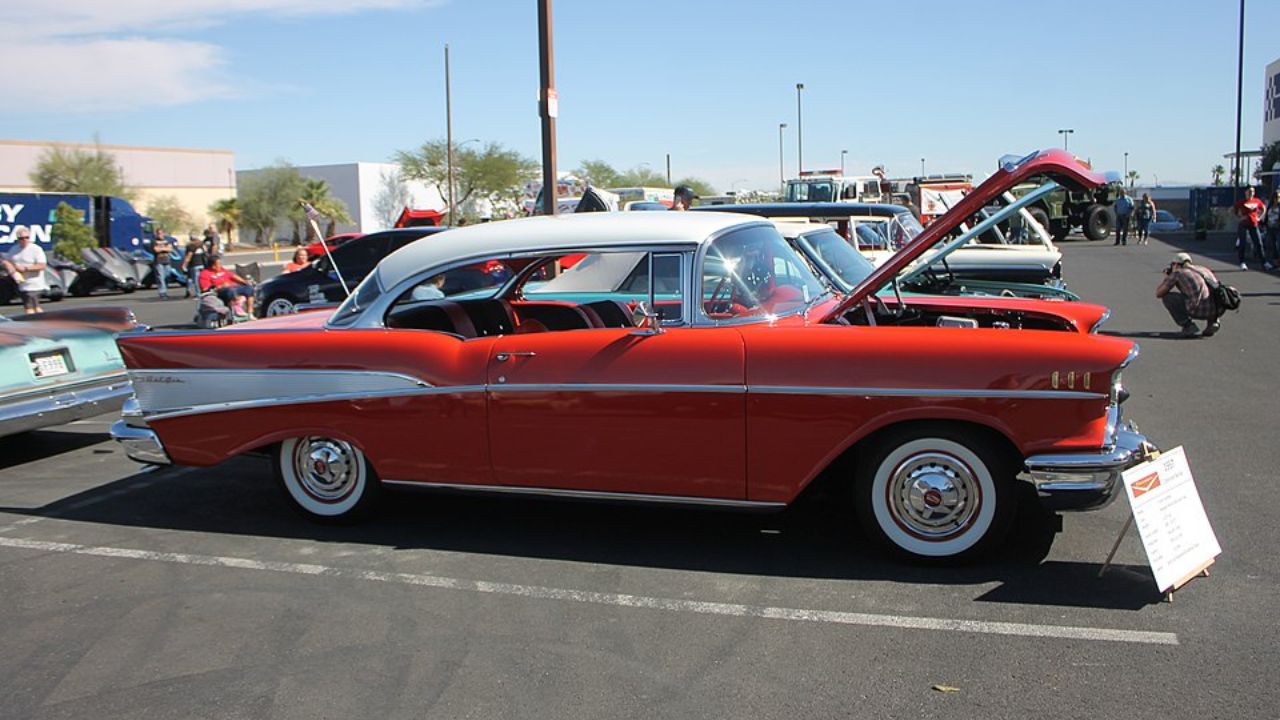
If you’ve ever torn into a Tri-Five Chevy project, you know the surprises don’t usually come from rust alone. With 1957 Chevrolet Bel Airs, restorations often reveal old modifications—some clever, some crude—because these cars lived long, active lives through decades when “restoration” often meant “make it better for how I drive.” From the late 1950s through the muscle era and into the street-rod boom, owners routinely updated their Bel Airs to keep up with traffic, improve reliability, or simply stand out at the local cruise night.
They were used cars early, not “classics”
It’s easy to forget how quickly a new car becomes just transportation. By the early-to-mid 1960s, a 1957 Bel Air was simply an older used car that could be bought cheaply, fixed in a driveway, and modified without guilt. That reality matters, because the first round of changes often happened when the cars were only 5–10 years old and still plentiful in salvage yards.
Restorers commonly find evidence of these early “keep it on the road” repairs: non-matching engines from later Chevrolets, swapped rear axles, or improvised wiring fixes done to address charging or starting issues. When a Bel Air was worth a few hundred dollars, originality rarely outranked practicality.
Chevrolet parts interchange encouraged mixing and matching
One reason old modifications are so common is that Chevrolet built a huge ecosystem of compatible components. Small-block V8 interchangeability, shared transmission patterns, and similar suspension layouts across multiple years made upgrades feel straightforward. Owners and local mechanics knew that a later generator, alternator conversion, or different carburetor could be made to work with basic tools.
That interchangeability also means restorers find “period-correct but not original” parts: intakes and carburetors from later small-block applications, swapped distributors, or transmission changes using common GM units. Even when the work was done decades ago, it often reflects what was easy to source at the time rather than what matched the car’s build date.
Performance culture drove engine, transmission, and rear-end swaps
The Bel Air’s shape and V8 options made it a natural candidate for hot rodding, whether the goal was stoplight fun or weekend dragstrip runs. As higher-output engines became available in later years—and as speed parts proliferated—owners frequently upgraded what they had rather than buying something new. That’s why restorations can uncover older camshaft choices, aftermarket intake manifolds, headers, or evidence of cylinder-head changes.
Driveline updates are especially common. Many cars received stronger transmissions, different gear ratios, or rear-end swaps aimed at quicker acceleration or better highway manners. It’s not unusual to find modified crossmembers, non-stock shifter holes in the floor, or patched tunnel work that hints at a transmission change done long before the current restoration began.
Safety and drivability upgrades were popular long before “restomod” was a word
Some modifications weren’t about speed at all—they were about making a 1950s car feel more modern in daily use. Over time, owners often added seat belts, updated lighting, improved wipers, or replaced worn steering components with whatever was available. Brake changes are another frequent discovery, especially if a previous owner wanted more confidence in modern traffic or found it easier to source later brake parts.
Electrical upgrades also show up constantly because they solved real-world annoyances. Alternator conversions, added relays, aftermarket gauges, or auxiliary fuse panels were common solutions as accessories accumulated. During restoration, those layers of add-ons can appear as extra holes under the dash, spliced harness sections, or non-factory switch locations that reflect how the car evolved through multiple eras.
The custom and street-rod eras left distinctive fingerprints
By the 1970s and especially the 1980s, Tri-Five Chevys became prime material for street rodding and mild customizing. That period brought a different style of modification: shaved emblems, frenched antennas, side-pipe exhaust trends, aftermarket wheels, and interiors updated with contemporary seats or custom upholstery. Even if a car looks mostly stock today, restorers may uncover filled trim holes, bodywork that disguises earlier styling changes, or paint layers that track the car’s past identities.
Suspension and stance changes from those decades can be telling. Owners commonly lowered cars for looks, raised them for tire clearance, or mixed components to achieve a particular ride. During teardown, you might find cut springs, non-original shocks and mounts, altered bump stops, or older aftermarket sway bars—all choices that made sense in the context of the era’s trends and available parts.
Multiple owners mean multiple “solutions” hiding under one car
Perhaps the biggest reason restorations uncover surprises is simple: many 1957 Bel Airs have had a long chain of caretakers. Each owner addressed the car’s needs with their own budget, skill level, and goals. Over decades, that can layer modifications on top of modifications—some professionally done, others clearly improvised.
Restorers often discover this history in small but revealing ways: mismatched hardware, bracketry that doesn’t match factory shapes, redundant patches where an earlier repair was later revised, or evidence that accessories were added and removed over time. When you peel back the carpet, remove the dash, or strip the body, you’re not just restoring a car—you’re reading a timeline of how enthusiasts kept a beloved Chevy relevant through changing tastes and technology.