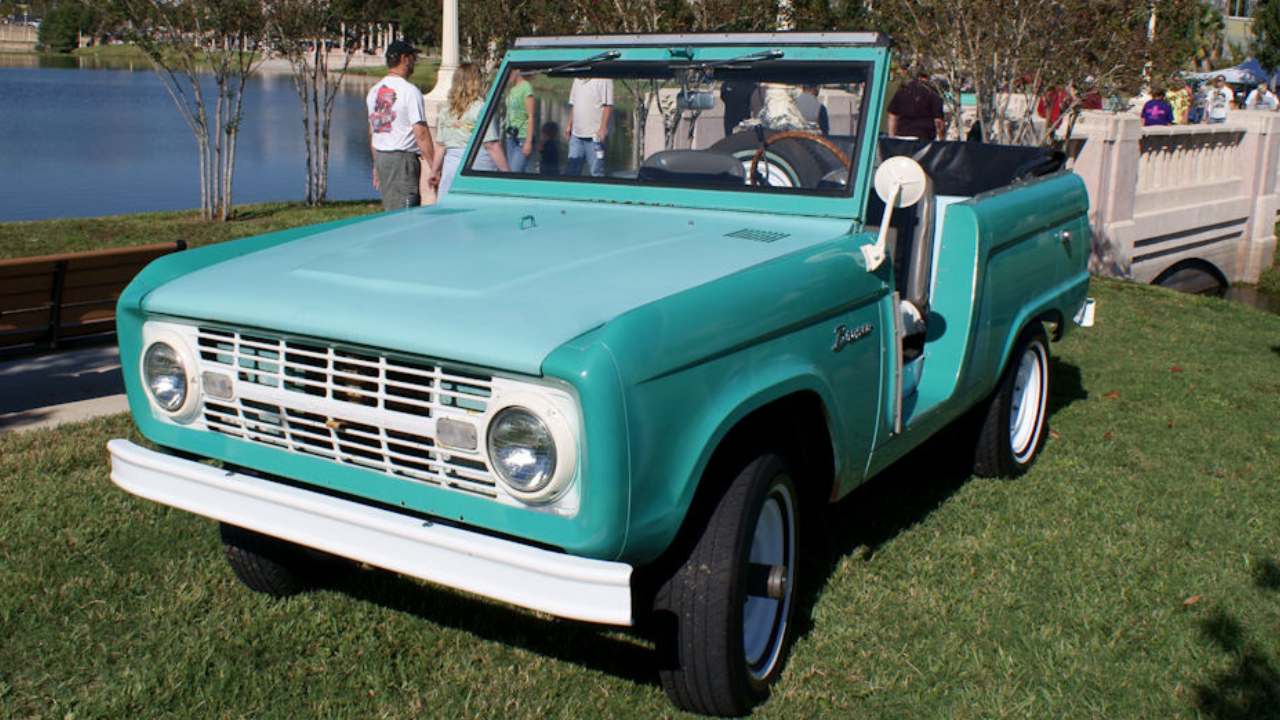
The early Bronco is one of those classic 4x4s that invites upgrades, but owners of 1966 trucks often learn quickly that adding power isn’t the first problem to solve. Before you chase horsepower, it’s worth understanding why steering typically gets attention first on these short-wheelbase rigs. The reason isn’t just comfort—it’s control, safety, and how the Bronco’s original steering design behaves once you start changing tires, suspension, and speed.
Why the factory steering can feel “busy” on a short-wheelbase Bronco
The 1966 Ford Bronco rides on a compact 92-inch wheelbase, and that short footprint can make it more sensitive to bumps, ruts, and driver input than longer trucks. Small corrections add up quickly, especially on uneven pavement or washboard trails. When you combine that with lifted suspensions or wider tires—common on restored or trail-focused Broncos—the steering can start to feel like it’s constantly asking for attention.
Even when everything is within spec, the early Bronco’s geometry and packaging prioritize simplicity and durability over the calmer on-road manners you’d expect from later SUVs. Owners often address steering not because the truck is “bad,” but because the baseline experience leaves less margin for bigger modifications. Getting the steering predictable makes every other upgrade feel more worthwhile.
Manual steering, larger tires, and leverage working against you
Many 1966 Broncos were delivered with manual steering, and that’s fine with stock-size tires and a mostly stock stance. Once the tire diameter and width increase, steering effort rises fast—especially at parking-lot speeds or when crawling over obstacles. Bigger tires also add scrub radius and leverage, which can translate into heavier steering and more kickback through the wheel.
This is a big reason steering comes before power for a lot of owners: you can’t enjoy extra performance if the truck is tiring to maneuver or feels unpredictable in a tight turn. Power steering conversions are common on early Broncos, but they’re usually approached as part of an overall steering plan rather than a standalone comfort upgrade. The goal is to reduce effort without introducing vague feel or bump steer.
Steering system wear is common, and it’s easiest to notice after other changes
Classic trucks accumulate decades of use, and steering components are some of the first places age shows up. Tie-rod ends, drag link ends, ball joints, track bar bushings, and steering box adjustment all play a role in how tight the truck feels. Even if wear isn’t dramatic, several small tolerances stacking up can produce wander, a delayed response off center, or a tendency to follow grooves in the road.
What catches many owners is that power upgrades can mask or amplify these issues. More engine power encourages higher cruising speeds, and higher speeds make loose steering feel worse. Likewise, adding traction with new tires can increase feedback loads into worn joints, turning a “livable” setup into one that feels sketchy.
Bump steer and alignment challenges show up after lifts
Early Broncos are frequently lifted for clearance, and a lift changes the relationship between the track bar and drag link. If those angles don’t stay reasonably matched, the truck can steer itself slightly as the suspension moves—classic bump steer. It can feel like the wheel tugs in your hands over bumps or that the truck darts when a front tire hits a dip.
Because suspension and tire upgrades are so common, steering often becomes the next logical fix. Owners may address track bar geometry, steering linkage angles, and alignment settings to restore predictable behavior. The important point is that steering corrections are often a response to suspension changes, not just an attempt to modernize the truck.
Drum brakes and steering go hand-in-hand in real-world confidence
A 1966 Bronco originally came with drum brakes, and while properly maintained drums can work well, they don’t always inspire confidence in modern traffic. Many owners upgrade brakes, and that tends to make steering feel like the next weak link. When a truck stops more consistently and tracks straight under braking, you become more sensitive to steering play and wander.
There’s also a practical safety mindset at work: control upgrades tend to come before power because they improve how the vehicle responds in unpredictable moments. Better steering feel, corrected geometry, and tight components help the driver place the truck accurately—whether that’s on a narrow trail, in a lane at highway speeds, or during an emergency maneuver.
Why steering-first makes power upgrades more enjoyable (and often simpler)
Once the steering is sorted, the rest of the build usually goes more smoothly. A stable, predictable front end reduces the trial-and-error that happens when you add power, swap gearing, or change how you use the truck. It’s also easier to diagnose drivetrain vibration, tire balance issues, or alignment problems when you’re not fighting basic steering slop.
For 1966 Bronco owners, the steering-first approach is less about restraint and more about sequencing. These trucks were designed for a different era of speeds, tires, and expectations, and steering upgrades help bridge that gap without compromising the character that makes an early Bronco appealing. Get it tracking straight and responding cleanly, and whatever power you add afterward will feel like a bonus rather than a band-aid.