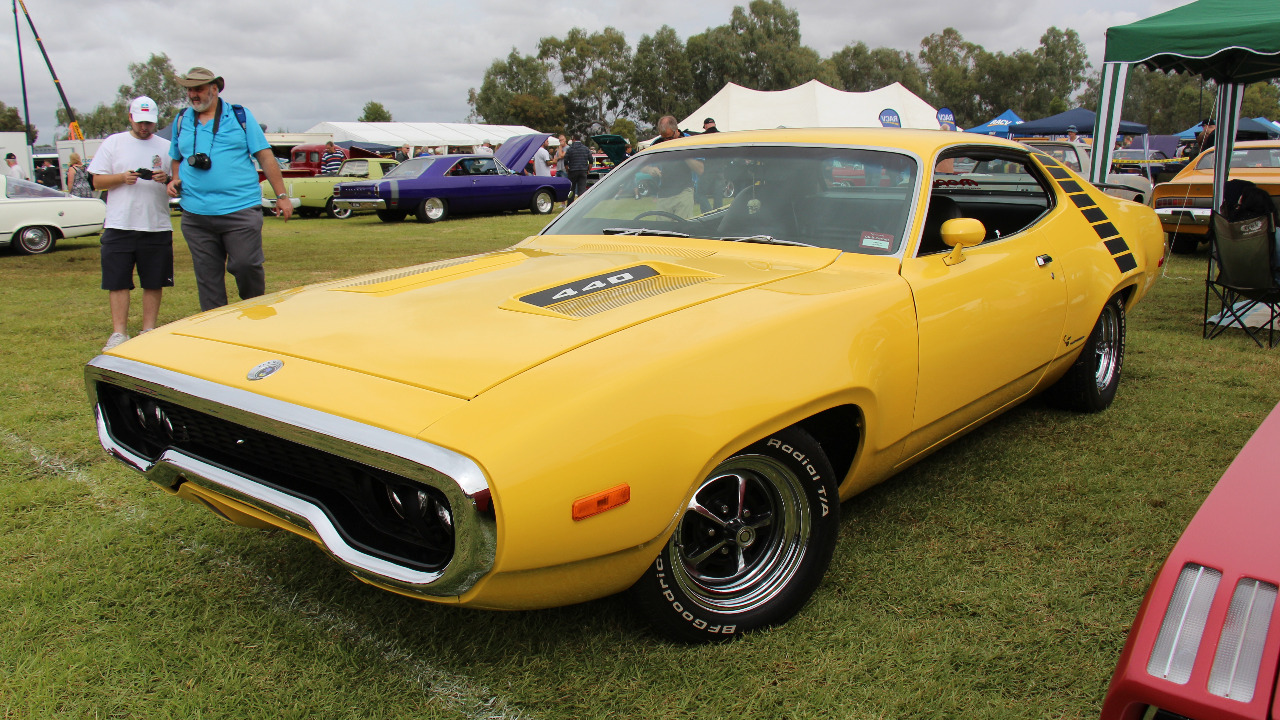
When people talk about 1971 Plymouth Road Runner values, they’re often really talking about credibility. These cars sit at an interesting crossroads: the muscle-car era was still alive, but emissions rules, insurance pressure, and shifting buyer tastes were already changing what Detroit built and how buyers ordered it. Because so many Road Runners have been modified, “what’s original” can matter as much as what’s shiny.
Preserving original details doesn’t just help at show time—it helps establish what the car actually is, how it left the factory, and how confidently a buyer can compare it to another example. With 1971 being the first year for Plymouth’s “fuselage” body styling on the Road Runner, details like trim, driveline, and interior components can be surprisingly model-year-specific. The more of those clues that remain intact, the easier it is for the market to reward the car.
Why 1971 is detail-sensitive in the first place
The 1971 model year brought major styling changes across Chrysler’s intermediate line, and the Road Runner inherited a look and feel that’s distinct from 1970 and earlier cars. That means buyers tend to pay closer attention to correct parts and finishes, since swapping in earlier or later components can be easier to spot than it is on more visually consistent generations. A car that “looks right” for 1971 often reads as more trustworthy, even to casual enthusiasts.
It’s also a year where option combinations and equipment levels can change how the car presents. Road Runners could be ordered in very basic form or dressed up with appearance and comfort items, so originality helps separate a thoughtfully optioned survivor from a car that’s been pieced together over decades. When two cars wear the same color and wheels, the one with intact factory details usually feels less like a guess.
Numbers, tags, and paperwork: how authenticity gets priced
A big part of value is confidence, and confidence comes from documentation and matching identifiers. Buyers commonly look for consistent VIN, body/data plate information, and engine/transmission stampings where applicable for the era and drivetrain. Even when someone isn’t chasing a perfect “numbers-matching” example, they still want to know the major components make sense together for a 1971 Road Runner.
Original paperwork can add to that confidence in a very practical way. A broadcast sheet, window sticker, or dealer invoice (when present and verifiable) helps confirm factory-installed options and original colors. That matters because it reduces debates about whether a car started life as a higher-spec combination or was later upgraded to look like one.
Factory paint, stripes, and trim: the small visual tells that buyers notice
Paint and graphics can dramatically affect how authentic a 1971 Road Runner feels. Correct stripe placement, period-appropriate colors, and proper trim pieces tend to stand out to knowledgeable shoppers, especially because these cars are often restored. A high-quality repaint can still be a repaint, but using factory-correct treatments helps keep the car aligned with what collectors expect from the model year.
Trim details matter because they’re easy to get wrong during restoration. Things like emblems, grille and tail panel finishes, and correct style of mirrors or moldings can be subtle but meaningful. When those items are incorrect or missing, buyers often assume other corners were cut too—and that assumption can show up in the price.
Interiors and instrumentation: originality that’s hard to fake convincingly
Interiors are where “restored” sometimes looks less convincing than “preserved.” Correct seat patterns, door panel designs, steering wheel style, and dash components help anchor a car in its model year. If the interior has been heavily customized, it can make the whole car feel less like a 1971 Road Runner and more like a restomod built around one.
Even small items—like the style of knobs, the appearance of the gauge cluster, and the fit and finish of upholstery—can influence perceived quality. A buyer might accept tasteful updates for drivability, but original-looking materials and correct layout tend to support stronger offers. That’s especially true when the interior condition suggests careful long-term ownership rather than a quick flip.
Drivetrain and underhood details: where value is won or lost quietly
Under the hood, originality isn’t only about which engine is installed; it’s also about how the engine bay presents. Correct air cleaner style, hose routing, clamps, ignition components, and factory-style finishes can make a big difference in how the car is judged. A clean engine bay with era-appropriate parts often signals that the rest of the restoration (or preservation) was handled with similar care.
Modifications are common on Road Runners, and not all of them are deal-breakers. But when upgrades require cutting, irreversible changes, or removing hard-to-find factory pieces, the market often penalizes the car compared to a reversible setup. Keeping original parts—even if they’re swapped out for driving—can help preserve value because it gives the next owner the option to return the car to a more factory-correct presentation.
Survivor appeal vs. restored perfection: why “honest” details can command a premium
There’s a reason unrestored survivors can attract serious attention: they provide a reference point for what’s real. Original paint (even with flaws), factory assembly marks, and untouched fasteners can’t be replicated perfectly, and experienced enthusiasts know it. When a 1971 Road Runner retains these “honest” details, it can earn a premium because it’s harder to find than a car that’s been cosmetically refreshed.
That doesn’t mean restorations aren’t valued—far from it. But the closer a restoration stays to factory-correct components and finishes, the more it tends to be rewarded, since it aligns with how collectors compare cars across auctions, private sales, and judged events. In the end, the market often pays for the story a car can prove, and original details are what make that story believable.
If you’re buying or selling one of these cars, it helps to think like a historian as much as a driver. The best-value 1971 Road Runners usually aren’t the ones with the most dramatic changes—they’re the ones that preserve (or accurately recreate) the small, model-year-correct details that show what the car really is.