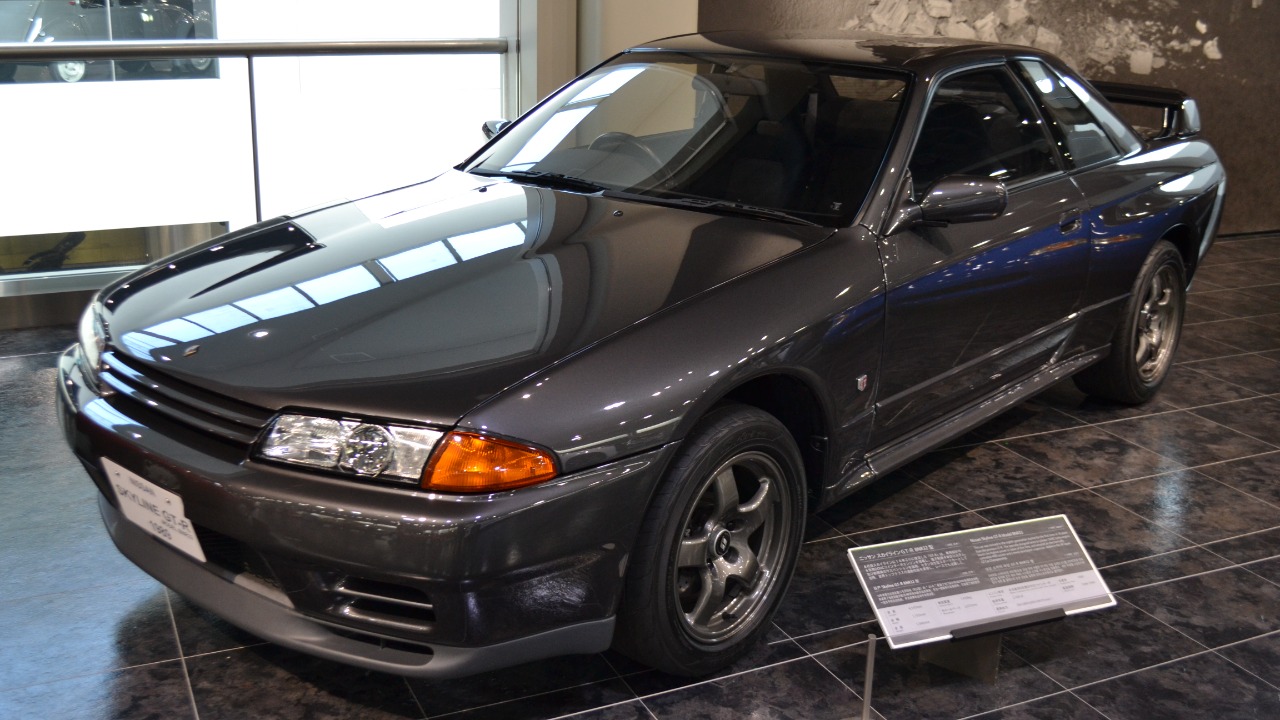
The 1989 Nissan Skyline GT-R sits in a rare sweet spot: it’s old enough to feel truly mechanical, yet advanced enough that many of its original design choices still make sense today. When owners talk about keeping these cars “as Nissan intended,” it usually isn’t about being precious or anti-modification. It’s more that the R32 GT-R’s factory package was engineered as an integrated system, and changing one part can upset the balance that made the car special in the first place.
The factory package was designed as a whole, not a parts bin
The R32 GT-R arrived with a mission—win in Group A touring car racing—and the road car reflects that cohesive engineering mindset. The RB26DETT, ATTESA E-TS all-wheel drive, and Super-HICAS rear steering weren’t standalone features; they were meant to work together under the same set of assumptions about grip, weight transfer, and response. When owners modify one of those elements heavily, it can expose compromises elsewhere, especially on a chassis that’s now several decades old.
That “system” feeling is part of why mild, reversible changes tend to be favored—things like maintenance refreshes, period-correct upgrades, or subtle suspension tuning—over wholesale reengineering. The car’s reputation wasn’t built on one hero component, but on how the entire package performed as a unit. For many enthusiasts, preserving that original harmony is the point.
RB26DETT tuning comes with well-known tradeoffs
The RB26DETT’s strength and headroom are legendary, which is exactly why so many engines have been pushed hard over the years. But that history also makes today’s owners cautious: higher boost and aggressive tuning can quickly turn into heat management challenges, fuel system demands, and a general rise in mechanical stress. On an engine family that’s now aging, “easy power” isn’t always as easy as it sounds once you factor in parts availability, machine work, and the unknowns of prior maintenance.
Owners who keep the engine close to stock often do it because the factory output level keeps everything in a comfortable operating window. The stock character—smooth, responsive, and tractable—fits the car’s original intent as a fast, usable road machine rather than a single-purpose build. When the goal is longevity and repeatable performance, leaving the core engineering intact can feel like the smart play.
ATTESA E-TS and Super-HICAS are integral to the car’s identity
The R32 GT-R’s all-wheel-drive system is a big part of why it feels so composed when the pace rises. ATTESA E-TS uses sensors and hydraulics to vary torque delivery to the front, helping the car put power down and stay stable. Owners often hesitate to alter driveline geometry, diff setups, or overall grip balance too drastically, because those changes can shift how the system behaves in ways that are hard to predict without deep testing.
Super-HICAS is similarly tied to the car’s personality, even though it’s sometimes misunderstood. Some enthusiasts choose to delete or lock out rear steering for certain track uses, but many keep it functional because it contributes to the GT-R’s quick, confident turn-in when everything is working properly. Keeping these systems stock-ish is often less about worshipping originality and more about respecting how much engineering went into making them play nicely together.
Originality and collectability reward careful decisions
Values for classic Japanese performance cars have made originality matter more than it once did. Clean, unmolested R32 GT-Rs—especially those with factory-correct parts and tidy engine bays—tend to be easier to evaluate and often more desirable to collectors than heavily modified examples. Even owners who enjoy tasteful upgrades may keep the major factory components and avoid irreversible changes, simply because it protects the car’s long-term appeal.
There’s also a documentation angle. A car that still wears its factory turbo setup, airbox arrangement, and OEM-style plumbing is typically simpler to inspect and to explain to the next caretaker. For enthusiasts who view themselves as temporary stewards of a historically significant model, leaving the original engineering in place can feel like the most responsible way to own one.
Parts age, and the stock baseline makes troubleshooting easier
With any late-1980s performance car, time becomes a variable. Rubber hoses harden, connectors corrode, sensors drift, and previous owners may have introduced wiring or plumbing “solutions” that don’t age gracefully. When an R32 is kept close to its factory configuration, diagnosing problems tends to be more straightforward because the layout matches service information and community knowledge.
That matters on a platform with sophisticated systems for its era. When modifications stack—aftermarket ECU, altered boost control, nonstandard ignition components, custom fuel setups—small issues can masquerade as bigger ones. Many owners would rather start from a known stock baseline, get the car healthy, and only then consider changes that don’t complicate the fundamentals.
The driving experience is already distinctive in stock form
A well-sorted 1989 GT-R doesn’t need extreme modifications to feel special. The combination of a high-revving twin-turbo straight-six, a planted AWD chassis, and a taut, compact body delivers a character that modern cars often smooth over. Plenty of owners chase that period-correct sensation: the way the car builds speed, the feedback through the controls, and the sense that you’re driving something engineered with racing in mind.
Keeping factory engineering intact is also a way to preserve the car’s original “story.” The R32’s reputation was earned in an era when manufacturers were pushing technology into road cars to satisfy homologation and competitive goals. For many enthusiasts, the most satisfying modification is simply restoring what Nissan built—refreshing suspension bushings, returning systems to proper function, and letting the original design speak for itself.
None of this means R32 GT-R owners never modify their cars—only that many choose a lighter touch because the stock formula is unusually complete. The car rewards careful maintenance and sympathetic upgrades, and it tends to punish random, disconnected changes. When you start with a machine engineered this deliberately, leaving the core factory thinking intact can be the most enjoyable path.