
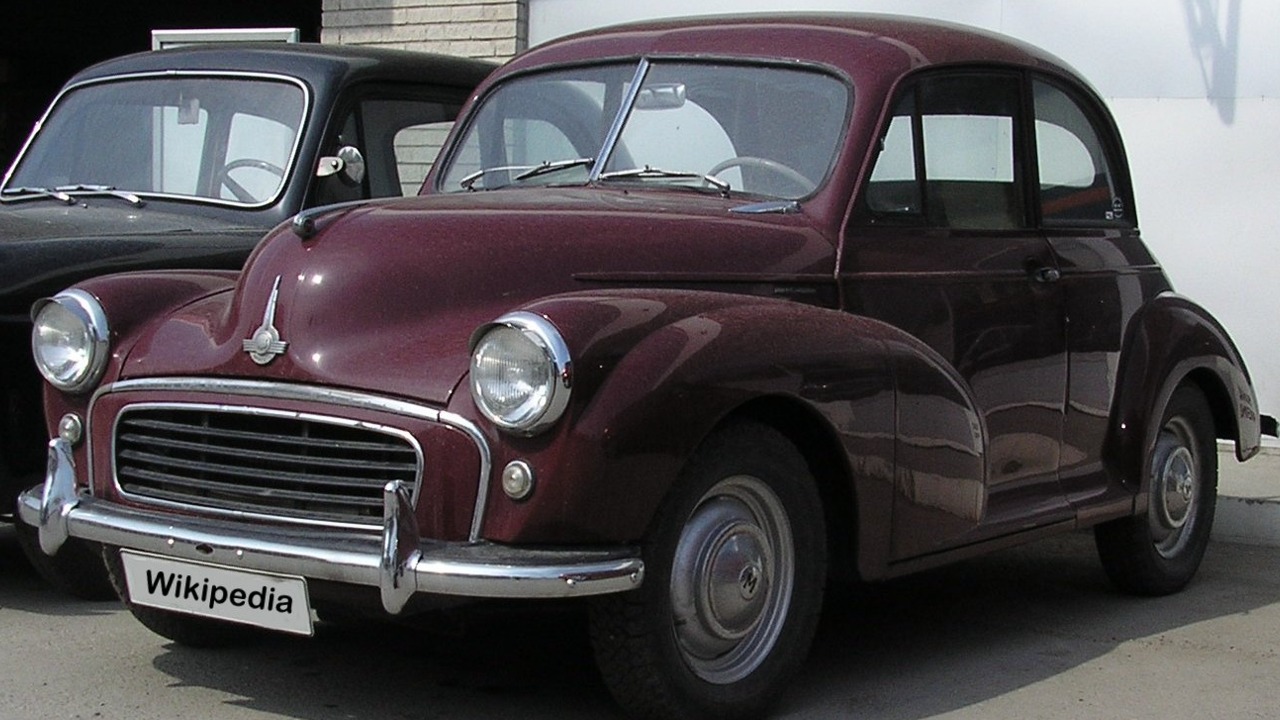
The 1955 Morris Minor did not just put Britain on wheels, it normalised the idea that an ordinary family could own, run, and enjoy a car. By the mid fifties the Minor had evolved into a practical, modernised machine that was cheap to buy, easy to drive, and simple to keep alive in an era of rationing and tight household budgets. Its mix of clever engineering and unpretentious charm turned it into the country’s default choice for everyday motoring.
From post‑war austerity to practical freedom
When the Minor first appeared in the late 1940s it arrived into a Britain still shaped by shortages, petrol coupons and strict controls on raw materials. Private motoring was a luxury, not a given, and many people still relied on buses, bicycles or their feet to get to work. By 1955, as the Series II cars matured, the Minor had become a familiar sight on streets and in driveways, offering a modest but genuine sense of freedom to people who had never expected to own a car at all. Contemporary accounts describe how petrol was rationed and resources were limited, yet the Minor was designed to sip fuel and use simple components that could be repaired rather than replaced, which made it viable transport for households watching every shilling.
That practicality was not an accident. The car’s creator, Alec Issigonis, later summed up his approach by saying he wanted an economy car that “the average man would take pleasure in owning, rather than feeling of it as something he had to use because he was poor.” His aim was not just to build something cheap, but something that felt dignified and enjoyable for inexperienced motorists. The resulting Morris Minor combined low running costs with light, reassuring controls that made it easy to handle for new drivers, including the growing number of women taking to the road. In a country still emerging from wartime sacrifice, that blend of affordability and pride was a powerful social shift.
Designing an “everyman” car that felt modern
By the mid fifties the Minor had already earned a reputation for being more sophisticated than its modest price suggested. The chassis and suspension gave it handling that was praised as safe and predictable, with reports noting that the Morris Minor was noted for its handling, space, economy and light controls. That combination meant the car felt less like a compromised budget option and more like a scaled‑down version of something more expensive. The 1955 split‑screen Series II cars, with their raised headlamps and tidy proportions, looked contemporary without being flashy, which helped them appeal across class lines.
Inside, the Minor made clever use of its compact footprint. The cabin was airy, the boot was usable, and the car could genuinely carry a small family, which was not a given in the economy segment at the time. The merger of Morris and Austin into the British Motor Corporation created the context for the Morris Minor Mk II, which introduced a new engine to replace the earlier 918cc unit and helped keep the car competitive as expectations rose. Even before that update, the 1955 cars embodied Issigonis’s philosophy that a small car could still feel cleverly engineered and pleasant to drive, not just frugal.
Built for ordinary budgets and everyday abuse
Affordability was central to the Minor’s rise as Britain’s default car, but it was the running costs rather than the showroom price that really mattered. Owners found that the car’s simple mechanical layout, modest engine sizes and robust components kept servicing bills low. The Minor was designed to be maintained by local garages and even keen amateurs, which mattered in a country where specialist dealerships were thin on the ground outside big cities. Reports on the car’s history stress that it was woven into the fabric of everyday life because it was cheap to insure, economical on fuel and straightforward to keep on the road, even as petrol remained a carefully managed expense for many families.
That durability is reflected in the way surviving cars are still traded today. A 1955 Morris Minor Series II saloon, upgraded with a later 948cc A‑series engine, recently sold at auction with a result including premium of £5,292, a figure that underlines how usable examples remain accessible compared with many other classics of the era. The fact that such a car could be upgraded, maintained and enjoyed seventy years on speaks to the underlying toughness of the design. In the 1950s that same toughness translated into confidence for buyers who needed a car that could handle poor roads, heavy loads and minimal pampering.

From family runabout to national symbol
As production expanded and the model evolved, the Minor shifted from being simply a popular car to becoming a cultural reference point. It served as a family runabout, a learner’s car, a tradesman’s van and a police patrol vehicle, which meant it appeared in every corner of British life. One detailed history describes the Morris Minor as a symbol of British automotive history, noting that the later Morris Minor 1000 became the most famous and widely recognised version. Yet the groundwork for that status was laid by the earlier Series II cars of the mid fifties, which normalised the idea of the Minor as the default choice for ordinary drivers.
Over time, the car’s ubiquity gave it a kind of quiet prestige. It was not aspirational in the way of a sports car or a big saloon, but it was trusted, familiar and woven into family stories. Enthusiast groups and regional events now celebrate that heritage, with gatherings that bring together examples ranging from the earliest cars to the latest, giving a different spin on how the model evolved. One enthusiast‑led history filmed in West Wales shows how cars from across the Minor range still draw affection from owners who value their simplicity and the memories attached to them. That emotional connection is a direct legacy of the car’s role as an everyman companion rather than a rarefied object.
Why 1955 still matters in the Minor story
Focusing on 1955 is not just an exercise in picking a neat mid‑point in the production run. By that year the Series II design had settled, the split‑screen body with raised headlamps had become instantly recognisable, and the car’s reputation for space, economy and light controls was firmly established. Auction descriptions of early fifties saloons emphasise that the Series II cars were noted for precisely the qualities that made them ideal for everyday use in post‑war Britain. In other words, by the middle of the decade the Minor had fully grown into the role Issigonis had imagined for it, as a car that ordinary people could both afford and enjoy.
Later developments, such as the introduction of the Morris Minor 1000 and the broader consolidation of the British Motor Corporation, would refine and extend that formula. Yet the essential character of the Minor as Britain’s everyman car was already locked in. It combined a designer’s ambition to give dignity to budget motoring with a national mood that was ready for modest, practical freedom. That is why, when I look back at the long story of the Minor in name, major in impact, the 1955 cars stand out as the moment when a clever piece of engineering truly became part of everyday British life.
More from Fast Lane Only:



Leave a Reply