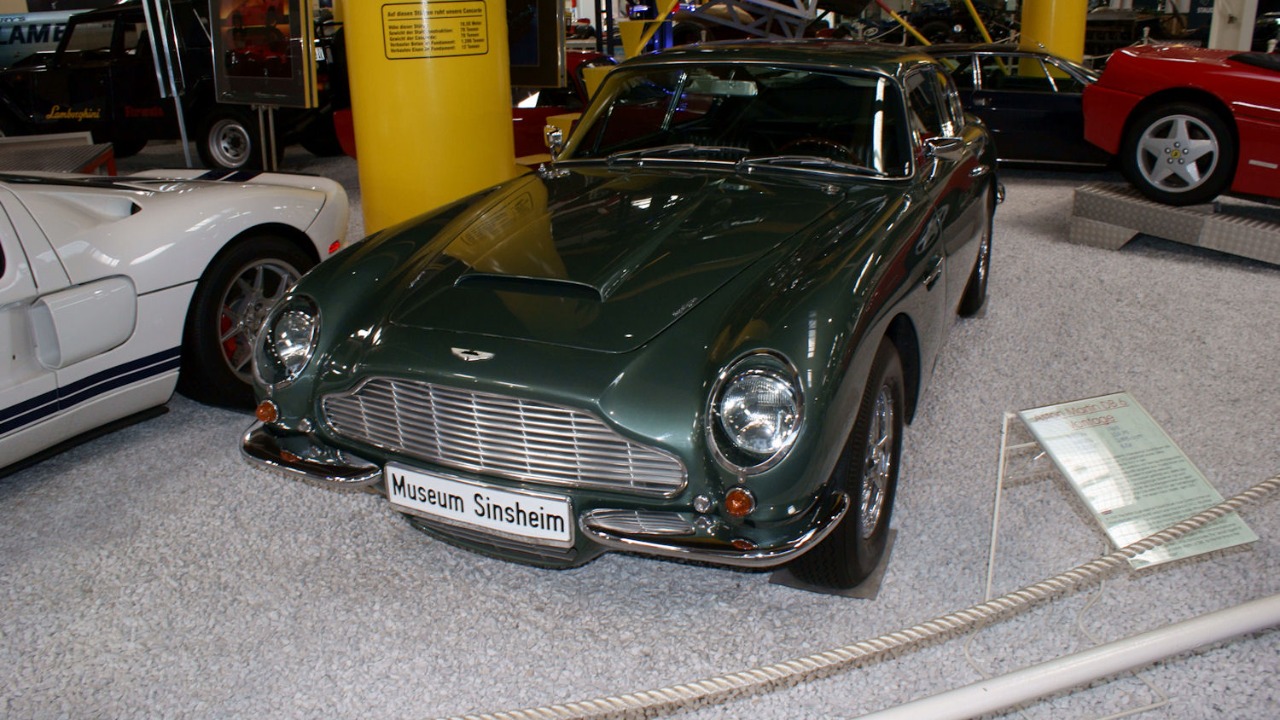
The 1965 Aston Martin DB6 arrived at a delicate moment, tasked with following the DB5 that 007 m turned into a global celebrity and cultural shorthand for suave danger. Rather than chasing a new gimmick, the DB6 quietly sharpened the formula, stretching the body, tidying the aerodynamics and civilising the cabin while keeping the essential character intact. In doing so, it did not just extend the legend of its predecessor, it matured it into a grand tourer that could genuinely live with the expectations that fame had created.
When I look at the DB6 today, I see a car that solved a problem every halo model eventually faces: how to grow up without growing dull. The DB6 did that by pairing a more practical body and more composed high speed manners with the same hand built glamour and straight six soundtrack that made the earlier cars so intoxicating. The result is a machine that feels less like a sequel and more like the director’s cut of the classic Aston Martin story.
From DB5 spotlight to DB6 substance
The DB6 was born into the glare of pop culture, because the DB5 had already been propelled into myth when 007 m put Aston Martin on cinema screens and bedroom walls. That kind of exposure could easily have trapped the company into building a static icon, but instead the engineers treated the new car as a chance to refine what a fast British grand tourer should be. Official material notes that the DB6 was obviously derived from the DB5, yet it sat on a longer wheelbase with a slightly higher roofline to improve space for both front and rear seats, a clear signal that this was meant to be driven and lived with, not just posed beside.
That evolution was not accidental. Bodywork development was brought in house after Bodywork proposals from Touring of Milan for a DB5 replacement were passed over, and Aston Martin instead focused on creating a more habitable grand tourer. The company later described the DB6 as Clearly evolved from the DB4 and DB5 when it was announced at the London Motor Show, but the intent was different: this was a car that had to carry the legend into daily use, not just weekend fantasy.
Design that traded glamour for real-world grace
Visually, the DB6 is where Aston Martin allowed function to nudge form without losing its sense of theatre. The car was launched with a 95 mm longer wheelbase than the DB5 to provide more interior space, and the new body was more expansive and upright, with a distinctive tail complete with a discrete spoiler that signalled its aerodynamic focus Dec. That tail was not a stylist’s flourish, it was a practical solution to high speed lift, and it gave the DB6 a recognisable profile that still looks purposeful today.
The rear treatment followed the principles of a Kamm tail, which improved aerodynamics and provided better stability at speed, a clear break from the more flowing but less disciplined rear of the DB5. Contemporary observers noted that Aston Martin was not chasing a sales rescue when it unveiled the DB6 at the London Motor Show, rather it was refining a car that already had pedigree. In person, the longer roofline and stretched glasshouse give the DB6 a relaxed, almost architectural elegance that suits its grand touring brief.
Mechanical refinement beneath the familiar silhouette
Under the bonnet, the DB6 kept faith with the straight six that defined the earlier DB cars, but it did not stand still. The 4.0 litre inline six was a refined evolution of the company’s earlier engines, with hemispherical combustion chambers and a displacement of just under 4.0 litres that offered a notable increase in torque over earlier versions, bringing more real world flexibility in a single, beautifully engineered package Dec. That extra torque is what makes a DB6 feel so relaxed on a long motorway run, even by modern standards.
The chassis and drivetrain were updated with the same quiet confidence. All DB6s came with the ZF 5 speed transmission as standard, while a no cost optional BorgWarner three speed automatic was available for buyers who wanted an easier life in traffic All. That represented a step on from the DB5 convertible, whose Transmission Initially was a 4 speed manual with overdrive before a 5 speed ZF gearbox became standard Transmission. In period, that combination of a torquey straight six and a modern five speed made the DB6 feel like a car that could cross countries rather than just counties.
Comfort, practicality and the Volante breakthrough
Inside, the DB6 leaned into its role as a true four seat grand tourer. The longer wheelbase and higher roofline translated into a cabin that was more than a token gesture for rear passengers, and later commentary has described the model as the culmination of Aston Martin’s iconic DB series, preserving the timeless beauty of its predecessors while adding a level of comfort that became a hallmark of British luxury The Aston Martin. That balance is what makes a DB6 feel so usable today, even compared with younger classics.
The open top versions pushed the idea further. The Aston Martin DB6 was the first of the marque’s cars to carry the name Volante, which means flying in Italian, and it was in fact the last of the DB4 based convertibles, with a quoted top speed of 148 mph that underlined its serious performance The Aston Martin. Earlier short chassis Volante models, of which just 37 were built, came with a 5 speed manual gearbox as standard and an optional 3 speed automatic transmission, and they also featured independent front suspension that sharpened their responses The car. In the cabin of a 1965 Aston Martin DB short chassis Volante, the balance and focus are clear, with little to distract from the wood rimmed steering wheel, the Smiths gauges and the expansive view over the bonnet Smiths.
Cultural cachet and the DB6’s lasting reputation
For all its engineering nuance, the DB6 also thrived in the cultural slipstream of the 1960s. The British Invasion stormed the ramparts of adolescent imaginations as the Beatles and the Rolling Stones vied for the top spot on the music charts, and the DB6 became a favourite of that rock star set The British Invasion. Later auction records list Owners that include Twiggy, Mick Jagger, Peter Sellers and Paul McCartney, and even note that the royal household retained a rare DB6 for HRH Prince Charles for his 21st birthday Owners. That kind of ownership roster cemented the car as a symbol of a particular British moment, where pop culture, royalty and engineering overlapped.
Over time, the DB6 has been reassessed as more than just the car that followed the DB5. Some commentators have described it as the culmination of the DB line, produced between 1965 and 1971 as a more practical and refined successor to the legendary DB5 while its basic styling remained unchanged from the preceding car Produced. During the 1960s the car evolved from the DB4 into the DB5 and then the DB6, and whilst it changed both mechanically and cosmetically from one model to the next, each generation marked its own distinct era in Aston Martin history During the. I find that when I watch modern reviewers like Jack from Dear Mistoric walk around a DB6 and talk through its oodles of oomph Jan, or listen to long form video essays that call it a controversial Aston, better and yet less desirable than the DB5 in some collectors’ eyes Mar, the same theme keeps surfacing: this is the car where Aston Martin quietly perfected the recipe.
More from Fast Lane Only: