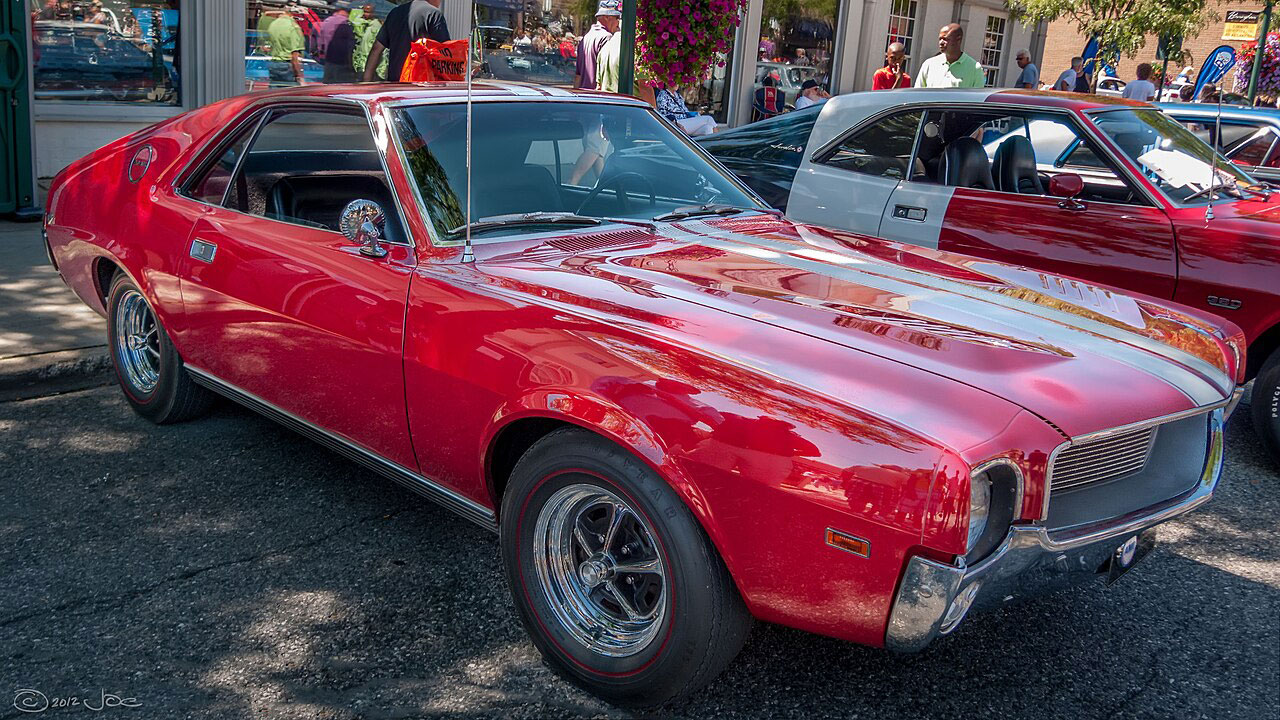
The late 1960s were full of loud, long-hooded muscle cars that seemed to measure their success in feet and cylinders. AMC went a different direction with the AMX, and the 1968 model is where that idea arrived in showrooms with real intent. It was still unmistakably American performance, but it didn’t follow the standard playbook.
What made it stand out wasn’t just one quirky detail—it was the way several unusual choices stacked together. From its size to its layout to how AMC positioned it, the AMX ended up in a lane that very few domestic cars occupied at the time. That mix is exactly why it still gets talked about today.
A true two-seater in a muscle-car era
Most American performance cars of the period were coupes with at least a token rear seat, even if it was best reserved for jackets or very patient passengers. The 1968 AMX broke that pattern by being a dedicated two-seater. That alone made it an oddball among Detroit’s stoplight bruisers.
A two-seat layout pushed it closer in spirit to sports cars than to the typical pony car formula. It also made the cabin feel more focused, with less emphasis on “room for everyone” and more on the driver and one passenger. In a market that often sold performance as family-friendly fun, AMC leaned into a more personal kind of fast.
Shorter, tighter, and built around a different footprint
American performance in the ’60s often meant long wheelbases and broad bodies, partly because so many of those cars shared platforms with larger models. The AMX went compact and purposeful by comparison. Its proportions looked more like something meant to change direction, not just annihilate a straightaway.
That smaller footprint also helped the car feel distinct even when parked next to more common rivals. It wasn’t trying to be a Camaro, Mustang, or Charger with a different badge. It was its own shape, and that mattered in a decade when copycat silhouettes were everywhere.
AMC’s unusual positioning: performance without the usual swagger
AMC didn’t have the same performance reputation as GM, Ford, or Chrysler, and that’s part of what made the AMX such a curveball. The company was known more for value and practicality than for headline-grabbing horsepower wars. Dropping a serious performance two-seater into the lineup was a surprising move.
Because AMC was the underdog, it had to be smart about how it played. The AMX wasn’t just about chasing the same image as the big players; it was about offering something different that could still run with them. That outsider status is baked into the car’s personality.
V8 power, but with a different kind of balance
The AMX offered V8 performance in the thick of the muscle era, but the way it packaged that power helped separate it from the crowd. With a shorter body and two-seat configuration, the overall vibe leaned less toward “big car, big engine” and more toward compact muscle. It still spoke American V8, just with a different accent.
That matters because many performance cars of the time felt like extensions of full-size thinking—downsized a bit, but still fundamentally big. The AMX felt intentionally sized around performance rather than adapted from something else. It’s a subtle distinction, but it’s a big part of the car’s appeal.
Not a pony car, not a Corvette, not a traditional muscle car
Part of the AMX’s charm is that it doesn’t fit neatly into the usual categories. Pony cars were typically 2+2 coupes aimed at broad audiences, while the Corvette was a dedicated sports car with its own long-established identity. The AMX landed in between, borrowing cues from both worlds without fully belonging to either.
That in-between status was unusual in the American market, which often preferred clear segments and familiar formulas. Buyers usually knew exactly what they were getting: sporty coupe, muscle sedan, or sports car. With the AMX, the pitch was more nuanced—compact, two-seat, V8-powered performance from a brand that wasn’t supposed to build it.
A design that signaled purpose instead of excess
Many late-’60s performance cars wore their intentions loudly, with dramatic proportions and lots of visual theater. The AMX could be bold, but it generally came off as tighter and more deliberate than the era’s biggest shapes. It looked like it was drawn around the idea of a sporty two-seater rather than a roomy coupe.
This sense of purpose helped it stand out on the street. Even people who didn’t know what it was could tell it wasn’t the same old formula. That kind of immediate visual “difference” was rare in a time when plenty of cars shared similar profiles.
The AMX as a statement from a smaller player
Big automakers could afford to throw multiple performance nameplates at the market and see what stuck. For AMC, a car like the AMX felt more like a statement—proof that the company could do something exciting and distinctive. That context makes the 1968 model especially interesting, because it represents AMC taking a real swing.
And it wasn’t a halfhearted swing. Building a two-seat performance car is a commitment, since you’re narrowing your audience from the start. AMC’s willingness to accept that tradeoff is one of the most unusual things about the AMX in an era when broader appeal often won out.
Why its “differentness” still matters
Today, the 1968 AMX is remembered not just because it was quick, but because it was unexpected. It’s a reminder that American performance wasn’t a single storyline about ever-larger engines and ever-longer hoods. There was room—at least briefly—for a compact, two-seat V8 car that didn’t come from the usual suspects.
That’s the real reason it’s unusual: it combined a classic American powertrain approach with a packaging idea that Detroit rarely embraced. It didn’t try to out-imitate the mainstream. Instead, it carved out its own niche, and that decision is what keeps the AMX feeling special decades later.
More from Fast Lane Only
- Unboxing the WWII Jeep in a Crate
- 15 rare Chevys collectors are quietly buying
- 10 underrated V8s still worth hunting down
- Police notice this before you even roll window down
*Research for this article included AI assistance, with all final content reviewed by human editors.