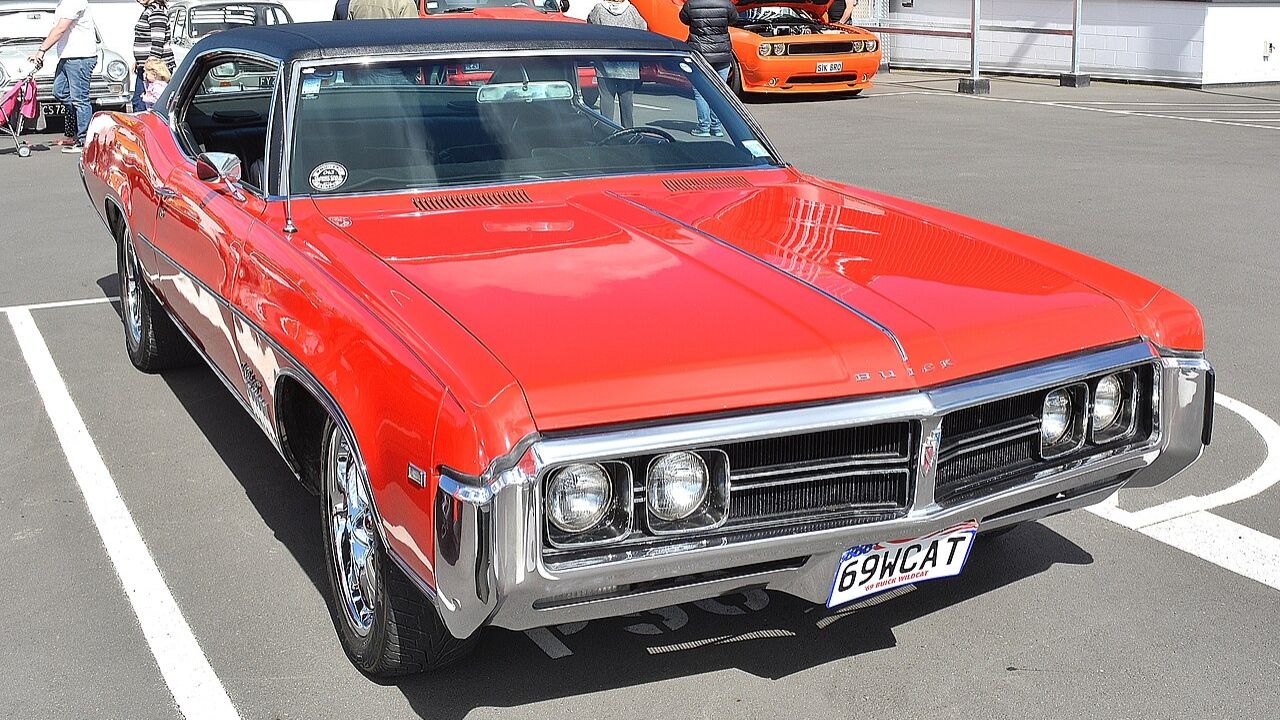
By the late 1960s, “big Buick” still meant something very literal. Even as some shoppers started eyeing trimmer cars and imports, Buick’s Wildcat stayed rooted in the idea that a full-size personal car should look substantial, feel roomy, and ride like it had plenty of road under it. So when people expected a noticeable downsizing for 1969, the Wildcat could seem bigger than the moment called for.
That size wasn’t an accident or a missed memo. It reflected how Buick positioned the model, what GM’s full-size engineering looked like at the time, and what many buyers still wanted: comfort, presence, and effortless highway cruising. To understand why it stayed large, you have to look at how the segment worked in 1969, not how it would change a few years later.
Full-size expectations were still the default
In 1969, the American market still treated “full-size” as the mainstream choice, not a niche. Families, business owners, and long-distance drivers often assumed their next car would be roomy enough for adults in the back seat and luggage in the trunk without negotiation. For that crowd, a car that looked and felt big wasn’t a drawback—it was reassurance.
Buick also had a brand promise to maintain. The Wildcat sat in a space where buyers wanted more flair than the most basic full-size sedans, but not necessarily the formal luxury of the top-tier lines. Keeping the Wildcat physically substantial helped preserve that premium, confident identity.
GM’s platform strategy encouraged shared dimensions
General Motors in this era relied heavily on shared full-size architectures across its divisions. When multiple brands are drawing from the same underlying set of engineering decisions, big shifts in size don’t happen casually. A meaningful change in exterior footprint usually implies retooling, new body structures, and coordinated updates across the lineup.
That platform logic tended to keep cars like the Wildcat in step with the overall full-size program. Even if marketing teams sensed a growing appetite for something smaller, the practical path was to refine what already worked rather than reinvent the car year to year. The result was a vehicle that continued to read as unabashedly full-size to shoppers walking into showrooms.
The Wildcat’s mission leaned into comfort and road presence
The Wildcat wasn’t trying to be tidy or minimalist. It was meant to feel expansive from the driver’s seat, with a ride character tuned for ease and stability rather than quick direction changes. A larger body can support that mission: more cabin volume, more sound isolation potential, and a general sense of calm at speed.
Road presence mattered, too. In a market where styling cues and physical stance signaled status, a long hood, broad body, and substantial proportions were part of the product. Buyers often equated that presence with quality and value, so shrinking the car could have risked undermining what the Wildcat was supposed to represent.
Buyers’ expectations were changing, but not uniformly
It’s easy to assume everyone was ready to downsize in 1969, but the shift was uneven. Some customers were starting to pay more attention to maneuverability and parking, especially in growing suburban and urban environments. Others still prioritized interior space, a smooth ride, and the feeling that they’d bought “enough car” for the money.
That split helps explain why the Wildcat could feel larger than some buyers expected while still making sense to Buick’s core audience. A shopper cross-shopping newer, more compact alternatives might view the Wildcat as old-school in footprint. A longtime Buick customer could view it as reassuringly familiar.
Styling trends made cars look and feel substantial
Late-1960s American styling often emphasized width, long horizontal lines, and a low, planted stance. Those cues can make a car seem even larger than its specifications suggest, especially when paired with generous glass areas and expansive sheetmetal. If you were expecting a visual “shrink,” the design language of the time didn’t always deliver it.
Design also had to communicate the car’s place in the lineup at a glance. Buick needed the Wildcat to read as a step above more basic transportation, and generous proportions helped do that. Even subtle changes in trim, lighting, and body surfacing could reinforce the impression of size and substance.
Packaging priorities favored big interiors and big trunks
A key reason full-size cars remained appealing was simple: they were easy to live with. Adults could sit comfortably in both rows, and the trunk was expected to handle real-world tasks—travel, shopping, or family errands—without careful planning. Those practical benefits tend to require physical volume, and volume tends to show up in exterior dimensions.
In a period when many households owned one primary car, flexibility mattered. A vehicle that could handle passengers one day and luggage the next fit the do-it-all role. Keeping the Wildcat large supported that everyday versatility that buyers had come to expect from a Buick in this class.
Performance and cruising character rewarded a larger footprint
Even without getting into specific engine or suspension specs, it’s fair to say the Wildcat’s character aligned with effortless cruising. Larger cars can deliver a particular kind of on-road demeanor: steady, composed, and less busy over broken pavement. For many drivers, that was the whole point of choosing a big Buick.
Highway travel was central to American driving life in the late 1960s. A bigger, heavier-feeling car could inspire confidence on long trips and at sustained speeds. So while some shoppers wanted smaller, Buick still had strong reasons to keep the Wildcat aligned with the full-size cruising ideal.
Downsizing pressures weren’t yet fully baked into the segment
The forces that would later push American cars toward smaller footprints—regulatory changes, fuel concerns, and shifting consumer priorities—weren’t hitting full-size models in a decisive way in 1969. Automakers were certainly aware of changing tastes, but the market hadn’t fully turned. For Buick, staying the course was a rational bet.
That timing matters when you look back at the Wildcat with modern expectations. Today, we’re used to rapid shifts in size and category, with nameplates moving between segments. In 1969, continuity was part of the promise, and the Wildcat’s size signaled that Buick wasn’t abandoning the traditional full-size buyer.
So the Wildcat’s “bigness” wasn’t a quirk as much as a reflection of where Buick thought the center of the market still was. It carried forward the values that defined the brand’s full-size cars: space, comfort, and a confident presence. For shoppers who expected a more dramatic move toward smaller dimensions, it could feel surprising—but for Buick, it was consistency by design.
More from Fast Lane Only
- Unboxing the WWII Jeep in a Crate
- 15 rare Chevys collectors are quietly buying
- 10 underrated V8s still worth hunting down
- Police notice this before you even roll window down
*Research for this article included AI assistance, with all final content reviewed by human editors.