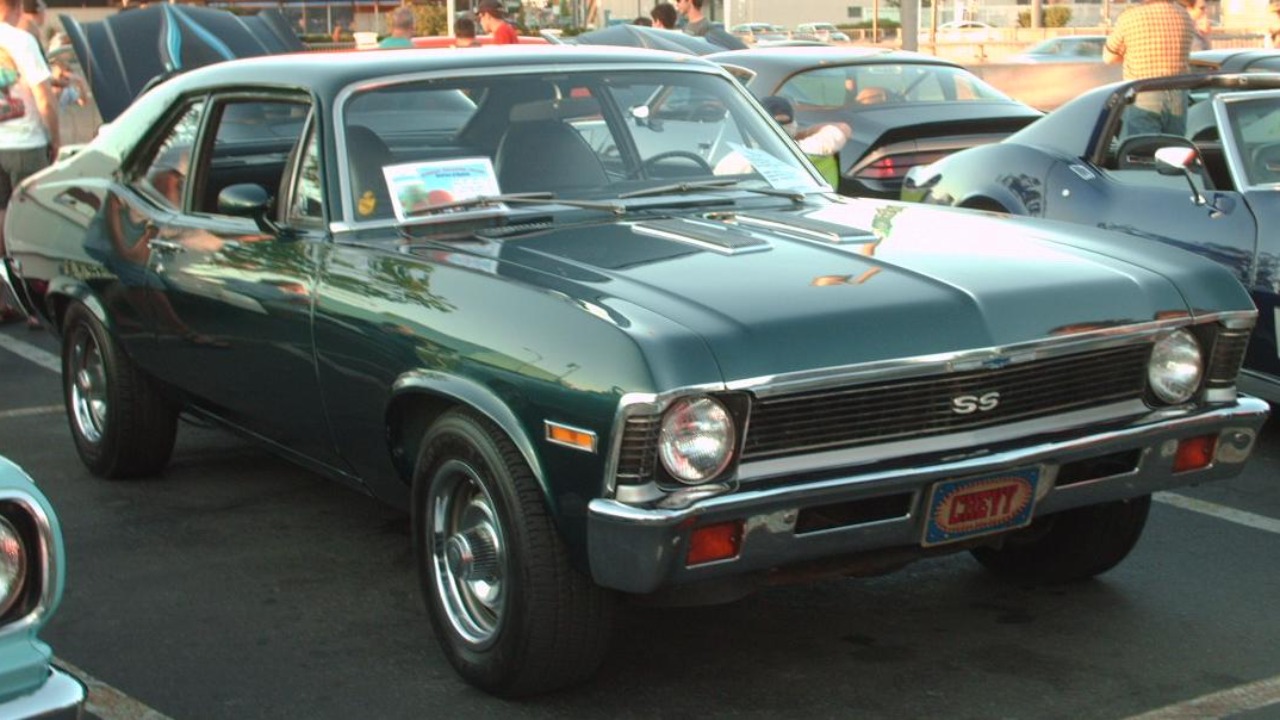
The 1972 Chevrolet Nova SS occupies a rare sweet spot in car culture, bridging bare‑bones practicality and genuine muscle car attitude. It was compact, relatively simple, and yet capable of serious performance, which is why it still feels current in a world of complex, software‑heavy machines. When I look at how enthusiasts treat the car today, from meticulous restorations to wild restomods, it is clear that the Nova SS has never really left the conversation.
What keeps this particular model year in the spotlight is not nostalgia alone, but a mix of design, drivability, and accessibility that continues to make sense for modern drivers and builders. The 1972 Chevrolet Nova SS is still a car you can wrench on in your garage, tune to your taste, and actually drive, rather than just admire under fluorescent lights.
The sleeper styling that aged into a classic
The 1972 Chevy Nova was the final model year of the second generation, and its clean, almost understated lines are a big reason it still looks right at home in traffic today. The body is compact and straightforward, with crisp fenders and a simple roofline that avoids the excesses that date some of its flashier contemporaries. Contemporary enthusiasts describe this year as known for its “clean, straightforward styling and solid construction,” a combination that helped the Nova become a favorite canvas among hot rodders and customizers.
That restraint is exactly what lets the 1972 Chevrolet Nova SS feel timeless rather than trapped in a particular era. The basic two‑door shape works just as well slammed over modern wheels as it does on period‑correct rally rims, and the relatively small footprint makes it look nimble instead of bulky. When you add the subtle cues of The Super Sport package, from the badging to the more aggressive stance, the car gains presence without losing its sleeper vibe, which is why the Super Sport turned an unassuming compact into something that still looks like a street brawler today.
Performance that fits real roads, not just posters
Under the skin, the 1972 Chevrolet Nova SS was never about chasing the wildest horsepower numbers at any cost. Instead, it paired a lightweight body with a solid powertrain, which gave it the kind of responsive, usable performance that still feels relevant on modern roads. Enthusiasts point out that the Nova SS was a small car with strong acceleration and a thrilling driving experience, yet it remained Affordable and fast, which is a rare combination in any era.
That balance matters more than ever in a time when many performance cars are too powerful to enjoy legally on public roads. The Nova SS delivers enough shove to be exciting without demanding a racetrack to make sense, and its relatively simple suspension and steering give the driver a direct connection that modern electronic systems often filter out. Owners still talk about how the 1972 Chevy Nova “looked good, but they handled,” and one enthusiast even called a 1972 Nova “on point like a Sniper,” a sharp compliment that sits alongside mentions of big‑block power and the appeal of the performance package.
A platform built for tinkerers and restorers
Part of the Nova SS’s lasting relevance comes from how approachable it is for people who like to turn wrenches. The car’s mechanical simplicity, from its straightforward engine bay to its basic chassis layout, makes it less intimidating than many other classic muscle machines. Modern coverage of the model notes that there are few times as good as now to be a classic car enthusiast, and that the Chevy Nova in particular is relatively inexpensive to bring back to life, even if you still have to decide whether the There and effort are worth it for your budget.
That accessibility shows up in the stories owners tell. In one detailed video diary, a builder explains how he has spent the past year and a half restoring his dream muscle car, a 1972 Chevy Nova, and how the car will be off the road for nearly five years by the time it is finished, yet he still treats the project as a labor of love rather than a burden. The way he talks about his Chevy Nova underscores how the platform invites long‑term commitment, whether you are chasing originality or building a personalized street machine.
Authenticity, documentation, and the hunt for a “true” SS
As values rise and interest grows, the question of what counts as a “real” Super Sport has become central to the Nova’s modern story. Collectors and buyers increasingly demand proof that a car left the factory as a genuine SS, not a clone built from base‑model bones. Guides to decoding the details walk enthusiasts through the process, explaining how to read the cowl tag and how the first digits, such as 11427, indicate that a car was built with a V8, while 11327 points to a six‑cylinder, a distinction that helps confirm whether a Nova started life as a performance model or not. Those step‑by‑step checks are laid out in videos that show how to spot a true Super Sport Oct Nova using factory codes rather than guesswork.
Documentation has become so important that well‑preserved examples with clear paper trails are singled out as especially desirable. One feature on a carefully kept 1972 Chevrolet Nova SS highlights how a fully documented car, complete with original build sheets and matching numbers, stands out in a crowded market of modified and rebadged cars. When enthusiasts are urged to Make a list of top Chevrolet muscle cars, the Chevrolet Nova SS earns its place in part because buyers can still verify what they are getting, which protects both the car’s legacy and the owner’s investment.
From rare racers to restomods, the Nova SS keeps evolving
Even within the Nova world, there is a spectrum that runs from ultra‑rare factory builds to heavily reimagined street cars, and that diversity keeps the 1972 SS in the spotlight. Some of the rarest Chevy Nova variants, including those that quietly dominated drag strips while the flashier Camaro ZL1 and Chevelle SS 454 grabbed the posters, have become six‑figure auction stars. Coverage of these cars notes that While the Camaro ZL1 and Chevelle SS 454 became icons, the Nova stayed a whisper among gearheads who actually raced, and that quiet capability is part of what makes the blueprint so appealing today.
At the same time, builders are not afraid to push the platform far beyond its original spec. Modern restomods take the basic 1972 Chevy Nova SS shell and layer in contemporary suspension, brakes, and powertrains, creating cars that can run with new performance models while still looking vintage. One recent build was described as a Tight restomod 1972 Chevy Nova SS ready to show off, a phrase that captures how the car has become a showcase for craftsmanship as much as nostalgia.
More from Fast Lane Only: