The 1989 Corvette ZR-1 arrived as a shock to both European supercar makers and American traditionalists, pairing exotic engineering with a familiar fiberglass shape. It did not just add power to the fourth-generation Corvette, it rewrote expectations for what a mass-produced American sports car could do on a racetrack, an autobahn, or a 24‑hour endurance run.
By the time the production ZR-1 reached customers for the 1990 model year, it had already proven that Chevrolet could build a car that ran with the world’s quickest exotics while still starting from a Bowling Green assembly line. The surprise was not only the numbers, but the way this car blended Lotus engineering, prototype thinking, and brutal durability into something that looked, at first glance, like a regular C4.
The unlikely supercar brief behind the ZR-1
The ZR-1 began as a corporate challenge: turn the Corvette from a quick American sports car into a machine that could embarrass European flagships on their own turf. General Motors did not try to stretch the existing small-block formula, it went outside for help and, back in 1986, acquired Lotus to inject high revs and racing know‑how into the project. That partnership produced an all‑aluminum LT5 V8 that revved higher than the standard pushrod engine and delivered 375 horsepower at launch, a figure that later climbed to 405, with torque peaking around 370 to 385 lb‑ft according to detailed performance breakdowns. Those numbers put the ZR-1 squarely in the territory of contemporary Italian and German supercars, but in a car that still wore a Corvette badge.
What made this powertrain so startling was how different it was from the base C4’s hardware. The LT5 used dual overhead cams and four valves per cylinder, a layout more at home in a Ferrari than in a Chevrolet showroom, and it was packaged with a strengthened driveline and chassis to handle the extra output. Contemporary analysis of the C4 ZR-1’s performance notes that this engine did not just add straight‑line speed, it gave the car a top speed of over 180 mph and the stamina to repeat that performance lap after lap. In other words, the ZR-1 was engineered from the outset as a world‑beating Corvette, not just a hotter trim level.
Lotus, prototypes, and the “Cyborg” character
The Lotus connection did more than deliver a spec sheet, it changed the character of the Corvette in ways that startled long‑time fans. Engineers leaned on prototype thinking, similar to the experimental Makeo Shark concepts that had shaped earlier Corvette design studies, to integrate the LT5 and its cooling, braking, and suspension demands into the existing C4 platform. The result was a car that some modern reviewers have described as a “Cyborg Supercar Destroyer,” a machine that blended familiar American styling with almost clinical precision in the way it attacked a road or track. That duality, half blue‑collar sports car and half high‑tech experiment, is a big part of why the ZR-1 felt so disruptive when it appeared.
On the road, that hybrid personality translated into a Corvette that could be docile in traffic and then, with a deep press of the throttle, surge to speeds that rivaled far more expensive machinery. Video reviews of well‑preserved examples highlight how the ZR-1’s power delivery, high‑rev soundtrack, and long‑legged gearing still feel exotic decades later, even compared with modern performance cars. The car’s ability to destroy benchmarks set by rivals like the Porsche 911, while retaining everyday usability, underscored just how far the Corvette program had leapt with Lotus’s help and with the willingness to treat the ZR-1 as a rolling prototype for future performance ideas.
Endurance records that stunned Europe
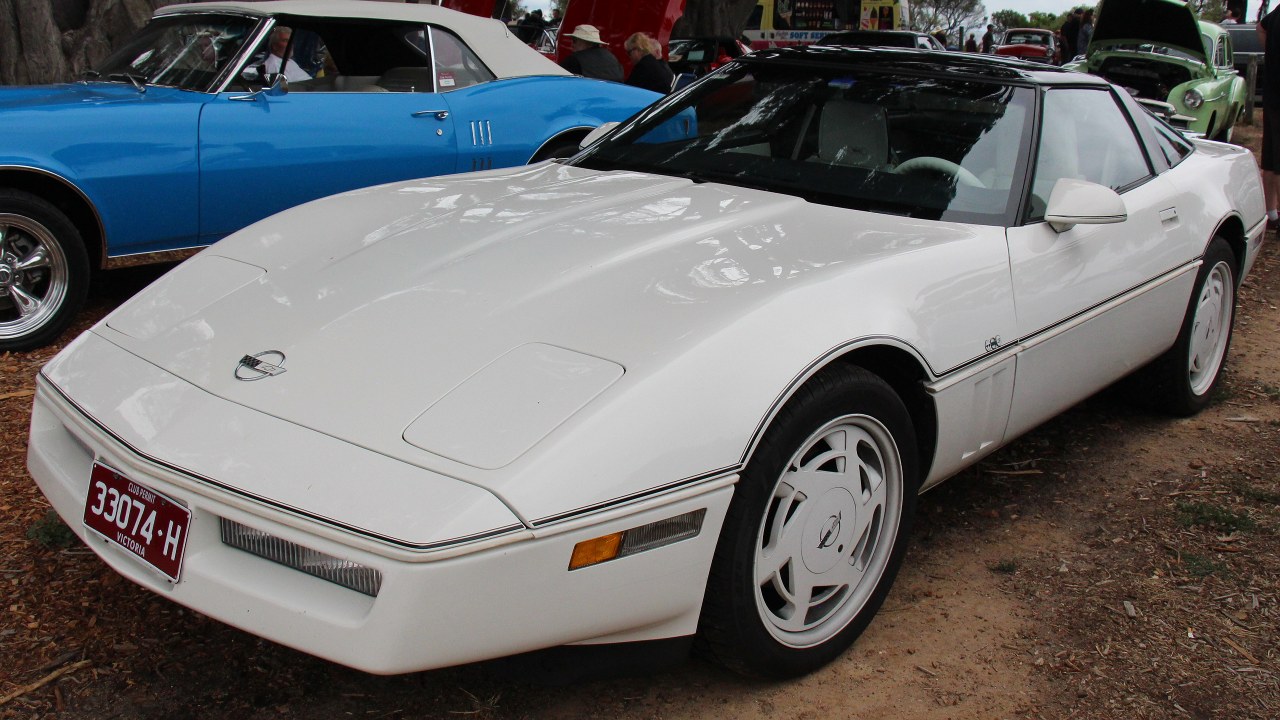
If the spec sheet surprised enthusiasts, the ZR-1’s endurance exploits shocked skeptics who assumed an American V8 could not survive flat‑out punishment. In 1989, Chevrolet and a group of drivers took a near‑stock ZR-1 to Fort Stockton, Texas, for a world record attempt that would prove the car’s durability in the harshest possible way. Heading To Fort Stockton, the team had to sort mechanical issues and secure funding, but once the car hit the high‑speed oval it ran at sustained triple‑digit speeds for 24 hours and beyond, setting multiple FIA‑recognized endurance marks. The key point was not just the records themselves, but that the car did it without the fragile temperament often associated with European exotics of the era.
Accounts of that run describe how the ZR-1 circulated lap after lap in brutal heat, with drivers rotating through stints while the LT5 hummed near its upper rev range. The car’s ability to maintain that pace, then drive back in essentially the same configuration, gave Chevrolet a powerful rebuttal to critics who dismissed the Corvette as a straight‑line toy. When enthusiasts later compared the ZR-1’s performance to contemporary European machines, they often pointed to those Fort Stockton records as proof that this Corvette was not just quick, it was engineered to survive the kind of punishment usually reserved for factory endurance racers.
How the ZR-1 humbled European supercars
On paper, the ZR-1’s mission was clear: outsell and outperform European supercars that had long dominated enthusiast wish lists. The LT5’s 375 horsepower at launch, rising to 405 in later years, combined with torque figures between 370 and 385 lb‑ft, gave the car acceleration and top‑speed numbers that matched or exceeded many Italian and German rivals. Contemporary comparisons noted that the ZR-1 could run with, and often outrun, icons like the Porsche 911 on both straightaways and technical circuits, while costing significantly less and offering the practicality of a mass‑produced interior and dealer network. That combination of raw pace and relative accessibility is why some modern commentators argue that this Corvette “destroyed” the 911 in real‑world terms.
Yet the ZR-1 did not simply chase numbers, it changed the way American performance was perceived overseas. Analyses of the C4 ZR-1’s market impact point out that Chevrolet tried to sell the car as a genuine alternative to Italian glamour, even if it lacked gated‑shifter theater or hand‑stitched cabins. The car’s ability to lap at supercar speeds, then idle in traffic without complaint, undercut the notion that high performance required temperamental hardware. In that sense, the ZR-1 humbled its European competition not only by matching their lap times, but by showing that a large manufacturer could mass‑produce that level of performance with everyday reliability.
The legacy: from “Batmobile” oddity to cult classic
Despite its achievements, the ZR-1 spent years as an underappreciated outlier, a pattern that still shapes its legacy. Some enthusiasts gravitated toward even wilder C4‑based customs, like white “Batmobile” builds wearing ACI Aero body kits, which exaggerated the Corvette’s wedge shape and made the stock ZR-1 look almost subtle. Others dismissed the car as just another C4 with a wide rear end and a high price tag, a perception that helped keep values relatively low long after production ended. Commentators have described the C4 ZR-1 as the coolest Corvette that no one cared about, noting that its sophisticated engineering was often overshadowed by later, more aggressive models and by the styling controversies of the fourth‑generation platform.
Over time, however, the car’s reputation has shifted as enthusiasts re‑evaluate what it represented. Retrospectives on the ZR1’s legacy argue that it marked The Epitome Of Corvette Performance for its era, setting a template that later high‑performance Corvettes would follow. Quick Facts About The C4 program highlight how the ZR-1’s blend of Lotus engineering, high‑rev power, and endurance credibility laid groundwork for future Chevrolet Corvette ZR variants, including modern versions that revived the badge for a single 2019 model year. Looking back, I see the 1989 ZR-1 as the moment when the Corvette stopped chasing European benchmarks and started forcing those same rivals to respond, which is exactly why it shocked the world when it first appeared.
More from Fast Lane Only: