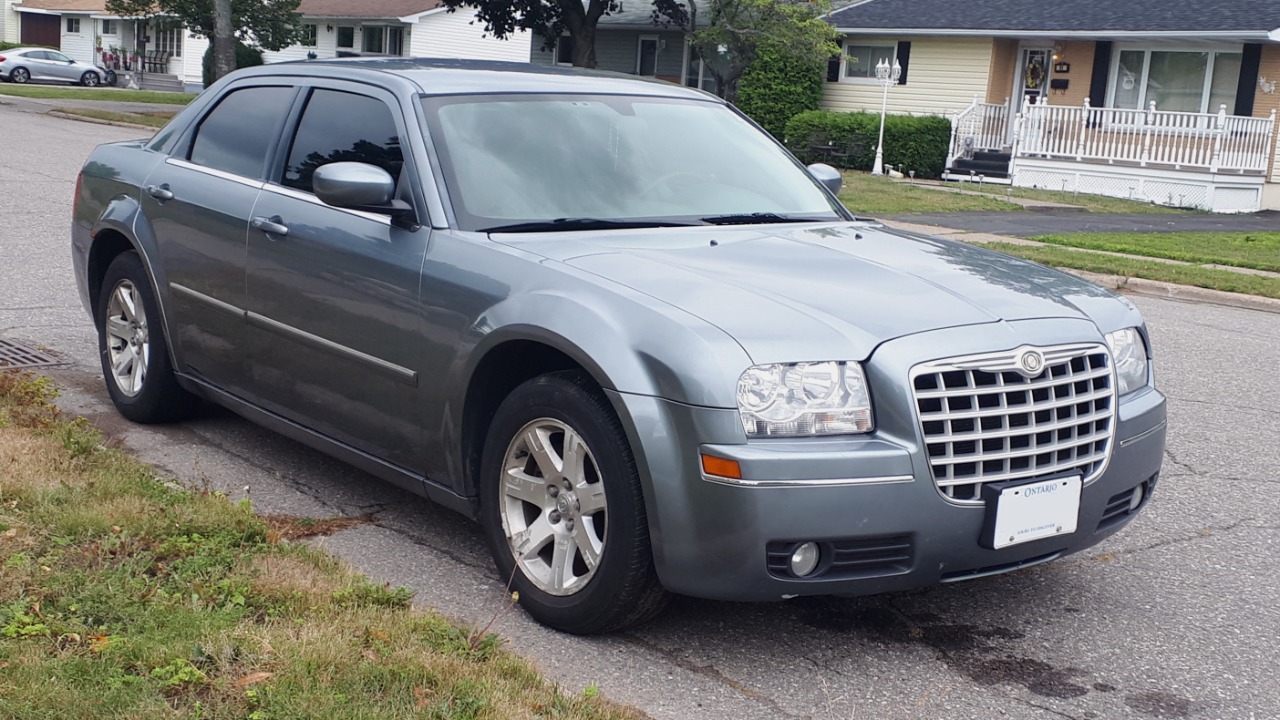
The 2004 Chrysler 300 arrived at a moment when big American sedans felt tired, and it refused to play by the old rules. With its blocky stance, rear‑drive layout, and unapologetically upscale attitude, it reset what you expected to see when you walked into a mainstream showroom. Two decades later, you still feel the ripple effects every time a volume brand tries to sell you a car that looks and feels more expensive than its badge suggests.
If you are wondering why that single model had such an outsized impact, you have to look beyond the styling and into how it changed the business conversation. The 300 gave Chrysler a credible luxury family car again, helped dealers lean less on discounts, and quietly laid the groundwork for an entire era of modern muscle and premium‑leaning sedans.
The bold sedan that made “premium” feel attainable
When the modern 300 landed, you suddenly had a full‑size sedan that looked like it belonged in a valet line, not just a rental lot. The proportions were dramatic, with a long hood, chopped roofline, and that oversized grille that reviewers quickly labeled “boxy” and unmistakable. An analysis of the model’s run notes that even an eight‑year stretch of strong demand for this distinctive sedan would have been enough for Stellantis (referred to as Stell) to call the Chrysler 300 a success, which tells you how strongly that design connected with buyers.
You also felt something different when you sat inside. The Chrysler 300 was pitched as a luxury family car for the United States of, with the 300C branding reserved for higher‑spec versions, and that positioning showed up in the materials, the available V8 power, and the way the car carried itself. Since its debut in 2004, the model has been described as rooted in American tradition, with the press praising its style, comfort, and performance, a reputation echoed in a detailed maintenance guide that treats the car as a modern classic rather than just another sedan.
Rear‑drive, real power, and a different kind of family car
Under the skin, the 300 quietly broke with the front‑drive norm that had taken over mainstream sedans. Engineers pushed for a rear‑wheel‑drive platform years before it was fashionable again, and reporting on the program notes that, Despite what many enthusiasts assume, the Daimler Chrysler merger was not the sole trigger. According to development accounts, key figures like Gale were already sketching out a rear‑drive successor to the LH cars as early as 1997.
That decision paid off in how the car drove and how you perceived it. Since its debut in 2004, the Chrysler 300 has been framed as part of a tradition of powerful American sedans, with a gearbox and drivetrain tuned for torque and long‑distance comfort, something highlighted in technical discussions of the transmission. When you compare that to the softly sprung, front‑drive sedans that dominated showrooms at the time, you can see why the 300 made buyers start asking for more engaging hardware from mainstream brands.
Design that borrowed history and punched above its badge
Visually, the 300 did something clever: it blended cues from Chrysler’s own heritage with the kind of presence you associated with far pricier cars. Enthusiasts have long pointed out that, While the big sedan might look like a Bentley at first glance, many of its design elements were actually borrowed and modernized from the 1955 300C, a connection that fans dissect in online threads. That mix of retro American muscle and quasi‑European formality gave you a car that felt familiar and aspirational at the same time.
Reviewers leaned into that comparison, noting that the way the 2011 update refined the formula did not change the core impression that it looked a bit like a Bentley, which, as one retrospective on the 2011 Chrysler 300 put it, did not hurt. That perception filtered straight into the showroom: you could walk into a Chrysler store and feel like you were getting some of the curb appeal of a six‑figure luxury sedan for a fraction of the price, which raised your expectations for how “ordinary” brands should look.
From incentives to “sell the car itself”
Beyond the sheet metal, the 300 helped Chrysler pivot away from a discount‑driven sales culture. Around the time the car launched, Chrysler was in the midst of rolling out 25 new cars and trucks by the end of 2006, including nine in a single year, and executives pointed to the early success of the 300 as proof that you could win on product rather than rebates, a point underscored in coverage of the brand’s comeback strategy. You felt that shift on the lot, where the conversation started to revolve around design, performance, and image instead of just monthly payment.
That mindset aligned with a broader industry push to “sell products, not incentives.” In a detailed look at how brands like Chrysler and Mazda were repositioning themselves, executives such as Parker at Mazda talked about giving “More room for zoom” by leaning into personality rather than price cuts, and Chrysler’s big sedan became a case study in how that could work. When you walked into a showroom and saw a 300 sitting next to more conventional models, it set a new baseline for what a full‑size car from a mainstream badge should deliver before you even started talking about deals.
A car that outlived its moment and shaped a muscle‑car era
The 300 did not just spike and fade, it anchored an entire era of rear‑drive American performance. When the modern‑day Chrysler 300 debuted in 2004, its bold, distinctively American styling grabbed headlines and helped frame the car as a statement piece, a point that still comes through in later impressions of the 2017 Chrysler 300. That same platform and attitude underpinned a wave of Dodge muscle, and a retrospective on the Brampton, Ontario plant notes that Rear drive, forward thinking was the philosophy that started with Chrysler’s new rear‑wheel‑drive sedan, with designers like Ralph Gilles often photographed alongside the 300 as the face of that shift.
As that era wound down, the car’s staying power became even clearer. Coverage of the end of Dodge muscle in Brampton points out that it all started with Chrysler’s new rear‑wheel‑drive 300, tying two decades of Chargers and Challengers back to that original sedan and its rear‑drive layout. A companion piece on the same plant’s history notes again that an eight‑year run for the boxy sedan with undersized windows and that oversized grille would have been enough for Stell to declare victory, yet the 300 kept selling far longer, which tells you how thoroughly it reshaped expectations for what a big American four‑door could be.
More from Fast Lane Only