The 2012 Toyota Prius did not roar into the market with muscle-car bravado or luxury-car flash. Instead, it quietly turned into a fixture of driveways and carpool lanes, reshaping what a mainstream family car could look like in an era of volatile fuel prices. By the time most people noticed, the Prius family had already climbed into the global sales elite and turned hybrid technology from a curiosity into a default choice.
Looking back now, I see that success as the product of several converging forces: a maturing technology, a smartly expanded lineup, and a set of economic and policy tailwinds that made efficiency feel less like a virtue signal and more like common sense. The 2012 model year was when all of that crystallized, and it explains why this unassuming hatchback and its siblings quietly dominated sales charts around the world.
From niche experiment to global heavyweight
By 2012, the Prius nameplate had traveled a long way from its early days as a science project for early adopters. The car had already topped domestic rankings in Japan, even as safety concerns and recall headlines swirled around other models, helped along by tax breaks and other government incentives that kept the Toyota hybrid in the spotlight. That early momentum mattered, because it gave shoppers in other markets a sense that this was not an experiment that might vanish in a few years. When a car becomes a common sight in its home market, it starts to feel like a safe bet everywhere else.
That perception was reinforced when the Prius line vaulted into the global top tier. Reporting at the time described how Global sales of the Prius line more than doubled in the first quarter of 2012, pushing the hybrid into the world’s top three sellers. Another analysis, citing Bloomberg, put the figure at 247,230 vehicles sold globally in that period, a number that would have sounded implausible when the first generation launched. At that point, the Toyota Prius was no longer a niche; it was a pillar of the global car market.
Gas prices, shortages and a pent-up wave of demand
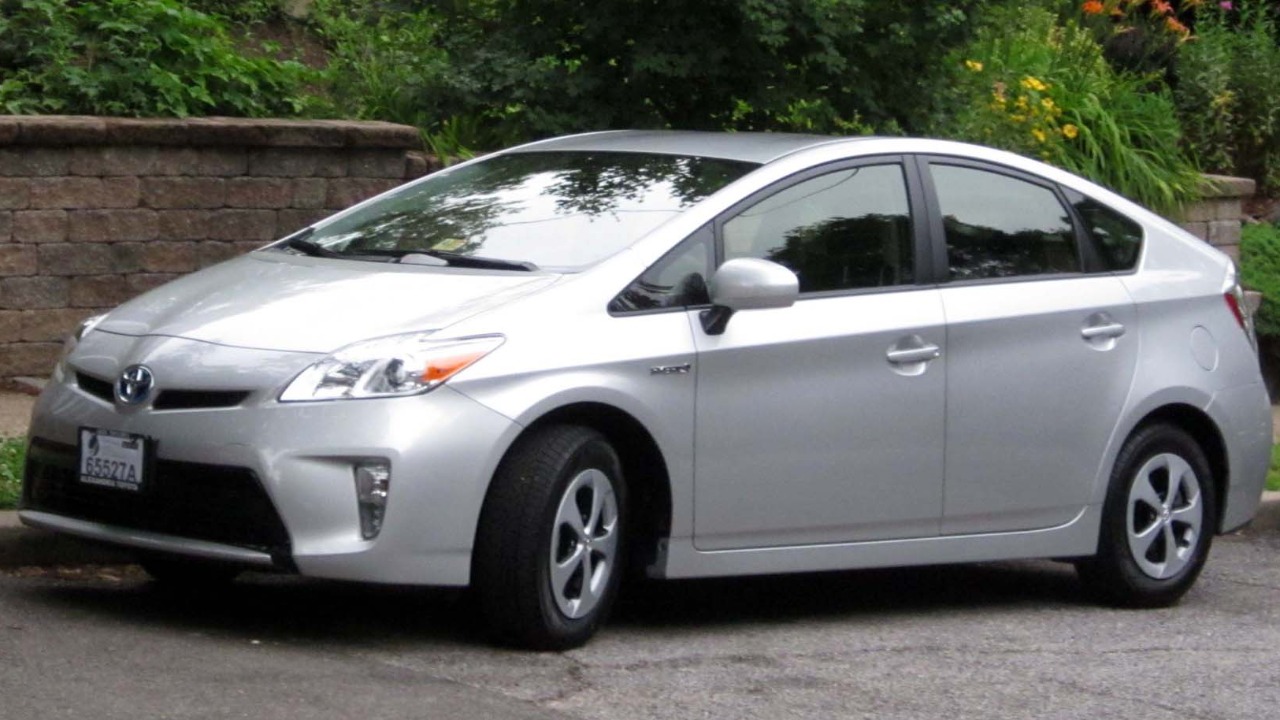
Context matters, and the economic backdrop of the early 2010s did a lot of the quiet work for the Prius. Fuel prices were climbing toward psychologically painful levels, and shoppers were suddenly doing math on every commute. Reports from that period described how demand for the hybrid surged as gas headed toward $5/gallon, with Toyota already having more than 25,000 cars on the way to dealers just to keep up. When a model is that tightly linked to saving money at the pump, every spike in prices functions like free advertising.
At the same time, supply constraints had created a kind of enforced patience that only intensified interest. Even before the quake that disrupted production in Japan, the Prius had been in tight supply, with Rising gas prices already stretching inventories. A separate analysis noted that Prius shortages had first cropped up in 2009 after the all new 2010 model arrived, and that production was only expected to normalize for 2012. In other words, the year the lineup expanded was also the year Toyota could finally build enough cars to meet the appetite it had been stoking for several cycles.
A family of Priuses for almost every driveway
What really changed in 2012 was not just volume, but variety. Instead of a single hatchback, shoppers suddenly found a family of Priuses tailored to different needs, from subcompact commuters to family haulers. One retrospective on hybrid sales pointed out that three new models were added to what was dubbed the Prius Liftback range in 2012, including the Prius C subcompact hatchback. That move effectively turned the badge into a sub brand, something Toyota would lean into heavily.
The strategy was already paying off early in the year. Company figures showed that Toyota had sold 8,399 units of the new Prius V Minivan style people hauler by mid January, a strong showing for a wagon like hybrid that prioritized space. Later, corporate updates framed the broader hybrid lineup as a key driver of recovery, with internal communications literally headlined Toyota Sales Resurgence Gets Help from Popular Hybrid Products, and highlighting how the All new Prius variants were posting robust numbers. Once buyers could choose their size and shape without abandoning the Prius name, the sales curve bent upward.
The Prius C, V and Plug in: targeted hits, not one size fits all
Within that expanded family, each variant played a specific role. The Prius C was the entry point, and it was engineered to feel approachable in both price and footprint. Reviews at the time described how The Prius C was the smallest and cheapest member of the Prius family, yet arguably the most compelling to drive, preserving the core hybrid virtues in a package that some critics said they would actually buy themselves. Another breakdown of buzzy small cars noted that the Prius C, a slightly smaller version of the original, started at under $19,000 and delivered 53 mpg in the city, numbers that made hybrid ownership feel less like a luxury and more like a smart default for first time buyers.
Pricing data reinforced that positioning. One consumer focused report pegged the 2012 Toyota Prius C at $19,705 and up, making it the company’s least expensive hybrid, yet also tying it with its siblings for top tier efficiency. On the other end of the spectrum, the Prius V catered to families who needed cargo space but still cared about fuel economy, with testers noting that the Prius V hit the 40 mpg mark, a figure that for many buyers outweighed complaints about ride quality. Together, these models made it possible for a household to stay within the Prius ecosystem as their needs changed.
The plug in variant added yet another dimension, aimed squarely at commuters and policy savvy drivers. Early coverage described how the 2012 Toyota Prius plug in Hybrid had only been on sale for two months yet was already selling at a pace that suggested it could become a fixture despite its limited electric range. Another analysis went further, arguing that the real secret weapon was not the battery but the ability to wear a coveted HOV lane sticker in crowded parts of California, where But for every other commuter stuck in traffic, a line of Priuses slipping by in the carpool lane became its own form of marketing.
Efficiency, reputation and the long tail of a quiet revolution
Underpinning all of this was a simple, easily communicated promise: the Prius family would save fuel, reliably, without drama. Internal marketing materials highlighted how The Prius C leads the EPA’s compact classification with 50 mpg combined, while The Prius Liftback also delivered 50 mpg combined and the Prius V offered strong efficiency of its own. That kind of clarity made it easy for buyers to justify the hybrid premium, especially when paired with the brand’s reputation for durability. One overseas review captured the sentiment succinctly, noting that Prius was the first hybrid on the block and that The Prius line’s global popularity now delivered its own marketing benefits.
That halo effect has lingered well beyond the 2012 model year. Even as Toyota experiments with new electric offerings, analysts still frame them in relation to the hybrid that came before, noting that a model like the bZ4X will not be an automatic purchase just because buyers once loved a Prius, Rather it must earn its place on the strength of its own engineering. Enthusiasts still debate the legacy of specific variants too, with one video review filmed on a sweltering Aug day in Los Angeles, where the temperature hit 110, arguing that the 2012 Prius C might be the best discontinued hybrid ever. When a decade old compact hatchback still inspires that kind of loyalty, it is a sign that its quiet dominance was not a fluke but the result of a carefully built ecosystem.
Even Toyota’s broader sales story in the early 2010s is hard to separate from this car. Corporate updates credited hybrid products for a Jul surge in hybrid sales, with At the end of each month’s reporting, the Prius line consistently stood out as a volume driver. Later reflections on why hybrid sales eventually cooled have pointed back to 2012 as the high watermark, when the combination of gas prices, incentives and a fresh lineup made the Prius feel like the obvious answer to a lot of different questions. That is why, when I think about cars that quietly reshaped the market, the 2012 Prius family still sits near the top of the list, not because it shouted the loudest, but because it fit so seamlessly into everyday life that its dominance almost felt inevitable.
More from Fast Lane Only: