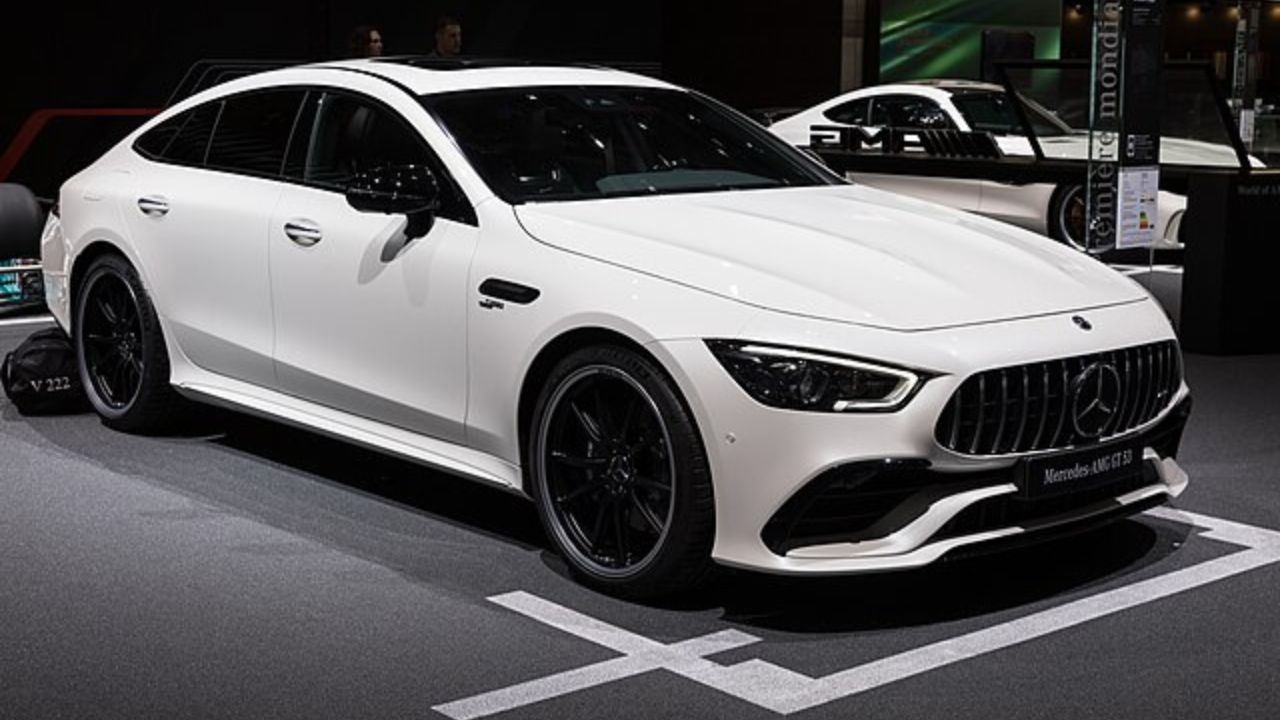
The 2018 Mercedes-AMG GT did not simply arrive as another fast German coupe, it emerged as a car that sounded like it had something to say every time the starter button lit up. From the first cold idle to a flat-out run, its voice became central to how drivers and reviewers understood the car, shaping everything from track impressions to YouTube thumbnails. I want to trace how that soundtrack was engineered, tuned and ultimately celebrated, and why it still resonates in an era when synthetic noise is creeping into the performance world.
The evil whisper that sold the AMG GT R
When I think about how the 2018 Mercedes-AMG GT found its personality, I start with the GT R, the wildest member of the family. On a twisting road in Connecticut, one reviewer described how the 2018 Mercedes-AMG GT R put an “evil voice” in the driver’s head, a way of saying that the car’s character egged you on to brake later, turn in harder and use every inch of tarmac, and that sense of temptation came as much from the exhaust note as from the power figures themselves, as captured in a vivid drive through Connecticut. The GT R was not just about numbers, although the official spec sheet made clear that it was Featuring pioneering technologies and Figures such as 0 to 60 m in 3.5 seconds that were aimed squarely at fast laps on the racetrack. It was about how those numbers were delivered, with a soundtrack that turned acceleration into a kind of narrative, rising from a bassy growl to a serrated howl as the revs climbed.
That same duality, brutal performance wrapped in a theatrical voice, is what made the GT R such a magnet for road tests and video reviews. One clip framed as asking “How BEAST is the 2018 Mercedes AMG GT R” leaned heavily on the way the car sounded under load, the presenter of How BEAST repeatedly prodding the throttle to let the Mercedes AMG GT clear its throat during the Road Test Review, punctuated by the abrupt bark of each upshift. Even when the content itself is no longer available, the framing tells you what mattered: the GT R’s identity was inseparable from the noise it made, to the point that “Thats” the hook that drew viewers in. For a car that already had the hardware to be quick, its voice became the emotional multiplier.
Roadster variations on a common theme

Move from the fixed-roof GT R to the open-top models and the story of sound becomes even more literal, because the 2018 Roadsters let that exhaust note pour straight into the cabin. The standard GT Roadster and the GT C Roadster shared the same basic architecture, but they were tuned to speak with slightly different accents, and the difference between the two versions in the GT and GT C Roadsters was the power output. Through special tuning, the GT C featured more horsepower and 37 lb-ft of torque over its sibling, and that extra shove translated into a deeper, more insistent exhaust note when you leaned on the throttle. From behind the wheel, I would expect that extra torque to feel like a thicker midrange in the soundtrack, the kind of difference you notice most when overtaking or climbing a hill with the top down.
Video from events like Supercar Sunday captured how the 2018 Mercedes-AMG GTC Roadster turned that extra power into aural theater, with one clip showing a Jun gathering where a GTC Roadster made some nice sounds as it accelerated past spectators. Another test drive from Prestige Imports Miami focused explicitly on “Roadster Test Drive Acceleration Sound Exhaust,” the 2018 Mercedes Benz AMG GT Roadster Test Drive Acceleration Sound Exhaust at Prestige Imports Miami turning each tunnel and on-ramp into a makeshift sound stage. Even dealer walkarounds leaned into the noise, with a Lovely Mercedes-AMG GT C clip thanking Mercedes-Benz Baan Twente Welco while the Lovely Mercedes AMG Roadster burbled and cracked on overrun. In each case, the open roof turned the car’s mechanical voice into the main character.
Engineering a signature exhaust
Underneath the drama, the 2018 Mercedes-AMG GT family relied on a carefully calibrated set of hardware and software choices to give the car its signature sound. The core package was a 4.0 liter twin-turbo V8, and the 2018 Mercedes-AMG GT ranges in power from the Roadster 2D with 469 horsepower and a 0 to 60 time of 3.9 seconds to the C Roadster with a quicker 60 sprint of 3.6 seconds, figures that appear in the official Mercedes AMG Roadster specs. Those numbers matter because they hint at how aggressively the engine is breathing, and the more air and fuel you are moving, the richer and more complex the exhaust note tends to be. The 2018 Mercedes-AMG GT delivers the thrilling performance you want from a high-end luxury coupe, and that performance is inseparable from the way the Mercedes AMG engine clears its throat when you ask for full power.
On the outside, AMG used variable exhaust flaps and careful muffler tuning to give the GT a dual personality, quiet enough to slip through a neighborhood at low revs but ready to open up with a sharper, more metallic edge in sportier modes. A video titled “2018 AMG GT (612hp) – pure SOUND (60FPS)” shows a Cold-Start & pure exhaust SOUND of the Cold Start SOUND from a Mercedes AMG GT optimized by a tuner, and even in modified form you can hear the underlying character that AMG baked in. Another clip of a Mercedes AMG GT C Roadster focuses purely on Exhaust noise samples of 2018 Mercedes AMG GT C Roadster, including hard revs and acceleration runs that showcase how the in-gear pull puts out 469 hp (13 hp more than some versions), and the way those Exhaust bursts punctuate each upshift. Even a simple Mercedes-AMG GT C 2018 Test Drive clip, though now unavailable, was framed around the idea that hearing the car at work was as important as seeing it.
From facelift to Pro, the voice gets sharper
The 2018 model year was also when AMG used a mid-cycle refresh to refine the GT’s dynamic and acoustic personality. When Mercedes introduced the GT Roadster, it debuted a new trim level called GT C, and less than a year later the entire range had been refreshed for the 2018 model year with more power and active aero, changes that also affected how the car sliced through the air and how its exhaust reverberated at speed, as detailed in a review that begins, “When Mercedes” and goes on to explain how When Mercedes AMG Roadster updates arrived. What was New was that, although the Mercedes ( Mercedes-Benz ) AMG GT had been all-new just the year before, for 2018 Mercedes ( Mercedes-Benz ) had updated the coupe and the GT and GT C Roadsters, tweaks that sharpened throttle response and, by extension, the immediacy of the sound that followed each pedal input, as laid out in a buyer’s guide that opens with “What New Although the Mercedes” and goes on to describe the AMG changes.
By the time Mercedes-AMG arrived on Wednesday at the 2018 LA Auto Show with the GT R Pro, the company was leaning even harder into the idea that sound was part of the car’s performance toolkit. The updated GT sports car range, which included the GT R Pro, featured aerodynamic and chassis upgrades aimed at slashing lap times, and those changes also meant more load on the tires and brakes, more speed through corners and, inevitably, more time spent with the engine at full song, as highlighted when Mercedes AMG used the Auto Show stage. A later performance review of the closely related 2019 GT C described the M178 V8 as a fearsome engine and noted that, in this application, it also makes a more organic noise, a reminder that AMG ( Mercedes-AMG ) treats each installation of the engine as a chance to fine tune the soundtrack, as explored in a piece that calls out how AMG Mercedes calibrates the sound.
A loud answer in a quieter future
All of this noise sits in a broader context where carmakers are wrestling with how future performance cars should sound at all. Giving character to cars, which used to create plenty of beautiful noise of their own but now require artificial enhancements for electric drivetrains, has become a new design discipline, and one composer described how Giving character to cars with synthetic soundscapes for EVs was not something he found difficult, because he approached it like scoring a film, as explained in a feature on how Giving future EVs a voice. Against that backdrop, the 2018 Mercedes-AMG GT feels like a snapshot of the internal combustion era at full volume, a car that used its mechanical lungs to tell you exactly what it was doing, without filters or synthesized overlays. The contrast is striking: where an EV might have its soundtrack composed in a studio, the GT’s voice came from combustion, turbochargers and carefully tuned pipes.
For me, that is why the 2018 Mercedes-AMG GT still stands out, even as the industry moves toward quieter, more digital performance. It was a car that delivered its speed with a sense of theater, from the first bark of a cold start to the crackle of an upshift, and it invited drivers to participate in that performance simply by choosing when to open the throttle. Whether you experienced it in person, in a Lovely Mercedes showroom, at Supercar Sunday or through a laptop speaker, the GT’s voice was impossible to ignore, and that is how the 2018 Mercedes-AMG GT found its place in the modern performance-car conversation: by speaking up, loudly and clearly, every time the engine turned over.