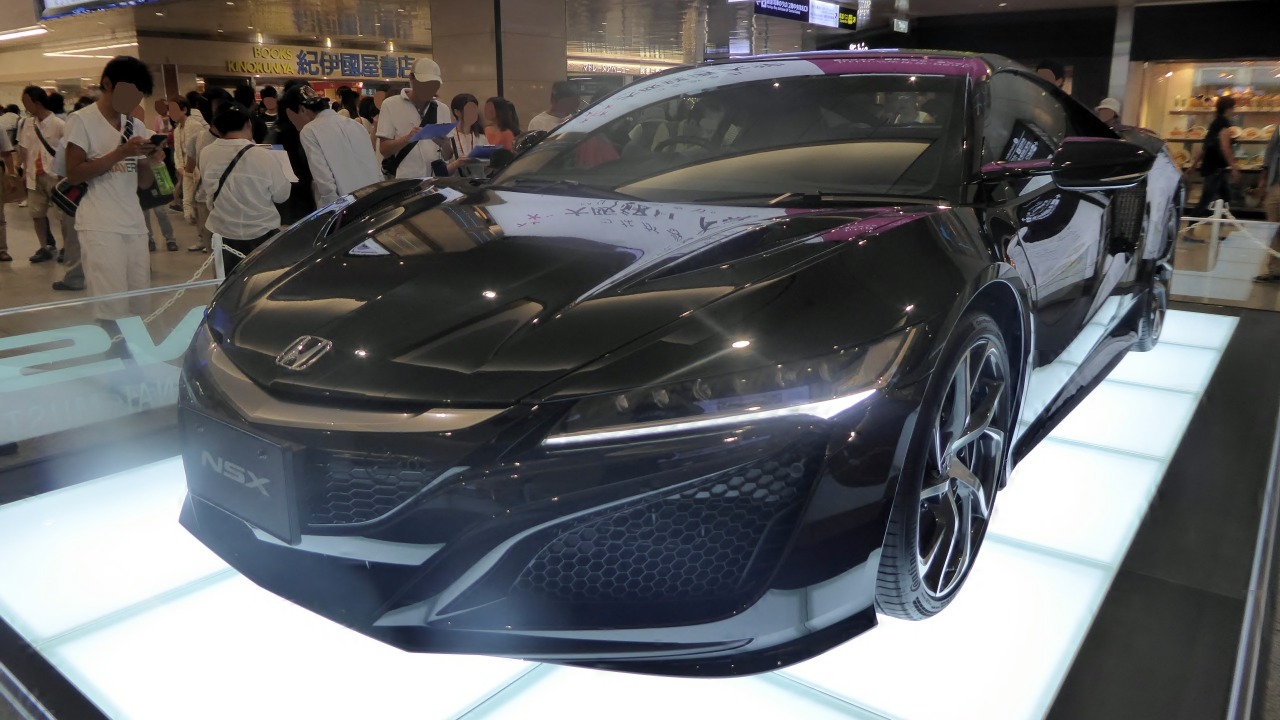
You could argue no modern supercar carried more expectation on its shoulders than the 2016 Honda NSX reboot. The original NSX had become a legend for its mix of everyday usability and race-bred purity, so when Honda finally returned to the badge with a complex hybrid, you were always going to see sparks fly. The result was a car that impressed you on paper and on track, yet left enthusiasts sharply divided over what the NSX name should stand for.
To understand why opinions split so cleanly, you have to look at what you, as a driver, were promised versus what actually arrived. The reboot gave you cutting edge tech, huge performance and real-world comfort, but it also walked away from the simplicity and lightness that made the first NSX such a benchmark. That tension between heritage and reinvention sits at the heart of every argument about this car.
The weight of a legend on its shoulders
If you grew up idolising the first NSX, you probably saw it as the thinking driver’s supercar: light, simple, and easy to live with. Fans still talk about how the original car was praised for being usable every day, a theme that continues in modern clips where The NSX is described as “famous for being a usable, daily drivable supercar.” That reputation set a clear benchmark: you expected the reboot to feel just as intuitive and approachable, only faster.
Instead, you were handed a very different proposition. The 2016 car arrived as a twin-turbo V6 hybrid with multiple electric motors, torque vectoring and drive modes that turned it into a rolling tech lab. Some enthusiasts on first gen NSX threads argue that the second car could never match the purity of the original, with comments pointing out that it “was highly praised and revered” while the follow up is still debated. When you come in expecting a spiritual sequel to a minimalist icon, a heavy, software-driven hybrid is always going to feel like a philosophical swerve.
A high-tech masterpiece, or a car that lost its soul?
From behind the wheel, the rebooted NSX gives you a very different kind of thrill. Reviewers who spent time with The NSX in 2016 stressed that it did not feel artificial, even with all that hardware working in the background. The hybrid system was praised for helping the car do things it simply could not manage with a conventional powertrain, especially when you leaned on its torque vectoring to fire you out of a bend with uncanny precision.
Another early drive described the new NSX as a “Cruise missile,” calling it a true track-day weapon whose hybrid powertrain delivered ballistic acceleration out of corners. If you are the kind of driver who loves feeling technology work with you, that blend of instant electric shove and turbo punch can be intoxicating. Yet the same sophistication that wins over some drivers leaves others cold, because you are no longer the only one doing the work, the computers are constantly shaping the experience.
Identity crisis: supercar, GT, or something in between?
That tension feeds into a deeper question about what the car is trying to be. Commentators have argued that the modern NSX suffers from an identity crisis, pointing out that it is fast and easy to drive but oddly anonymous in a crowded supercar market. You can sense that confusion in the way people talk about it: some see a comfortable, all-weather GT, others a track toy, and the badge itself still carries expectations of a purist’s tool.
Owners and fans echo that split personality in online debates. In one long-running old vs new comparison, drivers who sampled both generations on road and track praised the modern car’s speed but questioned whether it captured the same magic. Another thread bluntly suggests that the second generation “lost what made it special,” arguing that the original was light, simple and easy to maintain while the new NSX is heavier, more complex and far more expensive to run.
On the road, on the track, and in the comments
When you actually drive the car, the story becomes more nuanced. Enthusiasts who have taken both generations back to back on circuit and public roads, as in the detailed Mar comparison, often come away impressed by how approachable the new car is at serious speed. One early owner described it as “handsome and exotic looking in person,” noting that Even a Ferrari driver in a 458 was rubbernecking as they cruised together, which tells you the styling still turns heads in serious company.
Professional testers have also framed the car as a kind of junior hypercar. One back-to-back drive asked, Honda NSX really a cut price rival to the Porsche 918 Spyder, pitting it directly against a Porsche hybrid that carries the numbers 918 and 91 in its name. That kind of comparison flatters the Honda’s engineering, but it also nudges it into a rarefied space where buyers expect drama and theatre as much as lap times, and that is where some critics feel the NSX’s muted soundtrack and calm demeanour hold it back.
Living with it: usability, tech and the daily grind
Where the reboot really leans into its heritage is in day to day use. Owners and reviewers repeatedly highlight how easy it is to drive, with one video celebrating how NSX examples rack up serious mileage with a single owner. Hybrid torque makes city driving effortless, visibility is better than in many rivals, and the cabin is comfortable enough that you can genuinely commute in it without feeling like you are sacrificing your spine for style.
That does not mean everything about living with it is perfect. A detailed The Bad list for the 2017 model points to Slim availability of safety tech, a Hybrid powertrain that is not especially pleasing at wide open throttle, and Infotain quirks that make basic tasks more fiddly than they should be. If you are cross shopping with a 911 or an R8, as one Comments Section user suggested, those details matter, because German rivals tend to nail the everyday ergonomics that make ownership painless.
More from Fast Lane Only