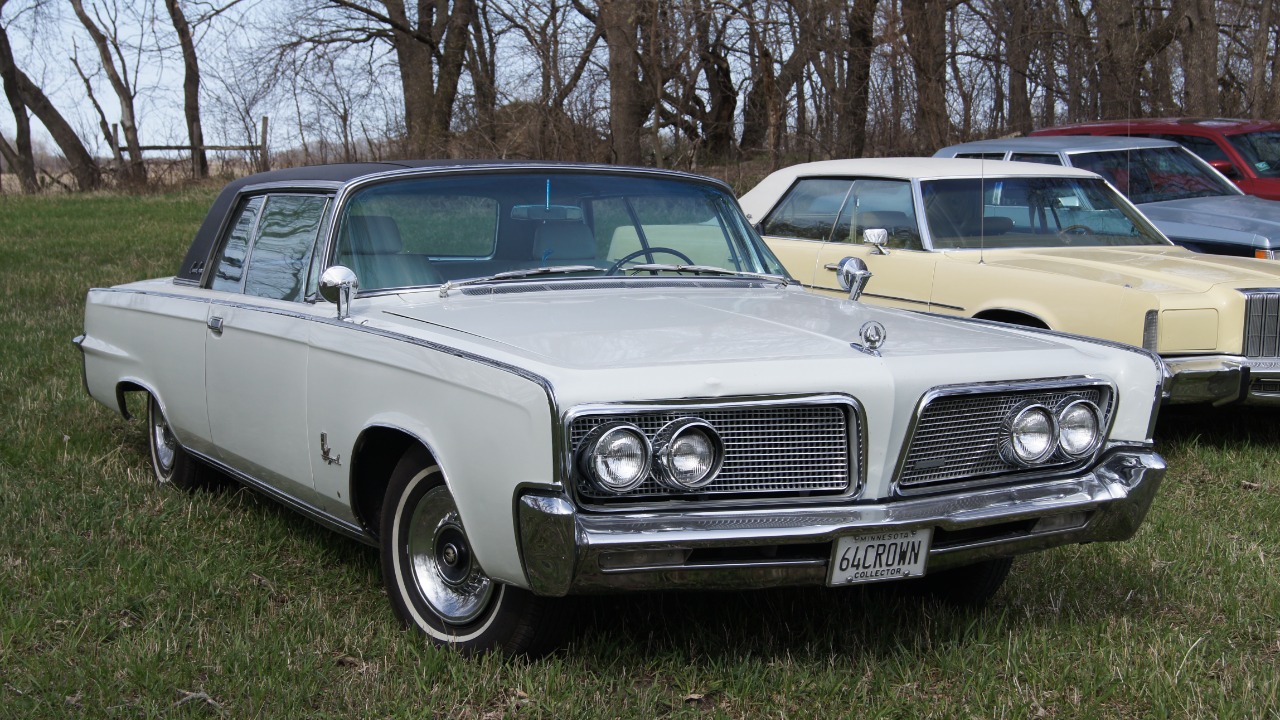
The Chrysler Imperial Crown Coupe occupies a rare space in American car culture, a luxury flagship that still commands attention long after its production ended. Its blend of audacious styling, meticulous craftsmanship, and quiet engineering confidence means that even in a crowded cars-and-coffee lot, the big two-door still looks like it owns the pavement. I see that enduring presence as the product of a clear mission: to be a Statement of American Luxury at a time when Chrysler was determined to prove it could stand shoulder to shoulder with the most prestigious names on the road.
The roots of a standalone American luxury icon
To understand why the Imperial Crown Coupe still stops people in their tracks, I start with its origin story. Chrysler introduced The Imperial name in 1926 as its top-tier offering, positioning it from the beginning as a Statement of American Luxury that sat above the rest of the lineup. Later reporting notes that the Imperial name first appeared in 1926 as Chrysler’s top-tier offering and that this heritage was still being examined as recently as Aug 17, 2025, which underscores how long the car has lingered in the enthusiast imagination and how deliberately Chrysler framed it as a flagship from the start, rather than just a nicer trim level on a family sedan, a point reinforced in detailed histories of The Imperial.
That positioning became even more distinctive when Imperial was treated as a separate marque, not just a Chrysler with extra chrome. Enthusiast accounts from Jan 16, 2018, stress that, Unlike Lincoln and Cadillac, which were divisions within Ford and GM respectively, Imperial operated as a distinct mar identity, a subtle but important distinction that signaled to buyers that they were stepping into something more exclusive. When I look at the Crown Coupe through that lens, its long hood, formal roofline, and lavish interior read less like options on a mass-market car and more like the calling card of a brand that wanted to stand apart from Ford and GM, a view echoed in period reflections on how Imperial was carefully refined over the decades.
Design drama that still looks modern in motion
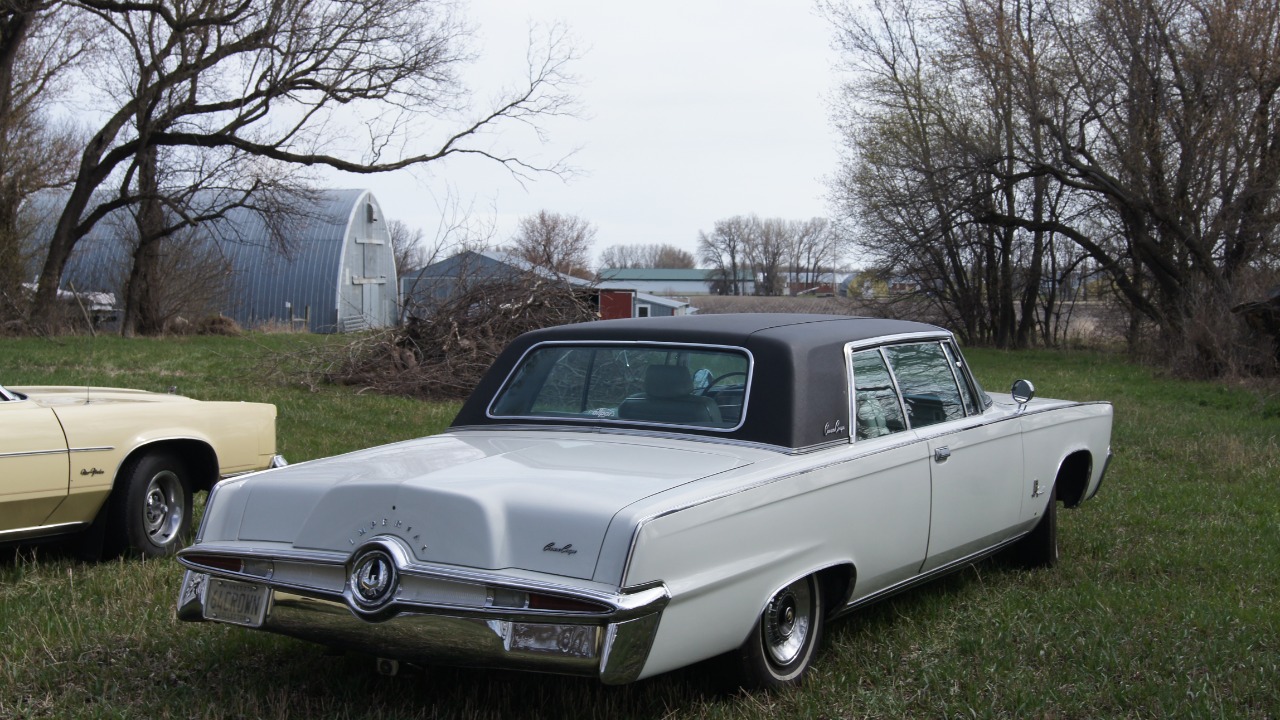
The Imperial Crown Coupe’s styling is the first reason it still draws a crowd, even among people who do not know its history. Earlier this year, detailed commentary on the 1966 Imperial highlighted how its Design featured a long, elegant body with dramatic lines, a massive front grille, and distinctive rear styling that made the car instantly recognizable from a distance. When I stand next to a Crown Coupe from that era, the sheer scale of the sheet metal, the knife-edge fenders, and the formal roofline create a presence that feels closer to architecture than transportation, a quality that recent observers of the 1966 Imperial say still appeals to people who appreciate classic American luxury.
That drama was not limited to a single model year. Coverage of the 1964 Imperial Crown Coupe by Chrysler describes how The Imperial’s design was striking, with bold tailfins, free-standing headlights, and a prominent grille that reflected a confident vision of American style. Those free-standing lamps and sculpted fins give the car a sense of motion even when it is parked, and they help explain why younger enthusiasts, raised on crossovers and minimalist EVs, still pull out their phones when a 1964 Crown Coupe glides by. The fact that a recent feature framed the 1964 Imperial Crown Coupe by Chrysler as a pinnacle of American luxury motoring shows how that visual language continues to resonate, with the The Imperial design cues still treated as reference points rather than relics.
Luxury engineering that earned real-world respect
Beyond the styling, the Imperial Crown Coupe’s reputation for toughness and refinement gives it a different kind of curb appeal. Enthusiast reporting from Aug 28, 2020, on a Cohort Sighting of a 1965 Imperial Crown Coupe notes that They drove their age, sure, but they were famously sturdy enough to be banned from demo derbies, a detail that has become part of Imperial lore. When a luxury coupe is so structurally robust that demolition derby organizers do not want it in the ring, that toughness becomes part of its mystique, and I find that this story often surfaces in conversations around the car, reinforcing the idea that the Imperial was engineered to a standard, not a price point, as highlighted in that 1965 Imperial Crown Coupe profile.
That engineering focus extended to the way Imperial positioned its top trims. A Nov 9, 2022, discussion of the 1961 Imperial Crown Convertible Chrysler points out that Chrysler’s range-topping Imperial line launched in 1926 and was marketed as a standalone luxury brand, with the Imperial Crown Convertible Chrysler presented as a halo product that showcased the best materials and technology Chrysler could offer. When I look at the Crown Coupe in that context, its heavy doors, thick glass, and overbuilt suspension feel less like excess and more like the physical expression of a brand that wanted to compete with the best in the world, a narrative that continues to shape how collectors talk about the Imperial as Chrysler’s flagship luxury brand.
A flagship that stood apart from Detroit’s usual playbook
What keeps the Imperial Crown Coupe relevant today is not just that it was luxurious, but that it pursued luxury on its own terms. Historical analysis of the Imperial nameplate emphasizes that Chrysler treated it as a Statement of American Luxury rather than a simple trim hierarchy, and that the Imperial name first appeared in 1926 as Chrysler’s top-tier offering, a fact that still anchors modern discussions of the brand’s legacy. When I compare that approach to the way Ford and GM structured their lineups, the Imperial strategy looks almost contrarian, and that contrarian streak is part of what makes the Crown Coupe so compelling to modern enthusiasts who are tired of badge engineering, a point that surfaces repeatedly in retrospectives on Statement of American Luxury branding.
Enthusiast commentary from Jan 16, 2018, reinforces this by stressing that, Unlike Lincoln and Cadillac, which were divisions within Ford and GM respectively, Imperial operated as a distinct mar identity, which gave it a different aura in the showroom and on the street. I find that this separation still matters to collectors and casual observers alike, because it helps explain why the Crown Coupe feels less like a dressed-up Chrysler and more like a peer to the era’s most prestigious nameplates, a perception that continues to shape how people talk about Ford and GM rivals when they compare them to Imperial.
Why the Crown Coupe still captivates new generations
All of this history would not matter if the Imperial Crown Coupe did not still connect with people who were not alive when it was new. Recent coverage of the 1966 Imperial notes that its Design, with a long, elegant body and dramatic lines, continues to attract enthusiasts who appreciate classic American luxury, and I see that play out whenever a Crown Coupe appears at a modern event. Younger fans, raised on digital dashboards and driver-assistance systems, are drawn to the analog theater of the car, from the free-standing headlights to the sweeping dashboard, and that reaction validates the idea that good design and confident engineering can outlast changing tastes, a point underscored in detailed looks at the 1966 Imperial.
At the same time, the Crown Coupe’s reputation for durability, captured in accounts that They drove their age, sure, but they were famously sturdy enough to be banned from demo derbies, gives it a story that owners are eager to share with anyone who stops to look. I find that this blend of visual drama, engineering credibility, and a distinct brand identity, rooted in the fact that Chrysler’s range-topping Imperial line launched in 1926 and was marketed as a standalone luxury brand, is what keeps the car relevant in a world of SUVs and EVs. The Imperial Crown Coupe does not just turn heads because it is big or rare; it does so because it represents a clear, unapologetic vision of what American luxury could be, a vision that still feels bold every time one of these cars rolls into view, as reflected in ongoing conversations about the They who continue to preserve and celebrate it.
More from Fast Lane Only