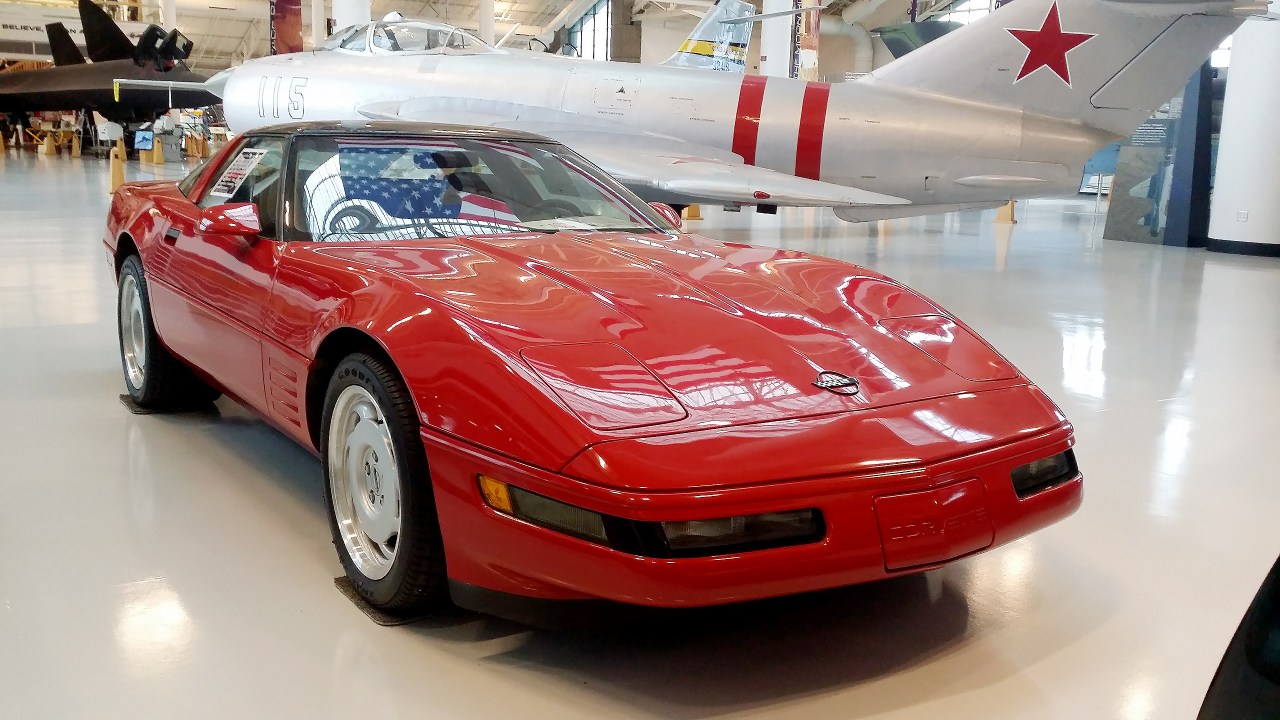
The story of how the Corvette ZR-1’s LT5 V8 almost ended up behind the seats of a Lotus Esprit is really a tale of two companies trying to reinvent themselves at the same time. General Motors wanted a world class flagship Corvette, and Lotus was searching for a modern, reliable V8 to keep its aging mid engine supercar relevant. For a brief window, those goals aligned so closely that the Esprit came surprisingly close to sharing its heart with the Corvette ZR-1.
Instead, the partnership reshaped both brands in quieter ways, influencing how the Esprit’s eventual V8 was engineered and how Chevrolet thought about durability, emissions and everyday usability in a 180 mph car. The LT5 never reached a Lotus badge, but the near miss explains why the Esprit V8 that finally arrived felt so different from the fragile prototypes that came before it.
From Etna to Esprit: Lotus’s long V8 obsession
Lotus did not suddenly wake up in the 1990s wanting eight cylinders in the Esprit. The company had been wrestling with the idea since the mid 1980s, when it revealed the Giorgetto Giugiaro designed Etna concept at the Birmingham, England Motor Show with a new in house V8 as a technical showcase. That car previewed the packaging and performance Lotus hoped to bring to a future road model, and it set the stage for the Esprit to move beyond its long serving four cylinder engines.
By the time the Esprit had been on sale for more than two decades, internal and external pressure to add a V8 had become impossible to ignore. Reporting on Why Lotus took 21 years to fit the Esprit with a V8 describes how engineers struggled with cooling, weight distribution and transmission strength, all while trying to preserve the car’s trademark agility. At the British International Motor Show in the mid 1980s, the company was already publicly acknowledging that a V8 Esprit was a goal, but the technical and financial hurdles kept pushing that goal further into the future.
GM buys Lotus and commissions the LT5
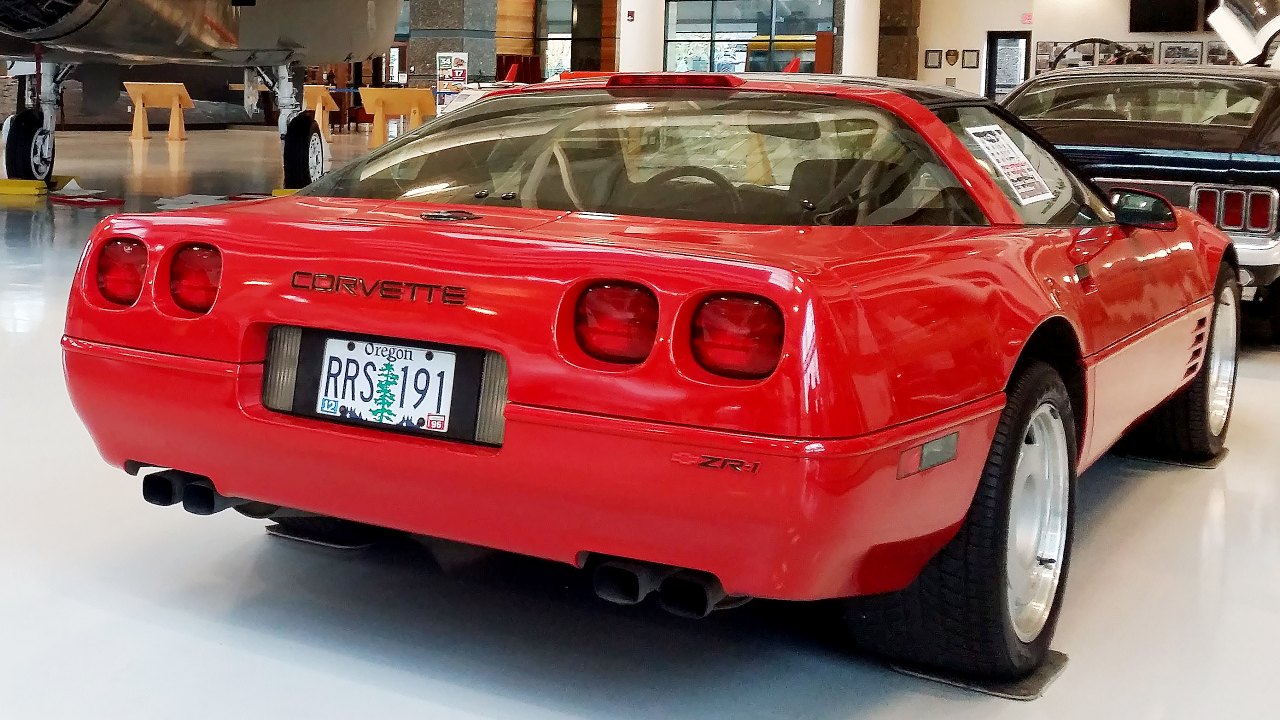
The turning point came when General Motors acquired Lotus and immediately tapped its new subsidiary to help create a halo Corvette. GM wanted a powerplant that would move the C4 Corvette into genuine supercar territory without sacrificing drivability, and Lotus was tasked with designing the LT5, a sophisticated all aluminum V8 that would power the Corvette ZR-1. The Boat Company That Built The Engine For The Corvette ZR project shows how Lotus engineered the LT5 while Mercruiser handled production, blending race bred thinking with mass production discipline.
Technical details from the National Corvette Museum underline how ambitious that engine was for its time. The LT5 would have the same 350 cubic inch displacement as the L98, but it produced 375 horsepower compared to the L98, a leap that came from multi valve heads, advanced fuel injection and careful attention to breathing and durability. Internal GM advocates like Reuss favored this approach because it delivered exotic car performance with the kind of reliability and emissions compliance the company needed for a flagship model.
Why the LT5 made sense for a mid engine Lotus
Once Lotus had designed a compact, high revving 350 cubic inch V8 that produced 375 horsepower, it was natural for engineers in Hethel to look at their own mid engine platform and wonder if the same powerplant could solve their V8 dilemma. The Esprit’s chassis was already proven at high speeds, and the LT5’s relatively low weight and smooth power delivery promised to transform the car without overwhelming its balance. Internal discussions described in coverage of the Lotus Esprit almost getting the Corvette ZR-1’s LT5 V8 make clear that pairing the engine Lotus designed with the car it built was more than a passing thought.
From a business perspective, the idea also had logic. Sharing the LT5 across Corvette and Esprit could have spread development costs and given Lotus a ready made, emissions certified engine at a time when creating its own clean sheet V8 was a major financial risk. The Jalopnik reporting on how Lotus engineered the LT5 for GM notes that the company already had deep familiarity with the engine’s strengths and limitations, which would have shortened the path to production. For a small manufacturer like Lotus, that kind of shortcut can be the difference between launching a new powertrain and shelving it indefinitely.
Why the LT5 Esprit never happened
Despite the technical fit, the LT5 powered Esprit remained a proposal rather than a production reality. Accounts of the Lotus Esprit almost getting the Corvette ZR-1’s LT5 V8 point to a mix of corporate politics and shifting ownership as key reasons. Regardless of the reason Lotus never got to pair the engine it designed with the car it built, GM sold the company before the idea could be fully developed, and the new ownership had different priorities for how Lotus should spend its limited engineering budget.
There were also practical obstacles. The LT5 had been optimized for a front engine Corvette with specific cooling and packaging assumptions, and adapting it to the Esprit’s tight mid engine bay would have required significant reengineering of intake, exhaust and ancillary systems. Reports on Why Lotus took 21 years to fit the Esprit with a V8 describe how even Lotus’s own Type 918 V8 demanded extensive work to fit around the existing backbone chassis and transaxle. Trying to shoehorn an engine built to GM’s standards and supplier network into that environment would have added cost and complexity that a low volume Esprit might not have been able to absorb.
How LT5 lessons shaped the Esprit V8 that finally arrived
Even without the LT5 itself, the Esprit that finally gained eight cylinders carried clear fingerprints from the Corvette program. Industry insights into the Lotus Esprit V8 explain that Lotus drew directly on its experience with Chevrolet’s intense engine durability and emissions testing when it created its own twin turbocharged 3.5 liter V8. For example, to match the LT5’s durability, Lotus chose to run cast iron cylinder liners in their aluminum block instead of relying on more exotic coatings, a conservative choice that reflected lessons learned from the Corvette ZR-1’s development.
The resulting Type 918 V8, which powered the production Esprit V8, was not a one off homologation special but a series production engine that sat at the heart of the model for years. Coverage of 10 super rare Lotus cars notes that Lotus Cars used the twin turbo 3.5L Type 918 V8 in some of its most focused variants, underlining how central that engine became to the brand’s late 1990s identity. The fact that Lotus could field a powerful, relatively compact V8 of its own, while still meeting the durability benchmarks it had seen inside Chevrolet, shows how the LT5 project paid dividends even without a direct engine swap.
The Esprit V8’s mixed legacy and the LT5 “what if”
Real world experience with the Esprit V8 has been more complicated than the engineering story suggests. A video spotlight on the Lotus Espri V8 from Classic Car TV notes that the Aspree has always been a dream car for enthusiasts, but it also acknowledges that reliability concerns and maintenance costs have colored its reputation. Another report on a Lotus Elise project recalls that the Esprit V8 proved to be too unreliable after initial tests in a racing context, and the team had to come up with an alternative, highlighting how the Type 918 could struggle when pushed beyond its comfort zone.
Those mixed results sharpen the counterfactual question of what might have happened if the Esprit had adopted the LT5 instead. The LT5’s track record in the Corvette ZR-1, where it delivered supercar performance with everyday usability, suggests that a Lotus tuned version could have given the Esprit a more robust and perhaps more refined character. At the same time, the cost and complexity of sourcing an American built 350 cubic inch V8 for a low volume British supercar might have made the car even more expensive and niche than it already was, limiting its impact despite the technical appeal.
Why the near miss still matters
Looking back, the LT5 Esprit that never was helps explain how intertwined American and British performance engineering became in that era. Reports on how Lotus helped Chevrolet in developing the world beating Corvette show that the C4 ZR1’s LT5 engine produced significantly more power than the standard L98 and pushed GM to adopt new thinking about materials, testing and calibration. Those same methods flowed back to Hethel, where Lotus applied them to its own V8 program and, later, to other projects that benefited from the company’s sharpened understanding of durability and emissions.
The story also underscores how fragile ambitious engineering plans can be when ownership and strategy change. Dec accounts of the Lotus Esprit almost getting the Corvette ZR-1’s LT5 V8 make it clear that timing was everything: by the time Lotus was ready to act on the idea, GM was already preparing to sell, and the window closed. What remains is a fascinating “what if” that connects Giorgetto Giugiaro’s Etna concept, the Birmingham, England show stand, the Corvette ZR-1’s 350 cubic inch LT5, and the eventual Type 918 powered Esprit V8 into a single, unlikely narrative about how close two very different supercars came to sharing the same beating heart.
More from Fast Lane Only: