
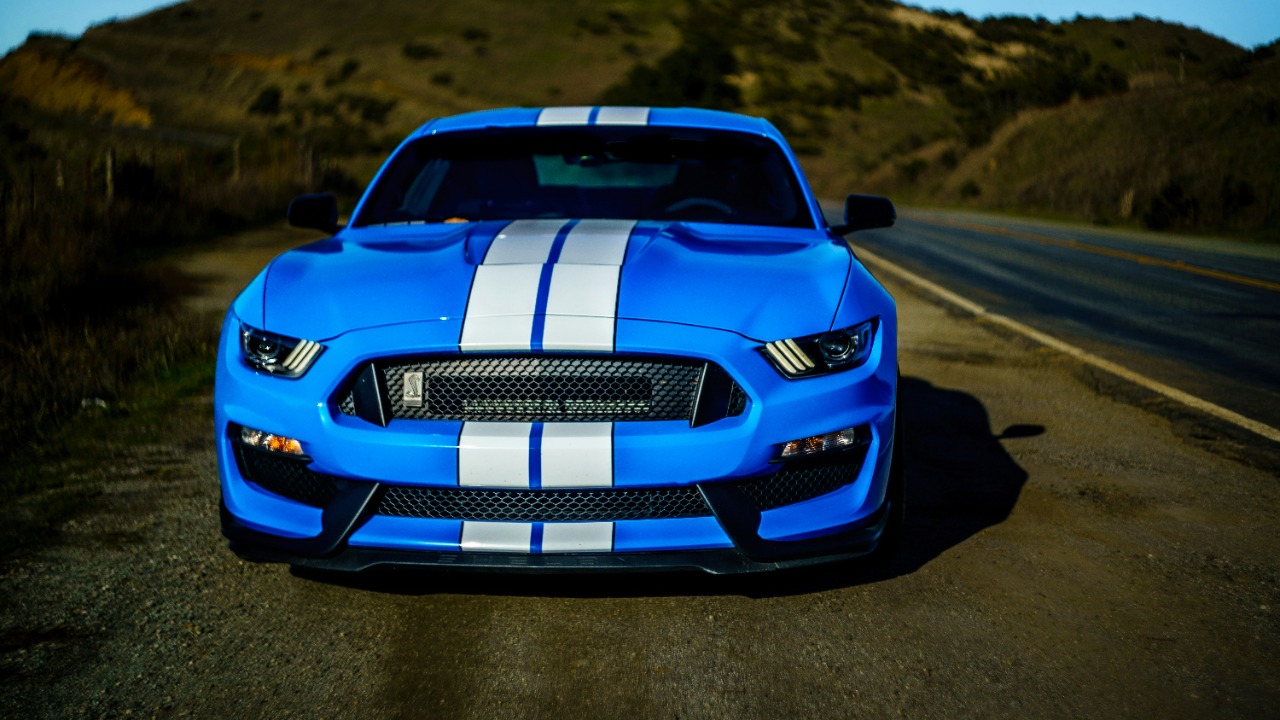
The Ford Mustang Shelby GT350 did something rare in modern performance cars: it turned a deeply technical engine experiment into an emotional experience that drivers still talk about in almost mystical terms. By pairing a high-strung V8 with a chassis tuned for feel rather than spec-sheet dominance, it made the idea of “Voodoo magic” on the street feel tangible. I see the GT350 as the moment the Mustang stopped chasing raw numbers and instead proved that an American muscle car could deliver the kind of precision and character usually associated with European exotics.
From Carroll Shelby’s original GT350 to a new kind of Mustang
The GT350 name carries a weight that starts long before the Voodoo engine ever fired. Introduced in the 1960s as Carroll Shelby’s race ready Mustang variant, the original GT350 was built to turn a humble pony car into a track weapon that could embarrass purpose-built sports cars. That heritage matters, because it set the expectation that any modern GT350 had to be more than a styling package or a louder exhaust; it had to feel like a car engineered first for the circuit and only second for the boulevard.
That lineage also explains why the modern car could not simply be another high-output Mustang. When Ford revived the Shelby GT350 badge for the S550 generation, it was stepping into a story that already included Carroll Shelby, the original Mustang, and decades of track lore. The new car had to honor that past while moving the platform into territory where it could stand beside contemporary sports cars, not just other muscle machines. The decision to create a bespoke engine and a deeply reworked chassis was a direct response to that pressure, and it is the reason the GT350 feels like a clean break from the rest of the Mustang family rather than just a higher trim.
The Voodoo V8: numbers that read like a spell
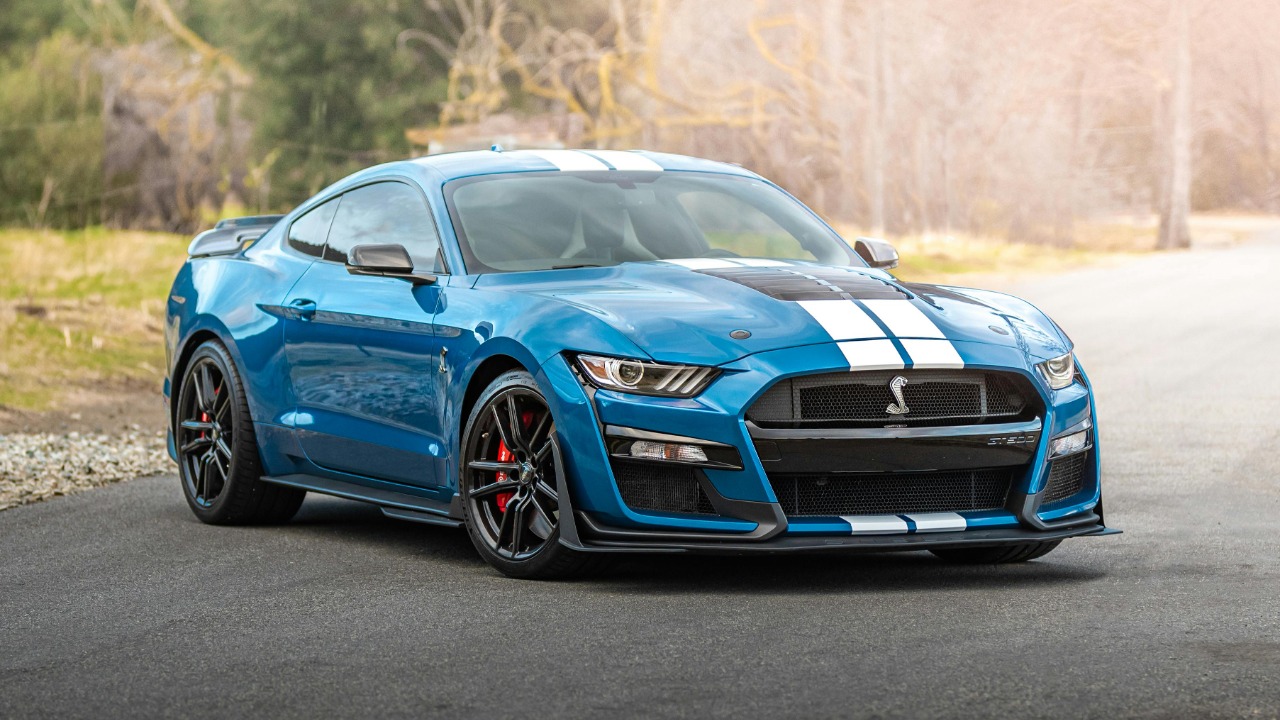
The centerpiece of the GT350’s sorcery is its engine, a powerplant that looks conventional on paper until you dig into the details. The Ford Voodoo V8 is a 5.2-liter, naturally aspirated, all-aluminum unit that abandons the traditional cross-plane crankshaft used in most American V8s in favor of a flat-plane design more commonly associated with European supercars. That layout lets the engine rev harder and breathe more efficiently, and it is why The Ford Voodoo V8 is described as making full and efficient use of its capacity to deliver the kind of specific output and responsiveness that muscle cars have lacked over the years, a claim that underpins its reputation as The Ford Voodoo of modern V8s.
The raw figures reinforce that impression. With a factory-set redline of 8,250 rpm, the 5.2-liter Voodoo V8 stands as the highest-revving Ford V8 engine ever put into production, a statistic that instantly separates the GT350 from every other Mustang that came before it. That willingness to spin, combined with the flat-plane crank’s unique firing order, gives the car a razor-edged throttle response and a soundtrack that is closer to a track-bred exotic than a traditional Detroit bruiser, and it is why the Voodoo has become the defining feature of the GT350 and GT350R Voodoo Ford muscle cars.
On the road and track, the GT350 feels genuinely enchanted
Specifications only tell part of the story; the real magic of the GT350 emerges when the Voodoo engine is working against a road or a circuit. Behind the wheel, the car’s character is defined by how eagerly that 5.2-liter V8 piles on revs and how precisely the chassis translates steering and pedal inputs into motion. One early drive review captured that sensation bluntly, describing the car as “completely under its spell” and calling out the way the 5.2 liter naturally aspirated, all-aluminum V8 engine turns every straight into a runway and every corner exit into a crescendo, a reaction that helps explain why the GT350 quickly earned a reputation as Sep magic rather than just another fast Mustang.
That sense of enchantment is not just about the engine note or the redline; it is about how the car’s systems work together. The steering is tuned to be communicative without feeling nervous, the brakes are sized and cooled for repeated hard use, and the suspension is calibrated to keep the car flat and composed while still allowing enough compliance for real-world roads. The result is a Mustang that invites you to push harder, lap after lap, without the sense that you are fighting the car’s weight or layout. In practice, that cohesion is what turns the Voodoo’s raw potential into something that feels almost supernatural when you are clipping apexes or threading a favorite back road.
Voodoo versus boost: why owners hesitate to add more power
The GT350’s engine is so distinctive that it has created a dilemma for some owners who are tempted by forced induction. A performance-focused car like the Ford Mustang Shelby GT350 puts its powertrain, specifically the engine, at the center of its identity, which is why the idea of bolting on a supercharger or turbo kit can feel like a betrayal as much as an upgrade. Comparisons with the more potent Ford Mustang Shelby GT500 highlight that tension, because the GT500’s supercharged approach delivers bigger numbers while the GT350’s naturally aspirated Voodoo is prized for its response and character, a contrast that frames the ongoing debate over Ford Mustang Shelby priorities.
Owners who have lived with the car for tens of thousands of miles often describe that conflict in personal terms. One long-term driver, Jan, framed the experience as “Brilliance and Burden,” explaining that the GT350’s balance is so carefully tuned that adding a centrifugal supercharger, even with low boost, risks upsetting what makes the car special. That perspective is why some enthusiasts talk about the need to “Preserve the Balance” when modifying a Shelby Mustang, and it reflects a broader recognition that the Voodoo engine’s magic is not just about horsepower but about how it delivers that power across the rev range and through the chassis, a dynamic that keeps many owners of a Mustang Jan on the fence about major power adders.
Designed for the circuit, tuned for the street
From the outset, the modern GT350 was engineered with the track as its primary stage. The car was Designed to rule the road course and cast a spell on the street, a brief that led to a finely tuned suspension, aggressive aerodynamics, and a powertrain calibrated for sustained high-rpm use rather than short bursts of straight-line acceleration. That focus is evident in the way the 2015–2020 Shelby GT350 uses its Voodoo engine and chassis tuning to deliver lap times and driver confidence that rival far more expensive machinery, even before some owners turn to aftermarket setups that can push the platform toward 1,600 horsepower and beyond.
Yet the GT350 was never meant to be a track-only toy. Its suspension, including advanced Magnetorheological dampers (MagneRide), allows it to adapt to changing road conditions and driving styles, softening for daily use and firming up when the pace increases. That duality is part of why the S550 GT350 is described as Still A Unique Beast Worth The Coin, a car that can commute comfortably during the week and then feel completely at home on a circuit over the weekend. The combination of adaptive hardware, carefully tuned geometry, and the Voodoo engine’s flexibility makes the GT350 feel like a machine that was engineered to deliver its best in real-world conditions, not just on a spec sheet, a trait that helps explain why it is already seen as a Unique Beast Worth The Coin among modern performance cars.
Why the Voodoo era already feels collectible
The Voodoo engine lives in the now-discontinued Ford Mustang Shelby GT350, and that scarcity is already reshaping how enthusiasts view the car. Not only does the Voodoo not slip into any other Ford model, it also stands apart mechanically from the brand’s other V8s thanks to its flat-plane crank design and high-revving character. That uniqueness, combined with the fact that the GT350 and GT350R were built for a limited window, has turned the car into a modern classic almost overnight, with collectors zeroing in on the flat-plane crank Voodoo V8 engine as the heart of what makes the The Voodoo Ford Mustang Shelby Not Voodoo so special.
That early collector interest is not just about production numbers; it is about the sense that the GT350 represents a particular moment in performance-car history. Emissions and noise regulations are tightening, electrification is accelerating, and naturally aspirated, high-revving engines are becoming rarer every year. In that context, a car that pairs a 5.2-liter flat-plane V8 with a manual transmission and a chassis tuned for driver engagement feels like a snapshot of a disappearing era. I see the GT350’s “Voodoo magic” as the convergence of all those factors: a historically loaded nameplate, a technically daring engine, and a driving experience that convinces even jaded enthusiasts that some spells are worth preserving long after production ends.



Leave a Reply