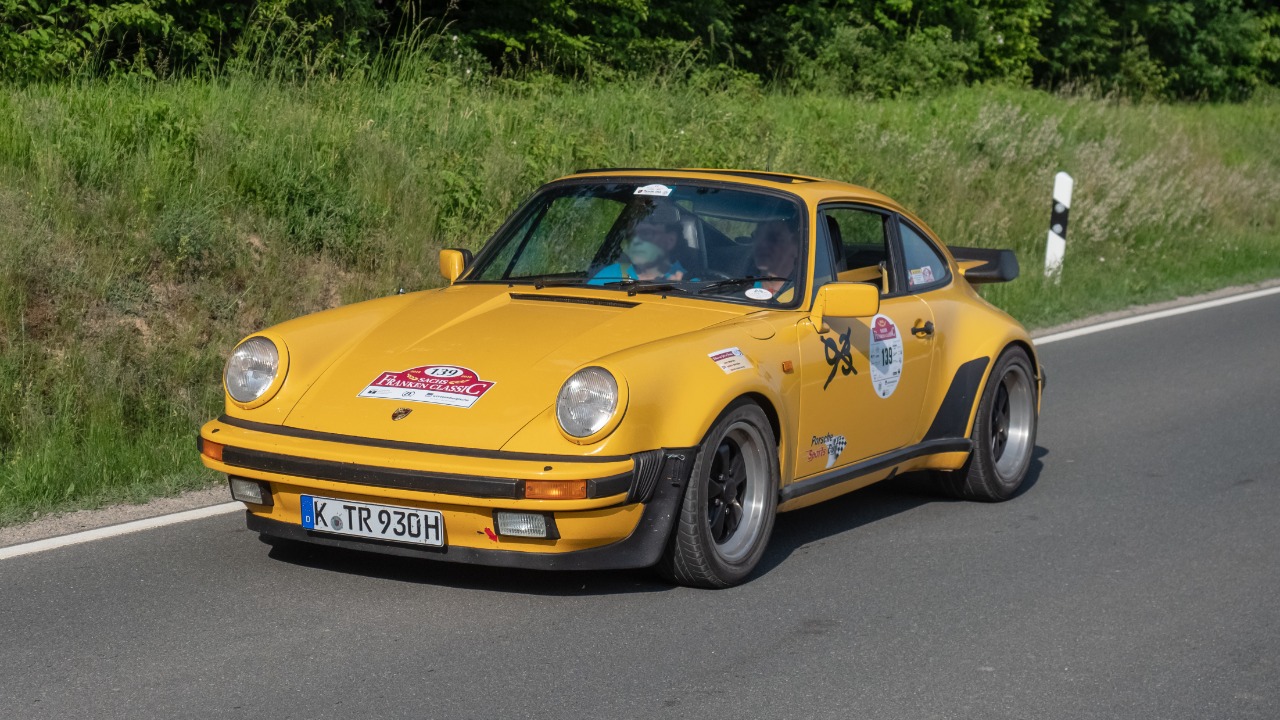
The Porsche 930 Turbo has never been remembered as a friendly car. It is revered because it fused supercar speed with a chassis that punished mistakes, turning every fast drive into a calculation of risk as much as reward. To understand why it lived so close to fear, I need to look at how its engineering, its era and its reputation combined to create one of the most intimidating 911s ever sold.
On paper, the 930 was simply the turbocharged flagship of the 911 range. In practice, it became a cultural shorthand for danger, a car that could thrill a skilled driver and terrify anyone who treated it like a modern, forgiving performance machine. Its legend was built not just on lap times, but on the number of people who discovered, too late, what happened when its boost arrived at exactly the wrong moment.
The brutal physics behind the 930’s reputation
The starting point for the 930’s fear factor is its layout. The car carried its engine behind the rear axle, and that rearward weight bias combined with a short wheelbase to create a chassis that was inherently eager to rotate. Contemporary accounts note that the 930 proved very fast but also very demanding to drive, and that this configuration made it prone to oversteer if a driver lifted off the throttle mid corner or applied power abruptly. In a naturally aspirated 911, that trait was already something to respect; in a turbocharged version with far more power, it became something to fear.
Turbocharging magnified those physics. Early single-turbo systems were not linear, and the 930’s engine was notorious for a long pause followed by a sudden, aggressive surge of power. Owners and enthusiasts still describe how the delayed turbo lag and rapid onset of boost could snap the rear tires loose with little warning, especially if the driver was not perfectly straight when the power hit. One discussion of the car’s nickname points out that this abrupt delivery would cause people to break a rear tire loose and wreck, a pattern that helped cement the 930’s status as a car that punished overconfidence rather than flattering it, particularly when that boost arrived mid bend in a car already predisposed to rotate.
From engineering challenge to “Widowmaker” myth
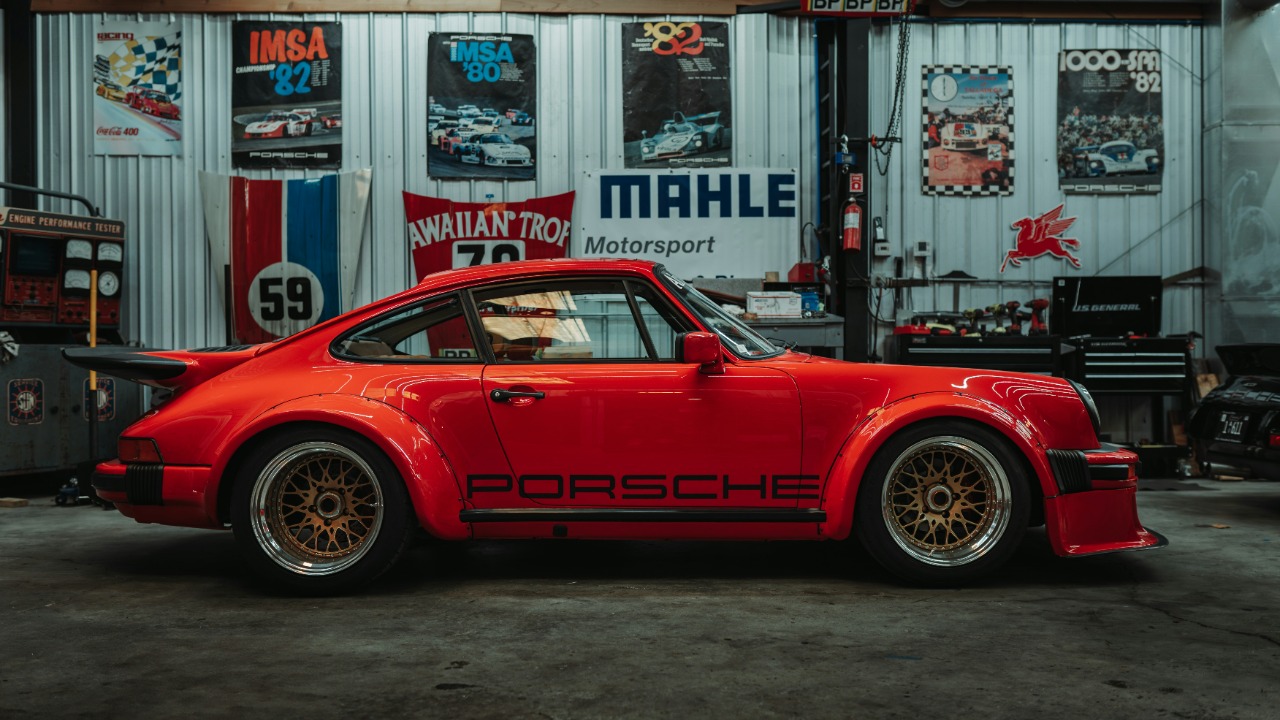
That unforgiving mix of layout and power quickly turned into a story that spread far beyond spec sheets. The 930 Turbo’s ominous nickname did not come from marketing departments, it came from the way the car behaved when inexperienced owners treated it like a status symbol instead of a machine that demanded respect. Reporting on the model’s legacy notes that the 930 Porsche 911 Turbo earned its ominous nickname because the car was prone to oversteer, and because that trait combined with its power to create crashes that were often severe. The phrase “Turbo The Widowmaker” captured the idea that this was not just a fast 911, it was a car that could end lives when its limits were misjudged.
Firsthand recollections reinforce how that myth grew. One writer who looked back on the car’s era framed it bluntly, explaining that the label was not a joke but a reflection of how the Why the Porsche 930 Turbo was Called The Widowmaker in the 1970s and 1980s. That perspective underlines how the car’s danger was understood in period, not just in hindsight. It was a machine that demanded skill, patience and mechanical sympathy, and when those were missing, the consequences were serious enough to give the car a reputation that outlived its production run.
How drivers learned fear the hard way
The 930’s fearsome image was not built in isolation; it was forged on real roads, in the hands of real owners. Accounts from people who drove and raced these cars describe how the majority of the weight being in the rear made it feel secure until the moment it did not, and how once the back stepped out, recovery required quick, precise inputs. One detailed look at the model’s history notes that inexperienced drivers would cut through the learning curve by simply trusting the car’s grip, only to discover that when the rear finally let go it often did so violently, with accidents that over the years often killed the drivers.
Modern owners and enthusiasts still trade stories that echo those early lessons. In one widely shared discussion, a commenter in Aug described how the long delayed turbo lag and sudden rapid onset of boost would cause people to break a rear tire loose and wreck, reinforcing that the car’s danger was not just theoretical but something drivers had seen play out. Another contributor in the same Aug thread added that this behavior was made worse by the tire technology at the time, which was pretty bad compared to today, and that these cars could make wives lose their husbands when drivers underestimated that combination of power and grip, a grim reminder of how the 930’s legend was written in real crashes rather than just folklore.
The role of period technology and context
To understand why the 930 felt so intimidating, I have to place it in its technological context. In the late 1970s and early 1980s, high performance road cars did not have the electronic safety nets that are now taken for granted. There was no stability control to catch a slide, no adaptive traction systems to smooth out a spike in torque, and no active suspension to mask weight transfer. When the 930’s turbo came on song, the driver alone had to manage the transition from lag to full boost, and any misjudgment was amplified by the car’s rear engine balance and short wheelbase, traits that contemporary descriptions of the 930 highlight as central to its tendency to spin out.
Tyre and chassis technology of the era compounded the problem. Enthusiasts reflecting on the car’s behavior have pointed out that period rubber simply did not offer the progressive breakaway or wet grip that modern performance tires provide. One Aug comment on the 930’s nickname notes that this was made worse by the tire technology at the time, which was pretty bad compared to today, and that even a skilled driver could be caught out when the rear stepped away suddenly. Another Aug remark in the same discussion captures the mindset of owners trying to process that behavior, with one person admitting that their tired mind at the moment still struggled to fully explain how such a car ever made it to showrooms, a telling sign of how extreme the 930 feels when judged by current standards.
Why the fear still matters today
Decades after the last example left the factory, the 930’s reputation still shapes how enthusiasts talk about fast 911s. Modern turbocharged models are quicker, yet they are also far more forgiving, with electronics that quietly correct the kind of mistakes that once sent early Turbos into the scenery. That contrast is part of why collectors and drivers continue to treat the 930 with a mix of awe and caution, seeing it as a benchmark for how raw a road car can be. Market analyses of the 911 Turbo The Widowmaker underline that its value today is tied not just to rarity or performance, but to the story of a car that demanded more from its drivers than most were prepared to give.
That lingering edge of fear is precisely what keeps the 930 relevant. Owners still trade advice on how to approach its limits, from warming the tires thoroughly to feeding in throttle gently as the boost builds, and they still warn newcomers that this is a car to be learned, not merely driven. In enthusiast spaces, people in Aug threads dissect how the lag, the sudden hit of power and the period-correct tires combined to make the 930 a machine that could make wives lose their husbands, and others admit with a tired mind at the moment that they are still trying to fully grasp how such a demanding car became a showroom icon. The 930 Turbo endures not because it is easy, but because it is one of the last road-going Porsches that asked drivers to confront their own limits every time the boost needle swung to the right.