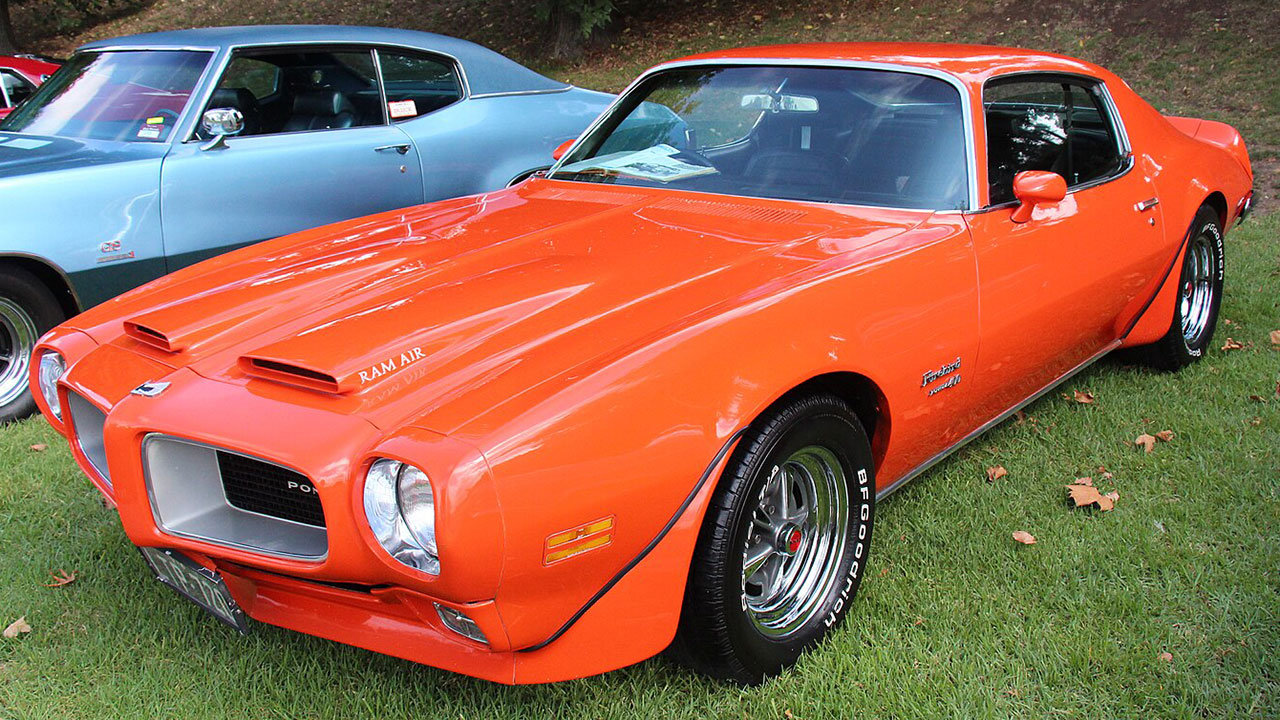
The Pontiac Firebird Formula 400 sits in a sweet spot between bare‑bones pony car and full Trans Am theater, and that balance is exactly what keeps collectors chasing it today. I want to trace when Pontiac actually built the Formula 400 package and how the market now prices those cars, using recent value guides, auction data, and real‑world asking prices to show where money is really changing hands.
How the Firebird Formula 400 fit into Pontiac’s lineup
The Firebird Formula 400 arrived as Pontiac’s way to deliver serious performance without the flash of a Trans Am, pairing a big‑cube V8 with cleaner styling and fewer add‑ons. One detailed price guide describes The Pontiac Firebird Formula 400 as a sporty pony car that was a sibling to the better‑known Trans Am, and notes that it was born in ’67, which anchors the model firmly in the first wave of Detroit’s muscle era. That positioning matters for values, because buyers who want authentic late‑1960s and 1970s performance but dislike spoilers and decals often gravitate to the Formula instead of the Trans Am.
Within that broader Firebird family, the Formula 400 badge signaled a specific engine configuration rather than a standalone body style, and that nuance is reflected in valuation tools that break out the package by year and trim. A dedicated entry for a Used 1970 Pontiac Firebird Formula 400 2 Door Coupe treats the car as a distinct configuration with its own Door Coupe Ratings, Values, Reviews, and Awards, which confirms that the market recognizes the Formula 400 as more than just another Firebird. That separation of trims is the foundation for tracking how the Formula 400 evolved year by year and how collectors now price each generation.
The years Pontiac produced the Formula 400 package
Based on the available reporting, the Formula 400 package clearly spans the 1970s, with specific documentation for early and mid‑decade cars and a price guide that traces the nameplate back to ’67. The valuation listing for a 1970 Pontiac Firebird Formula 400 2 Door Coupe confirms that the 400‑cubic‑inch engine was already central to the Formula identity at the start of the second‑generation body style, and it treats that configuration as a standard production offering rather than a one‑off or dealer conversion. That same guide to The Pontiac Firebird Formula 400, which describes the car as born in ’67, indicates that Pontiac was already using the Formula 400 concept in the late 1960s, even if detailed year‑by‑year breakdowns are not fully visible in the current sources.
Mid‑decade references show that Pontiac kept the Formula 400 alive well into the later 1970s, even as emissions rules and insurance pressures reshaped the muscle‑car landscape. A dedicated valuation entry for a 1976 Pontiac Firebird Formula 400 confirms that the package was still on the books in the middle of the decade, and that it is tracked separately from the Pontiac Firebird Trans Am in the same period. Later, multiple listings for 1978 cars, including a 1978 Pontiac Firebird Formula 400 and another 1978 Pontiac Firebird Formula offered for Sale, show that the Formula 400 remained a cataloged configuration at least through the late 1970s. Exact start and end dates beyond those anchors are unverified based on available sources, but the evidence supports a continuous presence from the late 1960s into the back half of the 1970s.
How valuation guides frame the Formula 400 today
To understand current money, I start with structured valuation tools, which aggregate auction and private‑sale data into model‑specific price ranges. The dedicated entry for the 1976 Pontiac Firebird Formula 400 uses past sales of related models to help frame expectations, including a record of Past sales that lists a Pontiac Firebird Trans Am that Sold for $37,800 and another transaction at $39,960 involving a 198‑series car in North America. Those figures are tied to the Pontiac Firebird Trans Am with an Automatic transmission, not directly to a Formula 400, but they show that well‑presented second‑generation Firebirds with performance credentials can command prices in the high‑thirty‑thousand‑dollar range at formal auctions.
Broader price guidance for The Pontiac Firebird Formula 400, updated on Nov 16, 2025, reinforces that the market treats these cars as collectible rather than used‑car leftovers. That guide, which describes THE FAQs under a section titled Tell Me More, positions the Formula 400 as a desirable slice of Pontiac history that benefits from its ’67 origin story and its relationship to the Pontiac Firebird Trans Am. While the exact value bands in that guide are not fully visible in the current summaries, the very fact that the Formula 400 has a dedicated, regularly updated price page signals that collectors and insurers see it as a distinct asset class with its own appreciation curve.
Real‑world asking prices and enthusiast estimates
Guides are one thing, but asking prices and peer estimates show how owners and dealers actually behave when money is on the table. A recent listing for a 1978 Pontiac Firebird Formula priced at $35995, promoted by Coyote Classics Call at phone number 641 816‑3145, illustrates how dealers position late‑1970s cars with the Formula package. The video description for that Pontiac Firebird Formula highlights features such as FORMULA badging, power steering, power disc brakes, and Rally wheels, and the $359 figure embedded in the price underscores that dealers are comfortable asking well into the mid‑thirty‑thousand‑dollar range for a clean, driver‑grade example. That aligns with the auction benchmarks for related Firebirds and suggests that late‑decade Formulas have broken out of entry‑level territory.
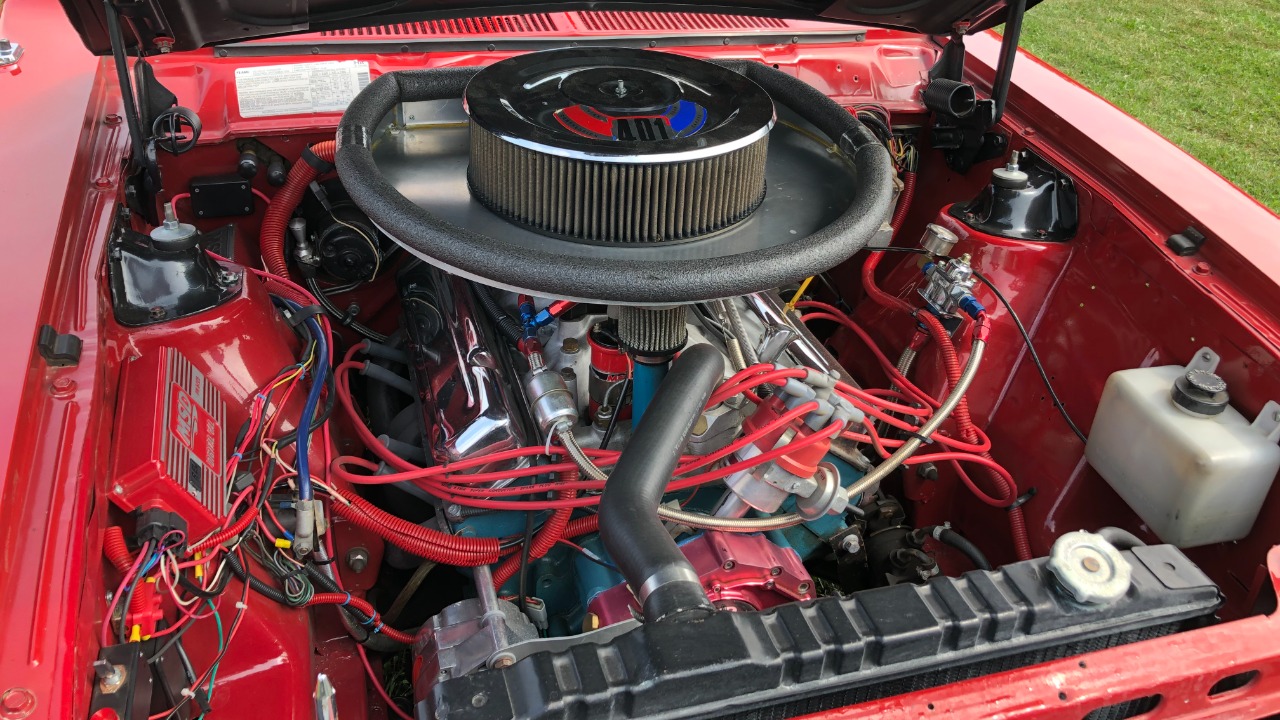
Private‑party and enthusiast discussions add another layer, especially for earlier cars that may not appear as often at high‑profile auctions. In one enthusiast exchange dated Sep 25, 2025, an owner asks, “Could you guys help with estimating a value for this? 1973 Firebird Formula 400 auto swapped for 455. Pretty strong bu…” and the responses cluster around a range of 20‑30k for that modified car. That conversation, centered on a Firebird Formula 400 that now carries a 455 engine, shows that even with a non‑original powertrain, a solid 1973 Formula can still command a mid‑five‑figure valuation. It also hints that originality and documentation could push a similar car higher, since the 400‑to‑455 swap introduces questions for purists.
Why some years and specs command a premium
Within the Formula 400 universe, specific years and configurations tend to attract more attention, and the available data points help explain why. The 1970 Pontiac Firebird Formula 400 2 Door Coupe sits at the front of the second‑generation run, and valuation tools that treat that Pontiac Firebird Formula as a separate line item suggest that early cars benefit from both styling purity and performance reputation. When a model earns its own Door Coupe Ratings, Values, Reviews, and Awards, it usually means buyers and insurers see it as more collectible than later, detuned versions, and that perception often translates into stronger prices for well‑documented 1970 examples.
Later in the decade, mileage and condition become key differentiators, especially as survivors thin out. A 1978 Pontiac Firebird Formula 400 with 64000 Miles, marketed as a Classic Muscle Car for Sale and priced at $44900, shows how a relatively low‑mileage car can leapfrog more ordinary examples. The listing describes the Classic Muscle Car for Sale as a stunning classic with only 64000 Miles, and the $449 figure embedded in the asking price places it well above the dealer example at $35995. That spread suggests that buyers will pay a premium for originality, documented mileage, and overall presentation, even within the same model year and engine family.
How I would read the market if I were shopping now
Looking across guides, auction benchmarks, dealer listings, and enthusiast chatter, I see a market that has quietly matured for the Firebird Formula 400, especially for cars built from the late 1960s through the late 1970s. The structured valuation tools for the 1976 Pontiac Firebird Formula 400, which reference Trans Am sales at $37,800 and $39,960 in North America, frame a ceiling that clean Formulas can realistically approach when they are documented, largely stock, and presented well. The broader guide to Pontiac Firebird Formula 400 values, updated in mid‑November 2025, reinforces that these cars are tracked closely enough to justify their own FAQs and historical context, which is not something you see for every 1970s pony car.
If I were in the market today, I would treat the 20‑30k enthusiast estimate for a 1973 Firebird Formula 400 with a 455 swap as a realistic baseline for a driver‑quality, non‑original car, then look to the $35995 and $44900 asking prices for 1978 Formulas as signals of what low‑mileage or especially clean examples can command. I would also keep in mind that early cars like the 1970 Pontiac Firebird Formula 400 2 Door Coupe, which have their own Door Coupe Ratings, Values, Reviews, and Awards, are likely to sit at the top of the range, especially if they retain their original 400 engine and factory options. Exact production start and end dates for every Formula 400 year remain unverified based on available sources, but the values now attached to these cars leave little doubt that the Formula 400 has moved firmly into the collector mainstream.