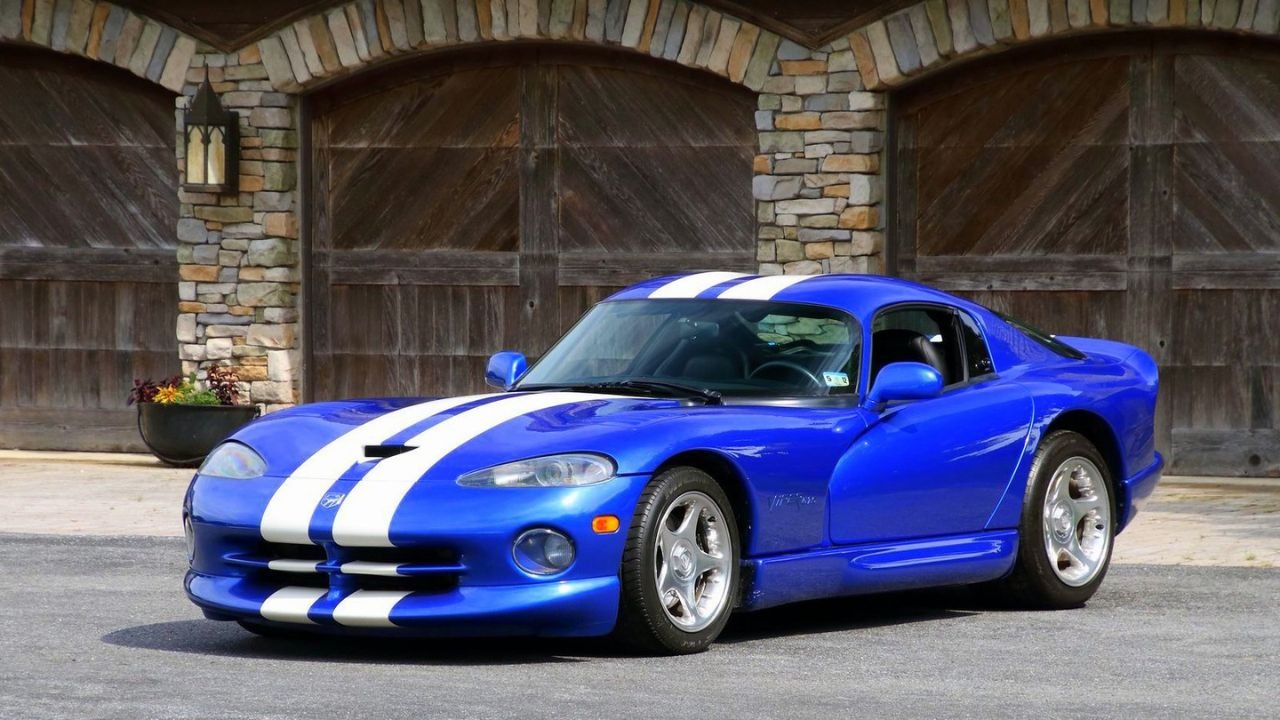
The Viper GTS never tried to be a polite sports car. It arrived as a front-engined sledgehammer that felt more like a factory race program let loose on public roads than a grand tourer, and that is exactly why it burned itself into track-day memory as something close to weaponized heat in a cobalt shell. To understand why it felt that way, I have to trace how its racing roots, brutal engineering choices, and unforgiving handling combined into an experience that was both intoxicating and, at times, genuinely intimidating.
On paper, plenty of modern supercars are quicker, more refined, and easier to drive fast, but few deliver the same sense of barely contained combustion that defined the Viper GTS. Its story is not just about horsepower, it is about how a car that looked like a cartoon missile was engineered with the sensibilities of a pit lane, then handed to ordinary drivers with almost no electronic safety net.
From skunkworks coupe to blue-shell race weapon
The road-going Viper GTS was conceived as a purist statement, a coupe that took the raw idea of the original roadster and wrapped it in a more rigid, aerodynamically sharper body. Its proportions and packaging were not accidents, they were rooted in Dodge’s racing ambitions, turning the Viper GTS into a symbol of visceral power and a bold, race inspired aesthetic rather than a comfortable long-distance cruiser. That intent is why the car always felt more like a homologation special than a conventional American performance coupe.
The competition arm made that implicit mission explicit when early in the 1990s, first generation Dodge Viper RT/10s were modified by racing teams for GT racing in North America and Europe, work that evolved into the dedicated Chrysler Viper GTS-R. That car, visually and mechanically linked to the blue and white street coupe, turned the silhouette into a fixture in international GT paddocks and set the tone for how aggressive the road car could afford to be.
Le Mans glory and the pressure to feel like a factory car
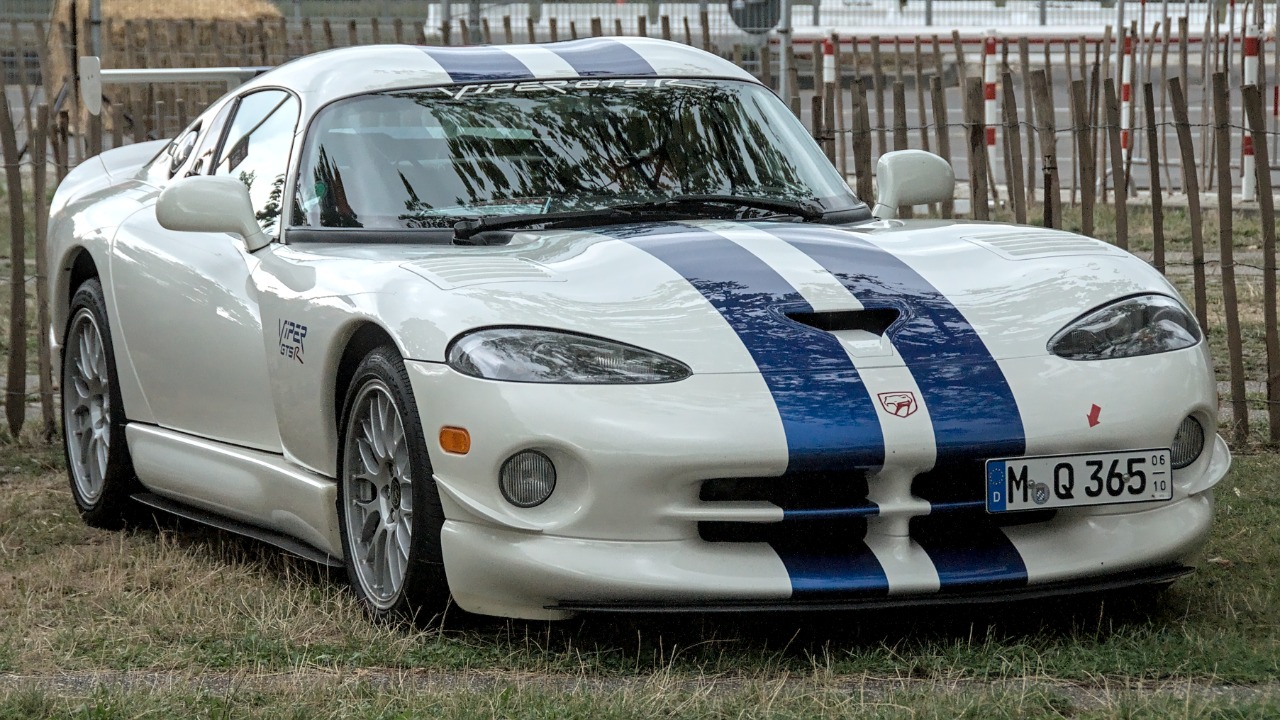
Once the Viper GTS-R started winning, the expectations around the street GTS changed. The race version’s success in the Le Mans 24 Hours and the FIA GT Championship, including a run of victories in the French classic three times from 1999 until 2002, meant the coupe was no longer just a loud American curiosity, it was a proven endurance weapon. That record, celebrated in collections that highlight the Viper GTS and its triple Le Mans 24 Hours and FIA GT Championship wins, created a feedback loop where owners expected the road car to feel like a pit-lane refugee every time they turned the key.
That heritage was not a one-off moment. The program’s endurance dominance has been framed as a kind of Year Le Mans GTS story, with a 1-2 Finish and Endurance Triple Crown Victory at Le Mans underscoring how deeply the car was embedded in long-distance racing culture. When a coupe carries that kind of résumé, any softness in the street version would feel like betrayal, so the engineers kept the car hard-edged, noisy, and demanding, even as rivals moved toward comfort and electronics.
V10 brutality and the heat of a track session
Under the hood, the Viper GTS was defined by its engine, a massive V10 that owed part of its character to European supercar thinking. The powerplant was developed in part by Lamborghini, and Dodge’s V10 gave the Viper a reputation as a brutal yet thrilling powerhouse that pushed boundaries and established it as a formidable track competitor. That collaboration helped explain why the car felt more exotic than its badge suggested, with a torque curve that seemed to start at idle and never let up.
Contemporary tests captured the mechanical drama. Reviewers noted that when you start the engine, 10 cylinders burst to life within an all aluminum block, displacing 8.0 liters and making the car feel more like a race unit detuned for the street than a conventional production motor. That sense of overkill, combined with the car’s relatively low weight and minimal insulation, meant every lap felt like sitting on top of a furnace that translated heat and vibration directly into the driver’s spine.
Short wheelbase, long learning curve
The chassis only amplified that intensity. The Viper has a relatively short 96.2 inch wheelbase, which grew to 98.8 in the Gen 3 to Gen 5 cars, and that compact footprint, Combined with the extremely wide tires and big power, made the car feel nervous at the limit. Track testing data has described how The Viper could be a little twitchy when drifting, a reminder that the car’s balance rewarded precision and punished clumsy inputs.
That dynamic fed into the Viper’s reputation as a car that separated drivers from passengers with a steering wheel. Enthusiasts have pushed back on the myth that the car inherently handled poorly, arguing instead that it was 100% a driver issue when things went wrong, especially once the tires and alignment were set up correctly. In one widely shared discussion, a 100% comment from a Top 1% Commenter, edited in Apr, framed the car as fundamentally capable but unforgiving, a machine that would bite you if you treated it like a modern, electronics-laden sports car.
Raw cabin, real heat, and the absence of filters
Inside, the Viper GTS never pretended to be a luxury coupe. The cockpit was functional and driver focused, but compared with contemporary European track specials, it felt almost primitive. Where a modern 911 GT3 RS surrounds the driver with a minimalist yet purposeful cabin, with Inside the cabin trimmed in Alcantara and dominated by razor sharp handling hardware, the Viper’s interior felt more like a roll cage with seats and gauges attached. That lack of polish kept the driver’s attention on the track, the temperature, and the car’s constant feedback.
The physical heat was not metaphorical. One of the most famous quirks of The Dodge Viper was its side exit exhaust, which ran under the doors and could easily singe your skin if you were not paying attention, a detail that made the car notorious to own at the time. Accounts of how perforated heat shields and door sills still radiated warmth even after short drives underline how the car literally radiated its performance, turning every pit stop into a reminder that you were sitting inches from a massive, unfiltered V10.
Track-focused by design, not by marketing
From the outset, the Viper was positioned as a car that only revealed its full potential in expert hands. The Dodge Viper is a track focused weapon with performance that is best extracted in the hands of experts, with low tech driver aids and a chassis that demands respect rather than coddling. That description of the Dodge Viper helps explain why the GTS felt so intense: it was not trying to be a daily driver that could survive the occasional track day, it was a track car that happened to wear plates.
That philosophy carried through to later special editions that explicitly celebrated the racing program. The GTS-R Final Edition was built as a send off to the Viper’s racing success, specifically its victories in endurance events, and it wrapped that heritage in a limited run of cars that looked and felt like road legal race machines. Descriptions of how The GTS Final Edition Viper sounded and rode, with a V10 that behaved exactly as a V10 should be, show how little the brand diluted the formula even in its final chapter.
Myth, memory, and the blue shell effect
Over time, the Viper GTS has taken on a kind of folklore status among enthusiasts, a car that feels more like a legend than a used performance coupe. Fans trade trivia about how the Dodge Viper was created initially as an attempt to save Chrysler and how its uncompromising character made it both a halo product and a risky business case.
That rawness is not just nostalgia. Footage of the 1997 Dodge Viper GTS circulating among collectors still emphasizes how the car was truly raw In its day, with minimal driver aids and a chassis that telegraphed every bump and slide.
Why it still feels like track fire today
Drive a well-kept Viper GTS today and the core experience has not mellowed. The car still feels like a blue shell hurled down a straight, a projectile that rewards commitment and punishes hesitation. Modern descriptions of the Viper GTS as an exhilarating driving experience that is sure to impress anyone who loves cars capture how the car’s age has not dulled its impact. When a dealer invites drivers to check out the Viper GTS and promises an experience that is Not only fast but deeply involving, it is tapping into that same sense of barely contained track energy.
Part of the appeal is how far it sits from today’s filtered performance cars. Where many modern machines isolate the driver from heat, noise, and risk, the Viper GTS keeps every sensation front and center, from the side pipes that once threatened to burn inattentive ankles to the steering that wriggles in your hands. That is why, decades after its debut, the car still feels like track fire in a blue shell: it was engineered from the ground up as a race bred coupe, One of the most famous American performance cars to own at the time, and it never pretended to be anything less than a barely tamed endurance racer for the road.