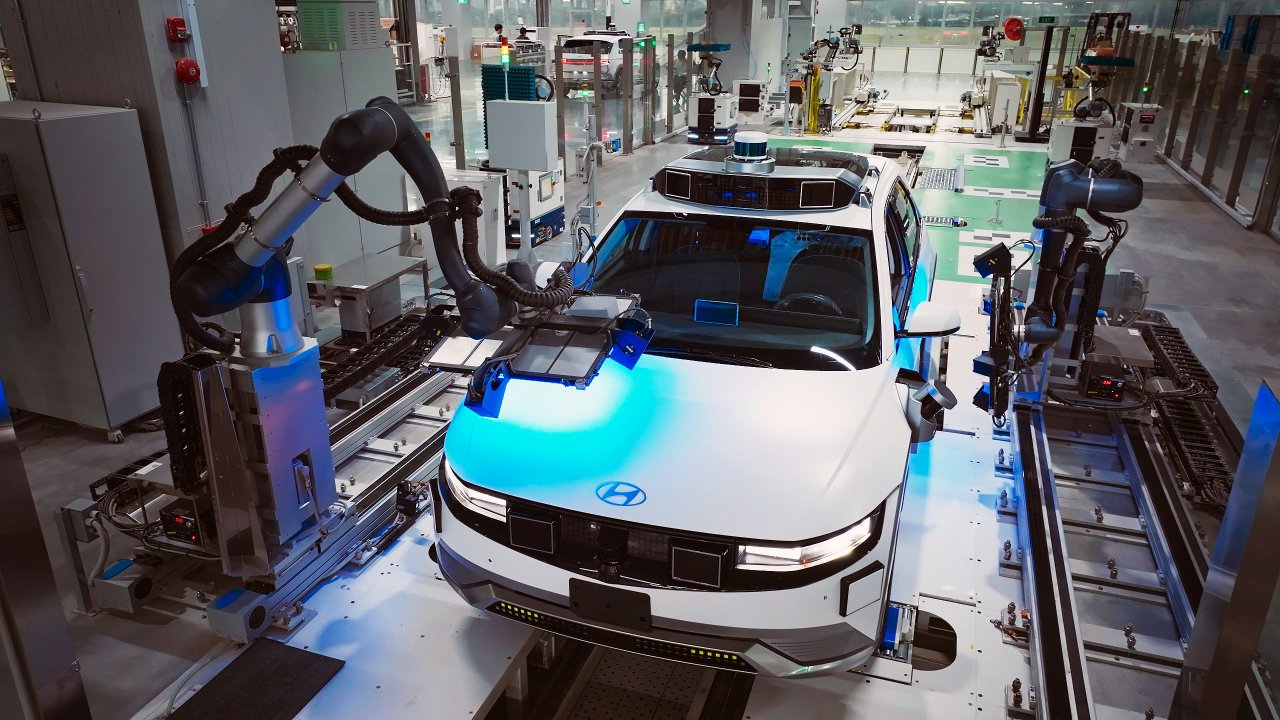
Automakers are racing to build the first car plant where robots, not people, handle every task from welding to final inspection. The vision of a fully automated “dark factory” is no longer science fiction but a concrete target for the next decade, with major manufacturers treating it as the next competitive frontier. As I look across the latest projects and prototypes, it is clear that the world’s first robot only car plant is not a distant dream but an industrial contest already under way.
From AI factories to dark plants: the new finish line
The clearest sign that the finish line has moved is that traditional automation is no longer enough. I see companies treating artificial intelligence, digital twins and humanoid robots as the new baseline for competitiveness, not experimental add-ons. BMW’s new facility in Debrecen, for example, was designed and tested as a complete digital twin before construction, and it is already being described as the World’s First AI Car Factory that is Building an 800-Km EV. That combination of virtual validation and long range electric production shows how software is now embedded in the factory walls as much as in the vehicles themselves.
Yet even that highly automated Debrecen plant still relies on people for complex tasks, which is why executives and engineers are already looking beyond it to a plant that can run with the lights off. Industry planners now talk openly about the first fully automated car plant, a dark factory where humanoid robots take on the entire assembly process and where the first such site is tipped to open in China or the United States by 2030. In that scenario, the AI rich facilities we see today are not the endpoint but the dress rehearsal for a factory that can operate around the clock with minimal human presence on the floor.
Humanoid robots move from demo to production line
For a robot only plant to work, machines must handle the messy, variable tasks that industrial arms have long struggled with, and that is where humanoid robots are starting to matter. I have watched the shift from lab demos to real factory deployments, and the most telling examples are already on automotive lines. Figure reports that its Figure 02 platform contributed to the production of 30,000 cars at BMW, an unprecedented step in bringing humanoid robots from the lab to the real world. Earlier trials at a BMW Group plant saw Two humanoid units running on the production line for 10 hours a day, a schedule that begins to resemble human shifts rather than short term experiments.
Other manufacturers are following a similar path, using existing plants as testbeds for the fully robotic facilities they want later. Hyundai Motor has committed to human like robots in its factories, drawing on the Atlas lineage from Boston Dynamics and positioning these machines as co workers that can eventually take on more of the line. Hyundai is already planning to deploy Boston Dynamics humanoid robots at its Georgia plant starting in 2028, while Mercedes is testing comparable systems on its own lines. Tesla has gone further by deploying Gen 3 Optimus bots inside its Austin Gigafactory, where They are already performing repetitive tasks that used to require manual labor. Each of these deployments chips away at the list of jobs that still require a person, and together they sketch the technical foundation for a plant that could run almost entirely on humanoid labor.
China’s dark factories point the way
While carmakers refine humanoid robots, other sectors are already operating facilities that look very close to the dark factory ideal. I find the most striking example in The Wuhan complex run by Xiaomi, which processes 90,000 units without direct human handling on the line. In that plant, devices are whisked into an automated system that manages storage, movement and assembly with minimal intervention, proving that a high volume electronics facility can function largely without people on the floor. The scale here is frankly insane, but it is also a practical template for how automotive plants might handle parts logistics and in process inventory once their robots are ready.
Xiaomi is also applying this philosophy directly to vehicles. The Xiaomi EV Hyperfactory is described as a benchmark of intelligent manufacturing, Covering an area of 718,000 square meters, roughly the size of the Forbidden City. That footprint gives engineers room to integrate advanced logistics, flexible lines and dense sensor networks that can support far higher levels of automation than legacy plants. When I compare this to traditional auto factories, it is clear that China is not only experimenting with dark factories in phones and electronics but is also building EV facilities that could be upgraded to near autonomous operation as humanoid platforms mature.
Why humans still matter inside highly automated plants
Even as robots spread, the most advanced car plants today still depend on human judgment in critical spots, and that reality shapes how quickly a fully robotic facility can arrive. Reports from America’s newest auto plants describe lines that are full of robots yet still need the Human touch for tasks like spotting burrs, fitting seats and attaching shock absorbers. Workers such as Unice Youmans perform jobs that no robot can yet match, because They must feel subtle misalignments, adjust to small variations and make real time decisions that are hard to encode. When I walk through these accounts, I see a gap between what robots can do in controlled demos and what is required on a live, mixed model line.
Automakers are not blind to that gap, which is why they are rolling out humanoids gradually rather than flipping a switch. Hyundai Motor executives talk about using robots to “amplify human potential” rather than replace it overnight, and that framing reflects both technical limits and social caution. At CES, Visitors watched as Chair Chung Euisun’s decade long bet on robotics turned into a tangible lineup of machines, including platforms that echo the headline grabbing Atlas humanoid. Yet even in those showcases, the message was that robots will first take on the dull, dirty and dangerous tasks, with people still overseeing quality, troubleshooting and complex assembly. A truly human free plant will only be possible once those oversight roles can be automated or shifted off site.
The race to the first robot only car plant
All of these strands, from AI factories to humanoid pilots and dark electronics plants, are converging into a clear industrial race. Automakers now speak of a first fully automated car plant that could open in China or the United States by 2030, a timeline that aligns with their current deployment plans. Hyundai’s roadmap to bring Boston Dynamics robots into Georgia by 2028, Tesla’s early use of Gen 3 Optimus in the Austin Gigafactory, and BMW’s experience with Figure 02 on its lines all suggest that the core technologies will be field tested well before that date. In my view, the winner will be the company that can integrate these pieces into a coherent system, not just the one with the flashiest robot on stage.
The implications extend far beyond bragging rights. A plant that can run with minimal human presence promises to cut labor costs, shrink defects and potentially bring new models to market up to 50 percent faster, according to projections tied to the dark factory concept. At the same time, it raises hard questions about employment, regional competitiveness and the role of workers in an industry that has long defined middle class manufacturing jobs. As I weigh the evidence from Debrecen, The Wuhan facilities, the Xiaomi EV Hyperfactory and the heavily automated American plants that still rely on the Human touch, I am convinced that the first robot only car plant is about to become reality. The more pressing question is how governments, workers and companies will adapt once the lights finally go out on the factory floor.
More from Fast Lane Only