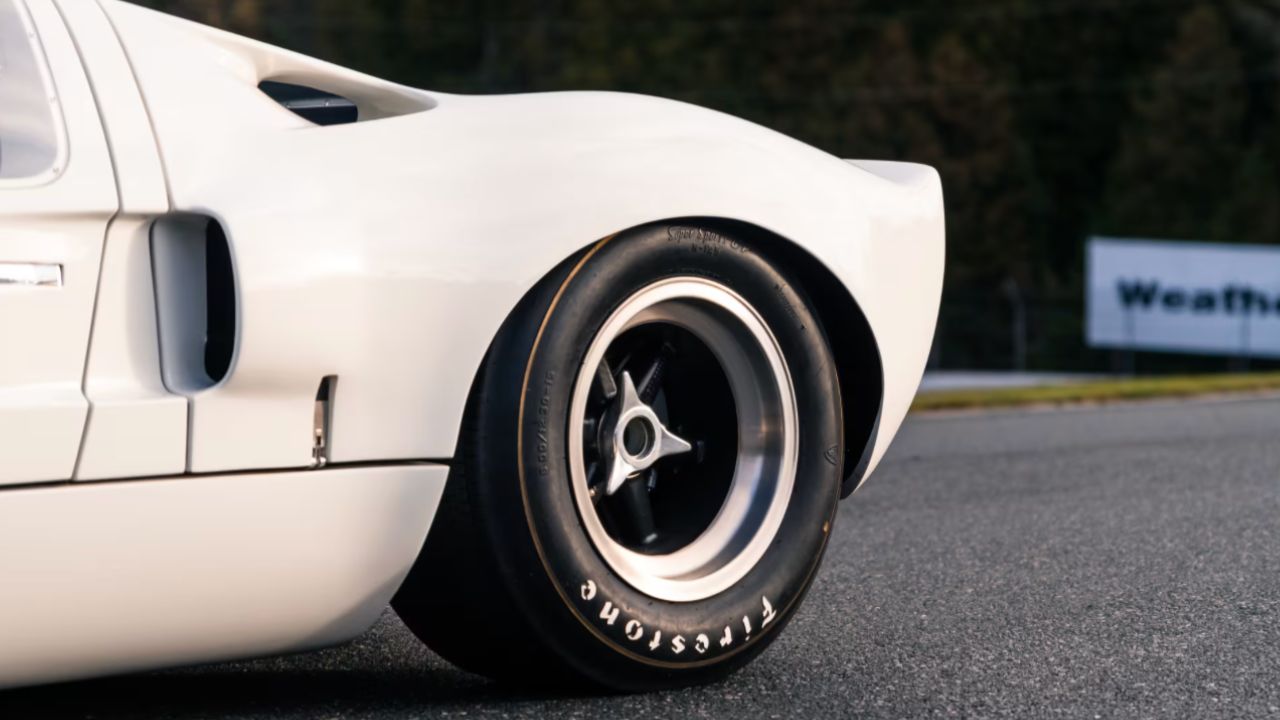
The Ford GT40 isn’t just a race car—it’s the story of how one company took a grudge and turned it into four straight wins at Le Mans. Born out of Ford’s failed deal with Ferrari, the GT40 became a weapon of revenge and a symbol of American engineering that could hang with the best from Europe.
But not all GT40s are remembered equally. Some won the big races, some pushed boundaries in the shop, and a few quietly helped shape the car’s legacy behind the scenes. These ten GT40s tell the full story—one chassis at a time.
GT40 Chassis P/1075 – The Back-to-Back Le Mans Winner

If there’s one GT40 that defines the legacy, it’s P/1075. This Gulf-liveried car won Le Mans in both 1968 and 1969—a rare back-to-back achievement in endurance racing. It was driven to victory by legends like Pedro Rodríguez, Lucien Bianchi, Jacky Ickx, and Jackie Oliver.
Built as a lightweight Mk I with the proven 4.9L V8, P/1075 had around 485 horsepower and a 5-speed ZF transaxle. The car’s balance, reliability, and top-speed performance made it a weapon at Le Mans, and it remains one of the most valuable GT40s in the world.
GT40 Chassis P/1046 – The Ferrari Killer
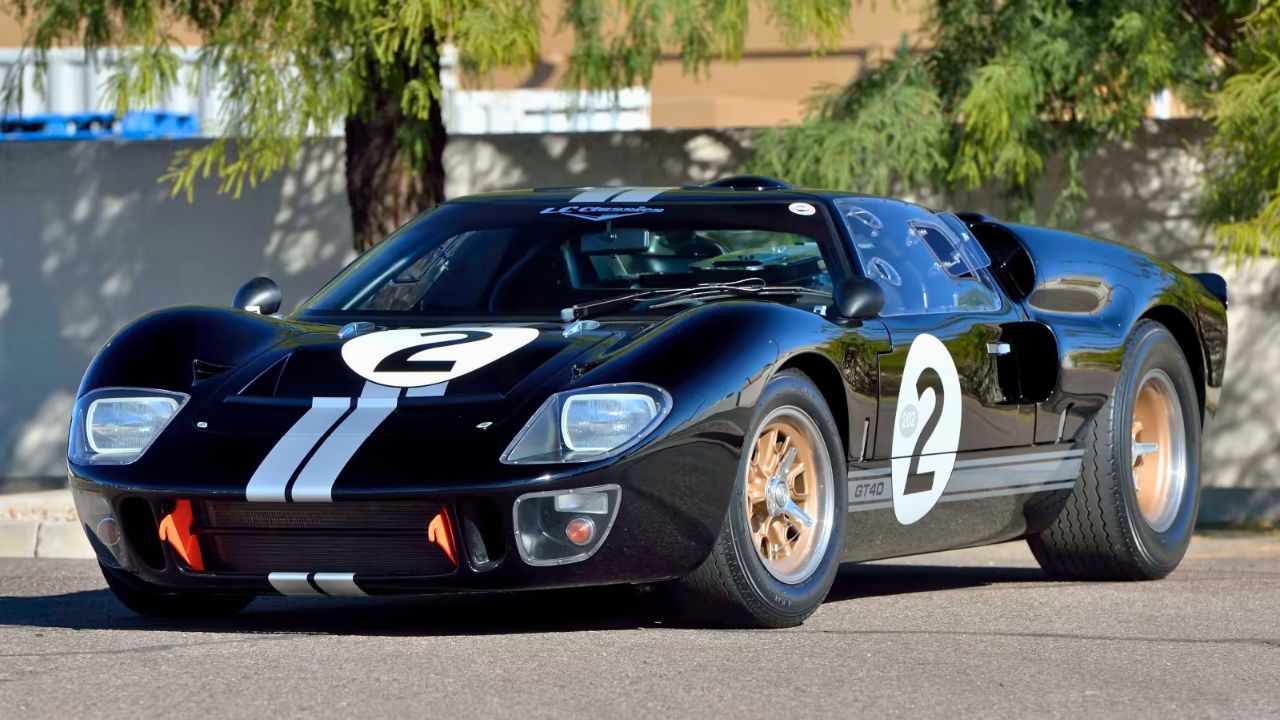
P/1046 is the GT40 that did the job Ford built the program for—it crossed the finish line first at Le Mans in 1966, ending Ferrari’s dominance. Bruce McLaren and Chris Amon were behind the wheel when it secured Ford’s first 24 Hours of Le Mans win.
This Mk II GT40 packed a 427-cubic-inch (7.0L) FE big-block V8 pushing over 485 horsepower and massive torque, paired with a rugged 4-speed gearbox. Restored to its 1966 spec, P/1046 stands as the ultimate symbol of Ford’s intent to beat Ferrari on their own turf.
GT40 Chassis X-1 Roadster – The Open-Top Oddball

The X-1 Roadster is one of the few open-top GT40s ever made. Built as a prototype and used by Bruce McLaren in the 1965 Can-Am series, the X-1 was a wild experiment that mixed GT40 styling with big horsepower and no roof.
Underneath was a modified Mk I chassis and a 4.7L small-block V8. It wasn’t ideal for endurance racing, but it showed Ford was willing to experiment. The X-1 served as a testbed for aerodynamics, cooling, and handling—and it still looks like nothing else from the era.
GT40 Chassis P/1030 – The Street-Legal Unicorn

While most GT40s lived on the track, P/1030 was one of the rare examples converted for street use. Sold new to a private buyer and later modified with leather upholstery, quieter exhaust, and road-legal lights, it blended race heritage with everyday drivability—at least on paper.
Power came from a 289-cubic-inch V8 pushing around 350 horsepower. It kept its racing suspension and low ride height, so it wasn’t exactly commuter-friendly. Still, P/1030 helped inspire the idea that a race-bred GT could live beyond the circuit, paving the way for the 2005 and 2017 Ford GTs.
GT40 Chassis P/1074 – The Movie Star

P/1074 wasn’t just a Gulf team car—it also had a brief Hollywood career. This lightweight GT40 was used in the filming of Le Mans with Steve McQueen and was heavily modified with camera rigs and access panels for filming high-speed shots.
Built originally for endurance racing, it ran a tuned 302 V8 and wore the signature blue and orange Gulf livery. Its racing days were impressive, but its connection to Hollywood and McQueen made it a legend of another kind. It sold at auction for over $11 million in 2012.
GT40 Chassis P/1000 – The Prototype That Lived

Chassis P/1000 was one of the first GT40s ever assembled—technically a development mule used to refine the early Mk I platform. It went through countless tests, including wind tunnel sessions and crash studies, and played a key role in getting the GT40 track-ready.
Though never raced competitively, it’s significant for helping shape the design and performance of the cars that followed. Later restored, P/1000 became a museum piece that represents the often-unseen part of racing success: endless trial and error.
GT40 Chassis P/1057 – The Privateer Warrior

P/1057 was one of several GT40s delivered to private teams rather than Ford’s factory program. Campaigned in Europe throughout 1966 and 1967, it saw action in events like the Nürburgring 1000km and Spa.
Powered by a 4.7L V8 and backed by dedicated privateers, this car showed the versatility of the GT40 platform. It didn’t need factory support to compete—and occasionally beat—bigger teams. P/1057’s survival and racing log make it one of the more under-the-radar GT40s with real street cred.
GT40 Chassis P/1083 – The Lightweight Track Monster

P/1083 was one of the last GT40s produced, and it was built with weight savings in mind. Fitted with aluminum panels and magnesium wheels, it was prepped for competition but never raced seriously—until later collectors gave it the life it deserved.
Its 289 V8 was tuned to around 400 horsepower, and the car often ran in vintage events decades later. P/1083 highlights how far the GT40 program had come—from heavy bruisers to refined, weight-conscious race machines with serious cornering capability.
GT40 Chassis P/1076 – The ’69 Le Mans Runner-Up

While P/1075 gets credit for winning Le Mans in 1969, P/1076 wasn’t far behind. It ran strong that same year and held second place, making it one of only a few GT40s to run the full 24 hours competitively in back-to-back years.
Like its sibling, it featured the 4.9L V8 and iconic Gulf paint. Its performance proved how deep the GT40 lineup was—this wasn’t a one-car team. Ford had multiple machines that could go the distance, and P/1076 quietly helped seal the GT40’s legend.
GT40 Chassis P/1015 – The One That Led the 1-2-3 Finish

At the 1966 Le Mans finish line, P/1015 was right there—part of the infamous photo-op where Ford orchestrated a 1-2-3 finish to humiliate Ferrari. Ken Miles and Denny Hulme were behind the wheel and likely would have won, had Ford not called for a staged tie.
This 427-powered Mk II was built for long-haul racing and delivered flawless performance for nearly the entire 24-hour stretch. Its role in that historic moment—both as a contender and as the car that got snubbed—has made it one of the most talked-about GT40s ever.
Like Fast Lane Only’s content? Be sure to follow us.
Here’s more from us:
*Created with AI assistance and editor review.