Motorcycles have become remarkably sophisticated. Modern sport bikes can have cornering ABS, traction control, quickshifters, sophisticated suspension, and tires that provide levels of grip riders from earlier generations could only dream about. Older motorcycles had to get their speed the hard way, and some of them demanded far more attention from the person sitting behind the handlebars.
That does not mean these motorcycles were badly designed. Many were brilliant machines for their time, and some were genuine milestones in motorcycle history. But ride one today after spending years on modern bikes and the differences can be startling. From violent two-stroke powerbands to skinny tires, crude suspension, heavy controls, and enormous engines, these are 13 motorcycles that can feel seriously unforgiving by modern standards.
Kawasaki 750 H2 Mach IV
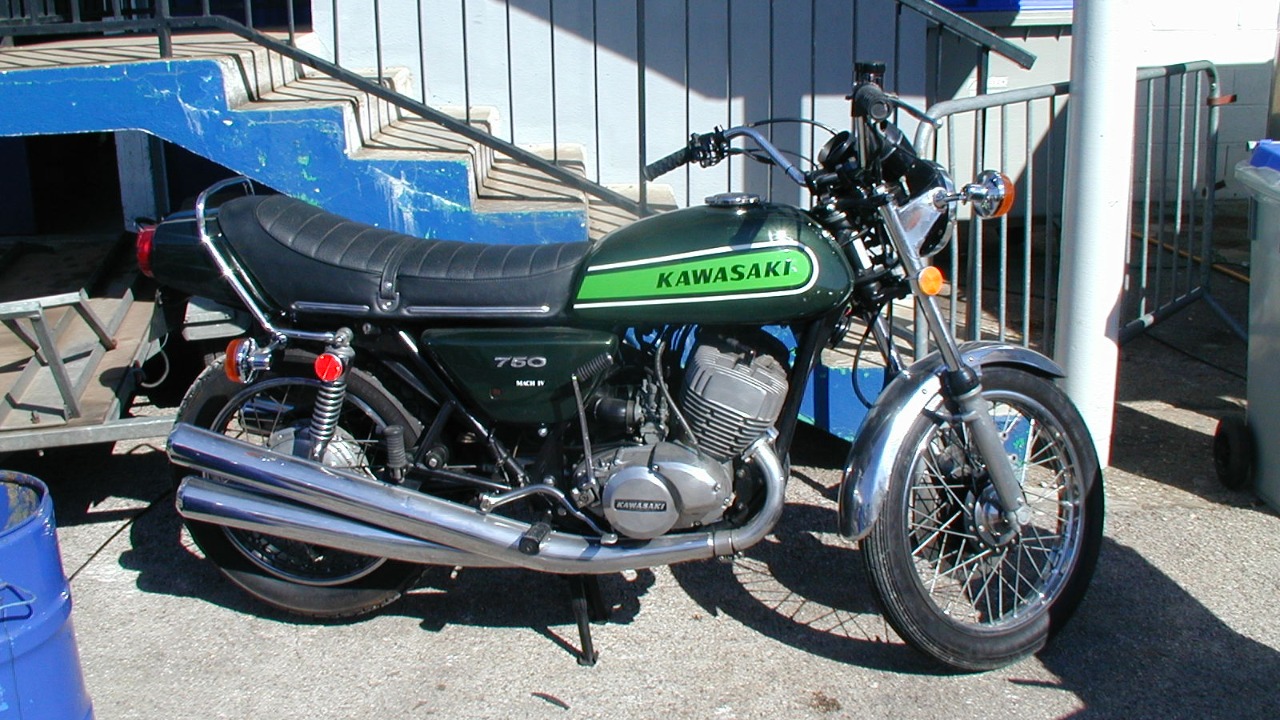
Few motorcycles have a reputation quite like the Kawasaki 750 H2 Mach IV. Introduced for 1972, it combined a 748cc two-stroke triple with a relatively lightweight chassis and enough performance to make riders pay attention very quickly. The engine’s power delivery was part of the attraction. It could feel manageable at lower revs before coming alive with a hard rush of acceleration, and that transition could catch an inexperienced rider off guard. The H2 also came from an era when chassis development had not yet caught up with the relentless horsepower race between Japanese manufacturers.
That combination is exactly why the H2 can feel intimidating today. Its narrow tires, period suspension, and braking hardware simply do not offer the same confidence as a modern motorcycle. A well-sorted H2 in the hands of an experienced rider can be remarkably enjoyable, but it rewards smooth throttle control and planning rather than careless enthusiasm. Twist the grip too aggressively and the famous two-stroke triple quickly reminds you that this is a machine from a very different era.
Kawasaki 500 H1 Mach III
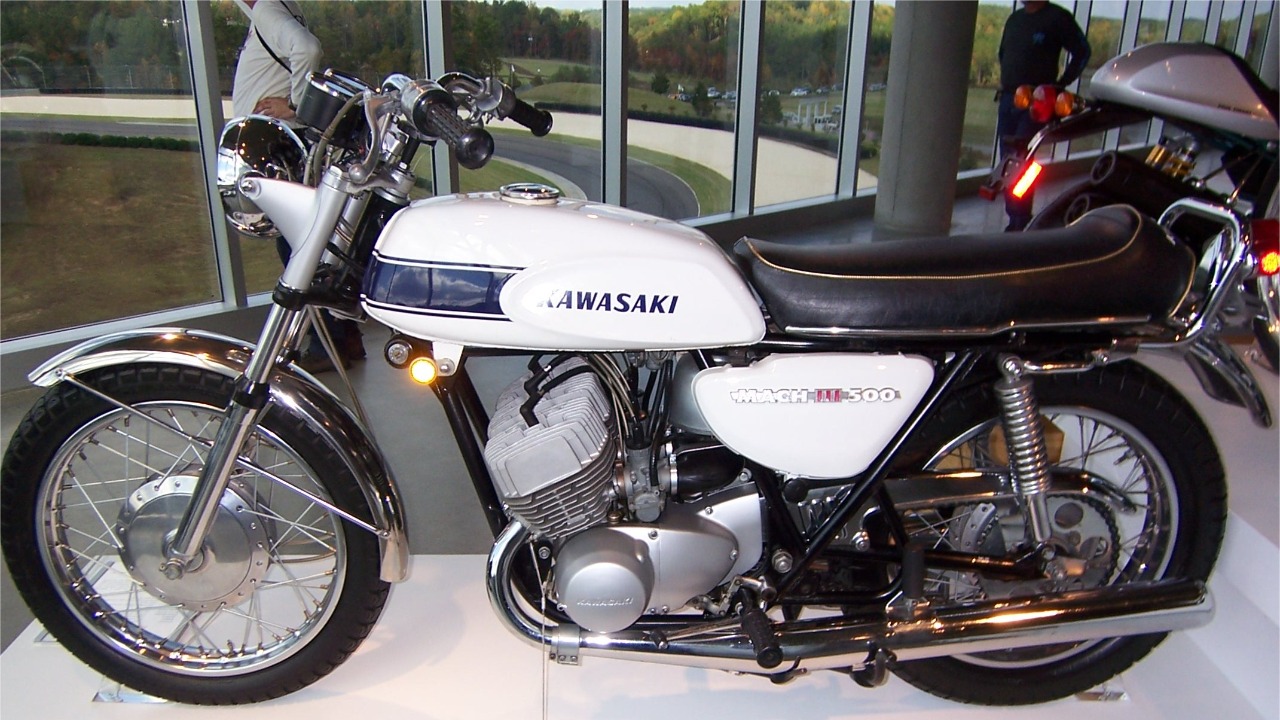
derivative work: Ligabo (talk) – CC BY 2.0/Wiki Commons
The Kawasaki 500 H1 Mach III became famous for giving ordinary riders access to performance that once belonged largely to racing machinery. Its 499cc two-stroke triple was compact, light, and eager to rev, while the motorcycle itself weighed surprisingly little. That was a huge part of the appeal, but it also created the sort of power-to-weight combination that could become demanding when the road stopped being perfectly smooth. The H1 could accelerate hard enough to make its period rivals look ordinary, yet the rest of the motorcycle did not provide the level of sophistication that today’s riders expect.
Modern tires and suspension can make an older motorcycle feel transformed, but a largely original H1 still requires respect. The brakes, frame, suspension, and tires all belong to a time when riders simply accepted more movement and feedback from a motorcycle. The result is a machine that can feel lively even when it is being ridden at moderate speeds. Its reputation as a wild old-school two-stroke is not difficult to understand once you experience the combination of a light chassis and a hard-hitting engine.
Suzuki TL1000S
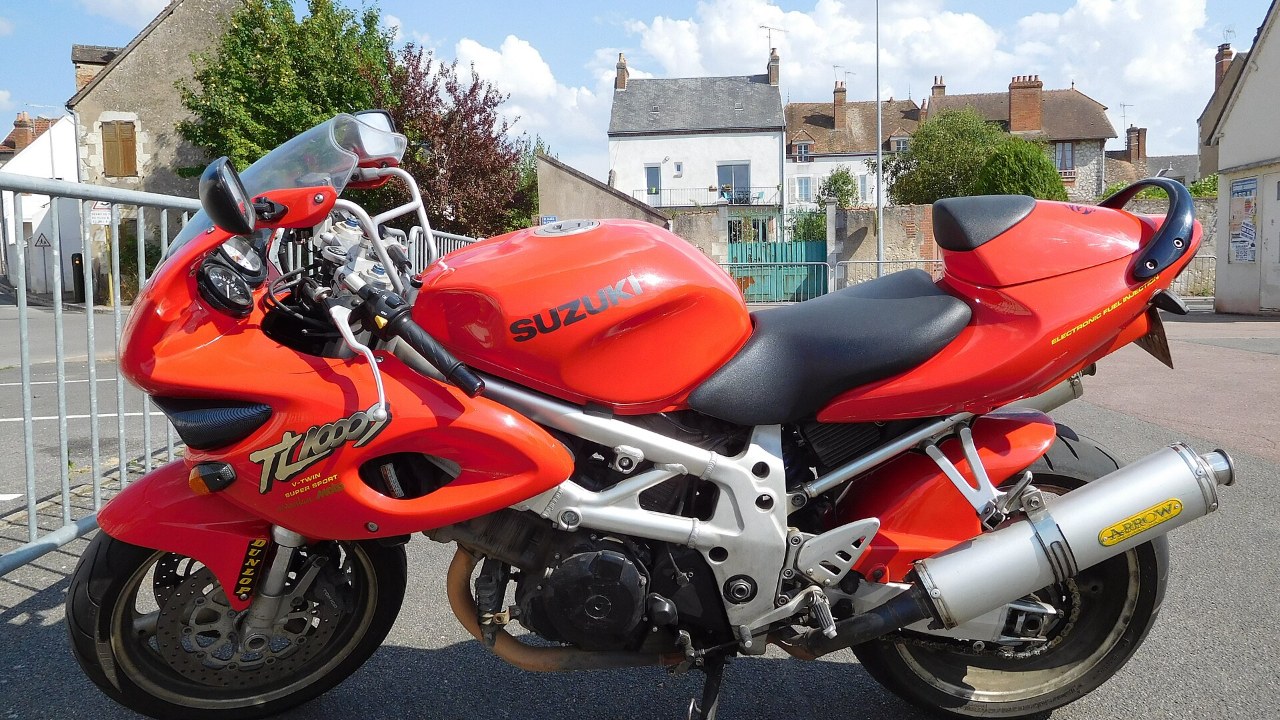
Suzuki’s TL1000S arrived for 1997 as a Japanese rival to Italy’s sporting V-twins, and it delivered far more punch than many riders were ready for. Its liquid-cooled 996cc 90-degree twin was claimed to make 123 hp and 76 lb-ft of torque, and it sat in an aluminum trellis frame with very sharp steering geometry. Because Suzuki said there was no room for a conventional rear shock, the TL used a rotary rear damper, an idea borrowed from Formula 1 cars that never translated well to motorcycles.
The result was a bike that picked up nicknames like widow-maker. Hard drives out of slow corners could overwhelm the rear suspension, and the quick steering made the front end prone to violent shaking. After several serious crashes, Suzuki recalled the TL to fit a steering damper, and a separate recall dealt with frames cracking near the shock mount. Many survivors now wear aftermarket rear suspension and behave far better, but an unsorted example still demands respect. With that much torque and a chassis that can be unsettled so easily, the TL1000S is no place for a careless throttle hand.
Kawasaki ZX-12R
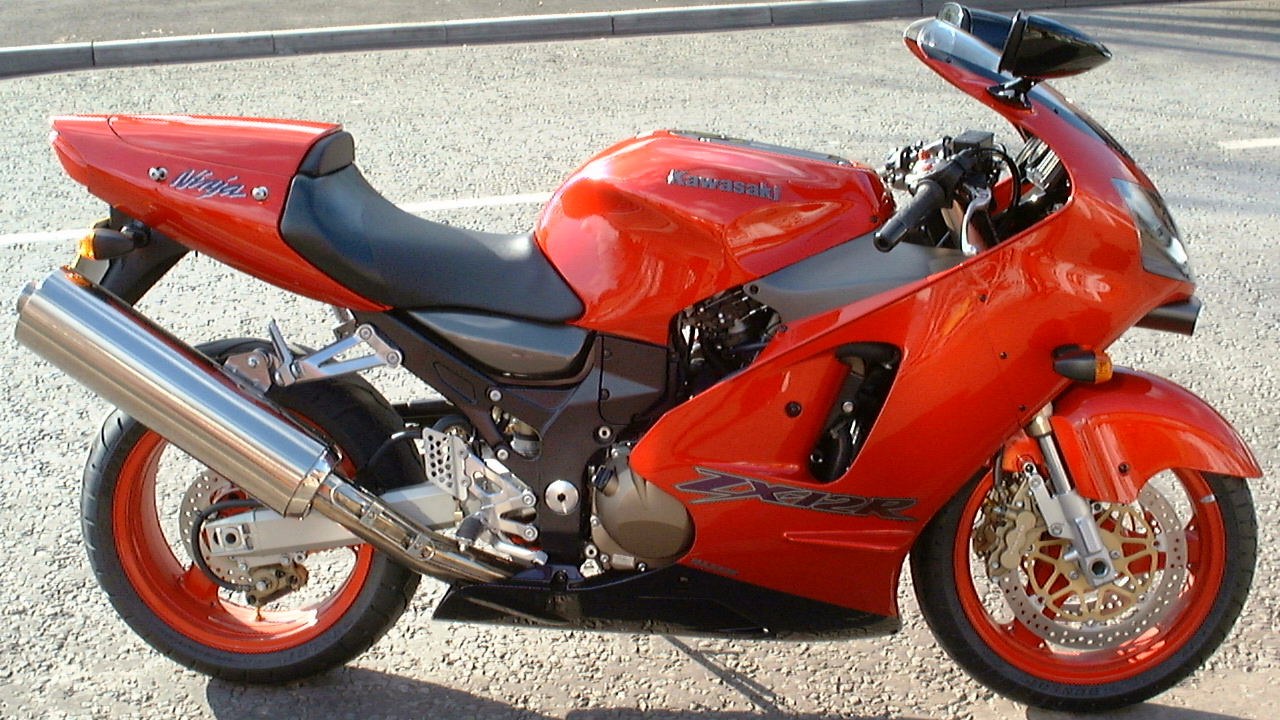
Kawasaki built the ZX-12R for 2000 with a clear goal, and that was taking the top-speed crown. Its 1199cc liquid-cooled inline four was claimed to make more than 170 hp, and it was mounted in an aluminum monocoque chassis that incorporated the airbox, a first for a production motorcycle. The 12R took over from Honda’s Super Blackbird as the fastest bike of its kind, although Suzuki’s Hayabusa usually edged it in top-speed testing. Its listed top speed was around 185 mph.
What makes the ZX-12R intimidating today is how little it does to protect a rider from that performance. There is no electronic traction control, so the right wrist is the only thing managing the torque. Early bikes also had snatchy fuel-injection response at low speeds until Kawasaki revised the bike for 2002. The steering geometry was aggressive for such a big machine, and owners say it feels heavy in tight bends. On a fast, open road it is impressively stable, but the speed builds at a rate that can catch out even experienced riders. Treat it casually and it quickly shows why reviewers warned it was not for the inexperienced.
Honda NSR250R
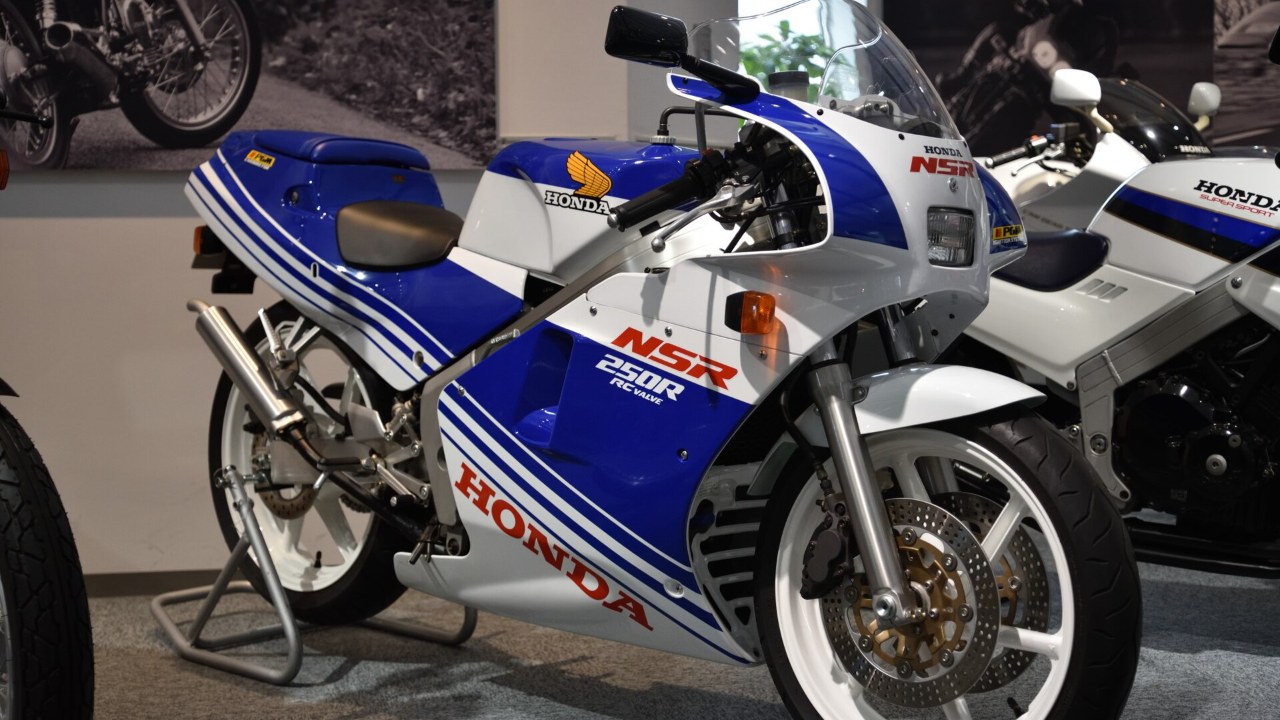
The Honda NSR250R came out of Japan’s late-1980s race-replica boom, when quarter-liter two-strokes were built to look and behave like Grand Prix machines. Developed alongside Honda’s RS production racer, it used a liquid-cooled 249cc two-stroke 90-degree V-twin rated at 45 PS, fitted to an aluminum twin-spar frame, with a dry weight of only 125 kg. Later generations added computer-controlled exhaust valves, and the 1994 MC28 brought a Pro-Arm single-sided swingarm and a memory card that had to be used to start the bike.
That light weight and racing focus are exactly why an NSR feels so lively today. Like most racing-derived two-strokes, it makes its best power high in the rev range, so the rider has to work the gearbox constantly to keep it on the boil. The chassis responds to small inputs instantly, which is wonderful on a clear road and far less forgiving when something unexpected happens. Many examples outside Japan are imports with unknown histories, so tired suspension and aging components can add to the risk. Ridden well, the NSR is a brilliant lesson in precision. Ridden carelessly, it punishes mistakes in a hurry.
Bimota SB2
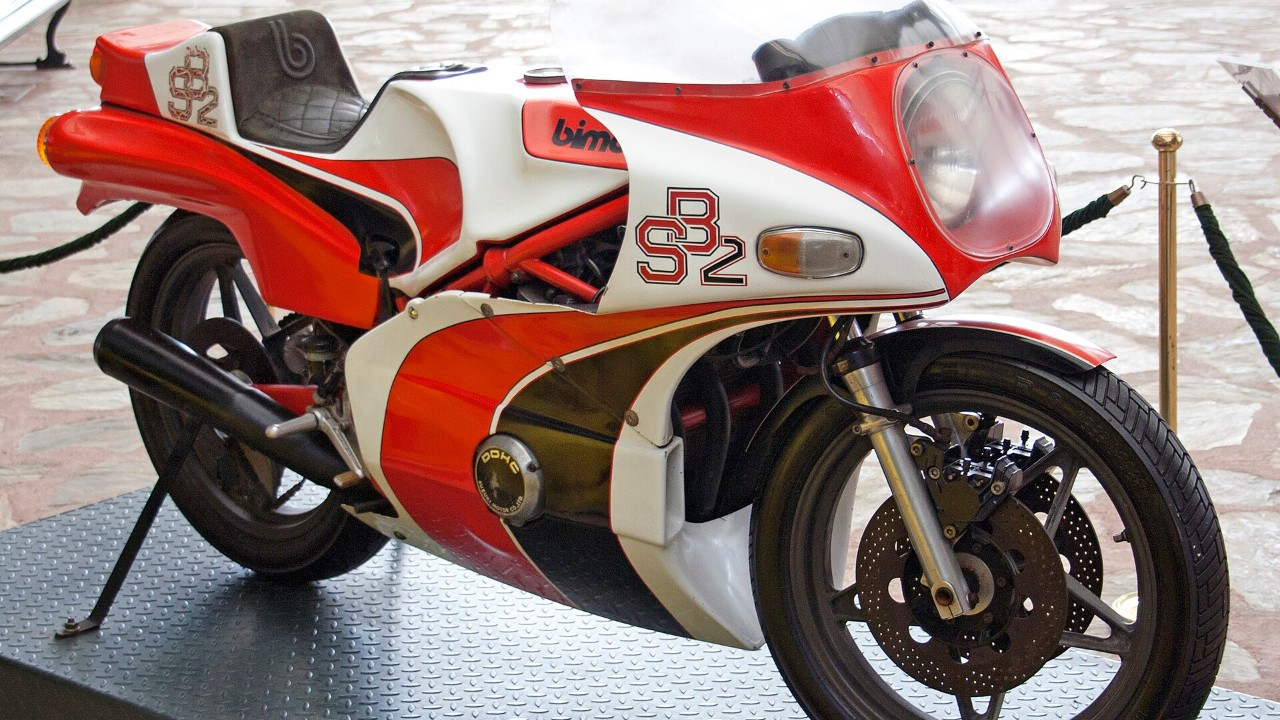
Bimota’s SB2 was one of the most advanced street motorcycles of the late 1970s. Built between 1977 and 1980, it wrapped a 743cc Suzuki GS750 inline four in a chrome-moly steel frame that ran straight from the steering head to the swingarm pivot and used the engine as a stressed member. The swingarm pivoted on the same axis as the countershaft sprocket to keep chain tension constant, and the whole bike weighed roughly 30 kg less than the Suzuki it borrowed from. Some were even sold with a Yoshimura 850cc kit.
By the standards of its day, the SB2 was a scalpel, praised for its suspension and steering geometry. Today it is a different story. Its 35mm fork, twin front discs, and period tires came from an era when that hardware was considered top-notch, and none of it matches even a modest modern motorcycle. The SB2 was also built in very small numbers, so any crash risks damaging something nearly irreplaceable. It rewards smooth, deliberate inputs and reminds you that the state of the art in 1977 is a long way from what riders take for granted now.
Yamaha RD350LC
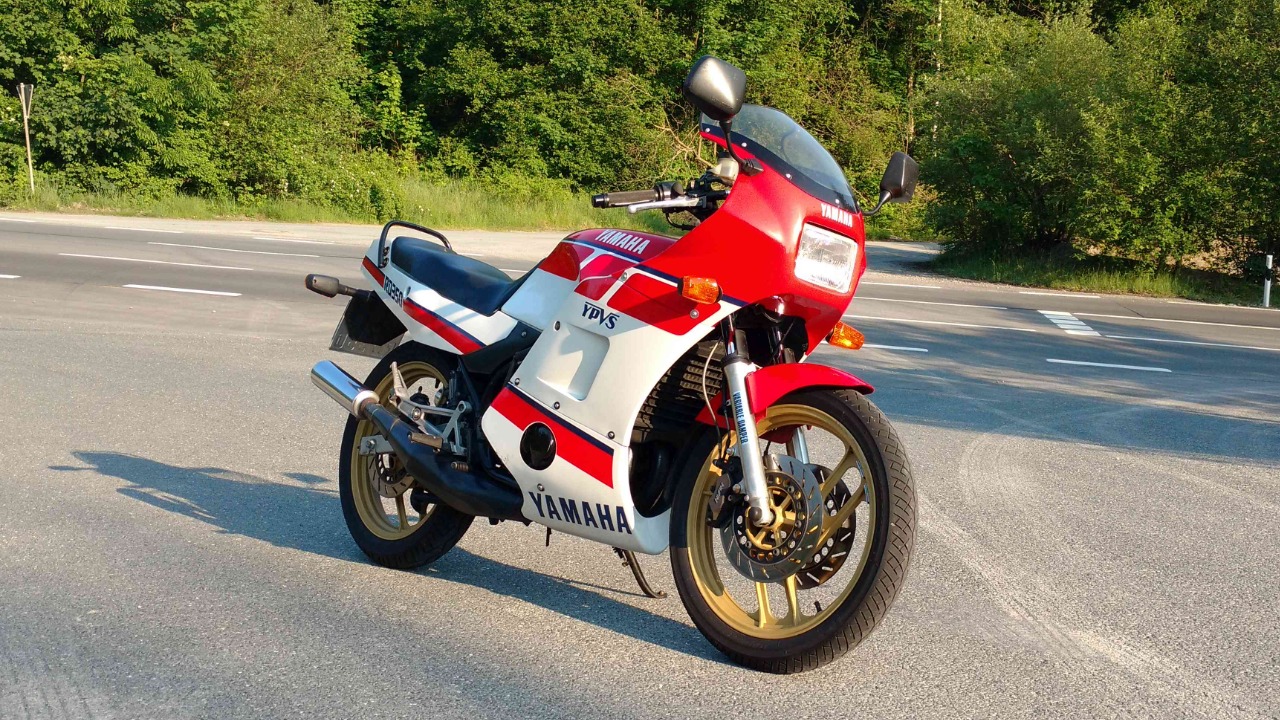
The Yamaha RD350LC became one of the defining performance motorcycles of the early 1980s. Its liquid-cooled 347cc two-stroke twin was compact and relatively light, while the power valve system helped broaden the engine’s usable range. On paper, the numbers do not sound particularly alarming today. In practice, the motorcycle’s combination of low weight and a strong powerband can make it feel much more urgent than the displacement suggests.
The RD350LC also belongs to a generation when riders were expected to understand exactly what the throttle was doing. There is no traction control to soften a mistake and no ABS to rescue a poorly judged braking maneuver. When the engine comes onto the pipe, the change in acceleration can be dramatic, particularly on a bike that weighs so little. Add period tires and suspension to the equation and the experience becomes distinctly old school. The RD350LC is not inherently unsafe, but it can feel unforgiving when ridden with the casual attitude that modern motorcycles sometimes encourage.
Yamaha RD500LC
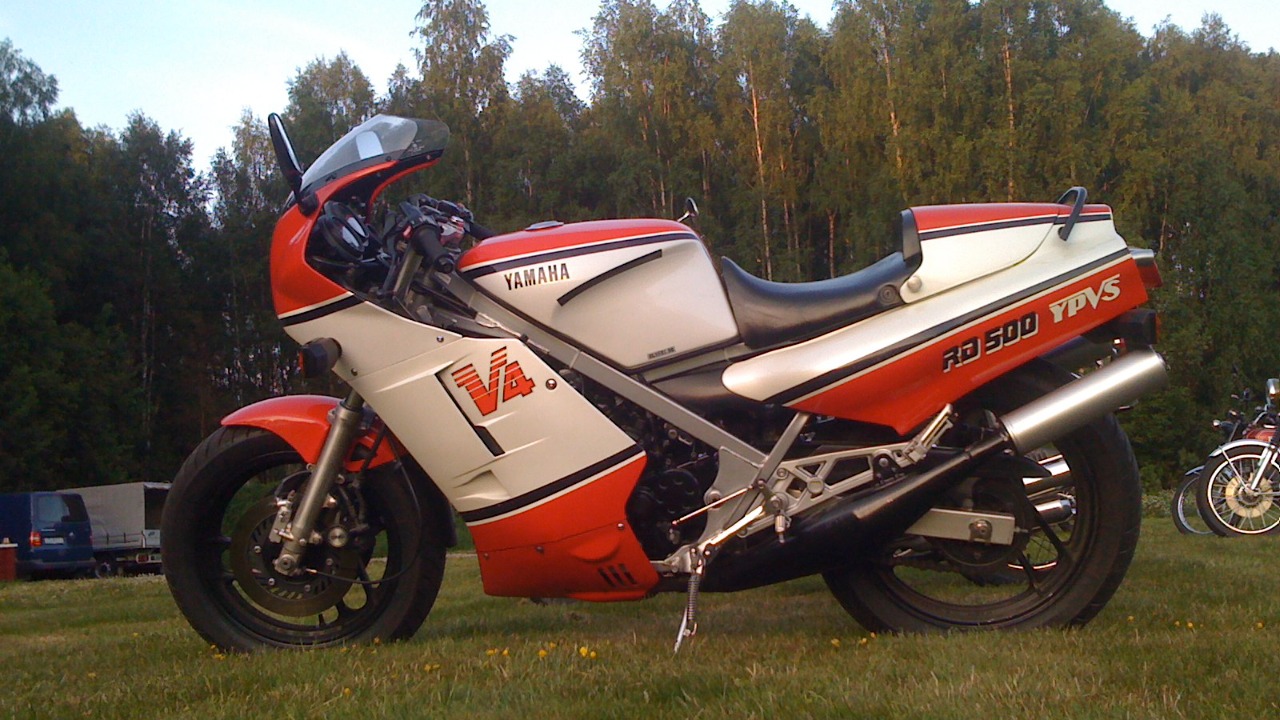
The Yamaha RD500LC took the Grand Prix replica idea and put it on the street. Its 499cc V4 two-stroke engine, YPVS power valves, lightweight construction, and aggressive riding position were all designed to evoke Yamaha’s racing technology. The result was one of the most exotic road motorcycles of the 1980s. The engine can feel relatively calm at low revs, then deliver a much harder surge as the power valves and two-stroke characteristics come into play.
That personality can feel startling today. The motorcycle has a narrow front tire by modern standards, a 16-inch front wheel, and suspension technology that is now decades old. The brakes were impressive for their time, but they do not provide the same consistency or electronic assistance found on current performance bikes. The RD500LC also encourages the rider to sit in a racing position and use the engine aggressively. It is one of those motorcycles that can feel perfectly manageable until the rider starts exploring what it was actually built to do.
Suzuki RG500 Gamma
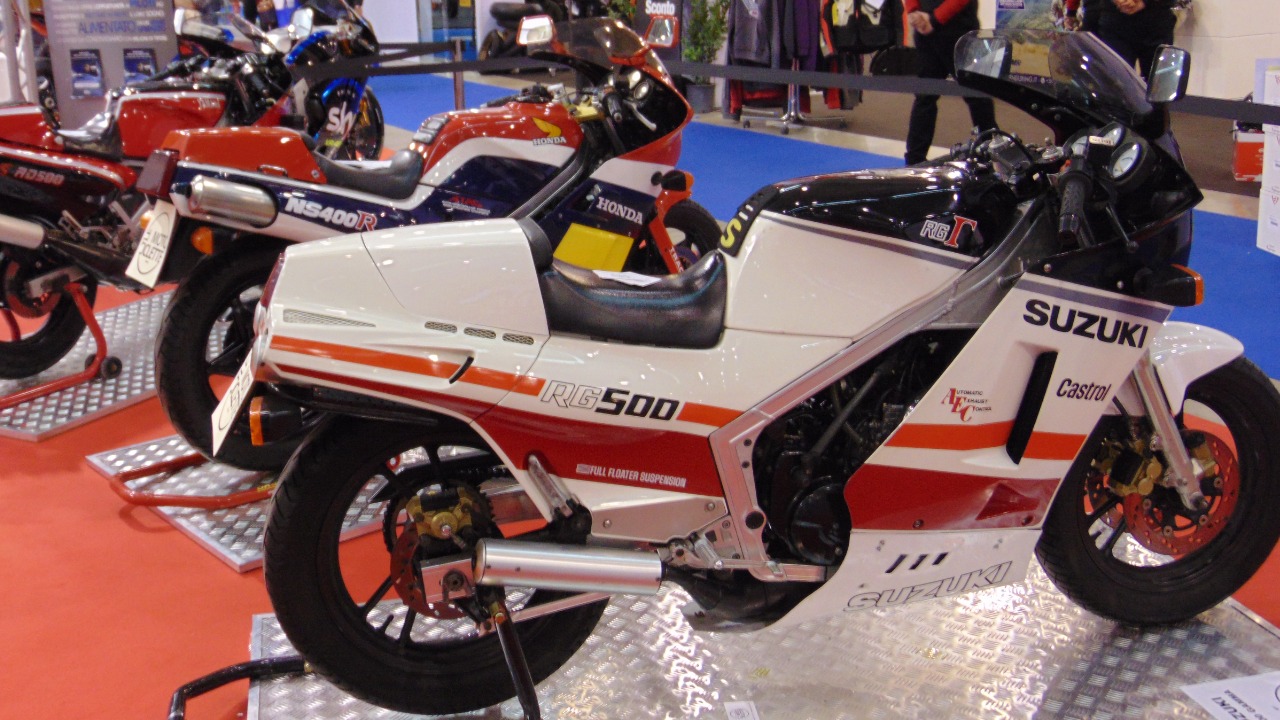
The Suzuki RG500 Gamma might be one of the clearest examples of a motorcycle that feels like a race bike with lights and registration equipment added afterward. Introduced in the mid-1980s, it used a 498cc square-four two-stroke engine inspired by Suzuki’s Grand Prix machinery. With roughly 95 horsepower and a dry weight around 156 kilograms, the performance-to-weight ratio was extraordinary for its time.
The chassis was considerably more advanced than that of earlier two-strokes, with an aluminum frame, Full Floater rear suspension, and sophisticated braking hardware. Yet the Gamma still demands attention. The engine’s character, compact dimensions, aggressive riding position, and relatively narrow tires make it feel much more intense than the displacement suggests. A modern rider may find the brakes and suspension surprisingly capable, but the lack of electronic intervention means every throttle input still belongs entirely to the rider. The RG500 Gamma is one of those motorcycles where a small mistake can develop into a big problem remarkably quickly.
Suzuki GSX-R1100
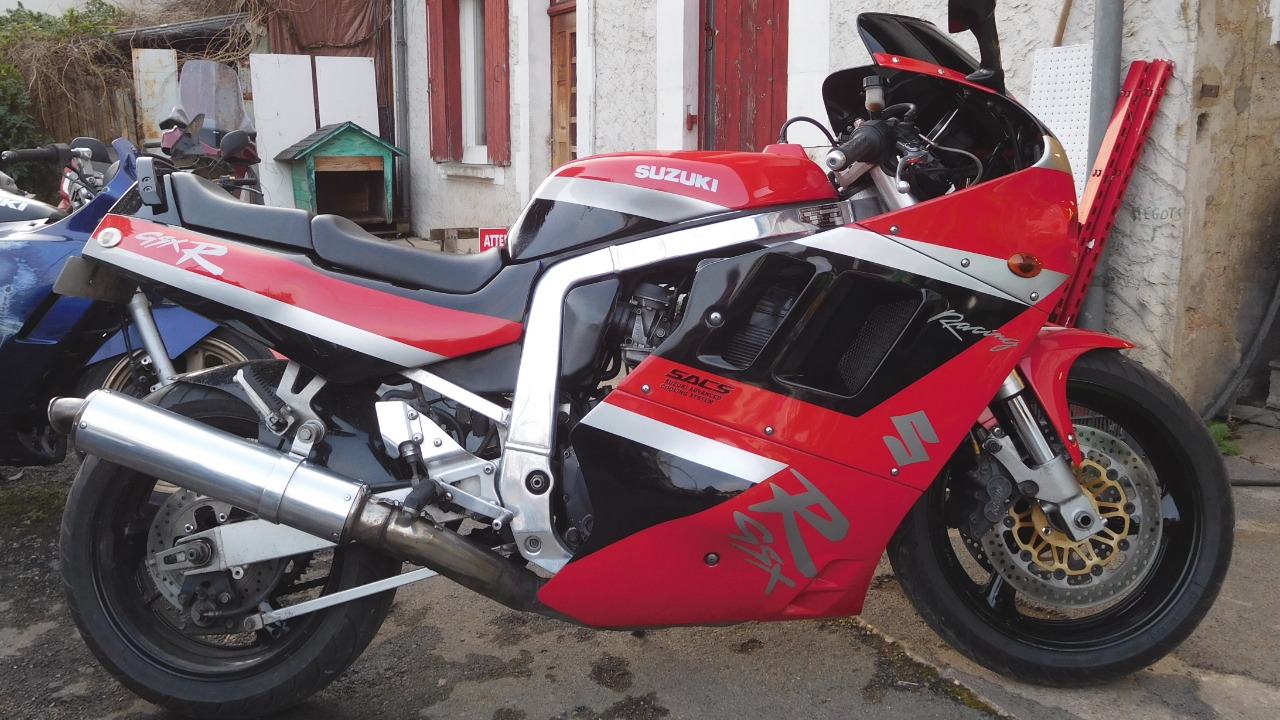
The first-generation Suzuki GSX-R1100 arrived in 1986 with an air and oil-cooled 1052cc engine producing roughly 125 horsepower. That figure does not sound extraordinary beside today’s superbikes, but the motorcycle weighed less than 200 kilograms and was built around the idea of putting serious race-inspired performance into a production machine. The result was startlingly quick for its era.
The GSX-R1100 can still feel fast today because it delivers its performance without electronic assistance. There is no traction control watching the rear tire and no ABS monitoring the brakes. The early 18-inch wheels and period geometry also give it a distinctly different feel from a modern superbike. Later versions became progressively more sophisticated, but an early GSX-R1100 can feel like a very fast machine that expects the rider to understand its limits personally. Its reputation was earned partly because Suzuki managed to make such serious performance available to ordinary customers.
Kawasaki GPZ900R Ninja
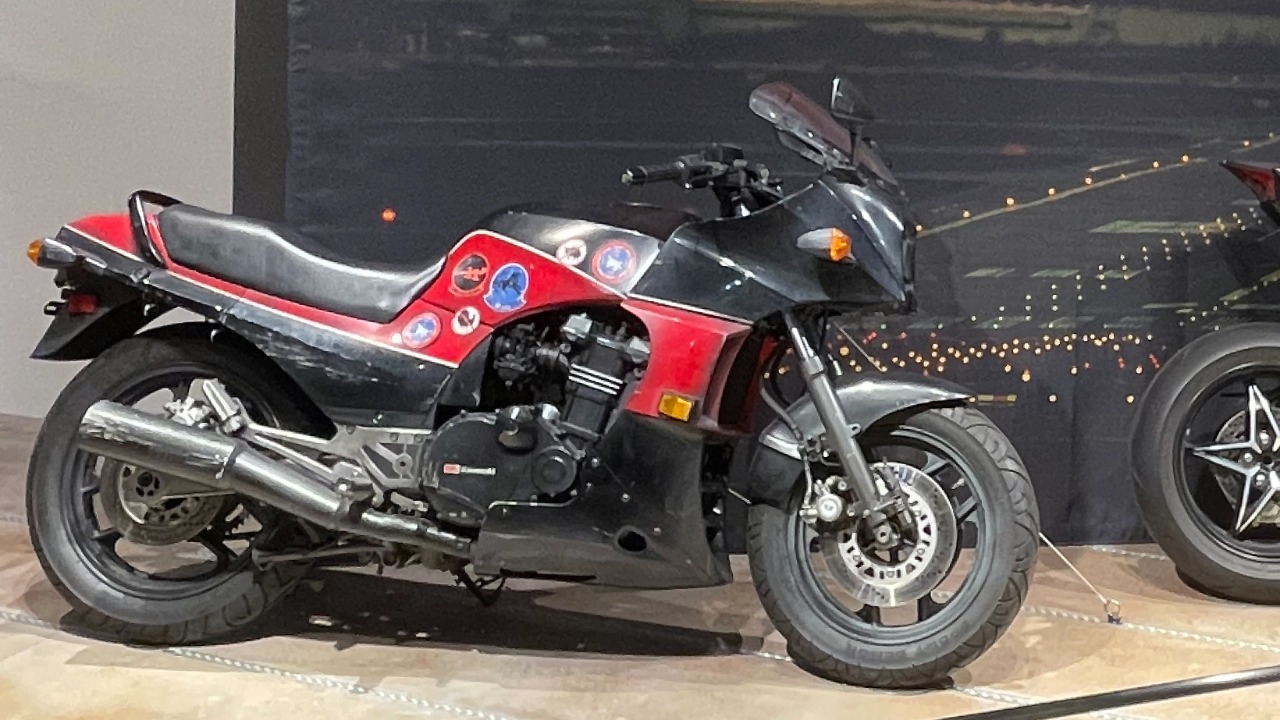
The 1984 Kawasaki GPZ900R Ninja was revolutionary when it arrived. Its liquid-cooled 908cc inline-four was compact, powerful, and capable of pushing the motorcycle to roughly 150 mph. It also introduced a level of aerodynamic performance that made it a genuine high-speed machine. What feels intimidating today is the speed available from a motorcycle whose brakes, suspension, tires, and chassis were designed before modern superbike technology matured.
The Ninja is not a crude motorcycle. In fact, its engineering was remarkably advanced for 1984. But modern riders are accustomed to machines that can turn, stop, and accelerate with far less drama. On an original GPZ900R, the rider feels more of the road through the chassis and has to manage braking and corner entry more carefully. The motorcycle’s legendary speed can also encourage riders to push beyond what its older hardware can comfortably handle. It remains an iconic motorcycle, but its capabilities need to be understood in the context of its era.
Ducati 750 Super Sport
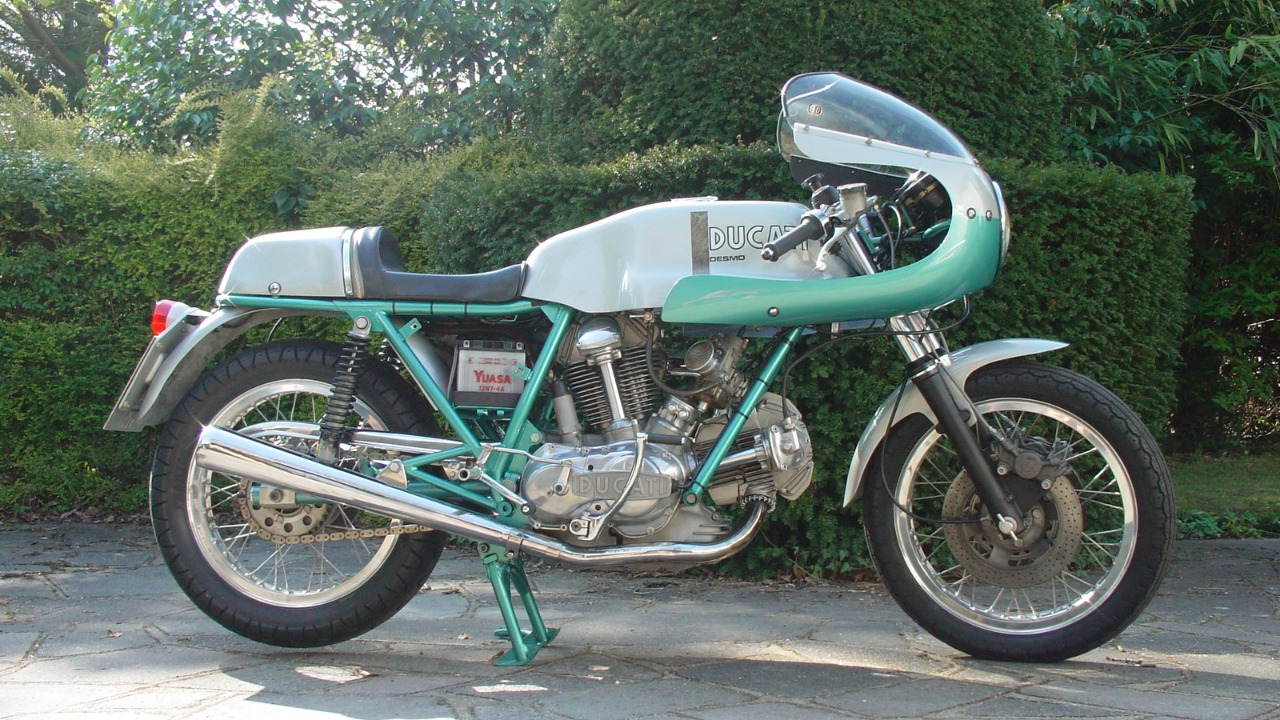
The Ducati 750 Super Sport occupies a special place in motorcycle history because it combined a charismatic air-cooled V-twin with a chassis that was focused heavily on sporting performance. The early versions were light, narrow, and built around the kind of mechanical simplicity that has become increasingly rare. Its desmodromic valve system and strong engine character give it plenty of personality, but the motorcycle’s real challenge today is understanding how much rider involvement it expects.
There is very little isolation between rider and machine. Inputs are mechanical, the suspension is basic by modern standards, and the narrow tires have a much smaller footprint than contemporary performance rubber. The bike can feel wonderfully precise when ridden properly, but it does not flatter sloppy technique. Braking needs to be planned, corners need to be approached with a clear idea of the exit, and the engine rewards a rider who understands its preferred rev range. It is a classic sport bike in the purest sense, which also means it offers very little technological forgiveness.
Honda RC30
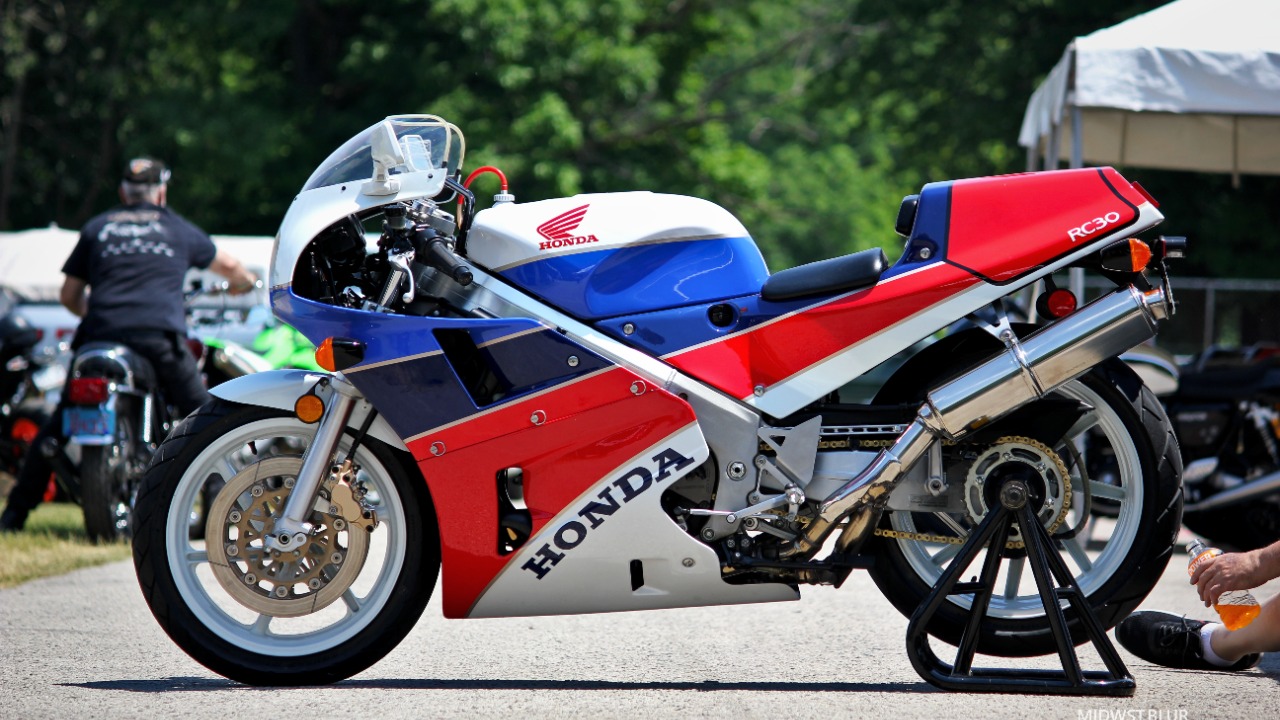
The Honda VFR750R RC30 is one of the most revered Japanese sport motorcycles of the late 1980s, and its reputation comes from far more than rarity. Developed as a homologation special, the RC30 used a 748cc V4 engine, lightweight construction, single-sided rear suspension, and a chassis heavily influenced by Honda’s racing program. It was extraordinarily focused for a road-legal motorcycle.
The RC30 can feel intimidating today for a different reason than the old two-strokes. Its hardware is genuinely good, but the riding position, compact dimensions, high-revving engine, and complete lack of electronic rider aids make it a very direct motorcycle. It does exactly what the rider asks, including when the rider makes a mistake. Modern sport bikes are much more forgiving of imperfect inputs because their electronics and tire technology can compensate for some errors. The RC30 expects the person riding it to be precise. That is a large part of what makes it so special, and also why it should never be mistaken for an ordinary old 750.