You know the type of pickup that turns every head at the gas station, then leaves its owner stranded at the service bay. Tough looks and big marketing claims do not always survive real-world towing, rust, or reliability tables. Here are 14 trucks that talked a big game, only for reality to hit once you started living with them.
Tesla Cybertruck

The Cybertruck might be the clearest example of a pickup that looks tougher than it really is. Fans loved the stainless steel panels and sharp angles, but owners and critics have raised serious concerns about the structure. One detailed post on The Cybertruck calls it “the epitome of fake toughness,” describing stainless panels hiding brittle, porous cast aluminum that is “fundamentally weak.”
For you as a buyer, that means the truck that looks like a sci‑fi tank may not shrug off hard work, corrosion, or impacts the way you expect. If the underlying cast pieces crack or deform, repairs can be expensive and time consuming. The stakes are high because you are paying premium money for a vehicle that promises extreme durability, yet the core structure is already under fire from people examining it up close.
Honda Ridgeline

The Honda Ridgeline sells itself as a smart, unibody alternative to body-on-frame trucks, and on paper it seems perfect for light-duty owners. Styling tweaks and chunky tires help it look tougher than a family crossover. Yet reporting on Pickup Trucks That flags “Honda Ridgeline – Premature Rusting Isn, Good Thing,” calling out how rust can show up earlier than many owners expect.
That kind of corrosion is not just cosmetic. Rust on suspension mounts, brake lines, or the underbody can shorten the life of a truck that you bought to last well over a decade. If you live where roads are salted, you need to factor in extra undercoating, frequent washes, and inspections. Otherwise, the Ridgeline’s laid-back, SUV-like charm can hide a long-term durability problem that undercuts its tough-truck image.
GMC Hummer EV Pickup

The Hummer EV looks like a military rig that wandered off a movie set, with massive tires and wild power figures. It even picked up praise for its powertrain, yet a closer look at Hummer EV coverage notes that “despite its impressive specs, the Hummer EV has encountered its share of problems,” including worries about build quality and long-term reliability.
For a truck that weighs over four tons and packs a huge battery, reliability concerns carry extra risk. Any issue with the battery pack, electronics, or suspension can be expensive to fix and may sideline the vehicle for weeks. You might love the crab-walk mode and silent acceleration, but if you need a dependable work partner instead of a weekend toy, those red flags should make you think twice before signing a long finance contract.
Subaru Baja

The Subaru Baja tried to blend a wagon and a pickup, and visually it had plenty of attitude with cladding, roof bars, and a small bed. Yet when you look at a list of disappointments that includes the Most Disappointing Pickup, the Subaru Baja shows up as an infamous effort, with “Courtesy Auto Trader” images reminding you how small and compromised that bed really was.
If you needed to haul lumber, tow a camper, or carry dirt bikes, the Baja’s limited payload and short bed made it more lifestyle accessory than tool. Owners often ended up hitting the limits of its capability much faster than with a traditional midsize truck. That mismatch between adventurous styling and modest hardware is exactly how you wind up with a pickup that looks ready for anything, yet struggles with basic truck chores.
Chevrolet Avalanche

The Chevrolet Avalanche came with a bold, blocky design and the clever midgate that let you extend the bed into the cabin. It looked like the Swiss Army knife of trucks. Yet the same rundown of disappointments that highlights the Subaru Baja also calls the Chevrolet Avalanche one of the most disappointing cars in the company’s history.
Owners ran into issues with complex body panels, cladding that aged badly, and a heavy platform that hurt fuel economy. The midgate system also introduced more seals and parts that could leak or rattle over time. If you bought one expecting a tough, low-maintenance work truck, you often got a high-maintenance compromise instead. The Avalanche shows how clever features can still fall flat when durability and simplicity take a back seat.
Jeep Gladiator (2020)

The Jeep Gladiator looks like a Wrangler that hit the gym, and the 2020 launch year drew huge attention from off-road fans. However, a dealer-focused breakdown of reliability explains that As the launch year, the 2020 Gladiator (Jeep Gladiator) “saw several reported problems, particularly with electronics and build quality,” and did not meet the same reliability standard as later years.
That matters if you plan to wheel your truck far from pavement or keep it for a decade. Electrical glitches can shut down lockers, cameras, or even the infotainment system when you need navigation. Early build-quality issues also hurt resale value, since buyers often search for later model years. The 2020 Gladiator still looks the part, but you are better off treating it as a first-year experiment rather than a proven workhorse.
Chevrolet Colorado (Redesigned)

The redesigned Colorado arrived with sharp styling, turbo engines, and a promise to compete with any midsize truck. On the lot, it looks like a downsized full-size, ready for trails and job sites. Yet a reliability ranking cited in a list of 12 notoriously unreliable used trucks says the redesigned Colorado is one of the lowest-scoring trucks in recent reliability tables, with the worst score in the truck segment.
When a truck that new lands at the bottom of those charts, you have to ask what ownership looks like at 80,000 miles. Problems with new drivetrains, electronics, or build consistency can mean more time at the dealer and higher long-term costs. If you want a midsize pickup that can age gracefully, those early warning signs suggest you should look at rivals with stronger track records before you commit.
Nissan Titan (Late-Run Models)

The Nissan Titan always tried to look as tough as the Detroit full-size trucks, with big chrome grilles and V8 power. Yet a breakdown of underperforming pickup trucks describes how the Titan struggled in the competitive full-size market, with consistently low sales figures that pushed Nissan to wind the model down.
Low demand has real consequences for you. When a truck leaves the market, aftermarket support can fade, resale values may soften, and future parts availability becomes less certain. The Titan can still tow and haul, but its market failure shows that looking tough is not enough if buyers do not trust the long-term story. If you want a truck with deep support and strong resale, this is a cautionary tale.
Subaru Baja Turbo

The Subaru Baja Turbo cranked up the visual drama with brighter colors, body cladding, and a more aggressive stance than the base Baja. It promised rally-inspired power in a pickup-style shell. Yet the same disappointed tone that surrounds the Most Disappointing Pickup list applies here too, because the basic package did not change: the bed stayed tiny and payload modest.
Adding a turbo engine also raised concerns about long-term mechanical stress, especially if owners towed or carried heavy loads that the chassis was never designed to handle. Instead of a rugged hauler, you got a quirky, niche vehicle that demanded careful maintenance. If you wanted a truck that could take abuse without complaint, the Baja Turbo’s flashy upgrades did not fix the underlying limitations.
Honda Ridgeline (First Generation)

The first-generation Honda Ridgeline leaned hard on its tough styling, with an angular bed and integrated trunk that felt ahead of its time. Marketing pushed it as a smarter truck for real life. Yet the same reporting that highlights “Honda Ridgeline – Premature Rusting Isn, Good Thing” in a list of Pickup Trucks That shows how corrosion concerns followed that early design as well.
When you combine a unibody structure with rust-prone areas, repairs can be more complex than on a traditional frame truck. You cannot simply swap a frame rail when the body and frame are one piece. That means a Ridgeline that looks fine on top can hide costly issues underneath. For shoppers in snowbelt regions, the first-gen truck’s friendly image should be balanced against the possibility of serious underbody work down the road.
Chevrolet Colorado (Older Generations)

Earlier versions of the Colorado wore squared-off styling and off-road packages that made them look ready for hard use. Many buyers treated them as budget alternatives to full-size trucks. However, a reliability rundown that labels the redesigned Colorado as one of the lowest-scoring trucks also hints at a longer history of mixed dependability.
Older Colorados have been criticized for engine issues, dated interiors, and spotty build quality. If you shop used, that history matters more than the off-road decals or aggressive grille. A cheap purchase price can quickly vanish if you are chasing electrical gremlins or drivetrain repairs. For a truck that looks like an easy way into pickup ownership, the long-term ownership story can be much rougher than the styling suggests.
Jeep Gladiator Mojave

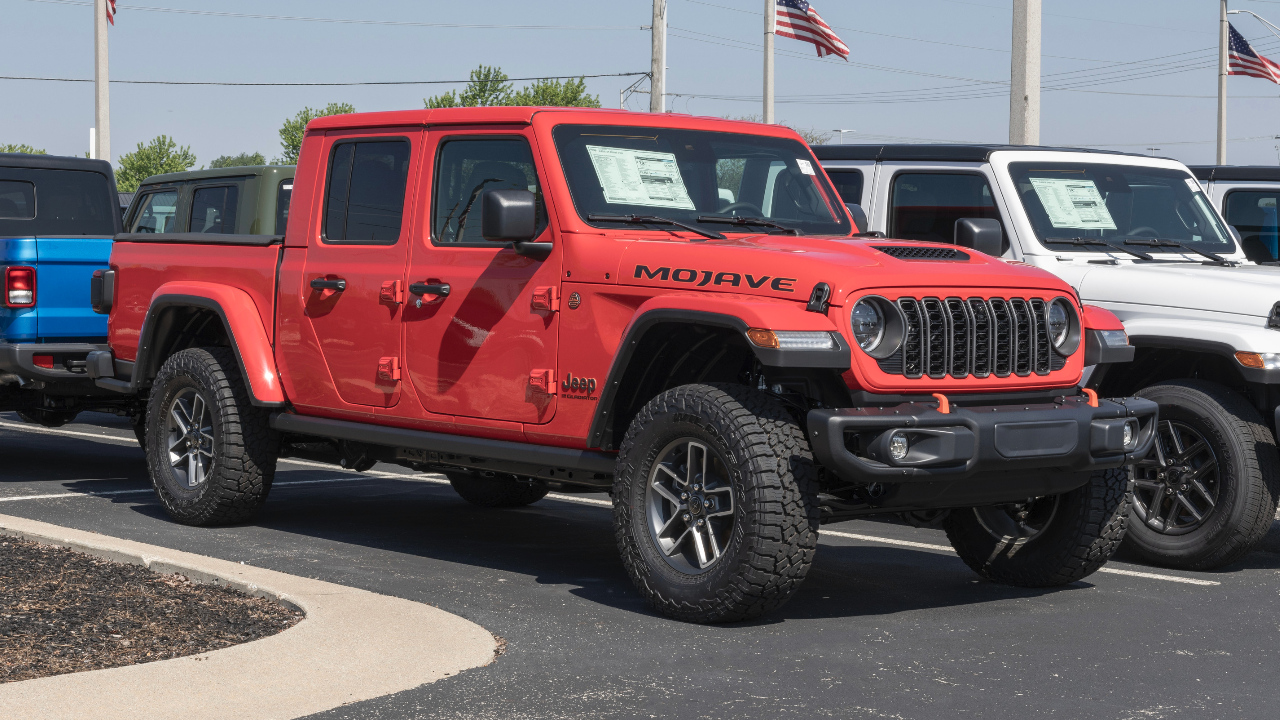
The Jeep Gladiator Mojave trim looks like the desert racer of your dreams, with lifted suspension, bold graphics, and chunky tires. It sends a clear message that it is built for abuse. Yet the same dealer analysis that states launch year 2020 Gladiator had electronics and build-quality problems applies to Mojave models built in that period as well.
If you are bombing across whoops or crawling over rocks, any weak link in electronics or assembly becomes a big deal. Suspension components, steering, and drivetrain parts all face more stress in this trim. The Mojave proves that a factory lift and orange accents do not erase first-year issues. You need to weigh the cool factor against the risk of owning one of the less reliable versions of an already complex truck.
Cadillac Escalade EXT

The Escalade EXT blended pickup utility with full-size luxury SUV presence. Chrome wheels, bold bodywork, and a premium badge made it look like the ultimate status truck. But beneath the flash, it shared much of its structure with GM SUVs and carried substantial weight.
Fuel economy was poor, parts were expensive, and complex electronics added long-term ownership risk. While it could handle light hauling, it was rarely used as a true work truck. The EXT’s tough image often masked the reality that it was more showpiece than serious tool, with upkeep costs to match its upscale branding.
Toyota Tundra (2007–2010 Early Redesign Years)

The second-generation Toyota Tundra launched with huge dimensions and a powerful 5.7L V8, clearly aimed at Detroit’s full-size dominance. It looked every bit the heavy-duty contender. However, early production years faced complaints ranging from cam tower oil leaks to secondary air injection pump failures that triggered expensive repairs.
While the Tundra generally maintained a strong reliability reputation overall, those early hiccups surprised buyers who expected flawless durability. The truck still performed well under load, but the gap between expectation and early real-world ownership costs caught some owners off guard.
More from Fast Lane Only