

Muscle cars are usually remembered for displacement, horsepower, and quarter-mile times—but factory paint codes? That’s where things get surprisingly interesting. Some of the most collectible muscle cars owe their value not to what’s under the hood, but what color they left the factory in.
This list looks at 15 standout muscle cars finished in rare, often overlooked paint codes. These aren’t your everyday reds, blacks, or blues. These are the colors that make even seasoned collectors double-check the fender tag.
1. 1970 Plymouth Duster – Panther Pink

The 1970 Plymouth Duster in factory Panther Pink (paint code FM3) is one of the rarest and most eye-catching combinations to leave a Chrysler plant. While the Duster was designed as an affordable, compact muscle car, ordering it in Panther Pink turned it into a bold statement piece. The color was part of Mopar’s High Impact Paint lineup and was officially only offered for a short time in 1970.
Because Panther Pink was rarely chosen—especially on Dusters—it’s become a serious collector draw. Most buyers at the time opted for more traditional shades, making FM3 cars incredibly scarce today. When paired with black or white interiors and optional performance packages like the 340 V8, Panther Pink Dusters are now standout survivors in the Mopar world.
2. 1970 Plymouth ‘Cuda – In Violet (Code FC7)

In Violet—also known as Plum Crazy over at Dodge—was one of Chrysler’s “High Impact” colors, but surprisingly few buyers ordered it on their ’70 ‘Cuda. Most stuck with Hemi Orange or Lime Light, leaving this purple bruiser to only the bold.
When paired with the 426 HEMI or even a high-compression 440, In Violet gave the ‘Cuda an unmistakable presence. It was loud without even starting the engine. Today, FC7 cars are highly sought after—not just for the performance, but because so few had the nerve to pick purple when it was new.
3. 1970 Chevelle SS – Tuxedo Black (Code 10)
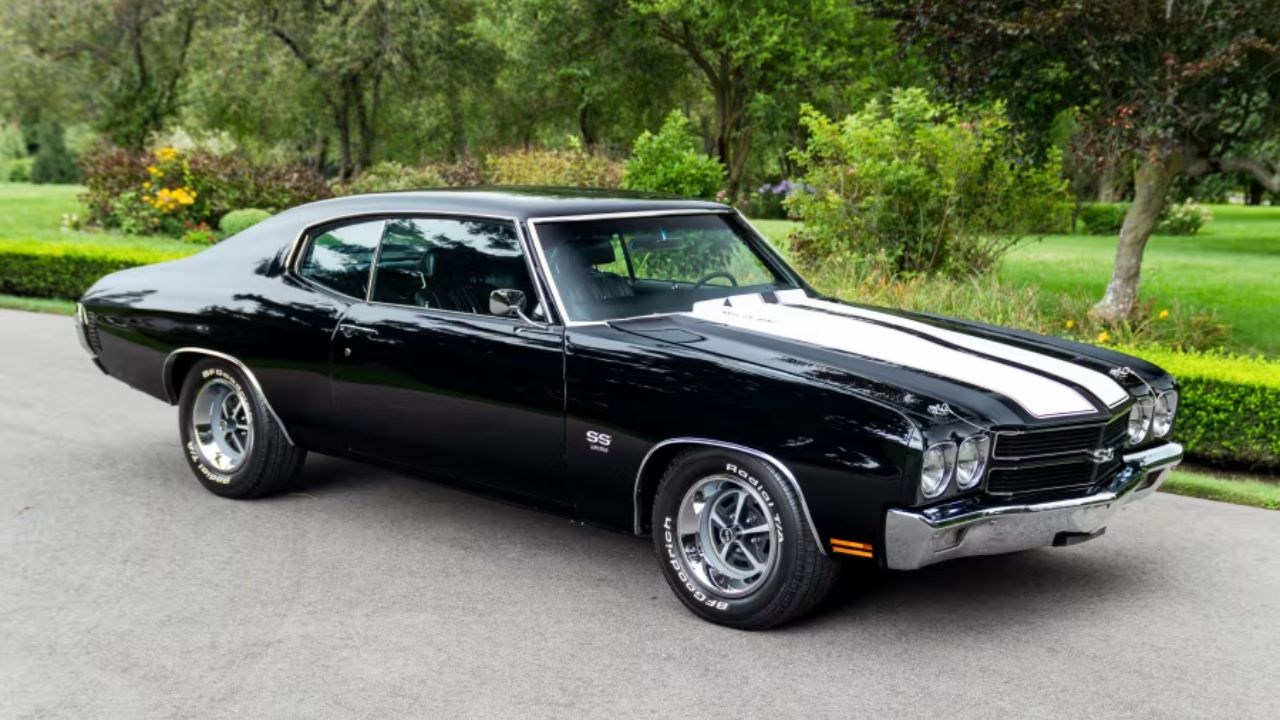
Tuxedo Black sounds common, but it was rarely chosen in 1970—especially on the Chevelle SS. GM’s brighter hues like Cranberry Red and Fathom Blue dominated dealer lots, while fewer than 1% of SS buyers opted for the deep, formal black.
When paired with an LS6 454 and cowl induction hood, a black-on-black Chevelle SS became a menacing presence. It didn’t need stripes or flair to make a point. These cars were sleepers in their day, but collectors now recognize how rare and intimidating the no-nonsense Tuxedo Black combo really was.
4. 1969 Dodge Charger – R4 Bright Red with White Top

Bright Red (Code R4) wasn’t rare on its own—but pair it with a white vinyl top and white interior, and you’ve got a surprisingly uncommon setup for 1969. Most buyers went with black or tan contrasts instead of this high-contrast combo.
Add a 440 Magnum or a HEMI into the equation, and you’ve got a Charger that’s hard to miss. The red-and-white pairing turns an already iconic design into something even more eye-catching. It’s not the rarest in raw numbers—but in originality and condition? It’s a unicorn.
5. 1971 Pontiac GTO – Quezal Gold (Code 5075)
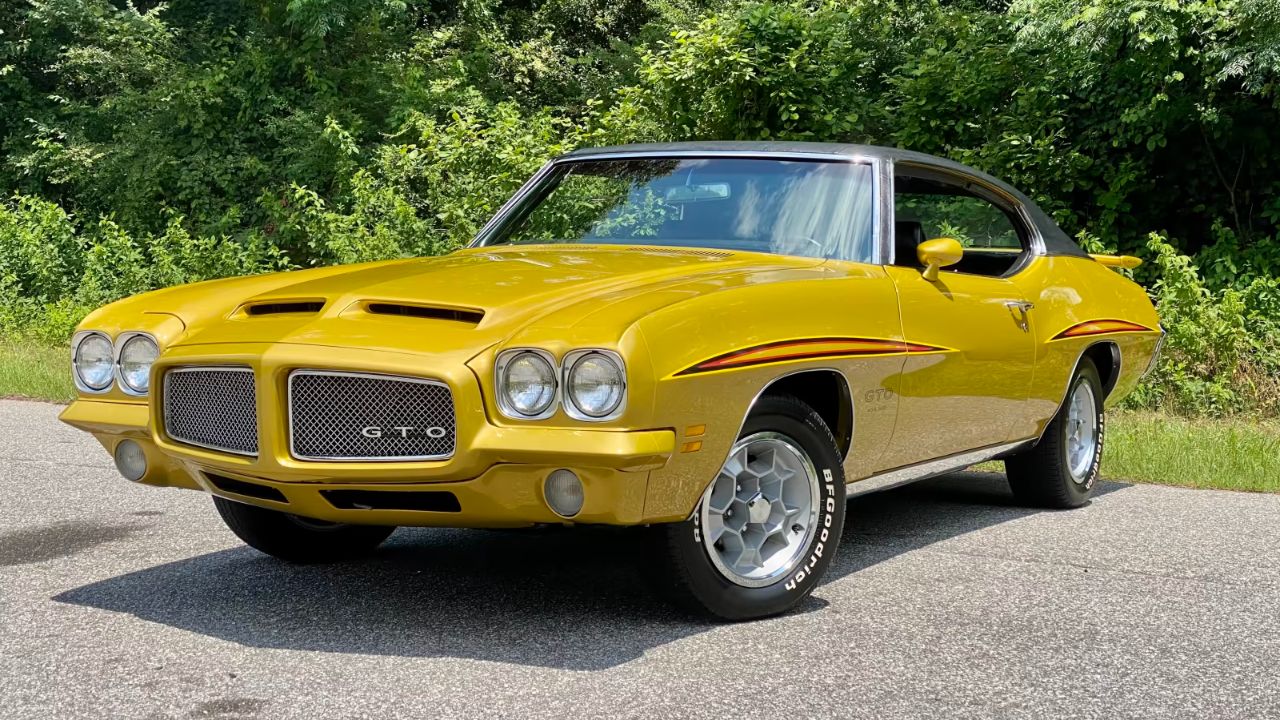
Quezal Gold was a one-year-only option for 1971, and it didn’t exactly fly off the lot. This warm metallic hue gave the GTO a classy, almost antique look that didn’t fit the street-fighting image most buyers were after.
Under the skin, the car still had plenty of muscle with a 400 or 455 V8 and performance suspension. But with Quezal Gold and Rally II wheels, it looked more high-society than high-speed. Today, survivors in this color are almost impossible to find—especially with matching drivetrain and original paint.
6. 1970 AMC AMX – Big Bad Green (Code 00)
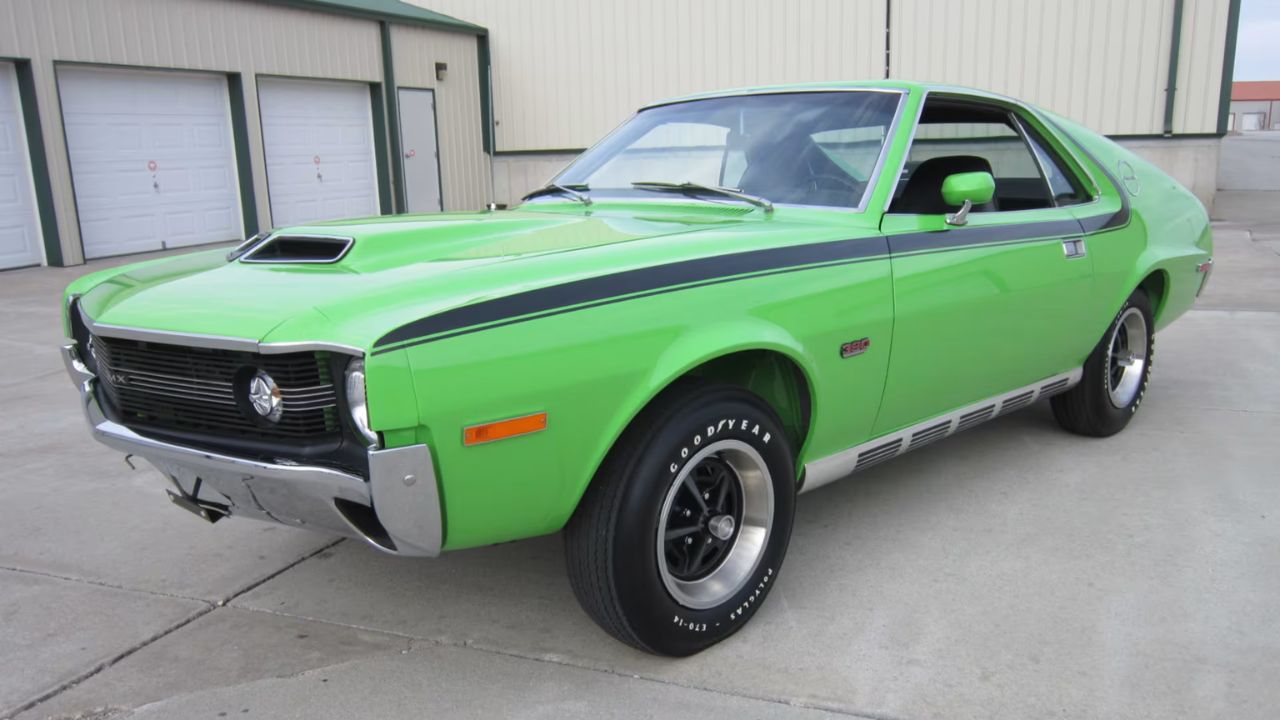
AMC’s “Big Bad” color lineup was an in-your-face marketing move, and Big Bad Green was by far the boldest. Available by special order only, this radioactive shade was rarely selected by AMX buyers, with fewer than 100 cars believed to have left the factory in it.
The AMX, with its two-seat layout and 390 V8, already stood apart from the pack. Painted Big Bad Green, it became a statement car in every sense. These cars were often raced, wrecked, or repainted, which makes true survivors nearly extinct today.
7. 1966 Ford Fairlane GT – Emberglo (Code V)
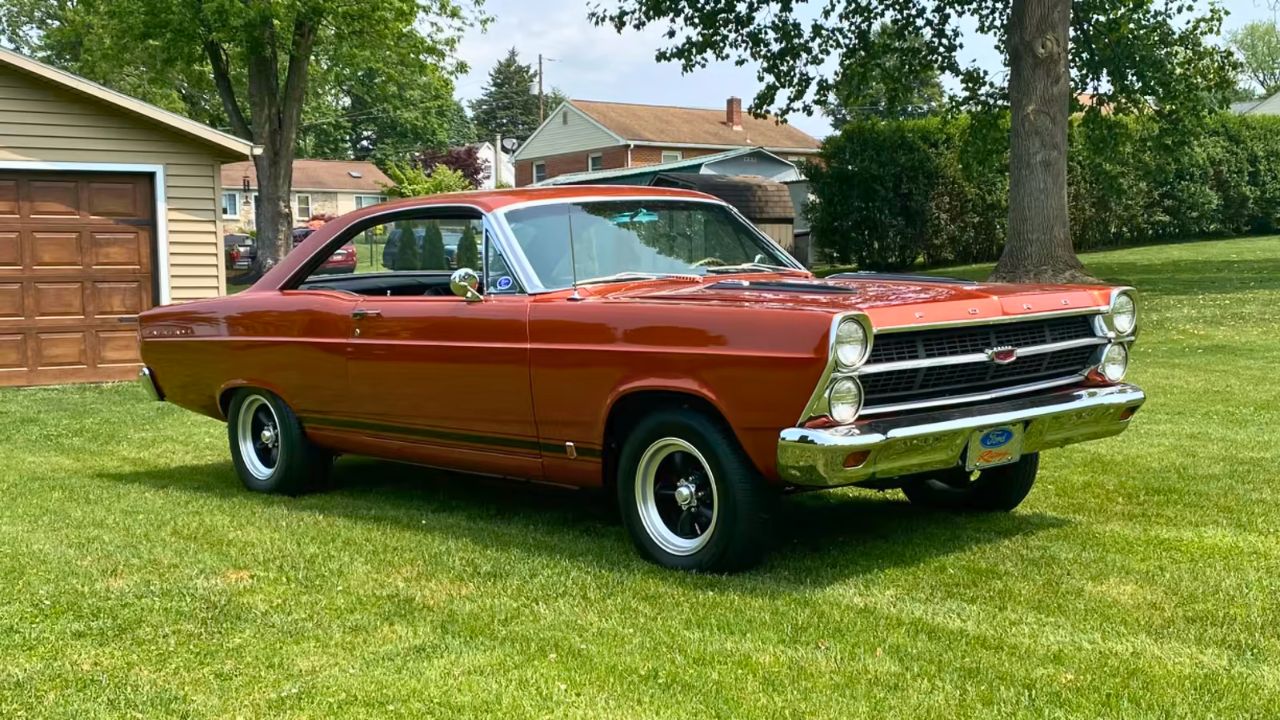
Ford’s Emberglo was one of those mid-’60s colors that defies easy description—part copper, part bronze, part burnt orange. It was available on 1966 Fairlane GTs, but rarely seen on high-performance versions like the GT 390.
With its 335-hp V8, bucket seats, and optional GT/A automatic, the Fairlane GT had solid muscle cred. But painted in Emberglo, it looked like a concept car that slipped through production. Very few remain in this color, especially with original interiors and matching tags.
8. 1970 Buick GSX – Apollo White (Code 10)

Everyone remembers the GSX in Saturn Yellow, but fewer know that the rarer color was Apollo White. Out of the 678 GSX cars built in 1970, only 187 wore this crisp, understated finish.
Under the skin, the Stage 1 455 made 510 lb-ft of torque—still one of the highest factory torque ratings of the era. In Apollo White, the GSX looked tame, but it packed serious bite. Today, these low-production cars are top-tier collectibles, especially with full documentation.
9. 1969 Plymouth Road Runner – Bahama Yellow (Code Y2)

Bahama Yellow was an oddball on the 1969 Road Runner—tropical and warm in an era when buyers leaned toward louder hues like Vitamin C or Rallye Green. Code Y2 was technically a carryover color and wasn’t part of Chrysler’s High Impact lineup.
Still, it worked. The Road Runner’s cartoon-bird vibe somehow matched the laid-back energy of Bahama Yellow. Add in a 383 or HEMI, and you had a muscle car that looked like it might burn rubber on its way to a beach bonfire.
10. 1971 Dodge Challenger R/T – Plum Crazy (Code FC7)

Plum Crazy is legendary now, but in 1971 it was less common than you’d think. Challenger buyers tended to lean toward black, red, or Top Banana yellow. As a result, fewer than 10% of ’71 R/Ts wore the FC7 code.
The Challenger R/T offered serious firepower with 383, 440, or HEMI engines—but Plum Crazy gave it instant curb appeal. It’s a combo that aged well. Cars that survived with original paint now fetch big numbers, and it’s easy to see why.
11. 1973 Pontiac Firebird Trans Am – Brewster Green (Code 48)

Brewster Green wasn’t flashy, but it had a richness that set it apart. Fewer than 800 Trans Ams were painted this deep forest tone in 1973, making it one of the rarest colors for that year.
That same year, Pontiac offered the Super Duty 455—a last gasp before smog laws choked muscle cars. In Brewster Green, the Trans Am looked stealthy, elegant, and dangerous all at once. Today, SD-455 cars in this color sit at the top of collector wish lists.
12. 1970 Oldsmobile 442 – Sherwood Green (Code 45)

Sherwood Green was offered on the 1970 Olds 442, but most buyers went for Rally Red or Twilight Blue. Code 45 cars were few and far between—especially those with W-30 or W-25 packages.
When paired with white stripes and the 455 big block under the hood, Sherwood Green 442s looked understated but serious. Survivors with this color and high-performance options are now prized by Olds collectors and nearly impossible to find unmolested.
13. 1970 Pontiac GTO Judge – Orbit Orange (Code 05)
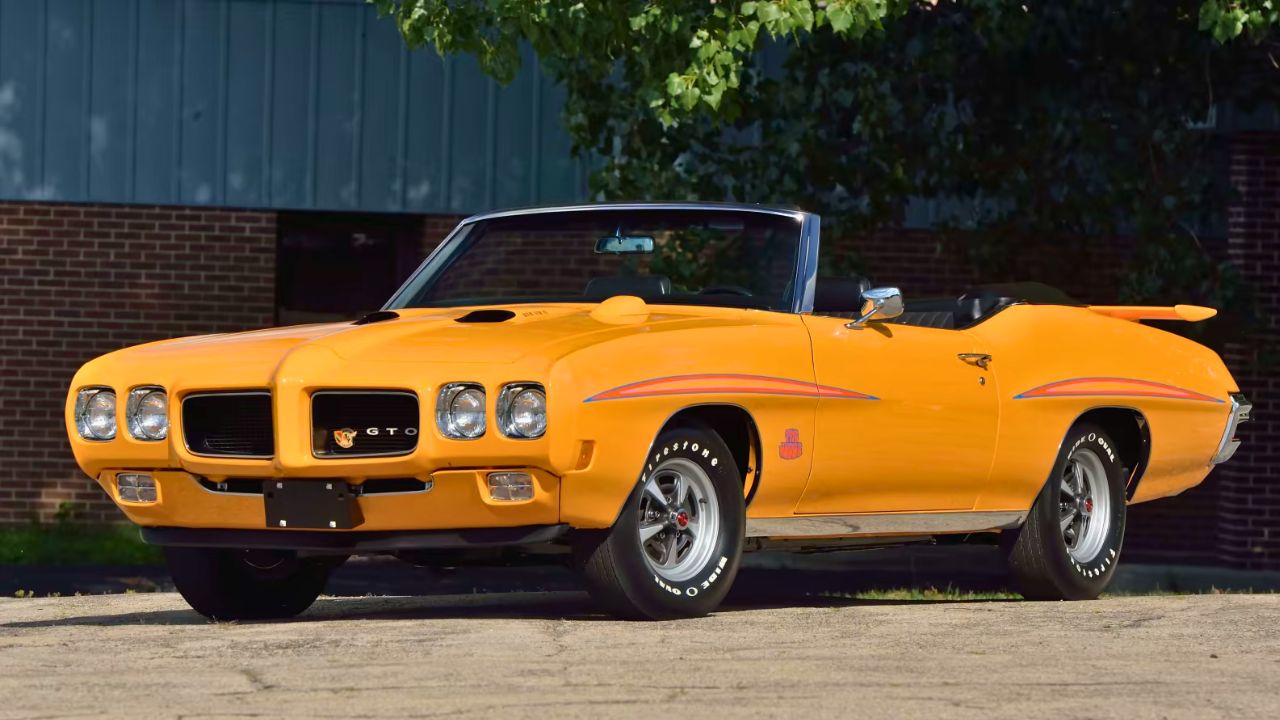
Orbit Orange is hard to miss—and that’s exactly why so few buyers chose it. Available in 1970 only, this screaming highlighter shade was meant to grab attention, and it did. Just not in big numbers.
Combine Orbit Orange with The Judge package and a Ram Air IV engine, and you’ve got one of the loudest, fastest, and rarest Pontiacs ever built. It was too much for most buyers in 1970, but today, collectors are lining up for the few that survived.
14. 1971 Chevrolet Camaro SS – Antique Green (Code 42)

Antique Green was an easy-to-miss option in 1971, and that’s probably why hardly anyone checked the box for it. Most Camaro SS buyers picked Hugger Orange or Cranberry Red instead.
The SS 396 (actually a 402 by this point) was still available, but the green made it look more executive than aggressive. Today, it’s a sleeper color that doesn’t show up often, but when it does, it gets noticed—for being original, and for daring to be different.
15. 1967 Chevrolet Camaro – Mountain Green
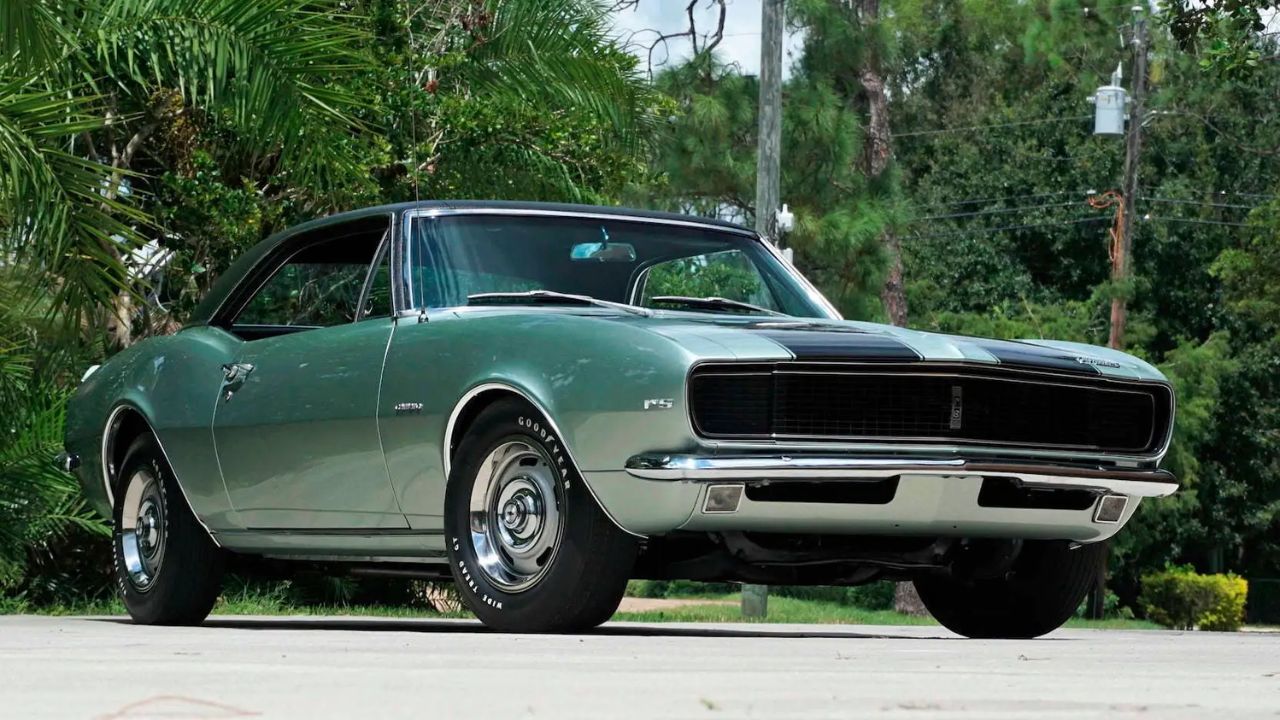
Mountain Green was a subtle yet uncommon choice for the 1967 Chevrolet Camaro, the first year of production for Chevy’s now-iconic pony car. This understated metallic green (paint code H) offered a cooler, more reserved look compared to the bold reds and blues more commonly seen on first-gen Camaros. As a result, Mountain Green examples were produced in low numbers.
That rarity has made surviving Mountain Green ’67 Camaros especially desirable among collectors. When paired with Rally Sport or Super Sport trim, the contrast between the muted paint and aggressive styling gives the car a unique presence—quiet on the surface, but unmistakably serious.
Like Fast Lane Only’s content? Be sure to follow us.
Here’s more from us:
*Created with AI assistance and editor review.



Leave a Reply