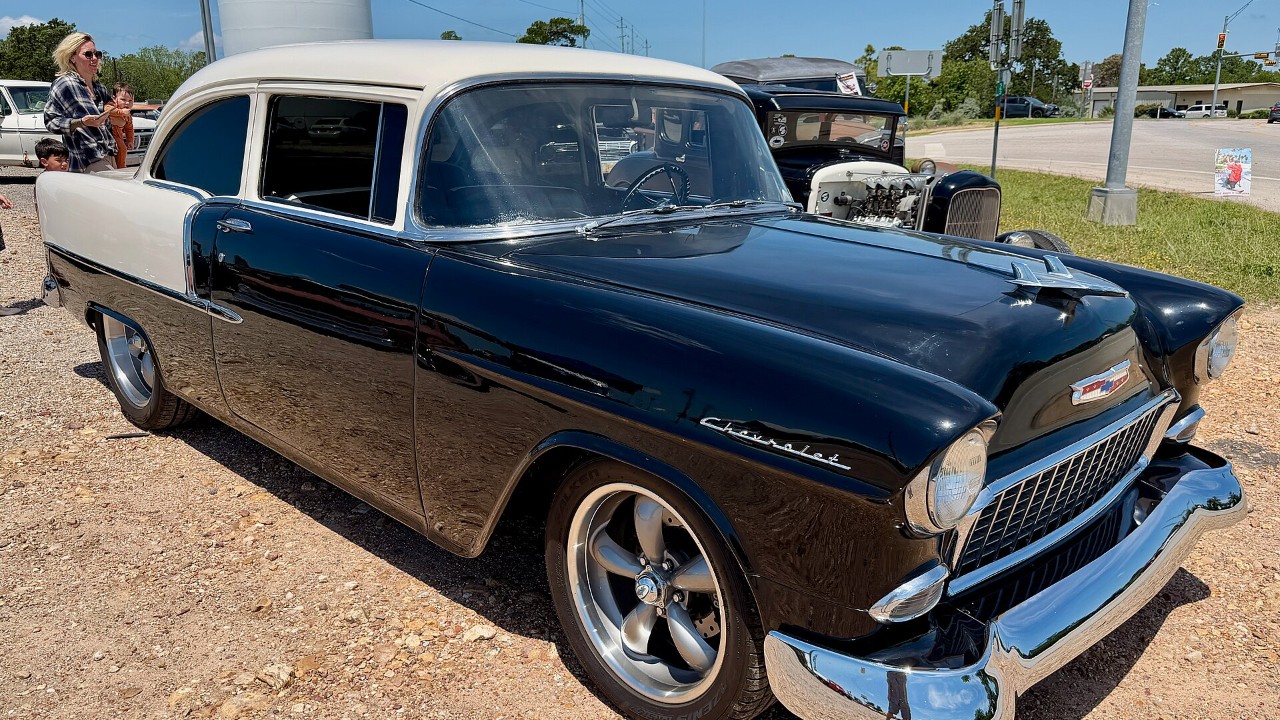
Six American brands put a new overhead-valve V8 in their 1955 cars, and the 1955 V8 engines they chose ran from Chevrolet’s 265 to Packard’s 352. Some makers designed their own engine, while others bought one from a rival. In fact, two of these brands shared the very same V8.
An overhead-valve engine puts its valves in the cylinder head, above the pistons. By contrast, an older L-head, or flathead, keeps them in the block beside the cylinders. So here is what each brand offered that year, with displacement and horsepower traced to a named source.
1. 1955 Chevrolet 265 V8
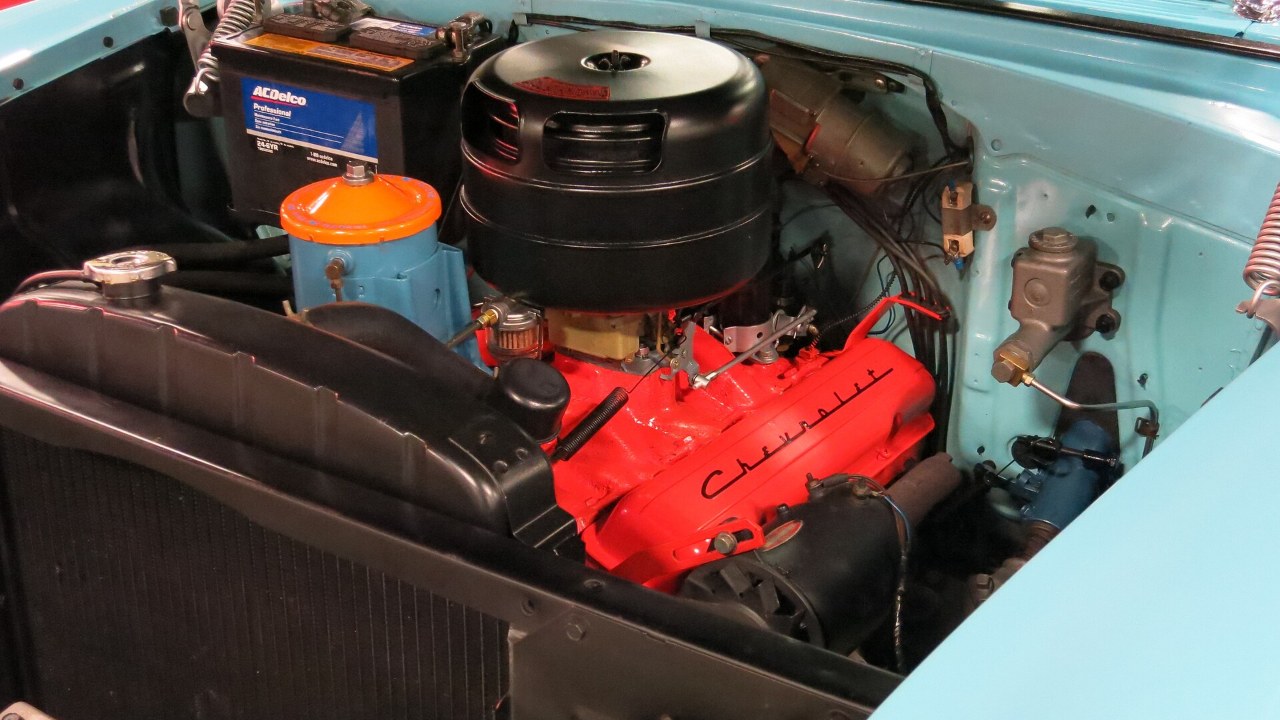
Chevrolet’s new V8 is the best known engine on this list. First, it went into the redesigned 1955 cars, including the Bel Air. However, it was not the brand’s first V8.
According to Restore An Old Car’s small-block history, Chevrolet built a 288-cubic-inch overhead-valve V8 for its D-Series cars in 1917 and 1918 only. By contrast, the 1955 engine used a 3.75-inch bore and a short 3.00-inch stroke for 265 cubic inches. With a two-barrel carburetor and 8.0:1 compression, it made 162 horsepower.
Buyers who wanted more could order the Power Pack. Hagerty’s price guide for the 1955 Bel Air says its four-barrel carburetor and dual exhausts lifted output to 180 horsepower.
2. 1955 Pontiac 287 Strato-Streak V8
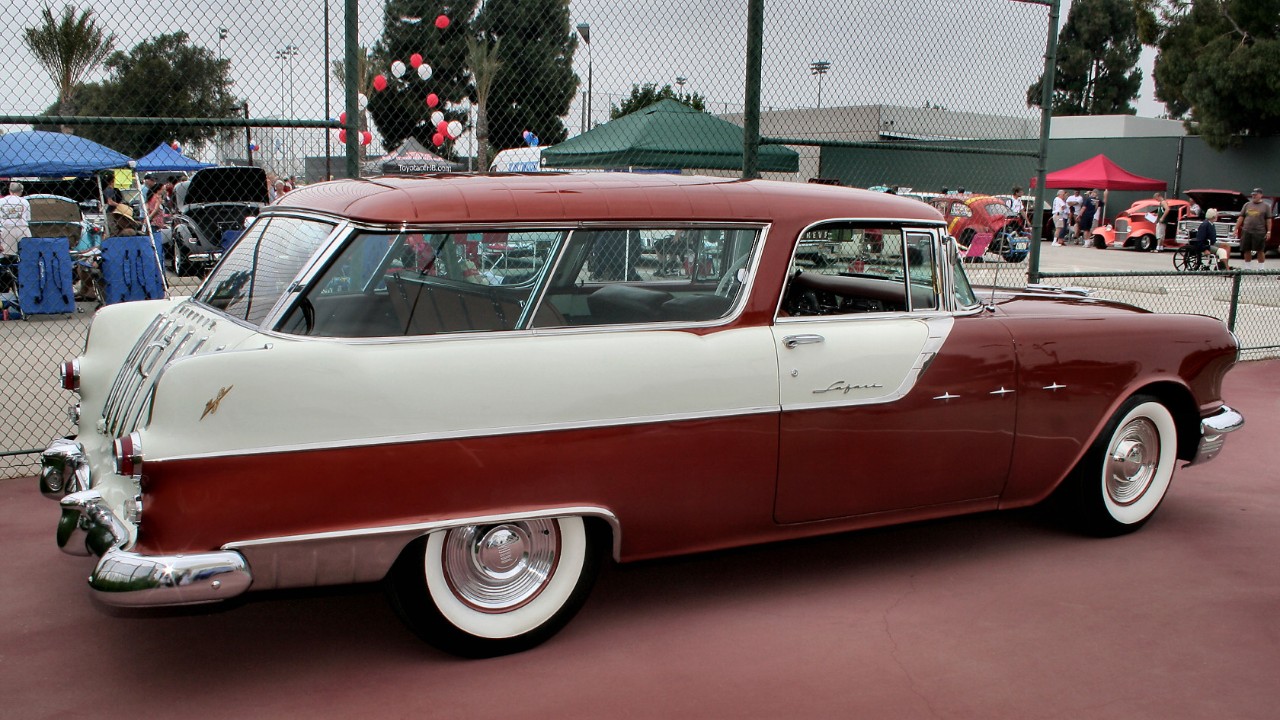
Pontiac had been even slower to modernize. Before 1955, according to Mac’s Motor City Garage, the division relied on “antiquated L-head sixes and straight eights.” The new Strato-Streak V8 replaced them in an all-new car aimed at younger buyers.
In addition, the 287-cubic-inch engine came in three versions, rated at 173, 180 and 200 horsepower. A three-speed manual was standard. Even so, more than 90 percent of buyers paid $178 extra for the four-speed Hydra-Matic. Pontiac also sold more than 550,000 cars that year, Mac’s reports.
3. 1955 Plymouth Hy-Fire V8
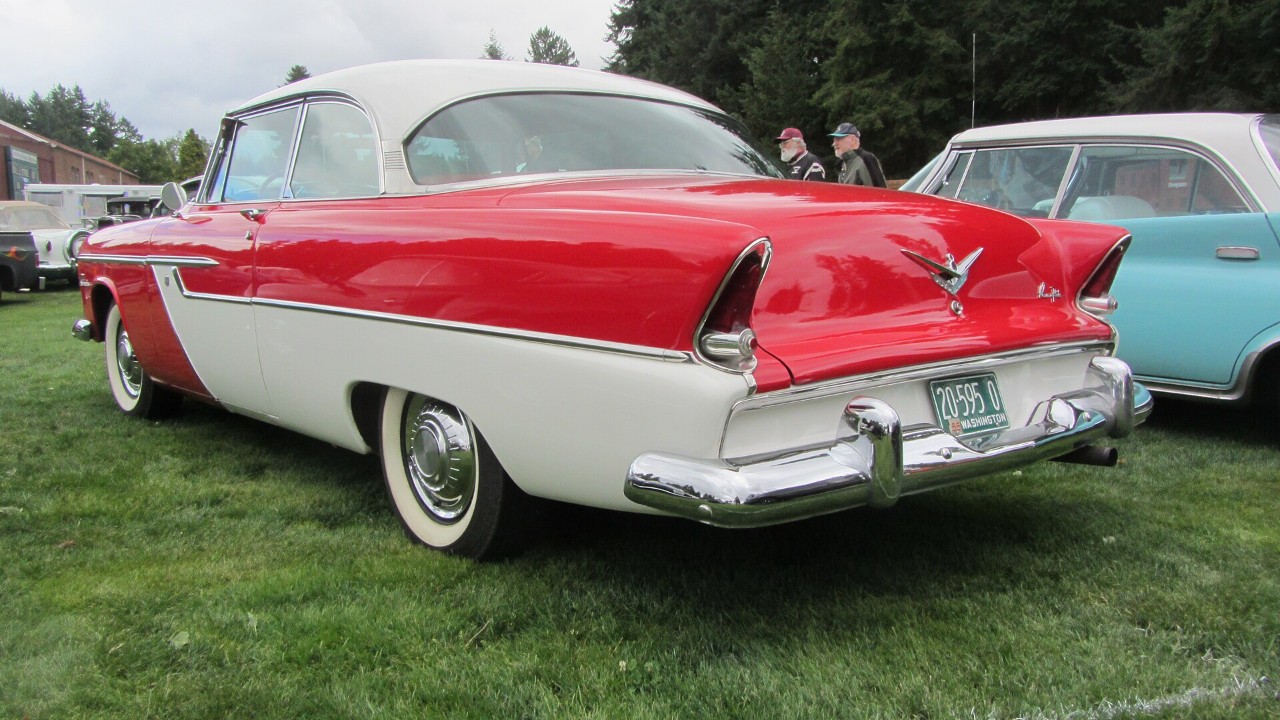
Plymouth got its first V8 in 1955, along with Virgil Exner’s Forward Look styling. The engine was Dodge-based, and Plymouth would get its own V8 a year later, according to Mac’s Motor City Garage. The Hy-Fire used polyspherical combustion chambers and a less costly single rocker shaft for each bank.
There were three states of tune. First came a 241-cubic-inch base V8 with 157 horsepower. Next was a 260 with a two-barrel carburetor and 167 horsepower. Then, at mid-season, a 260 with a four-barrel, dual exhausts and 177 horsepower arrived. Meanwhile, the division had its best year to date, selling more than 705,000 cars.
4. 1955 Hudson Hornet V8 (Packard 320)
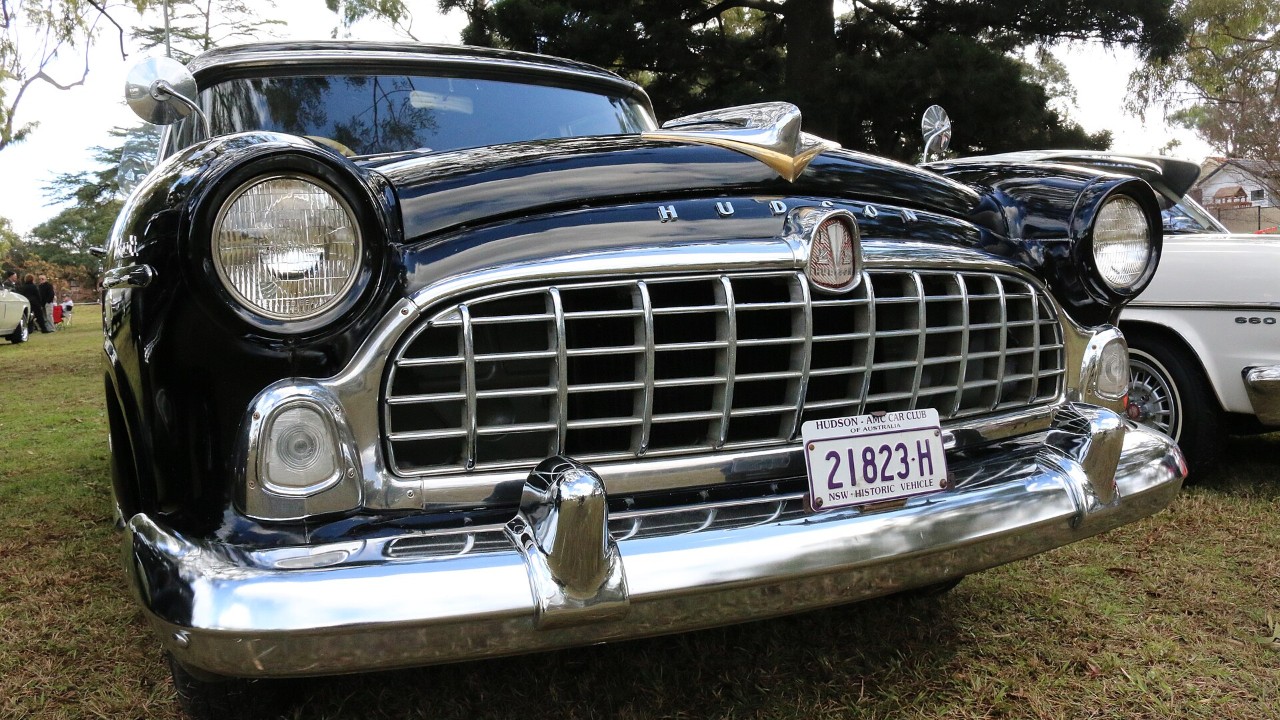
Hudson’s V8 came from another company entirely. Nash and Hudson had merged in May 1954 to form American Motors. For 1955, according to Automotive Timelines, Hornet buyers could order a 320-cubic-inch V8 rated at 208 horsepower. Packard built that engine and the Twin Ultramatic transmission paired with it.
Still, the option stayed a small seller. Automotive Timelines reports that 6,219 Hudsons left the factory with it. By then, all Hudsons rode on the senior Nash models, notes Unique Cars and Parts. Production had also moved to Nash’s Wisconsin factory.
5. 1955 Nash Ambassador V8 (Packard 320)
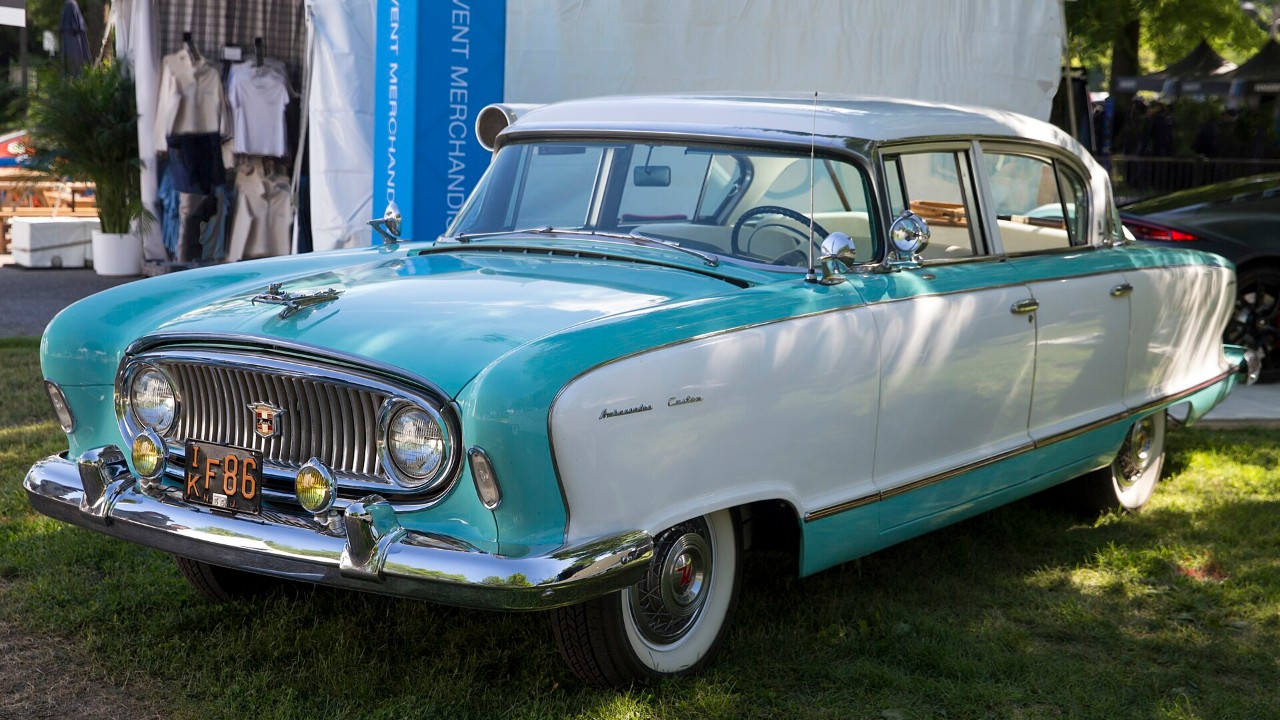
The Nash Ambassador got the same engine. Old Cars Weekly says American Motors “settled on a 320-cid power plant purchased from Packard.” Its spec sheet lists 208 horsepower at 4,200 rpm. Also, the V8 came only with the Twin Ultramatic, which Packard supplied as well.
That’s why Hudson and Nash count as two brands here but share one engine. Old Cars Weekly calls 1955 the year both marques entered “the high-compression overhead-valve V-8 sweepstakes.” One passage in the same story mentions 220 horsepower. However, its spec sheet and Automotive Timelines both give 208.
6. 1955 Packard 320 and 352 V8
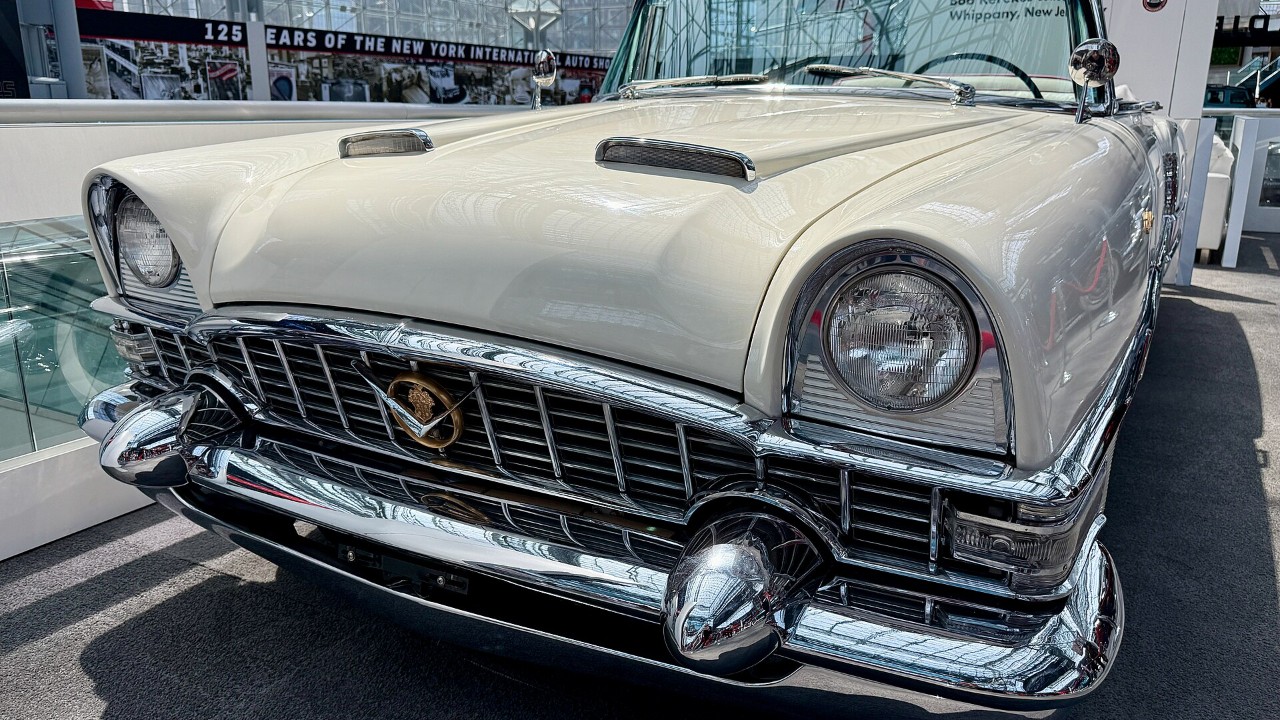
Packard built the engine the other two brands bought. Over-Drive Magazine’s 1955 Packard fact sheet calls it the “long-awaited OHV V-8.” For 1955, it came in 320- and 352-cubic-inch sizes, with 225 to 275 horsepower.
In the Clipper, the 320 made 225 horsepower at 4,600 rpm. By comparison, the 352 made 245 horsepower in the Clipper Custom and 260 in the senior Packard line, including the Patrician and Four Hundred. At the top, the Caribbean’s 352 wore two four-barrel carburetors for 275 horsepower at 4,800 rpm. According to Over-Drive, Packard delivered just 500 Caribbeans that year.
More from Fast Lane Only
- Unboxing the WWII Jeep in a Crate
- 15 rare Chevys collectors are quietly buying
- 10 underrated V8s still worth hunting down
- Police notice this before you even roll window down
This article was created with the help of AI and was reviewed and edited by Fast Lane Only editors before publication.