The 1964 Pontiac GTO did not just kick off a new trim line, it crystallized the American muscle car formula that would dominate streets and drag strips for the rest of the decade. By pairing a midsize body with big V8 power and a street-friendly price, it turned a clever option package into a cultural turning point, and today that origin story is a major driver of rising collector interest and escalating values. I want to trace how the car came together, what made its hardware so compelling, and why the market now treats early GTOs, especially 1964 models, as blue-chip pieces of muscle history.
The backstory: how Pontiac smuggled a muscle car into showrooms
The first GTO emerged from a mix of corporate rule-bending and sharp reading of youth culture inside Pontiac’s engineering offices. General Motors had an internal ban on midsize cars with engines larger than 330 cubic inches, so Pontiac engineers packaged the GTO as an option on the Tempest Le Mans rather than a standalone model, effectively sidestepping the displacement cap while keeping the car technically compliant with corporate policy. That decision turned what could have been a one-off engineering exercise into a volume product that dealers could order in meaningful numbers, and it set the template for other brands to bolt big engines into intermediate platforms and market them as performance packages rather than separate nameplates.
What made this strategy work was Pontiac’s sense that younger buyers wanted something more aggressive than full-size cruisers but more affordable than limited-production performance specials. By dropping a large V8 into a relatively light A-body chassis and keeping the base car’s practical dimensions, Pontiac created a machine that could serve as both daily transportation and weekend drag racer. The GTO badge, borrowed from European racing nomenclature, added a layer of aspirational flair that helped the car stand out in showrooms and advertising, reinforcing the idea that this was a serious performance step up from a standard Tempest or Le Mans.
Key specs that defined the 1964 GTO formula
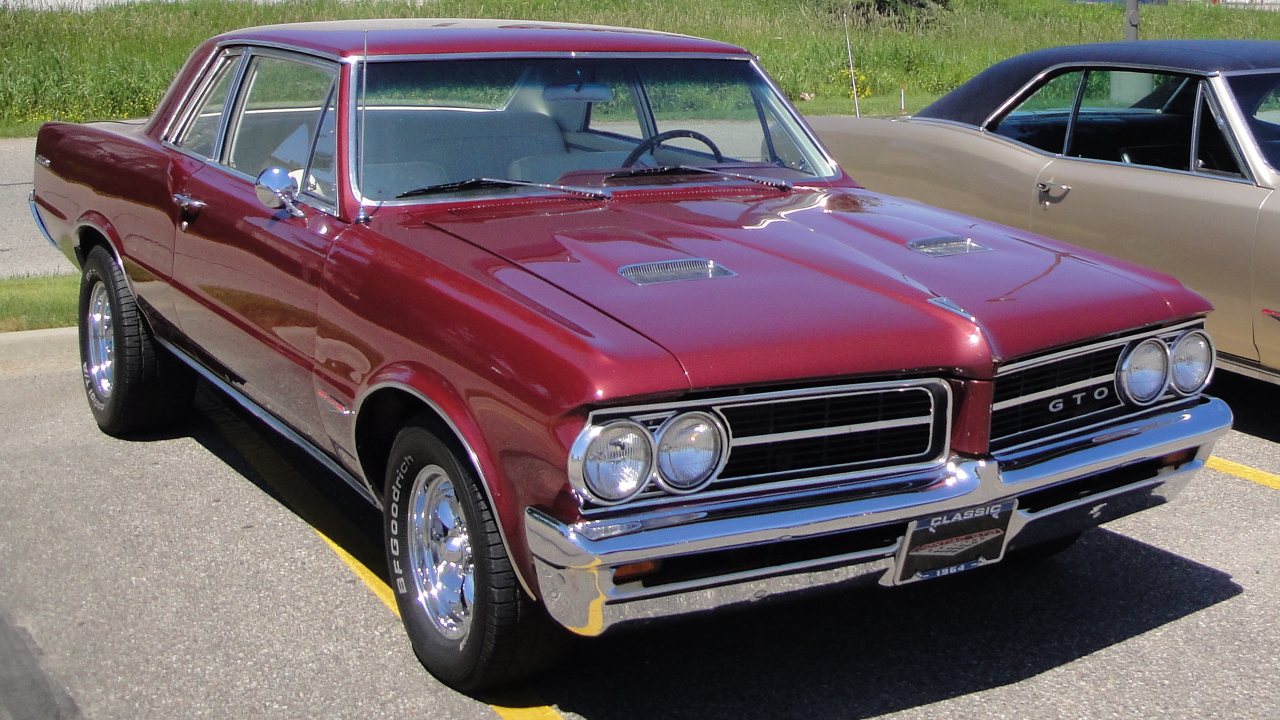
Under the hood, the 1964 GTO’s core appeal rested on its 389 cubic inch V8, which delivered strong power in a package that still looked like a sensible midsize coupe or hardtop. The standard configuration used a single four-barrel carburetor, while the optional “Tri-Power” setup added three two-barrel carburetors that significantly improved airflow at higher rpm and gave the car a distinct visual signature when the hood was open. Buyers could pair that engine with a three-speed manual, a four-speed manual, or an automatic transmission, which meant the car could be tailored to everything from boulevard cruising to serious drag strip duty.
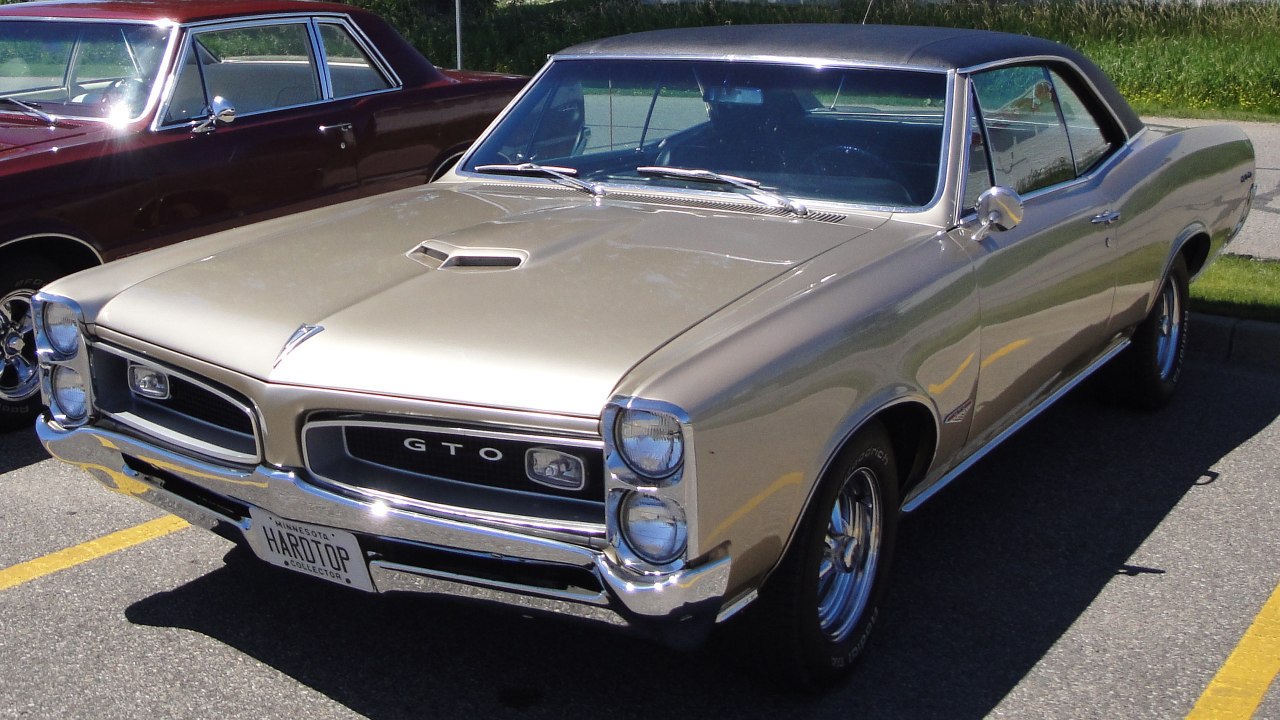
The chassis and appearance details rounded out the performance-first character without turning the car into a stripped-out special. Heavy-duty suspension components, upgraded brakes, and performance rear axle ratios helped the GTO put its power to the pavement more effectively than a standard Tempest, while cosmetic touches like hood scoops, unique badging, and optional rally wheels signaled its intent without sacrificing the basic practicality of the A-body platform. Inside, the car retained a relatively comfortable cabin with bucket seats and available console, which helped it appeal to buyers who wanted speed without giving up everyday usability.
How the 1964 GTO reshaped the muscle car landscape
Once the GTO option hit showrooms, its sales performance quickly validated Pontiac’s gamble and pushed competitors to respond with their own big-engine intermediates. The car proved that there was a substantial market for relatively affordable, high-horsepower coupes that could be ordered in volume, not just as limited-run halo models. That success encouraged other divisions inside General Motors, as well as rival brands, to develop similar packages, effectively launching a horsepower race in the midsize segment that would define the second half of the 1960s.
The 1964 model’s influence extended beyond raw numbers into how performance cars were marketed and perceived. By emphasizing quarter-mile times, engine displacement, and visual cues like hood scoops and badging, Pontiac helped codify the language of muscle car performance that enthusiasts still use today. The GTO’s blend of everyday drivability and serious straight-line speed set expectations for what a muscle car should deliver, and later iterations of the GTO, along with rival models, built on that foundation rather than reinventing it. In that sense, the first-year GTO functions as a blueprint that shaped an entire category of American performance cars.
Collectibility and the rising value of early GTOs
In the collector market, the 1964 GTO’s status as the first widely recognized muscle car has become a central part of its appeal and a key driver of rising prices. Enthusiasts increasingly view early GTOs as historically important, not just fast, and that perception tends to reward well-documented, correctly restored cars with strong auction results. Original drivetrain configurations, factory performance options, and rare combinations of body style and equipment can all push values higher, especially when supported by paperwork that confirms how the car left the factory.
Condition and authenticity now matter as much as raw performance numbers for serious buyers. Cars that retain matching-numbers engines and transmissions, correct interior trim, and factory-style finishes typically command a premium over modified or heavily customized examples, even when those modifications improve performance. As more collectors focus on preserving the GTO’s historical character, professionally restored cars that adhere closely to original specifications have seen particularly strong appreciation, while unrestored survivors with verifiable provenance often attract intense bidding when they surface.
What drives premiums: options, provenance, and market trends
Within the 1964 GTO universe, certain configurations consistently bring higher prices because they combine performance, rarity, and documentation. Tri-Power cars with four-speed manual transmissions, for example, tend to sit near the top of the value range, especially when paired with desirable body styles like hardtops or convertibles. Factory performance upgrades, such as specific axle ratios or heavy-duty cooling and suspension packages, can further enhance a car’s desirability when they are backed by build sheets, window stickers, or other period documentation.
Broader market trends also shape how collectors value these cars over time. Period-correct restorations have gained favor as judging standards at major shows and auctions increasingly reward accuracy, which encourages owners to source original-type components rather than modern replacements. At the same time, demographic shifts in the hobby mean that buyers who grew up with muscle cars as aspirational machines are now in a position to pay for the exact specifications they wanted in their youth, which helps sustain demand for high-quality 1964 GTOs. While individual sale prices can fluctuate with economic conditions, the combination of historical significance, limited surviving supply, and strong enthusiast interest has kept early GTOs on a steady upward trajectory in the collector car hierarchy.
More from Fast Lane Only