The 1968 Camaro Z/28 has shifted from weekend toy to serious blue-chip muscle, and buyers who treat it like any other first-gen Camaro risk paying top dollar for a car that will never decode as real. Values for documented examples have climbed into territory where paperwork, tags, and even trunk sheet metal matter as much as paint and horsepower. Navigating today’s market means understanding what made the Z/28 unique in period, why 1968 cars are notoriously tricky to verify, and how current pricing and restoration costs should shape any offer.
I approach the 1968 Z/28 as a car that rewards homework. The best examples combine authentic Trans-Am pedigree hardware with careful restoration, while the worst are clever clones built around vague stories and shiny paint. With a clear strategy for verification, condition assessment, and budgeting, it is still possible to buy confidently in a market that has become far more sophisticated than it was even a decade ago.
Why the 1968 Z/28 stands apart in today’s market
Among first-generation Camaros, the Z/28 package has always been the purist’s choice, and the 1968 model year sits in a sweet spot for collectors who want both early styling and refined hardware. The Z/28 was engineered as a road-racing tool, with a high-winding small-block, heavy-duty suspension, and serious brakes that made it a legitimate track car straight from the showroom. Period coverage of the 1967–1969 Z-28 line highlights how the package combined a race-bred 302 cubic inch V8 with a close-ratio four-speed, power front disc brakes, metallic-lined rear drums, and upgraded suspension components that turned the Camaro into what one source called a “racer’s delight,” all while staying just under displacement limits for competition Rule. That same blend of performance and homologation history is what keeps demand strong now.
From a buyer’s perspective, the 1968 Z/28 also benefits from being part of a well-documented trio of early Camaros, which allows direct comparison across 1967, 1968, and 1969 cars. A broad buyer’s guide to 1967–1969 Camaros notes that enthusiasts who favored road-course performance gravitated to the Z/28 trim, which arrived as a mid-year upgrade and was only available with a manual transmission, reinforcing its identity as a driver-focused package rather than a boulevard cruiser Feb. In today’s market, that original intent matters: buyers are paying for a specific combination of engine, gearbox, and chassis tuning that cannot be replicated by simply bolting parts onto a base Camaro, which is why documentation and correct components now carry such a premium.
Decoding authenticity: tags, VINs, and the 1968 headache
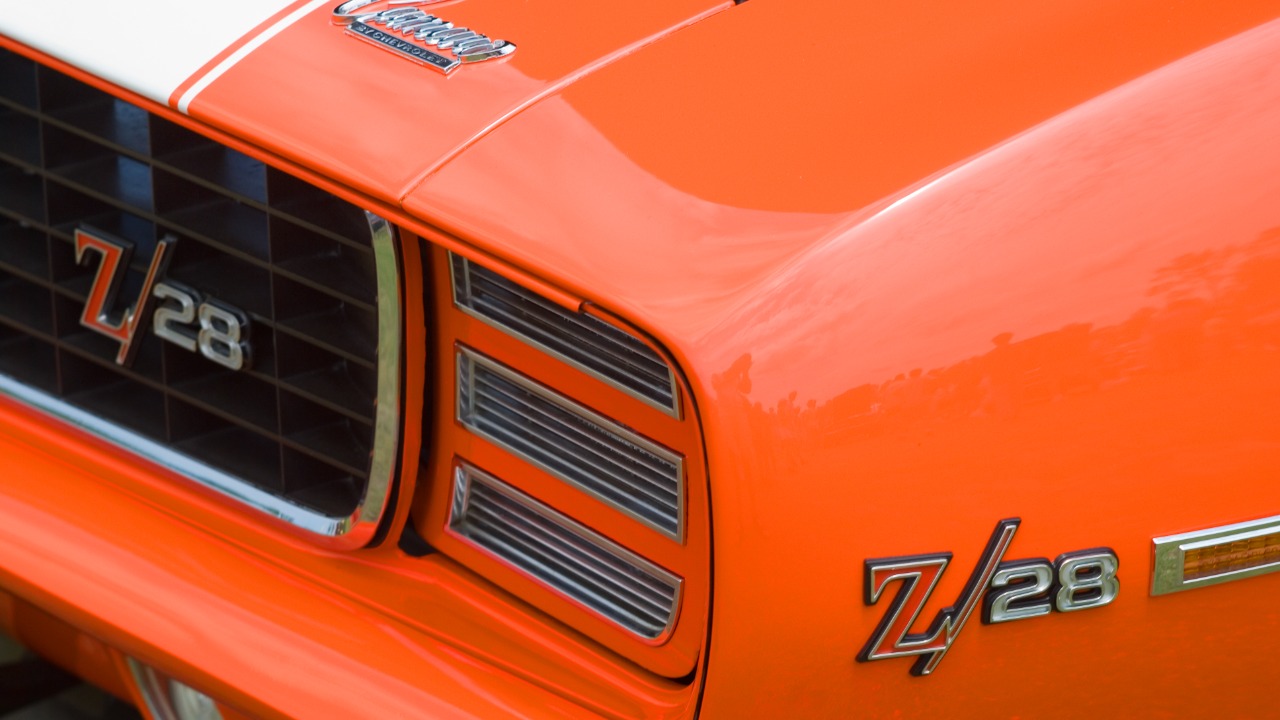
The single biggest risk in buying a 1968 Camaro Z/28 today is paying real money for a car that is not what it claims to be. Specialists who work with first-generation Camaros routinely describe 1968 Z/28s as the hardest of the early cars to decode, in part because factory documentation is inconsistent and because the model’s popularity has inspired decades of cloning. A detailed walk-through of a 1968 car published on May 1, 2025, underscores how challenging it can be to reconcile cowl tags, engine stampings, and build details, with the presenter noting that out of the first generation Camaros, 1968 Z28s are probably the hardest ones to decode, to the point that some enthusiasts simply give up and assume nothing is real without expert help Camaros. That complexity is exactly why any serious buyer needs a step-by-step verification plan before falling for a car’s story.
The process starts with the basics: the VIN and cowl tag. Guidance on decoding 1967–1969 Camaro tags explains how specific characters identify the model as a Camaro and distinguish between six-cylinder and V8 configurations, with the number four, for example, indicating a V8 in certain positions Camaro. While that tutorial is not Z/28-specific, it shows how much information is baked into the metal plates. For Z/28 verification, many experts recommend adapting the same discipline used on 1969 cars, where the first step is a Camaro Z/28 VIN Inspection that confirms the VIN format, then cross-checks it against engine stampings and other identifiers Camaro. Even though that guide focuses on 1969, the principle is identical for 1968: the original Z/28 engine should carry a partial VIN that matches the car’s full-length VIN, and any mismatch is a red flag that needs to be priced accordingly.
Condition, rust, and the true cost of “driver quality”
Once authenticity checks out, condition becomes the next major driver of value, and with 1968 Z/28s, rust and prior repairs can make or break a deal. A valuation snapshot for the 1968 Chevrolet Camaro Z/28 notes that Typically, you can expect to pay around $65,600 for a 1968 Chevrolet Camaro Z/28 in good condition with average spec, while the highest sale recorded in the last three years reached $165,000, a spread that reflects how much buyers reward clean, correctly restored cars and penalize rough or poorly repaired examples Typically. In practical terms, that means a car with solid structure, honest paint, and a tidy interior can sit near that $65,600 mark, while a fully documented, show-level restoration with original drivetrain and rare options can push toward the top of the range.
The catch is that many 1968 cars have lived hard lives, and the cost of putting one right can quickly erase any apparent bargain. A story about a long-hidden 1968 Chevrolet Camaro that surfaced as a “rare find” illustrates how even a seemingly complete car can require extensive metal work, with the buyer paying $23,000 for a project that still needed major attention to floors, quarters, and mechanicals before it could be considered roadworthy Mark. Replacement sheet metal is widely available, from deluxe trunk floor pan kits like the OER R8501 to more basic trunk floor repair panels that promise a straightforward way to address corrosion Find Find. However, the labor to install those panels correctly, align gaps, and preserve original seams is substantial, so I factor potential metal work heavily into any offer on a “driver quality” car.
Real-world examples: from abandoned shells to turnkey drivers
Looking at specific 1968 Z/28s that have surfaced recently helps clarify what buyers are actually getting for their money. A feature on an abandoned first-gen Z/28 described a 1968 Chevrolet Camaro Z/28 left to decay, with the car sitting exposed and deteriorating despite its status as Che performance royalty Chevrolet Camaro. That car is now slated for a full restoration, but its condition underscores how far some projects have to go: extensive rust, missing parts, and years of neglect can turn even a genuine Z/28 into a financial stretch that only makes sense for buyers who value the restoration journey as much as the finished car.
At the other end of the spectrum, several dealers have showcased turnkey 1968 Z/28s that illustrate what a sorted car looks like in today’s market. A video walk-around from Aug 23, 2023, features a 1968 Chevrolet Camaro Z/28 presented by a host identified as Aug Fleming, who highlights the car’s clean engine bay, detailed undercarriage, and crisp interior as selling points for a buyer who wants to drive immediately rather than take on a project Aug. Another presentation from Feb 3, 2025, by Wesley Dodson at Central Kentucky Classic Cars and focuses on a different 1968 Camaro, emphasizing how a thorough inspection of paint, panel fit, and mechanical behavior on the road can confirm whether a car’s glossy photos match reality Wesley Dodson. When I compare these examples to the abandoned shell, the lesson is clear: paying more upfront for a well-sorted car often costs less than rescuing a derelict, unless the project has exceptional provenance or sentimental value.
How to shop smart: inspection strategy and negotiation leverage
In a market where a solid 1968 Z/28 can sit around $65,600 and the best cars reach $165,000, buyers need a disciplined inspection strategy to avoid overpaying. I start with paperwork and tags, then move to the mechanicals. Adapting the structured approach used for a 1969 Camaro Z/28 VIN Inspection, I verify that the VIN format is correct, confirm that the cowl tag aligns with the body style and engine type, and then look for a matching partial VIN on the engine pad and transmission VIN. I also use general Camaro decoding guides to double-check that the tag actually corresponds to a Camaro and that the V8 designation is correct, which helps weed out cars that started life as six-cylinder models and were later upgraded Jul. Any inconsistencies do not automatically kill a deal, but they do move the car out of “investment grade” territory and into modified or tribute status, which should be reflected in the price.
Once the numbers make sense, I treat the car like any other high-value classic and look for signs of structural rust, collision repair, and deferred maintenance. The availability of reproduction trunk floor kits and repair panels is a double-edged sword, since it allows proper rust repair but also makes it easier to hide past damage if the work was done poorly Find Find. I use any evidence of patchwork, non-original drivetrain components, or missing Z/28-specific hardware as negotiation leverage, referencing current valuation ranges that show how sharply prices drop once a car moves away from “good condition with average spec” into project or heavily modified territory Chevrolet Camaro. In a market this mature, sellers who have done their homework will expect informed questions, and buyers who come prepared with specific data points and inspection findings are the ones most likely to land a 1968 Z/28 that will hold its own in both the garage and the marketplace.
More from Fast Lane Only