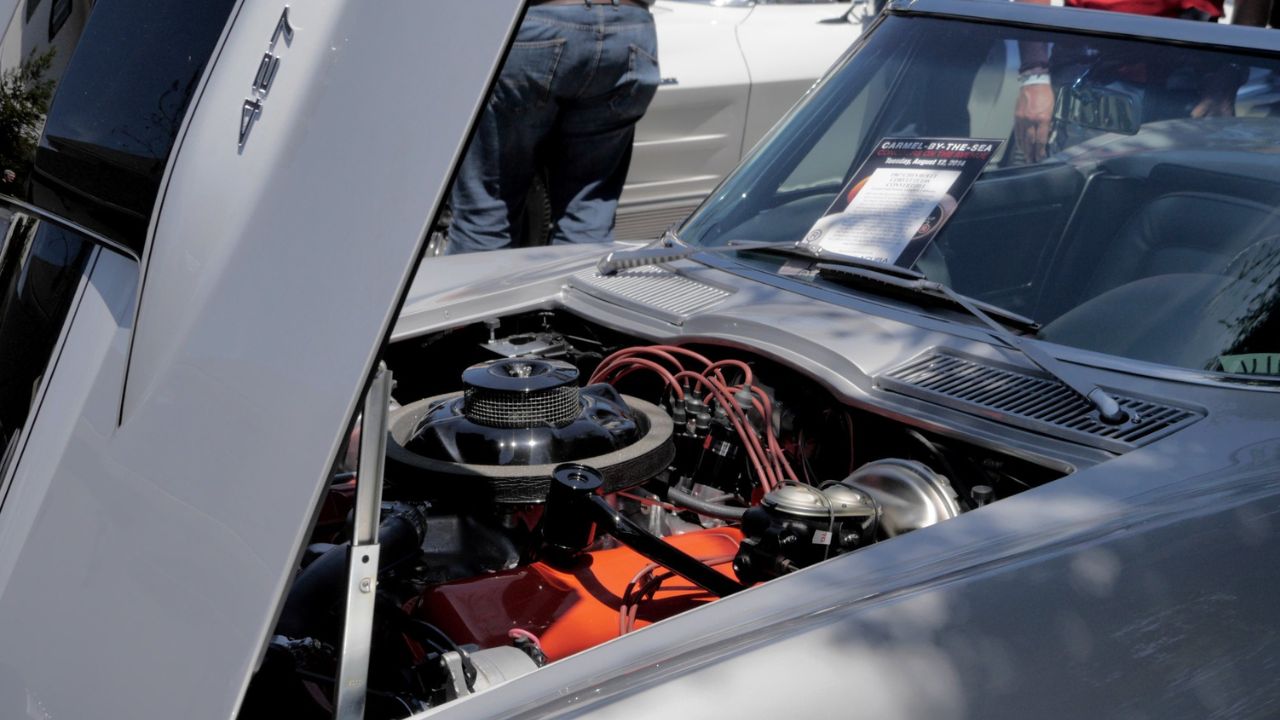
The 1967 Firebird 400 arrived at a moment when Detroit was locked in a horsepower race, yet Pontiac managed to give its new pony car a personality that went beyond raw numbers. By blending a big-inch V8 with distinctive styling cues and a surprisingly refined chassis, the Firebird 400 carved out a niche that still defines how I think about Pontiac muscle today. Its key traits, from the 400-cubic-inch engine to the carefully tuned suspension and trim details, set a template that later Firebirds and Trans Ams kept chasing.
Big-inch 400 V8 and real-world performance
The heart of the 1967 Firebird 400 was its 400-cubic-inch V8, a powerplant that gave Pontiac instant credibility in the emerging pony-car segment. Rather than simply dropping a large engine into a compact body, Pontiac engineered the 400 to deliver strong torque across the rev range, which made the car feel quick in everyday driving as well as on a drag strip. Period specifications show that the 400 was rated at 325 horsepower in standard form, with higher-output versions pushing that figure upward, and that combination of displacement and tuning placed the Firebird squarely in the same conversation as contemporary big-block Camaros and GTOs from within Pontiac’s own lineup, a positioning that modern overviews of the model’s launch continue to emphasize in their breakdown of the Firebird’s first-year engine options and performance focus.
What really defined the Firebird 400’s character, though, was how that power translated to the road. Contemporary road tests and later retrospectives describe quarter-mile times that were competitive with other late‑1960s muscle cars, helped by the engine’s broad torque curve and the availability of performance-oriented rear axle ratios. The 400 package also brought heavy-duty cooling and upgraded driveline components, which meant owners could exploit the engine’s output without immediately overwhelming the rest of the car, a balance that current historical summaries highlight when they compare the Firebird’s drivability and durability to similar-era big-block competitors.
Signature styling cues that separated Firebird from Camaro
Although the Firebird shared its basic F-body platform with the Chevrolet Camaro, Pontiac designers worked hard to give the 1967 Firebird 400 a distinct visual identity. The most obvious cue was the split grille with integrated parking lamps, a Pontiac hallmark that visually narrowed the nose and set it apart from the Camaro’s single opening. The Firebird also wore unique front fenders and rear sheetmetal, including taillights that echoed other Pontiac models of the era, and the 400 package layered on hood scoops and specific badging that signaled the car’s performance intent, details that modern design analyses point to when explaining how Pontiac differentiated its pony car despite shared underpinnings.
Inside, the Firebird 400 continued that separation with a dashboard and instrumentation layout that leaned into Pontiac’s sport-luxury image. Bucket seats, a deep-dish steering wheel, and available hood-mounted tachometer gave the cabin a more upscale and driver-focused feel than some rivals, while trim choices and color combinations allowed buyers to tailor the car to either a more restrained or flamboyant look. Current collector guides note that these interior and exterior distinctions, especially the 400-specific hood and emblems, are key identifiers for authentic cars and contribute significantly to the model’s appeal among enthusiasts who want something visually different from a first‑generation Camaro even if the basic proportions are similar.
Chassis tuning, suspension options, and the Firebird’s road manners

Where some muscle cars of the period were content to go fast in a straight line, the 1967 Firebird 400 earned a reputation for more balanced road manners. Pontiac engineers specified a front subframe and rear leaf-spring setup similar to the Camaro’s, but they paired the 400 package with stiffer springs, upgraded shocks, and larger anti-roll bars that helped control body motion. Power front disc brakes and quick-ratio steering were available, and when combined with the 400 engine, they turned the Firebird into a car that could credibly handle twisty roads as well as quarter-mile blasts, a dual personality that modern technical retrospectives highlight when they compare the Firebird’s suspension tuning to other GM offerings of the same era.
Those chassis choices also shaped how the Firebird 400 is perceived today. Enthusiast road tests of restored examples often point out that the car feels more composed than some contemporaries, with less front-end float and better turn-in response, especially when equipped with the factory performance suspension packages. The combination of a relatively compact wheelbase, wide track, and carefully chosen spring and damper rates gave the Firebird a planted stance that still feels confidence-inspiring at modern highway speeds, a trait that current buyer’s guides emphasize when they advise prospective owners on which suspension and brake options to prioritize for both authenticity and drivability.
Trim levels, option packages, and how the 400 fit the Firebird lineup
The 1967 Firebird did not arrive as a single monolithic model but as a range of trims, and the 400 sat at the top of that hierarchy. Below it, Pontiac offered versions like the base Firebird, the Sprint with its high-output inline-six, and V8 models with smaller displacement, each aimed at a different buyer profile. The 400 package effectively served as the halo, bundling the big engine with visual and mechanical upgrades that justified its premium price and positioned it as the choice for drivers who wanted maximum performance without stepping up to a full-size muscle car, a structure that modern production summaries outline when they list the first-year Firebird’s engine and trim combinations.
Within the 400 designation, buyers could further tailor their cars with transmission choices, axle ratios, and comfort or appearance options, which helped the Firebird appeal to both hardcore enthusiasts and customers who wanted a fast but comfortable cruiser. Automatic and manual gearboxes were both popular, and the availability of features like air conditioning, power windows, and upgraded audio meant the 400 could be configured as either a relatively plush grand tourer or a stripped-down street machine. Current valuation and registry data show that certain combinations, such as 400 cars with four-speed manuals and specific performance options, command a premium among collectors, underscoring how the original ordering flexibility has translated into a hierarchy of desirability in today’s market.
Legacy, collectability, and the Firebird 400’s place in Pontiac history
Looking back, I see the 1967 Firebird 400 as the car that proved Pontiac could translate its full-size muscle expertise into the more compact pony-car arena without losing its identity. The model bridged the gap between the brand’s earlier performance icons and the later Trans Am era, establishing styling and engineering themes that would carry through the end of Firebird production. Modern historical overviews consistently treat the first-year 400 as a foundational chapter in Pontiac’s performance story, noting how its combination of power, style, and relative sophistication helped the Firebird line survive and evolve even as the broader muscle-car market faced regulatory and economic headwinds in the years that followed.
That legacy is reflected in how the 1967 Firebird 400 is valued and preserved today. Auction and private-sale data show that well-documented, numbers-matching examples command strong prices, particularly when they retain original drivetrain components and factory-correct trim, and that interest has encouraged a robust restoration and parts ecosystem. Enthusiast communities often single out the 1967 400 as a sweet spot for collectors who want early Firebird styling with serious performance credentials, and current market analyses highlight the model’s steady demand relative to some later variants, reinforcing the idea that the traits Pontiac baked into the first Firebird 400 still resonate with buyers who want a car that captures both the spirit of 1960s muscle and the distinct flavor of the Pontiac brand.
More from Fast Lane Only