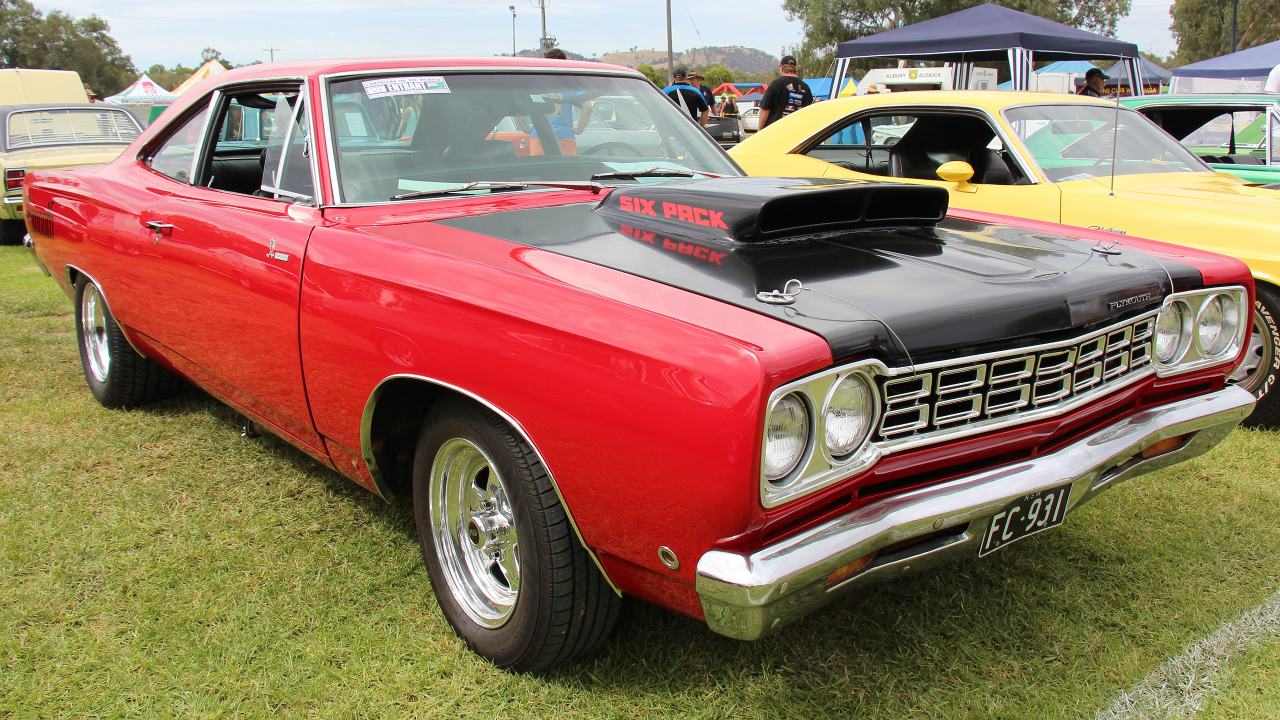
The 1969 Road Runner A12 arrived as a blunt instrument at a moment when muscle cars were drifting upmarket, and it forced Plymouth to double down on raw performance instead of luxury. By stripping out comfort, adding the brutal 440 Six Pack hardware, and pricing it within reach of younger buyers, the A12 package did more than win drag races, it reset how the brand thought about value, volume, and image in the heart of the muscle era.
As I trace how this single option code influenced Plymouth’s broader strategy, a pattern emerges: the A12 was both a reaction to rivals and a catalyst for a leaner, more focused performance playbook that still shapes how enthusiasts and collectors talk about the marque today.
The Road Runner’s “cheap speed” mission before A12
Plymouth did not stumble into the A12 by accident, it grew out of a deliberate decision to chase buyers who cared more about quarter-mile times than plush interiors. Recognizing that not every customer could afford both comfort and horsepower, Chrysler built the original Road Runner around the idea of “cheap speed,” prioritizing a strong engine and basic equipment over frills. That philosophy, described as Chrysler Recognizing that budgets were finite, set the stage for a car that undercut better-trimmed rivals while still delivering serious performance.
Pricing was central to this strategy. Reporting on Plymouth’s broader history notes that when buyers did the math on a well-optioned Road Runner, they were still below four thousand dollars for the so-called Bird at a time when competitors often rolled out of showrooms costing more. One account describes how you could get a quarter-mile car for around $3,500, reinforcing that Plymouth’s management was willing to sacrifice margin to own the value end of the muscle market, as reflected in the Do the calculation on the Bird. That mindset, already in place before the A12, meant Plymouth was primed to push the formula even further toward bare-knuckle performance.
Why Plymouth needed a harder-edged Road Runner
By 1969, the original Road Runner formula was wildly successful, but the market around it was shifting toward ever more powerful and specialized drag strip machinery. The standard car, built for pure muscle car performance without the frills, already wore bold styling and a signature “beep-beep” horn, and it had even captured a Car of the Year title according to a Plymouth Road Runner discussion. Yet rivals were escalating with factory drag packages and ever more aggressive big-block combinations, and Plymouth risked being seen as the “budget” choice rather than the quickest.
At the same time, the Road Runner’s popularity created an opportunity to carve out a more extreme submodel without alienating mainstream buyers. Social posts looking back on the era describe the car as one of the best-selling models in the United States in 1969, with distinctive graphics and a strong cultural footprint, as noted in a Legacy and Impact Cultura post. With that kind of volume, Plymouth could afford to peel off a small slice of production for a more focused, track-ready package that would defend the brand’s performance credibility against increasingly specialized competitors.
The A12 package: a factory drag car hiding in plain sight
The A12 option code was Plymouth’s answer, a way to turn the already potent Road Runner into a near factory drag car while keeping it technically a regular production model. Released in February 1969, Plymouth offered its 440 cubic inch V8, identified in reporting simply as 440, in the Road Runner with a package called A12 that added the famous Six Pack triple carburetor setup. This combination, paired with a more aggressive camshaft and heavy-duty driveline pieces, was engineered to deliver brutal straight-line acceleration while still being sold through regular dealers.
Under the hood, the A12 cars received the Six Pack induction system, which one technical breakdown describes as three Holley two-barrel carburetors mounted on an aluminum Edelbrock intake. That same report notes that the A12 cars got the Six Pack, with the Holley and Edelbrock hardware chosen specifically for airflow and durability, as detailed in a Six Pack overview. By baking this level of hardware into a coded option rather than a separate model line, Plymouth could keep the Road Runner’s identity intact while quietly offering a car that was far more serious than its cartoon bird badges suggested.
Stripping comfort to sharpen the performance message
If the engine made the A12 fast, the ruthless deletion of comfort features made it a statement of intent. Contemporary analysis of the package notes that if buyers wanted air conditioning, cruise control, fancy wheels, or a convertible top, they were out of luck, and quite likely shopping in the wrong showroom. One profile from Mar 1, 2013 describes how the A12 Road Runner was intentionally bare bones, with minimal trim and functional steel wheels, underscoring that this was not a car for those chasing luxury, as highlighted in a Mar report.
This strategy fit neatly with Plymouth’s existing “cheap speed” ethos but pushed it to an extreme that reshaped how the brand talked about performance. Rather than apologizing for the lack of amenities, Plymouth effectively turned it into a badge of honor, signaling that every dollar not spent on comfort went into making the car quicker. Later commentary on the A12 emphasizes that this was no fluke, and that the same stripped-down formula continued to resonate with enthusiasts, with parts and support still available for these cars decades later, as another Mar 1, 2013 Mar piece notes. In practice, the A12 taught Plymouth that leaning into minimalism could strengthen, rather than weaken, its performance image.
Quarter-mile credibility and the “world’s fastest” narrative
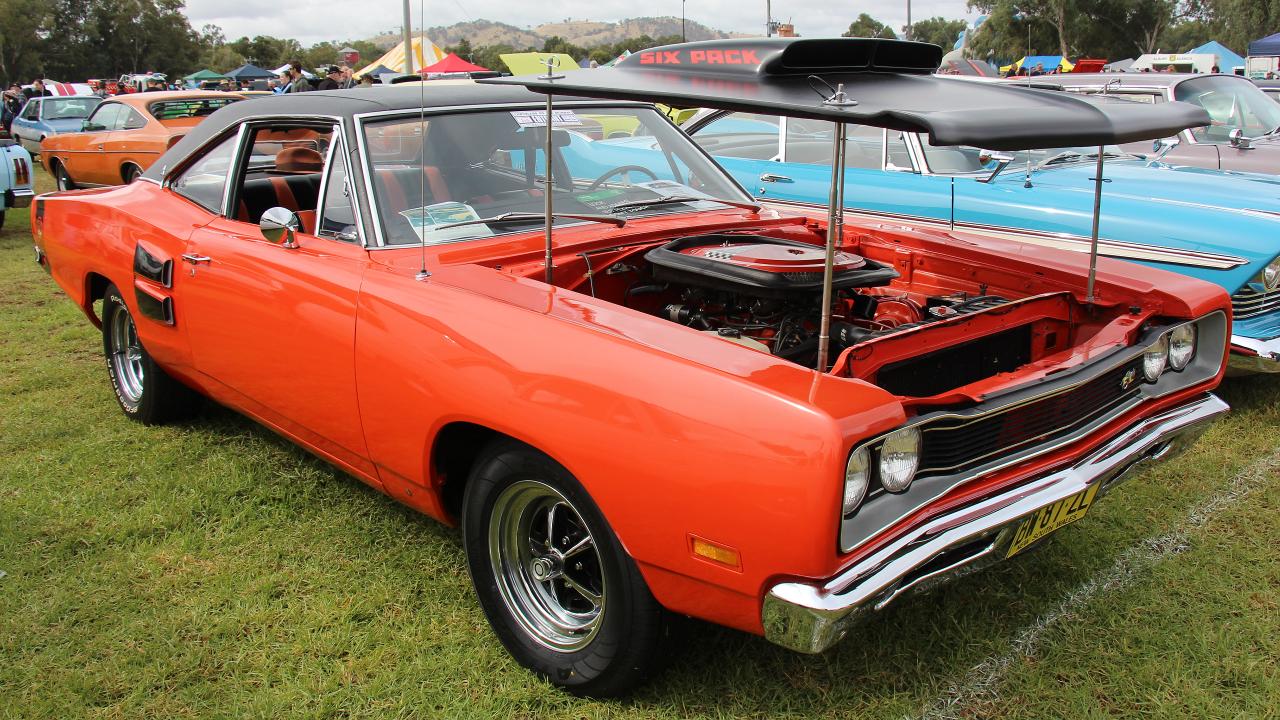
Performance numbers gave Plymouth the proof it needed to market the A12 as more than a parts-bin special. Reporting on the era highlights that Ronnie Sox, one of the most respected drivers in Super Stock racing, recorded a 12.91-second pass with a 1969½ A12 Plymouth Road Runner, making it one of the quickest factory muscle cars of the 1960s. That 12.91-second figure, cited in a Jun 6, 2025 feature on the Ronnie Sox run, gave Plymouth a concrete number to point to when claiming quarter-mile supremacy.
Those kinds of results fed directly into the brand’s strategy. Instead of relying solely on advertising copy, Plymouth could point to sanctioned drag strip times and respected drivers to validate the A12’s performance. Later enthusiast commentary, including a Jan 12, 2018 video that refers to “vitamin A12” as a daily dose of high performance, underscores how the package’s reputation as a factory drag strip car has endured, as seen in the Jan coverage. By anchoring its performance story in measurable results, Plymouth strengthened the case for future hard-core packages that prioritized straight-line speed over comfort or even handling.
Limited production, big strategic impact
On paper, the A12 was a low-volume experiment, but its influence on Plymouth’s thinking far exceeded its build numbers. Production data compiled in a Feb 1, 2025 feature notes that a total of 1,412 A12 Road Runners were built in 1969, a tiny fraction of overall Road Runner output that year. That same report, which labels the section PRODUCTION and specifies that 1,412 Road Runners carried the A12 package in 1969, underscores how deliberately scarce the option was, as detailed in the production breakdown.
Yet scarcity was part of the strategy. By limiting the A12 to a relatively small run, Plymouth could protect the Road Runner’s broad appeal while still signaling to hardcore enthusiasts that the brand was willing to build something uncompromising. Later social media commentary that calls the A12 a “factory drag strip car” and notes how such machines have become highly desirable collector cars, as seen in a Nov 8, 2025 Blue discussion, suggests that Plymouth’s decision to keep the package rare only amplified its long-term impact. Strategically, the A12 showed that the brand could use limited, high-intensity options to burnish its image without overhauling its entire lineup.
How the A12 recalibrated Plymouth’s value equation
What truly reshaped Plymouth’s strategy was not just that the A12 was fast, but that it proved buyers would pay a premium for focused performance even when comfort was stripped away. Earlier Road Runner pricing had already demonstrated that a sub-$4,000 muscle car could win market share, as the Aug 24, 2010 history of the Bird’s roughly $3,500 quarter-mile configuration makes clear in the Bird discussion. The A12 pushed that logic further by asking customers to accept even fewer amenities in exchange for a more serious engine and drivetrain, effectively testing how far Plymouth could stretch the “pay for speed, not fluff” proposition.
Enthusiast reactions suggest that the gamble paid off. Modern video reviews, such as a May 25, 2025 walkaround where Joe from Rady’s Rise calls the A12 Drag Pack a must-have and showcases the car at Dream Giveaway Garage, frame the package as the purest expression of the Road Runner idea, as seen in the Joe feature. That kind of reverence indicates that Plymouth’s decision to prioritize hardware over comfort did not cheapen the brand, it elevated it among performance buyers. In strategic terms, the A12 validated a pricing model where the company could charge more for less equipment, as long as the “less” was in the right places and the performance gains were undeniable.
Collector values and the long tail of the A12 experiment
The market’s verdict on the A12 came into even sharper focus decades later, when collector values began to climb sharply. A Mar 1, 2015 analysis of auction results notes that an A12 Road Runner that had sold earlier for a much lower figure brought $165,000 in Scottsdale just two years later, with the writer pointing out that few things appreciate almost 84 percent in such a short span. That $165,000 hammer price in Scottsdale, and the observation that Few assets see an 84 percent jump so quickly, as detailed in the Market movement piece, underscores how the A12’s scarcity and performance focus translated into long-term desirability.
Those numbers matter for understanding Plymouth’s strategy because they retroactively validate the decision to build such a narrowly focused car. When a limited-run option package becomes one of the most sought-after configurations in the collector market, it sends a clear signal about what enthusiasts value in the brand’s back catalog. Modern forum posts that describe the 1969 Plymouth Road Runner 440 Six Pack as a “factory drag strip car” and “highly desirable collector car” today, as seen in the Nov 8, 2025 Cars discussion, reinforce that the A12’s formula of big power, minimal frills, and limited production created a template for enduring value. For Plymouth, and later for those managing the brand’s legacy, that lesson has shaped how its most hardcore models are remembered and marketed.
The A12’s place in Plymouth’s broader legacy
Looking across Plymouth’s history, the A12 stands out as a pivot point where the company proved it could build a car that was both accessible in concept and extreme in execution. Earlier retrospectives on the brand’s legacy emphasize how management sometimes hesitated to fully embrace performance, yet the Road Runner’s success and the A12’s cult status show that when Plymouth committed to the cheap speed idea, it created era-defining cars, as suggested in the Aug 24, 2010 look at Plymouth’s Aug legacy. The A12 distilled that philosophy into a single, uncompromising package that still shapes how enthusiasts define a “real” Road Runner.
Today, when I see modern coverage of the A12 framed as a must-have drag pack or watch owners reunite rare Six Barrel cars with original families, the throughline back to Plymouth’s late 1960s strategy is clear. The company learned that a focused, limited, brutally honest performance package could elevate the entire brand, even if only 1,412 examples were built in 1969, as the Road Runners production figures show. In reshaping Plymouth’s approach to performance, pricing, and image, the 1969 Road Runner A12 did more than win races, it rewrote the company’s playbook for what a muscle car could be.
More from Fast Lane Only