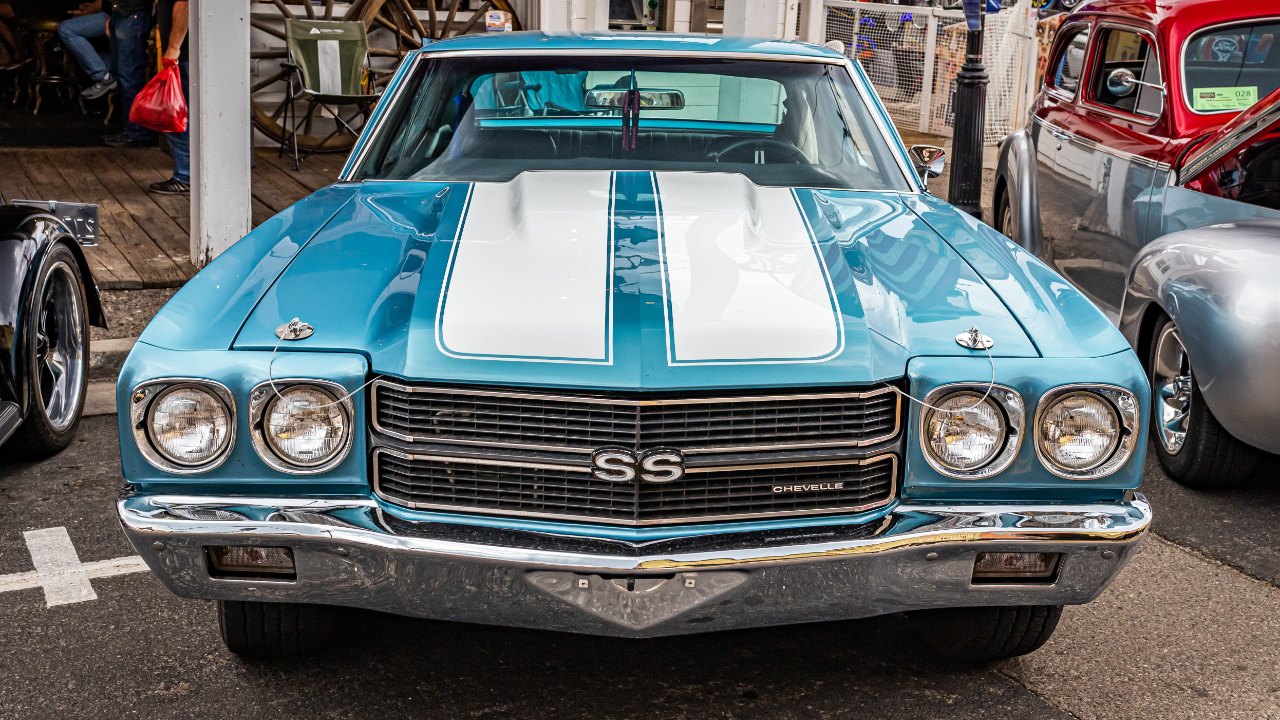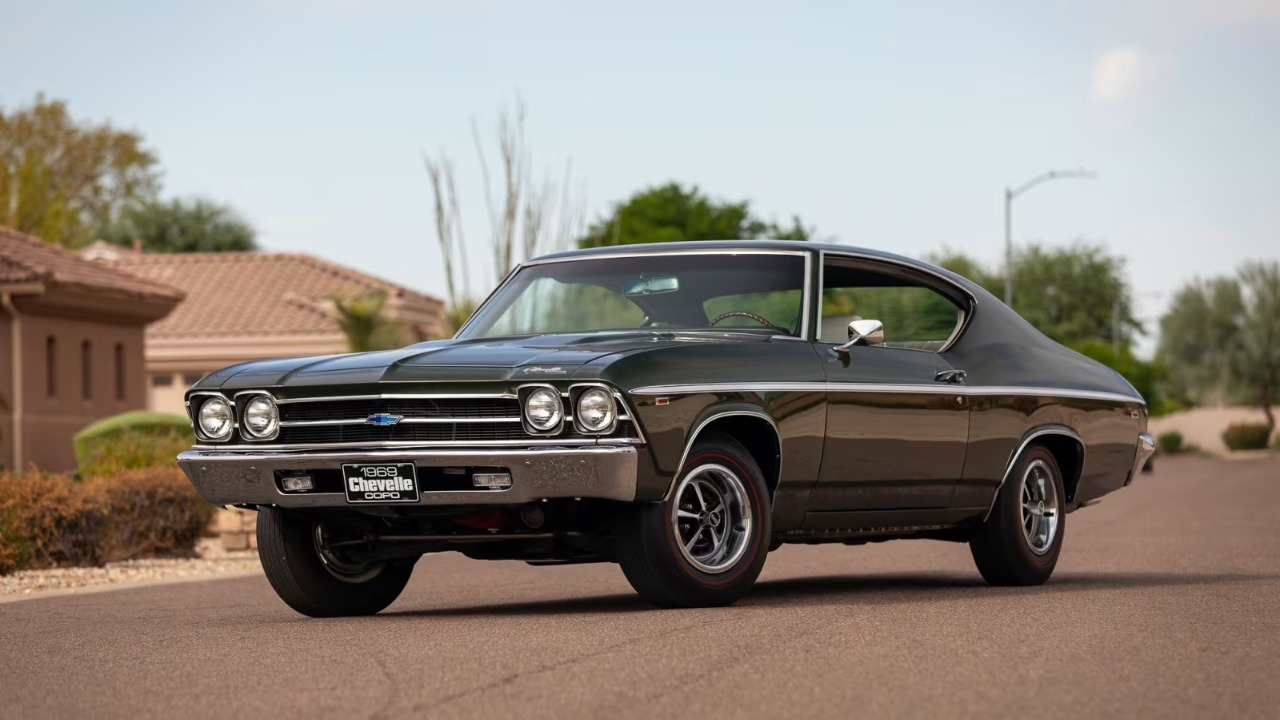
Values for the 1969 COPO Chevelle have been climbing steadily as collectors recognize just how rare, historically important, and brutally capable these cars are. What started as a quiet fleet-order workaround for a big-block engine has become one of the most closely watched corners of the muscle car market, with prices reflecting a mix of scarcity, performance pedigree, and cultural nostalgia.
As I look across recent sales data, historical production records, and enthusiast reporting, a clear pattern emerges: the COPO Chevelle is no longer just a niche curiosity. It has matured into a blue-chip collectible whose rising values are being driven by limited supply, deep ties to American muscle lore, and a new generation of buyers who see it as a tangible link to 1960s street and drag racing.
COPO origins and why scarcity keeps pushing prices higher
The first reason values keep climbing is simple math. The 1969 COPO Chevelle existed because Chevrolet dealers used the Central Office Production Order system, or Central Office Production Order, to spec combinations that were not available through normal retail channels. That process, used by the Chevrolet Motor Division for special equipment and fleet builds, allowed a handful of dealers to order the L72 427 in a mid-size Chevelle, creating a car that was never meant to be mass produced. Because COPO was designed for low-volume, special-purpose runs, the total number of 1969 COPO Chevelles was inherently capped, and every surviving example today represents a tiny fraction of overall Chevelle production.
Within that already small universe, some cars are even more exclusive. Reporting on the dealer network notes that Don Yenko ordered 99 COPO Chevelles, and as other dealers learned what was possible through COPO, they placed their own orders, pushing the total to approximately a few hundred cars. That kind of production figure is microscopic compared with mainstream Chevelle SS output, and it gives the COPO cars the kind of scarcity usually associated with hand-built exotics. Valuation tools focused on the 1969 Chevrolet Chevelle COPO consistently reflect this imbalance between supply and demand, with condition-sensitive price spreads that reward originality and documented history, a classic pattern when a model’s production numbers are this low.
Big-block performance that still feels outrageous
Rising values are not just about rarity. The COPO Chevelle’s performance hardware still looks formidable in a modern context, and that mechanical credibility matters to buyers. The L72 427 was a race-bred big-block, and detailed technical breakdowns describe it as Built around a beefy cast-iron block with four-bolt main bearing caps, a forged steel crankshaft, and heavy-duty internals designed to live at high rpm. Paired with aggressive rear axle ratios and Positraction limited-slip differentials, the COPO package turned an otherwise ordinary mid-size Chevrolet into a street-legal drag car that could embarrass many factory muscle rivals.
Period-correct features reinforce that purpose-built character. Enthusiast coverage of specific COPO Chevelles highlights details like open-element air cleaners, heavy-duty cooling, and drivetrain combinations that were clearly optimized for quarter-mile work rather than boulevard cruising. In some Yenko-prepped cars, automatic-equipped examples even received a Hurst Dual Gate floor shifter in place of the stock column selector, a small but telling sign that these cars were engineered for fast, repeatable shifts. When collectors compare this level of factory and dealer performance focus with more common muscle cars, the COPO Chevelle’s specification helps justify a price premium that has only widened as the market has matured.
Dealer legends and the Yenko halo effect

Another powerful driver of appreciation is the mythology around the dealers who made COPO possible, especially Don Yenko. Historical profiles recount how Yenko leveraged the COPO system to order those 99 Chevelles, then branded and tuned them to create some of the most feared street cars of the era. That story has become part of muscle car folklore, and it gives any COPO Chevelle, even a non-Yenko example, a connection to a broader narrative about dealer ingenuity and corporate rule-bending. When a car carries that kind of backstory, buyers are not just paying for metal and horsepower, they are paying for a piece of a well-known legend.
Firsthand accounts from owners and curators reinforce how that legend translates into market behavior. A detailed feature published on Mar 20, 2023, under the banner Ask The Man Who Owns This Yenko Chevelle notes that Prices in that story reflect the market at the time, yet even then the author acknowledged that values were climbing as awareness and documentation improved. The piece also points out that, As the curator for the car, the owner had access to extensive restoration parts and knowledge, which helped keep the car in top condition. That kind of well-documented, enthusiast-maintained example tends to set the tone for the broader COPO Chevelle market, and the premium attached to Yenko cars in particular has a halo effect that lifts interest and pricing for other COPO builds.
Cultural nostalgia and the Chevelle’s place in muscle history
Beyond hardware and dealer lore, the COPO Chevelle benefits from the broader cultural status of the Chevelle nameplate. Enthusiast histories of the model describe how the Chevelle SS became a touchstone for American performance, with sections explicitly titled Collectibility and Cultural Significance Today. Those accounts argue that the Chevelle SS is celebrated as a symbol of the spirit of American muscle cars, and that cultural weight spills over to the rarer COPO variants. When people think about the cars that ruled American streets in 1969, they often picture big-block Chevelles alongside Hemi Chargers and other headline-grabbing machines, a connection reinforced by video retrospectives that explicitly mention Hemi Chargers in the same breath as the COPO Chevelle.
That nostalgia is not limited to Chevelles. A Quora discussion dated Jul 26, 2023, about why 1967, 1968, and 1969 Camaros and Firebirds have become so iconic argues that these cars recapture a “lost” era and that their values are a result of rarity and scarcity. While the conversation centers on pony cars, the logic applies directly to the COPO Chevelle, which combines the same late-1960s styling cues with even more extreme performance and lower production. As younger collectors who grew up hearing stories about in 1969 street racing gain the means to buy the cars they idolized, they are gravitating toward models that best represent that period. The COPO Chevelle, with its mix of mainstream Chevelle looks and hidden factory muscle, fits that role perfectly, which helps explain why demand has stayed strong even as prices have risen.
Market data, documentation, and the shift to blue-chip status
Underpinning all of these factors is a maturing market infrastructure that treats the 1969 COPO Chevelle as a serious investment-grade collectible. Dedicated valuation tools for the 1969 Chevrolet Chevelle COPO track condition-based pricing and auction results, giving buyers and sellers a clearer sense of what correct, documented cars are worth. That transparency tends to support higher values for the best examples, because it reduces uncertainty and highlights the premium attached to originality, matching-numbers drivetrains, and verified COPO paperwork. As more cars are researched and certified, the gap between top-tier and driver-quality examples has widened, a classic sign that a niche model is moving into blue-chip territory.
Specialist market analysis has been flagging this trend for years. A profile dated Dec 5, 2016, on the 1969 Chevrolet Chevelle COPO 427 noted that the COPO Chevelle market is attractive for buyers who want the performance of a Yenko-spec car without paying the full Yenko price, implicitly acknowledging that even non-Yenko COPOs were already commanding a premium. More recent coverage of specific COPO builds, including a Dec 11, 2023, feature on a rare L72 example and a Jul 27, 2024, technical deep dive into the 427-powered icon, treat the COPO Chevelle as a benchmark muscle car rather than a quirky footnote. That shift in tone, combined with the hard data from valuation tools and auction catalogs, signals that the market now sees these cars as long-term holds, which in turn supports the sustained upward pressure on prices.
More from Fast Lane Only