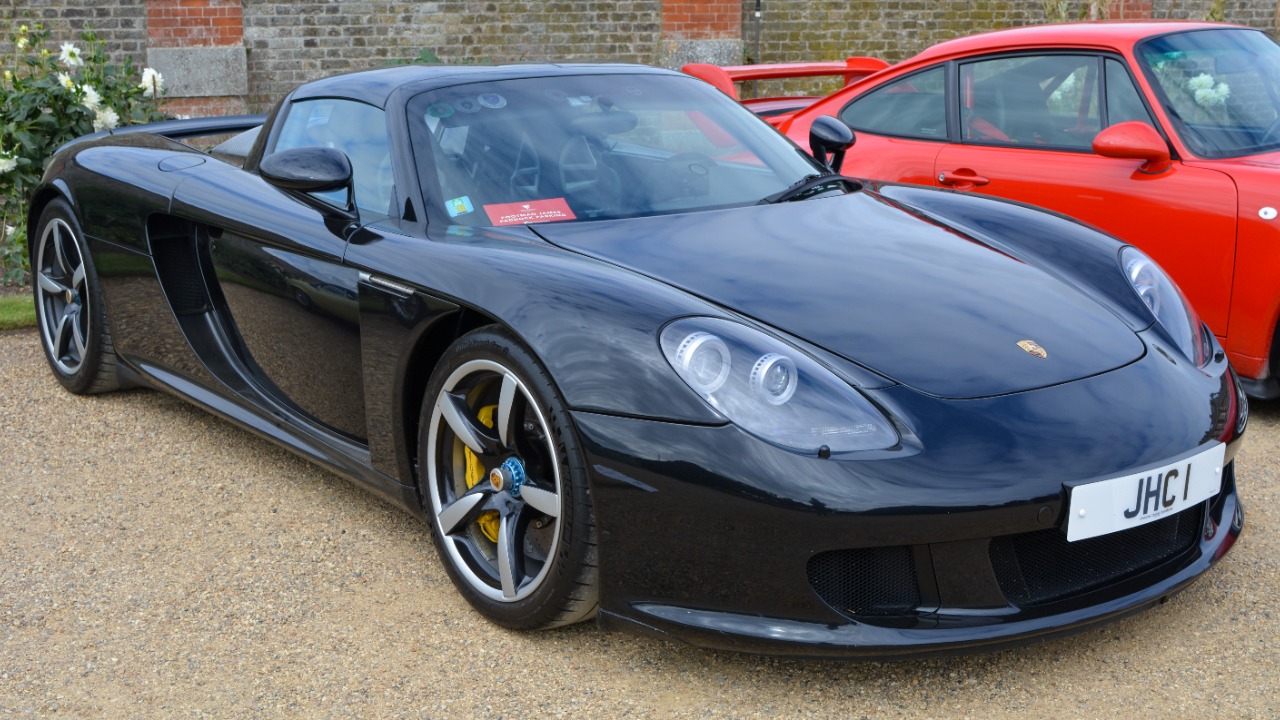
The 2004 Porsche Carrera GT arrived as a road‑legal distillation of top‑tier prototype racing, pairing a shrieking V10 with a carbon chassis at a time when supercars were still learning how to mix rawness with technology. It was the first production Porsche to combine that race‑bred ten‑cylinder with a carbon tub, and it has since become a reference point for what an analog hypercar can be. Two decades on, I see it less as a museum piece and more as a benchmark that still challenges how we think about performance, rarity, and driver involvement.
From LMP prototype to road‑going V10
The story of the Carrera GT really starts in the pits, not the showroom. Porsche had developed a V10 for the never‑raced LMP 2000 LMP prototype, and that engine, designed to be high‑revving, stable and uncompromising, became the heart of the road car. Instead of shelving the research, engineers reimagined the project as a limited‑run supercar, carrying over the race‑car mindset into everything from the dry‑sump lubrication to the compact block that could sit low in the chassis. The result was a powerplant that felt like it belonged on a grid at Le Mans, yet it wore license plates.
On paper, the numbers still look startling. The Carrera GT used a 5.7 liter V10 displacing 5.7 L, or 5,733 cc, and it was rated at 450 kW, which translates to 612 PS and 603 hp. That output fed the rear wheels through a manual gearbox, with no dual‑clutch safety net to smooth over mistakes. The whole package sat in a carbon structure that owed more to a prototype racer than to a contemporary 911, and that is where the car’s character really begins.
Carbon tub, analog soul
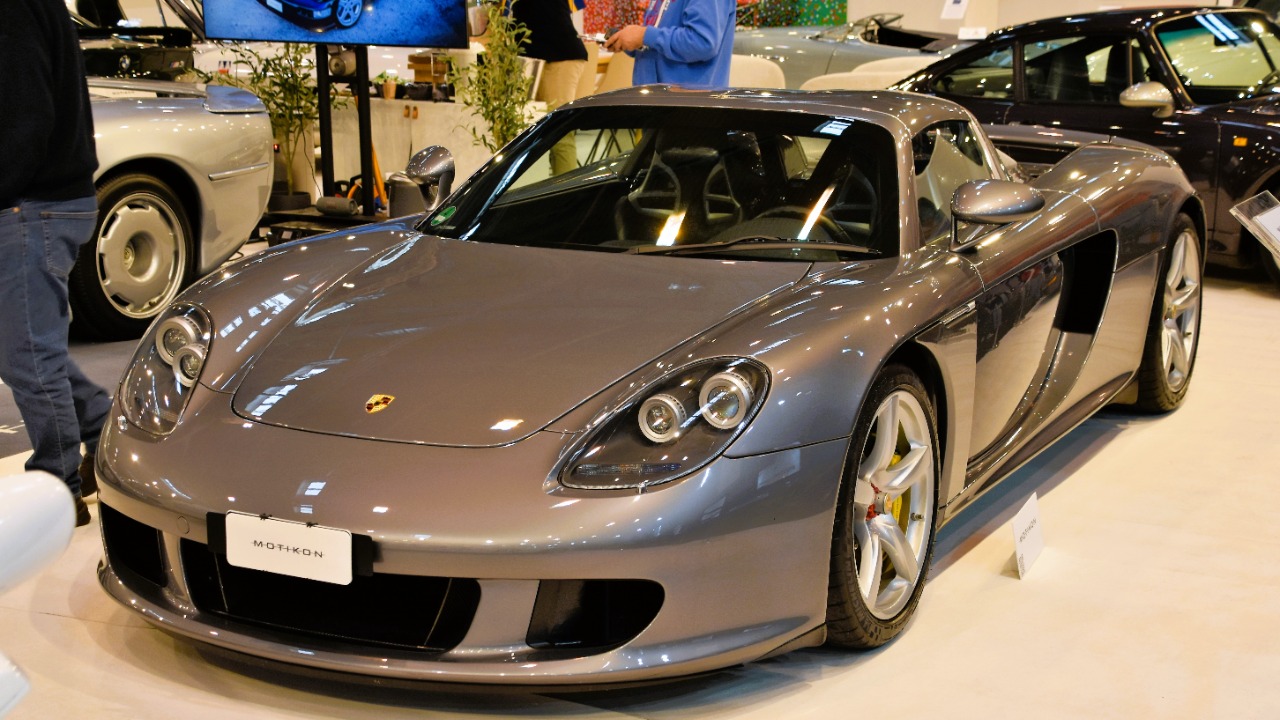
What set the Carrera GT apart structurally was its commitment to race‑car architecture. The chassis used a carbon fiber tub that kept weight low and stiffness high, and the dimensions underline how focused it was. According to period specifications, the Porsche Carrera GT rode on a Wheelbase of 107.5 inches, with a Length of 181.6 inches and a Curb weight listed at 3,146 pounds. The Powertrain was a Naturally aspirated 5.7 liter V10, and that combination of compact footprint and low mass gave the car a nervous, alive feeling that modern, heavier hypercars often lack.
That race‑bred layout was no accident. The Porsche Carrera GT was originally developed as a successor to the 911 G T1 program, and in its short production run Porsche built only a limited number of cars with roughly 3,050 pounds of curb weight cited in some materials, underscoring just how lean the package was for its era. One dealer overview of The Porsche Carrera GT highlights that link back to Porsche motorsport, noting it as a spiritual follow‑up to the 911 GT1 rather than a mere flagship 911. When I look at the car’s stance and the way the suspension hardware is exposed under the rear deck, it feels less like a road car with racing pretensions and more like a racing car that happens to tolerate public roads.
Driving experience: the last analog king
Plenty of modern supercars are faster, but very few demand as much from the person behind the wheel. Enthusiasts often describe the Carrera GT as the last analog king of supercars, and a detailed video review of the Porsche Carrera GT leans into that label, emphasizing how every input is unfiltered. There is no stability control to catch a clumsy throttle application, no automatic gearbox to mask a missed downshift, and the carbon clutch requires deliberate, practiced engagement. When I think about what makes a car feel “analog,” it is that sense that the machine will do exactly what you ask, for better or worse, and the Carrera GT embodies that bargain.
That character is rooted in its engineering. A deep dive into its Engineering & Performance describes it as Built Like a Racing Car Because It Basically Was One, with the suspension, brakes and aerodynamics all tuned for high‑speed stability rather than boulevard comfort. The steering is often described as telepathic, and the naturally aspirated V10 builds power in a linear, relentless way that rewards drivers who are willing to work for every tenth. When I imagine threading one along a fast, open road, it is clear that the car is not trying to flatter you; it is inviting you to rise to its level.
Dimensions, specs and the collector market
For all its drama, the Carrera GT is still a product with a VIN and a spec sheet, and those details matter in the collector world. Listings for the 2004 model year on research sites show the 2004 Porsche Carrera GT categorized with its key dimensions, performance figures and options, reinforcing how focused the configuration was from the factory. A typical example offered by a specialist dealer lists a Porsche Carrera GT for sale with a specific VIN and Mileage, and one such car, VIN WP0CA29884L001061 with Mileage of 1212, is highlighted in a detailed Vehicle Highlig summary that underscores how low‑use cars have become blue‑chip assets.
Market data backs up that perception. Valuation tools that answer Common Questions like How much is a 2004 Porsche Carrera GT worth note that the value of a 2004 Porsche Carrera GT can vary greatly depending on condition, mileage and specification, but even cars in good condition with average spec now trade in territory that would have seemed outlandish when the model was new. On the retail side, a nationwide search for a Used Porsche Carrera GT for sale shows asking prices that can reach $2,299,991 for a 2004 Porsche Carrera GT, a figure that reflects both scarcity and the car’s growing myth.
How the market trades these cars today
Looking at how these cars change hands now tells its own story about desirability. A broad marketplace listing for the model year shows multiple examples of the 2004 Porsche Carrera GT offered across the country, with filters that let buyers compare mileage, color and price. A related portal that promotes Used Porsche Carrera GT for Sale Nationwide, Now with Dealership Mode and a prompt to Get app illustrates how even a once‑esoteric hypercar has been pulled into the same digital shopping ecosystem as everyday sedans, even if the clientele is very different. That juxtaposition, a raw V10 carbon‑tub machine sitting alongside crossovers in a search result, says a lot about how the internet has flattened the car market.
At the more curated end of the spectrum, specialist retailers treat each chassis as a collectible artifact. One listing from a performance‑focused dealer presents a 2004 Porsche Carrera GT with details like Location, Stock Number GRP458, Vin WP0CA29834L001078 and Vehicle Type Car, emphasizing provenance and documentation. Another entry labeled 2004 Porsche Carrera GT | Graham Rahal Performance reinforces how outfits like Graham Rahal Performance have become gatekeepers for top‑tier examples. When I scan these listings, I see less of a used‑car market and more of a rolling auction catalog, where each car’s story is as important as its odometer reading.
Culture, color and the hypercar spotlight
The Carrera GT’s reputation has been shaped not just by numbers but by how it is talked about and sold. A high‑profile auction clip that introduces a 2004 Porsche Carrera GT on the block calls it the last of the analog supercar from Porsche, capturing the way enthusiasts frame it as a closing chapter in a certain kind of driving experience. Another video segment from Jun highlights how the Porsche badge and the car’s raw demeanor combine to create a sense of occasion every time one appears in public. When I watch those moments, I am reminded that some cars transcend their specs and become shorthand for an era.
That cultural weight extends into the world of bespoke builds and rare colors. A recent feature on a one‑off Speedster Blue example notes how the supercar specialists at Chicago Motor Cars showcased a unique 2004 Porsche Carrera GT among a roster of exotics for sale, underlining how even within this rarefied model line, certain specifications sit on an even higher pedestal. Historical overviews describe how The Porsche ( Porsche AG ) Carrera GT has become one of the most iconic and sought after Porsche ( Porsche AG ) models, with The Porsche anticipated to stir up plenty of fervor among collectors from the moment it was announced, a point reinforced in detailed Carrera GT histories. When I put all of that together, the 2004 car feels less like a single model year and more like the first chapter in the modern idea of a V10 carbon‑tub supercar icon, one that still sets the tone for how we judge the hypercars that followed.
More from Fast Lane Only: