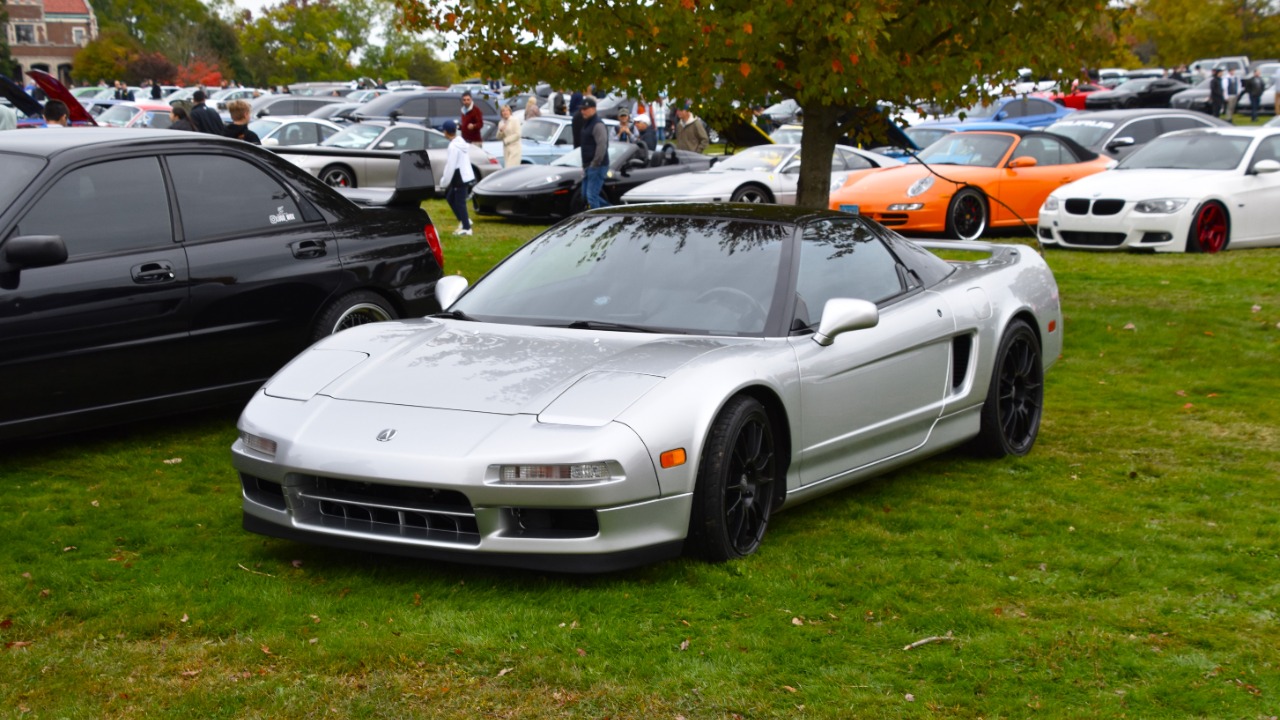
The 1991 Acura NSX arrived in a supercar world that treated breakdowns as part of the theater, and quietly refused to play along. Instead of fragile exotica, it offered mid‑engine performance wrapped in the manners of a well‑sorted daily driver, turning reliability into a competitive edge. More than three decades later, that decision still shapes how I think about what a “supercar” should be.
When reliability became a performance spec
By the early 1990s, the exotic car establishment had trained buyers to accept quirks as proof of character. The Italians had spent the 1970s and 1980s building spectacular but temperamental machines, and names like Ferrari and Lamborghini were shorthand for both speed and constant tinkering. Into that landscape stepped the original Honda Acura NSX, a car that promised the same mid‑engine drama without the ritual of tow trucks and specialist mechanics, directly challenging the way The Italians, Ferrari and Lamborghini defined the segment.
What made the NSX radical was not just its layout or its aluminum construction, but the idea that a supercar could be driven like a Civic on a bad day and still feel special. Owners discovered they could commute, sit in traffic, and then head for a back road without budgeting for a major service every time the tach needle swung past redline. That usability was not an accident. The Acura NSX was engineered from the start as a car that could be used every day, and later commentary has described how The NSX, Main Strength Was Also Its Biggest Downfall because it made traditional exotica look outdated in the one area they had long ignored.
Ayrton Senna and the science of approachability
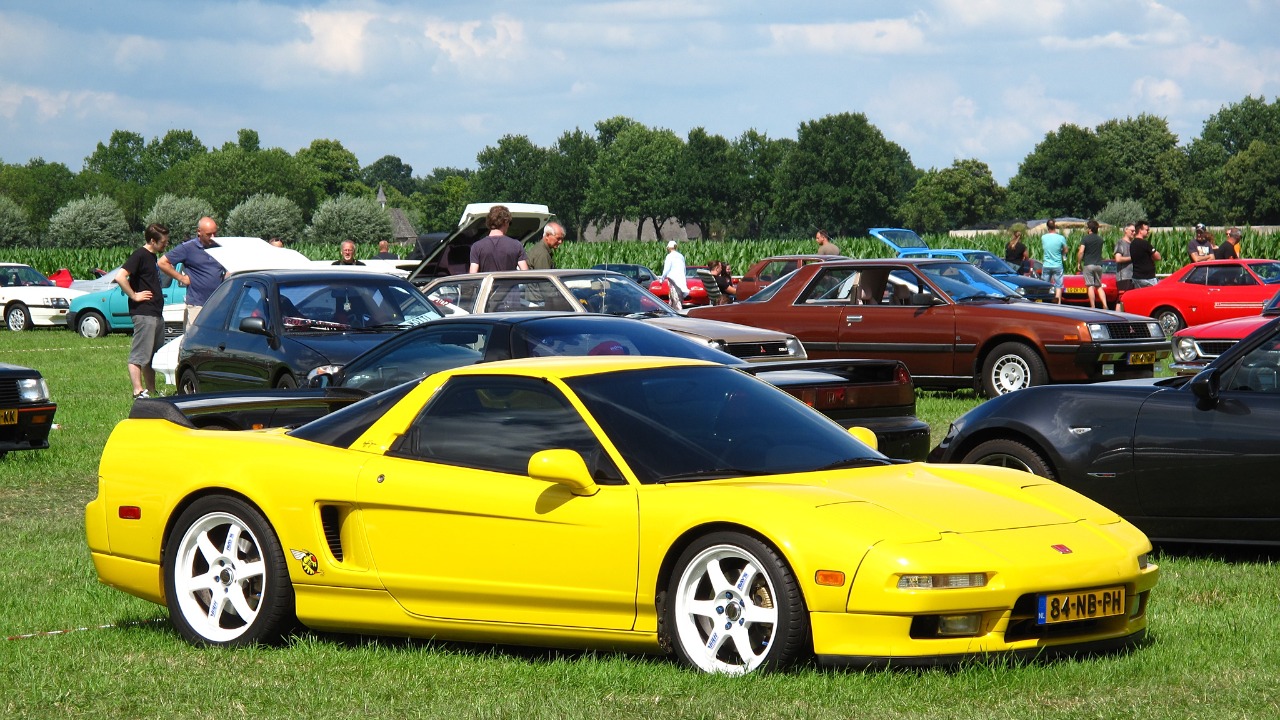
Underneath the NSX’s civility sat a chassis tuned with the help of one of the most demanding drivers who ever lived. Much of the development input came from Honda’s ace F1 driver, Ayrton Senna, whose feedback pushed the car away from softness and into a sweet spot where it could flatter ordinary drivers without boring experts. Contemporary accounts note that Much of the development input came thanks to Honda, Ayrton Senna, and that collaboration helped The NSX become Honda’s flagship overnight.
Senna’s influence shows up in the way the car communicates rather than intimidates. The suspension and steering were engineered to be transparent, so the driver felt what the rear tires were doing long before anything went wrong. That philosophy is captured in descriptions of how the NSX suspension and handling characteristics were sorted out to minimize surprises from mechanical or manufacturing error. In practice, that meant the car could be pushed hard on a track yet still feel forgiving on a wet commute, a blend that made its reliability feel like a form of dynamic confidence rather than just a low repair bill.
The everyday supercar in the real world
It is one thing for engineers to promise durability on a spec sheet, and another for owners to prove it over decades. The Acura NSX holds a unique position in automotive history as the first “everyday supercar,” and that reputation is backed up by real odometer readings. Commentators have pointed out that The Acura NSX holds a unique position
Enthusiast communities echo that story in blunt, lived‑in language. Owners trade photos of odometers that would terrify a vintage Ferrari buyer, and treat them as badges of honor instead of warning signs. One widely shared discussion even notes that The Original NSX Is So Reliable That 200,000-Mile Examples Aren, Actually Rare, Archived, New, a phrase that would have sounded like satire when the car was launched. When a mid‑engine supercar can rack up that kind of mileage without becoming a financial sinkhole, reliability stops being a footnote and becomes part of the performance story.
How Honda rewrote the supercar rulebook
Honda did not stumble into this formula by accident. The company approached the NSX as a technology and brand statement, then filtered it through the same manufacturing discipline that made its economy cars so dependable. The secret weapon of the NSX was that its suspension and handling were refined until the car behaved predictably at the limit, which meant that when the driver made a mistake, the car was less likely to punish it with a spin or a mechanical failure. That mindset is captured in descriptions of how the When the first-generation NSX ( Acura NSX ) arrived, it flipped the supercar script by proving that reliability and usability could be built right in.
That approach extended to the powertrain, where Honda applied its experience with high‑revving, naturally aspirated engines to a mid‑mounted V6 that could take abuse without complaint. Later analysis has described the car as the first daily supercar with one of the world’s most dependable six‑cylinder engines, and noted that Honda NSX: The First Daily Supercar With The World’s Most Reliable V6 was not just a slogan but a reflection of how owners actually used the car. In effect, Honda treated reliability as another measurable attribute, like horsepower or lateral grip, and then built the NSX to score high on all three.
The legacy of a supercar that refused to break
More than thirty years on, the 1991 Acura NSX still feels like a car from the future, not because of its raw speed but because of the way it normalized the idea of a livable exotic. When the first‑generation NSX arrived in the 1990s, it showed that a mid‑engine car could be as easy to operate as a family sedan, and that lesson has seeped into the way modern supercars are engineered. Later reflections on influential classics note that When the NSX arrived, it proved that reliability and usability were not the enemies of excitement, but the foundations that allowed drivers to enjoy performance more often.
That legacy is still being unpacked in enthusiast circles. Discussions about why the first generation NSX is so loved often circle back to the same themes: the involvement of Ayrton Senna, the balance between approachability and precision, and the way the car made supercar ownership feel less like a gamble. One conversation framed it simply, listing the factors that contribute to the NSX’s reputation and highlighting how Other NSX fans credit Ayrton Senna for the way the car feels on the limit. Even short video features that revisit the 1991 Acura NSX now tend to emphasize how Honda built a supercar that skipped the usual drama of ownership, with one clip pointing out how Nov, Honda, Acura NSX are still shorthand for a machine that was almost too good to succeed in a market that expected flaws. For me, that is the NSX’s greatest achievement: it turned reliability into a weapon so effective that the rest of the industry eventually had to follow.
More from Fast Lane Only: