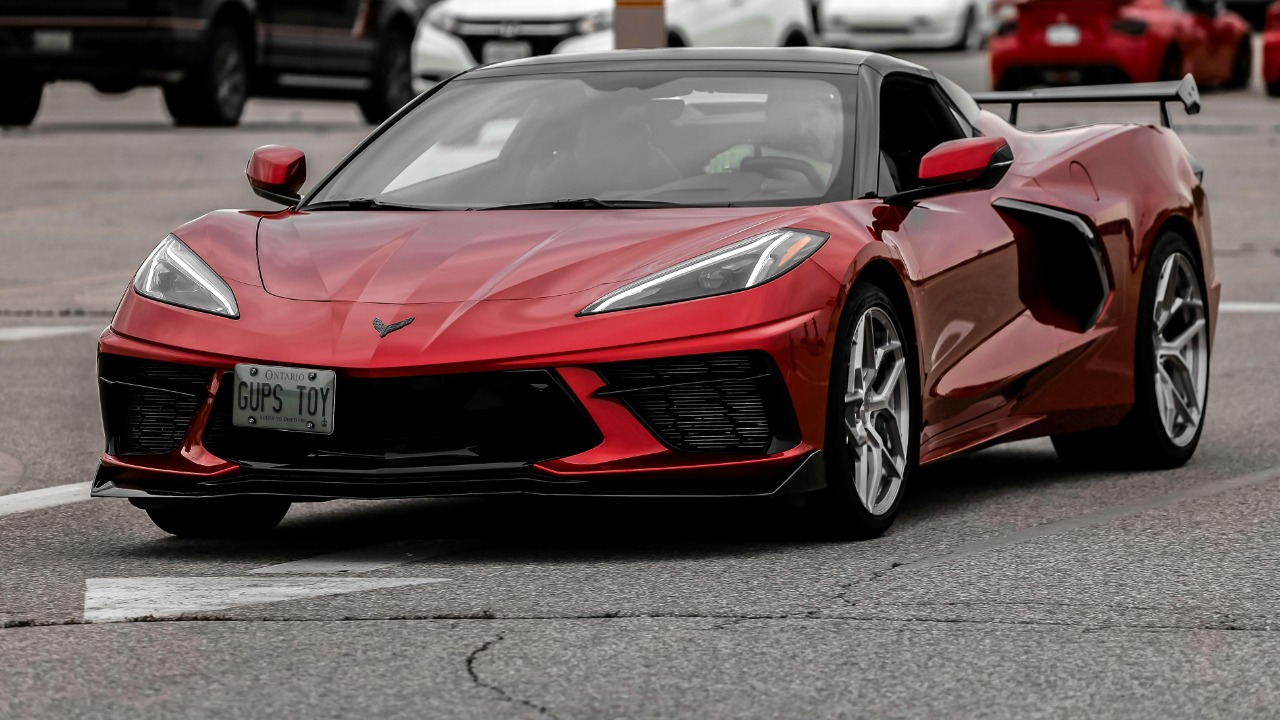
The 2020 Corvette C8 did more than move its engine behind the seats. It took a layout long reserved for exotic badges and turned it into something a lot more people could realistically buy and drive every day. By pairing a mid‑engine chassis with familiar Corvette attitude and pricing that undercuts traditional supercars, it became the first mid‑engine Corvette that genuinely feels built for the masses rather than a museum pedestal.
The long road to a mid‑engine Corvette
For decades, engineers toyed with the idea of putting the Corvette’s engine in the middle, but the production car stayed stubbornly front‑engined. The shift finally arrived with the C8, a clean break from the long‑hood proportions that defined the nameplate since the 1950s. When I look at the car in profile, the cab‑forward stance and short nose make it obvious that Chevrolet was no longer just tweaking a classic formula, it was rewriting it.
That change was not a whim. Reports on why They Corvette finally moved the powertrain explain that the company committed to a mid‑engine layout once it became clear the old configuration had hit its performance ceiling and that a new architecture delivered quicker straight‑line performance. Earlier experiments were shelved during financial turbulence, including plans around the C7, but the C8 project survived precisely because it promised a step change in capability rather than a marginal gain.
Why the mid‑engine layout matters on the road
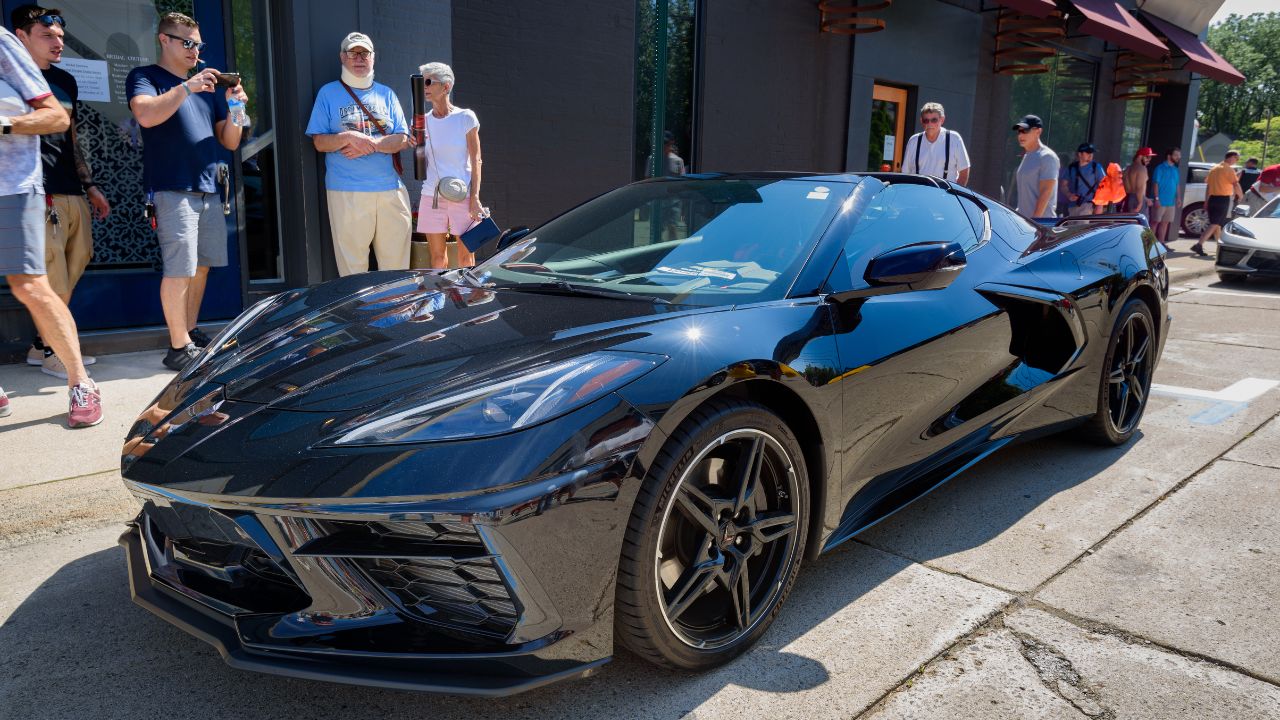
Moving the V8 behind the driver is not just a styling exercise, it fundamentally changes how the car behaves. With more of the mass concentrated between the axles, the car can rotate more eagerly into a corner and put power down with less drama on the exit. That is the core appeal of a mid‑engine car, and it is why so many high‑end sports machines have adopted the layout.
Explainers on What Is Mid-Engine Car? Understanding the New Corvette Stingray With Corvette point out that a mid‑engine is more balanced, which is exactly what performance‑car drivers are looking for when they push hard. Chevrolet leaned into that physics lesson with the C8, using the new layout to improve traction off the line and stability at speed. The result is a car that feels planted in fast sweepers yet still willing to change direction quickly, a combination that used to require a far more exotic badge on the nose.
Powertrain, performance and the numbers that matter
Under the rear glass, the 2020 Corvette C8 sticks with a naturally aspirated small‑block, but the details are thoroughly modern. The car’s Powertrain pairs a $59,995 6.2-liter By the Numbers Base Price Powertrain Chevrolet Corvette V8 with an eight‑speed dual‑clutch transmission, a combination that delivers instant shifts and a wide spread of usable torque. That 6.2‑liter displacement is familiar to Corvette fans, but in this application it is tuned to work with the new gearbox and weight distribution, turning every straight into an excuse to lean on the throttle.
Factory figures and dealer specs for Corvette Horsepower Torque Corvette show that the 6.2‑liter naturally aspirated V‑8 generates well over 400 horsepower and can launch the car to 60 m in less than three seconds when properly equipped. That kind of acceleration used to be the preserve of six‑figure supercars, yet here it is in a car that still wears a Chevrolet badge and can be ordered as either a coupe or a convertible. For drivers who care more about feel than spec sheets, the way the engine snarls toward redline and the dual‑clutch snaps off upshifts is just as important as the raw numbers.
From exotic layout to attainable price point
What really makes the C8 a watershed moment, in my view, is not just where the engine sits but how much the car costs relative to its performance. The base Aug Chevy Corvette Aim for the price of $59,995 after destination charges undercuts many far less capable sports cars, and even when buyers aim for the top trim they are still looking at a figure that hovers around the price of a well‑equipped luxury SUV. That is why so many reviewers describe it as a bargain: the performance envelope and mid‑engine layout simply do not match the sticker in the way enthusiasts have come to expect.
Value assessments of the 2020 Pros Chevrolet Corvette Available highlight that, despite the engineering leap, the car still manages to deliver supercar‑level acceleration and handling at a price that starts well below many European rivals and was originally priced from figures in the high‑$60,000 range for well‑optioned examples. When I compare that to what buyers typically pay for mid‑engine exotics, it is clear why the C8 is often described as the first mid‑engine Corvette that regular enthusiasts can aspire to own rather than just admire from behind a rope at an auto show.
On‑track poise and everyday usability
Numbers and price tags tell only part of the story, so I pay close attention to how the C8 behaves when driven hard. Track impressions from Villeneuve turns 2.2 mile circuit test describe a car that feels composed through long corners, stable on long straights and even unfazed by small jumps, which speaks volumes about the chassis tuning. The mid‑engine balance lets the driver carry speed into a bend and then lean on the rear tires on exit without the nervousness that can plague front‑heavy layouts, and that confidence is exactly what separates a true performance car from a fast grand tourer.
At the same time, road tests like Oct Speed Dating the Corvet emphasize that the first impression from the driver’s seat is not of a temperamental track toy but of a car that can handle residential streets and suburban speed limits without beating up its occupants. Reviewers note that the suspension copes with a fair amount of camber change and rough pavement, which matters if you plan to commute or road‑trip rather than trailer the car to every outing. That dual personality, sharp on a circuit yet civilized in traffic, is a big part of why the C8 feels like a realistic daily driver for more people.
Design, cabin experience and the trade‑offs of going mid‑engine
Shifting the engine rearward forced a rethink of the Corvette’s packaging, and the result is a cabin that wraps tightly around the driver. Sitting low behind a steeply raked windshield, you get a cockpit‑like view forward and a high center console that clearly divides the driver and passenger spaces. It feels intentional, as if the car is reminding you that this is a focused machine even when you are just cruising.
That focus comes with some compromises. Reviews that dig into the interior note that the enclosed feeling from the driver’s seat can verge on claustrophobic for some, and that the long line of climate‑control buttons along the console is a love‑it‑or‑hate‑it design flourish. One detailed drive report on Feb explains that the reason the mid‑engine layout works so well is that it lets the car rocket out of corners with a gout of tire smoke when provoked, but that same layout also limits rearward visibility and demands careful mirror adjustment in daily use. For buyers stepping up from a front‑engine C7, those trade‑offs will be part of the test‑drive calculus.
How the C8 feels from behind the wheel
From a driver’s perspective, what stands out about the C8 is how approachable it makes serious performance feel. The steering is quick without being twitchy, the brakes are strong yet easy to modulate, and the dual‑clutch gearbox can fade into the background in automatic mode or snap off shifts with race‑car urgency when you take control. That flexibility is crucial if you want one car to handle both weekday commutes and weekend canyon runs.
Hands‑on impressions from an Expert Chevrolet Corvette Chevrolet Corvette Stingray preview describe a car that feels as easy to maneuver in a parking lot as a 2020 Ford Explorer Platinum, which is not the comparison most people expect to hear in the same breath as a mid‑engine sports car. Video reviews, including a Jul breakdown that calls it a bargain mid‑engine performance car, underline how much more powerful it is than the last‑generation C7 while still being less intimidating to drive at the limit. For me, that is the essence of what makes the 2020 Corvette C8 special: it democratizes the mid‑engine experience without diluting the thrill that layout is supposed to deliver.
What the first mid‑engine Corvette signals for the future
Looking at the broader arc of Corvette history, the C8 feels like a pivot point rather than a one‑off experiment. Official material on how Jul Chevrolet Introduces First Ever Mid Engine Corvette Stingray Better describes the new Stingray as the first‑ever mid‑engine Corvette and highlights benefits like better weight distribution and the practicality of front and rear trunk tubs. That combination of everyday usability and serious performance is likely to shape future variants, from higher‑performance Z models to potential electrified versions that build on the same basic architecture.
As someone who has watched the Corvette evolve from chrome‑bumpered cruiser to track‑ready weapon, I see the 2020 C8 as the moment the car fully embraced its role as an attainable American supercar. It keeps the core ingredients that fans expect, from the burly V8 soundtrack to the bold styling, while adopting a layout that aligns it with the world’s most advanced sports cars. The fact that all of this arrives in a package priced at 6.2-liter levels that undercut many rivals is what truly makes it a mid‑engine Corvette for the masses, and a landmark moment in the ongoing story of America’s longest‑running sports car.
More from Fast Lane Only: