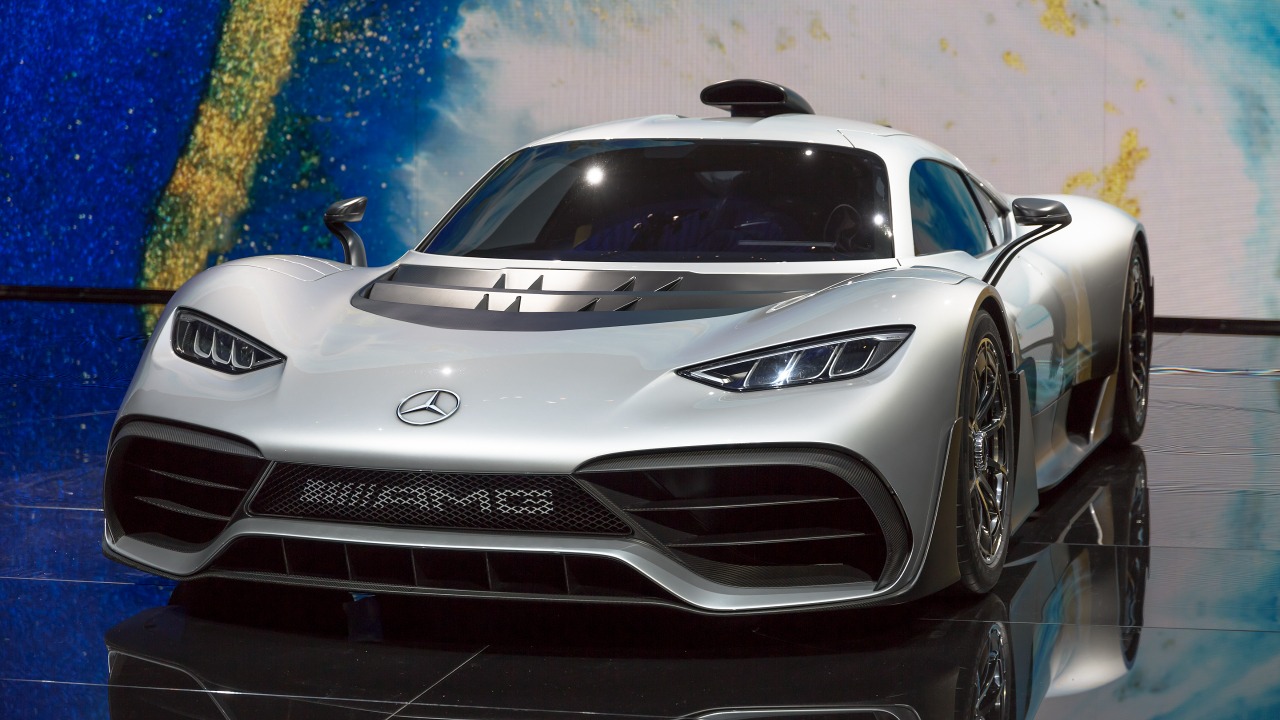
The 2021 Mercedes-AMG One is the rare moment when a marketing slogan about “Formula 1 technology for the road” is not exaggeration but a literal engineering brief. After years of development and delays, the first F1-hybrid hypercar built for private buyers has moved from concept poster to customer garage, turning a championship-winning powertrain into a street-legal statement.
By the time the first owners received their cars, the Mercedes-AMG One had already become a case study in how far a manufacturer will go to translate racing hardware into a production model. It is limited, complex, and unapologetically focused, yet it also signals how hybrid systems shaped in the pressure cooker of grand prix racing can filter into the highest tier of road-going performance.
From Project One promise to production reality
When Mercedes first revealed what it then called Project One, the pitch was simple and audacious: take a Formula 1 hybrid power unit and homologate it for public roads. The production version, officially named the Mercedes-AMG One, arrived with a plug-in dual hybrid layout and a specification that closely tracks that original ambition, pairing a highly strung combustion engine with multiple electric motors in a package designed for both outright speed and electric-assisted efficiency. According to detailed technical summaries of the AMG One, the car was always intended as a limited-production showcase rather than a mass-market halo model.
The road from show stand to series production was longer than Mercedes initially signaled, in part because adapting a Formula 1 derived engine to meet emissions, noise, and durability requirements proved far more complex than dropping a race motor into a carbon tub. Internal targets for launch slipped, and the company eventually confirmed that full build operations would not begin until 2022, pushing the first deliveries beyond the original timetable. Reporting on the development program notes that the production version of the One was unveiled with the expectation that assembly would start in late 2022, a schedule that set the stage for customer cars to follow soon after.
Series production and the first customer handovers
The turning point from concept to reality came when Mercedes confirmed that job number one of the exclusive production run had begun and that the first customer vehicles would be completed at a dedicated facility. The company framed this as the start of a tightly controlled build program, with each Mercedes-AMG ONE assembled by motorsport specialists rather than on a conventional line, underscoring how close the car sits to the brand’s competition machinery. Video coverage of the launch of Mercedes AMG One Production highlights that this was not a symbolic gesture but the formal start of a 275-unit run.
Once series production was underway, Mercedes signaled that customer deliveries would begin before the end of that year, a promise that aligned with the first handover of a completed car to a private buyer. Coverage of the first customer Mercedes-AMG One notes that the initial example went to an owner in Europe after nearly three months of ramp-up, confirming that the long-promised F1-hybrid hypercar had finally reached private hands. Additional reporting on the first Mercedes-Benz AMG One customer car being delivered in Germany reinforces that this was not a prototype loan or a factory demonstrator but a full production vehicle registered for road use.
F1-hybrid hardware, translated for the street
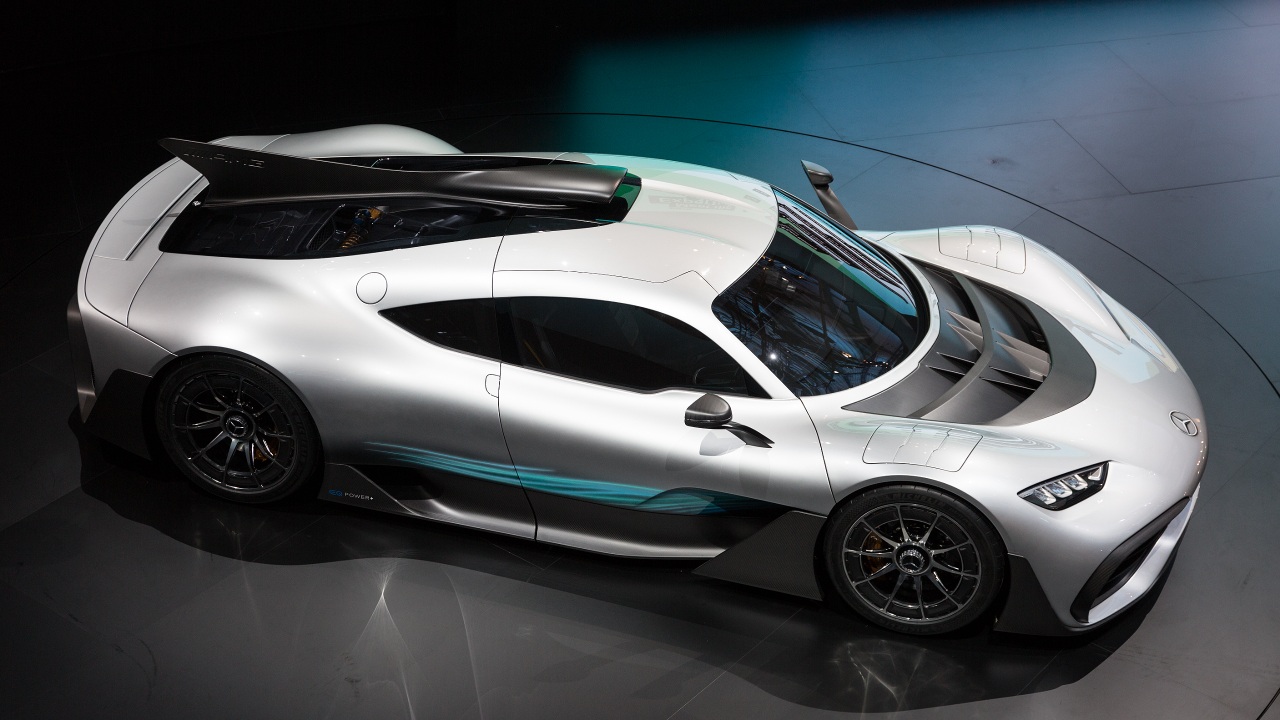
At the heart of the Mercedes-AMG One story is its powertrain, which lifts architecture and philosophy directly from the brand’s Formula 1 program. The car uses a turbocharged combustion engine paired with multiple electric motors in a plug-in dual hybrid configuration, mirroring the complex energy recovery and deployment strategies that define modern grand prix racing. Technical breakdowns of the Mercedes-AMG One describe how this system is tuned for both explosive acceleration and limited electric-only running, giving owners a taste of F1-derived hybridization in a package that can navigate city streets as well as circuits.
Translating that hardware into something that could pass inspection in multiple markets required extensive reengineering, from idle speeds and emissions mapping to noise control and start-up procedures. The result is a car that retains the character of a Formula 1 power unit while operating within the legal framework for a street-legal production model, a balance that no previous hypercar has attempted at this level of fidelity. Later analysis of the Mercedes-AMG ONE underscores that it is regarded as the first street-legal production car to use an engine directly related to a Formula 1 unit, rather than simply borrowing design cues or hybrid concepts.
Limited numbers, global demand, and early owners
Mercedes capped the Mercedes-AMG One program at 275 units, a figure that reflects both the complexity of the build and the desire to keep the car as an ultra-rare flagship. Each example reportedly carried a price tag in the multi-million range, and all build slots were spoken for well before the first production car left the factory. Reporting on the AMG ONE notes that Mercedes built 275 in total and that they cost around 2.7 million when new, underscoring how tightly controlled access to the car has been.
The ownership roster reflects that exclusivity, with high-profile names linked to the car alongside dedicated brand loyalists and motorsport insiders. Coverage of who bought the Mercedes-AMG ONE points out that Lewis Hamilton previously owned one before selling it, while another buyer with close ties to Mercedes also secured a car. These details underline how the One functions not just as a technological flagship but as a status marker within a very small circle of collectors who value its direct connection to the brand’s Formula 1 dominance.
From European garages to American streets
Although the first customer cars went to European buyers, Mercedes always intended the AMG One to be a global statement, and its arrival in the United States marked another milestone in that rollout. When a Mercedes-AMG One appeared in New York, it signaled both the start of American customer deliveries and the brand’s confidence that it could navigate the regulatory and logistical hurdles involved in bringing such a specialized machine to one of its most important markets. Coverage of the Mercedes-AMG One hypercar arriving in New York describes the car as one of the most anticipated performance models of its era and notes that its presence there marked the beginning of U.S. handovers.
That transatlantic expansion reinforces the central point of the Mercedes-AMG One project: this is not a track-only special or a museum-bound prototype, but a fully homologated production car that owners can register and drive on public roads in multiple regions. As more examples move from factory to private collections, the car’s role as the first F1-hybrid hypercar sold to buyers becomes less an abstract claim and more a lived reality, with each sighting on city streets or at track events illustrating how far Mercedes was willing to go to collapse the distance between its Formula 1 garage and its most devoted customers.