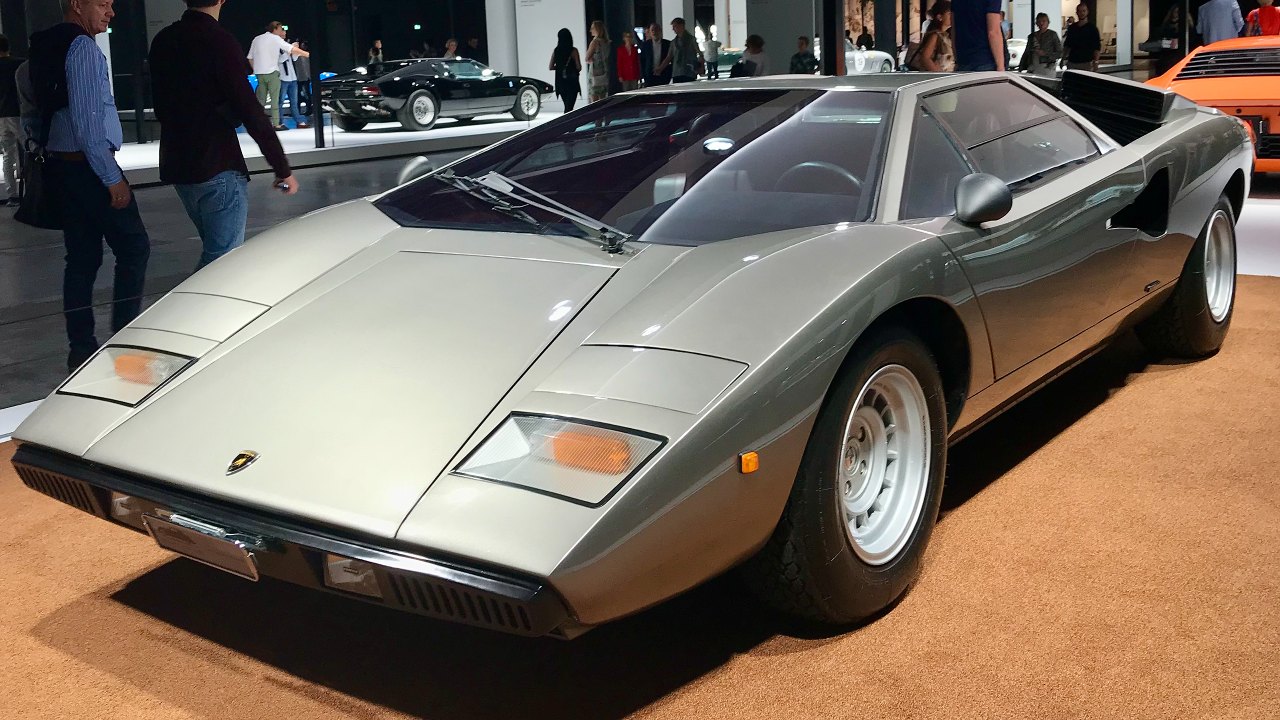
The 1974 Lamborghini Countach did not just replace the Miura, it detonated the entire idea of what an exotic car should look like. With its razor-edged profile, cab-forward stance, and outrageous scissor doors, it became the first truly modern wedge supercar, a template so influential that rivals and kit-car makers spent the next two decades trying to copy it.
What made that first production Countach so disruptive was not only its speed, but the way it turned engineering constraints into graphic, almost sci‑fi theater. The car’s mid-mounted V12, its low, wide stance, and its radical surfacing rewrote the visual language of performance, and the rest of the industry spent years catching up.
From Miura beauty to Countach shock
The Countach arrived as a deliberate break from the soft curves that had defined 1960s exotics. The Lamborghini Miura, styled by Marcello Gandini of the Bertone design studio, had already established the rear mid-engine layout as a thing of beauty, but it still relied on flowing, organic forms. When Gandini turned to the new project that became the Countach, he abandoned that sensuality in favor of sharp planes and a low, triangular profile that looked more like an aerospace study than a road car, a shift that is documented in detailed histories of the Countach.
By the time the production car emerged in 1974, the wedge silhouette was fully formed. The cabin was pushed far forward, the nose was almost horizontal, and the rear deck sat high over the engine, creating a dramatic rake that made the Miura look almost conservative. Contemporary analysis of the revolutionary design notes that this was not just a styling exercise, but a structural rethinking of how a supercar should package its mechanicals and its driver.
The 1974 wedge that set the template
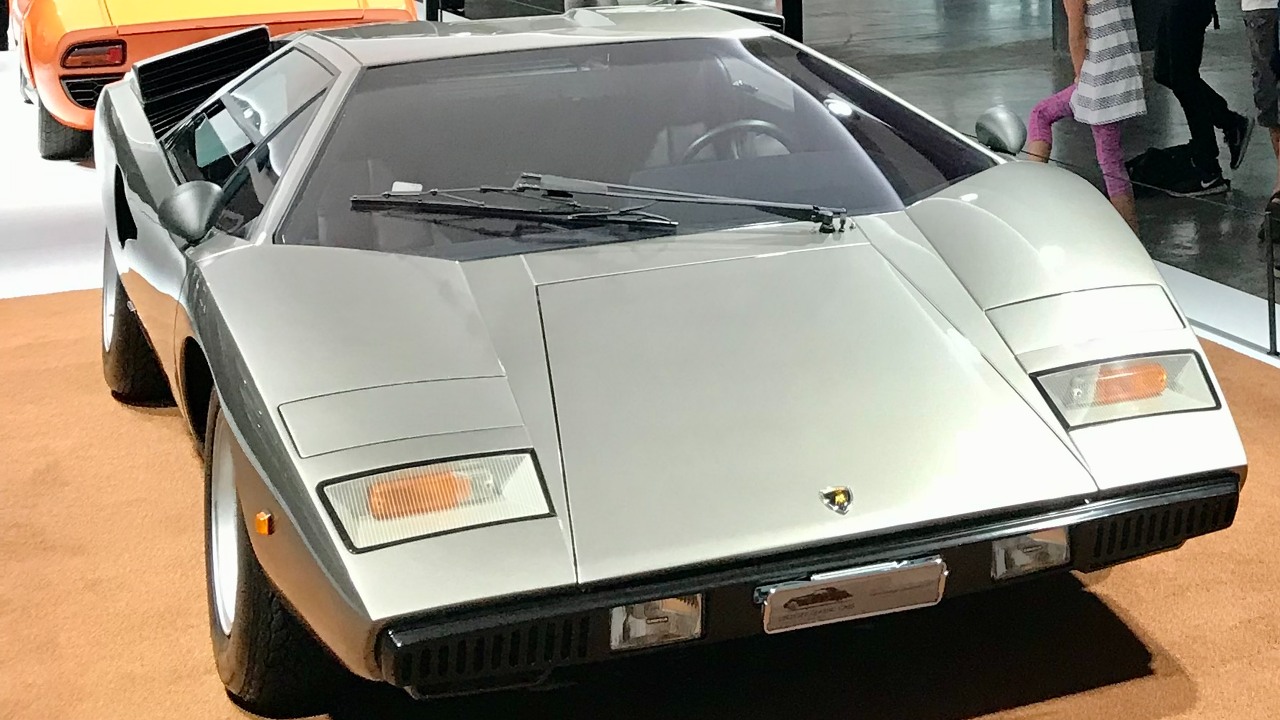
The first production Countach, introduced in 1974, crystallized the wedge era in a way no rival had managed. Its body sat over a rear mid-engine, rear-wheel-drive layout, with the V12 mounted longitudinally behind the cockpit, a configuration that gave the car its distinctive proportions and is carefully described in technical overviews of the Lamborghini Countach. The low nose, steeply raked windscreen, and high tail created a visual arrow, and the flat surfaces and hard edges made the car look faster standing still than many contemporaries did at full speed.
Design commentators often point out that the Countach did more than look extreme, it reset expectations for what an exotic should communicate. Reports that frame it as a standard for exotic supercars emphasize how its stance, its proportions, and its unapologetically theatrical presence turned the car into a rolling manifesto. The 1974 model set the core cues that later evolutions would exaggerate, but the essential wedge, the cab-forward layout, and the sheer visual aggression were already locked in.
Marcello Gandini and the birth of the modern supercar
Marcello Gandini of the Bertone studio is central to understanding why the Countach became the archetype everyone copied. His earlier work on the Miura had already proven that he could balance engineering and aesthetics, but with the Countach he pushed into what many historians describe as the birth of the modern supercar. Accounts of the Countach evolution underline how Gandini and the engineering team treated the car as a clean-sheet experiment, using the wedge form to solve aerodynamic and packaging challenges while also creating a new visual language.
That language quickly became the shorthand for high performance. The combination of a rear mid-engine layout, a low, wide track, and a sharply angled body created what later commentators describe as the template for modern mid-engine supercars. The Countach’s influence can be traced through subsequent designs that adopted similar proportions and surface treatments, and detailed design histories of the Countach highlight how Gandini’s ideas were echoed, refined, and sometimes directly imitated by competitors.
Different from every other “supercar”
What set the original Countach apart from other high-performance cars of its era was how completely it rejected convention. Contemporary retrospectives describe how the car felt unusual in every respect, from its extreme driving position to its limited rear visibility, and how it seemed to prioritize drama over practicality. One detailed breakdown of the early model notes that it was so unlike its peers that the very idea of supercars as a category was essentially invented around it.
That difference was not just about looks. The Countach’s rear mid-engine, rear-wheel-drive configuration, its scissor doors, and its unapologetically loud presence turned it into a lifestyle statement as much as a machine. Analyses that describe it as a lifestyle statement underline how owners were buying into an image of futuristic excess. In that sense, the Countach did not just compete with other fast cars, it created a new benchmark for what an exotic had to deliver in terms of spectacle.
How everyone copied the wedge
Once the Countach gained traction through the 1970s, the broader industry response was swift. By the 1980s, the wedge-shaped, mid-engine supercar had become the default fantasy poster, a shift that detailed retrospectives on how the Countach changed the automotive scene describe as a move into the realm of the wedge supercar. Rival manufacturers adopted similar low noses, angular bodies, and cab-forward proportions, while tuners and replica builders tried to mimic the Countach’s stance and detailing as closely as possible.
Design analysts who look back on the period argue that the Countach is widely credited with creating the template for high-performance automotive design. Reports that frame it as setting the standard point to how later exotics borrowed its wedge profile, its emphasis on visual drama, and its integration of engineering and styling. Over its 16-year production run, the Countach itself evolved, but as detailed histories note, there was always something special happening in that basic shape, a quality that design explainers describe as a lasting influence that continues to inform how supercars are drawn and engineered today.
More from Fast Lane Only: