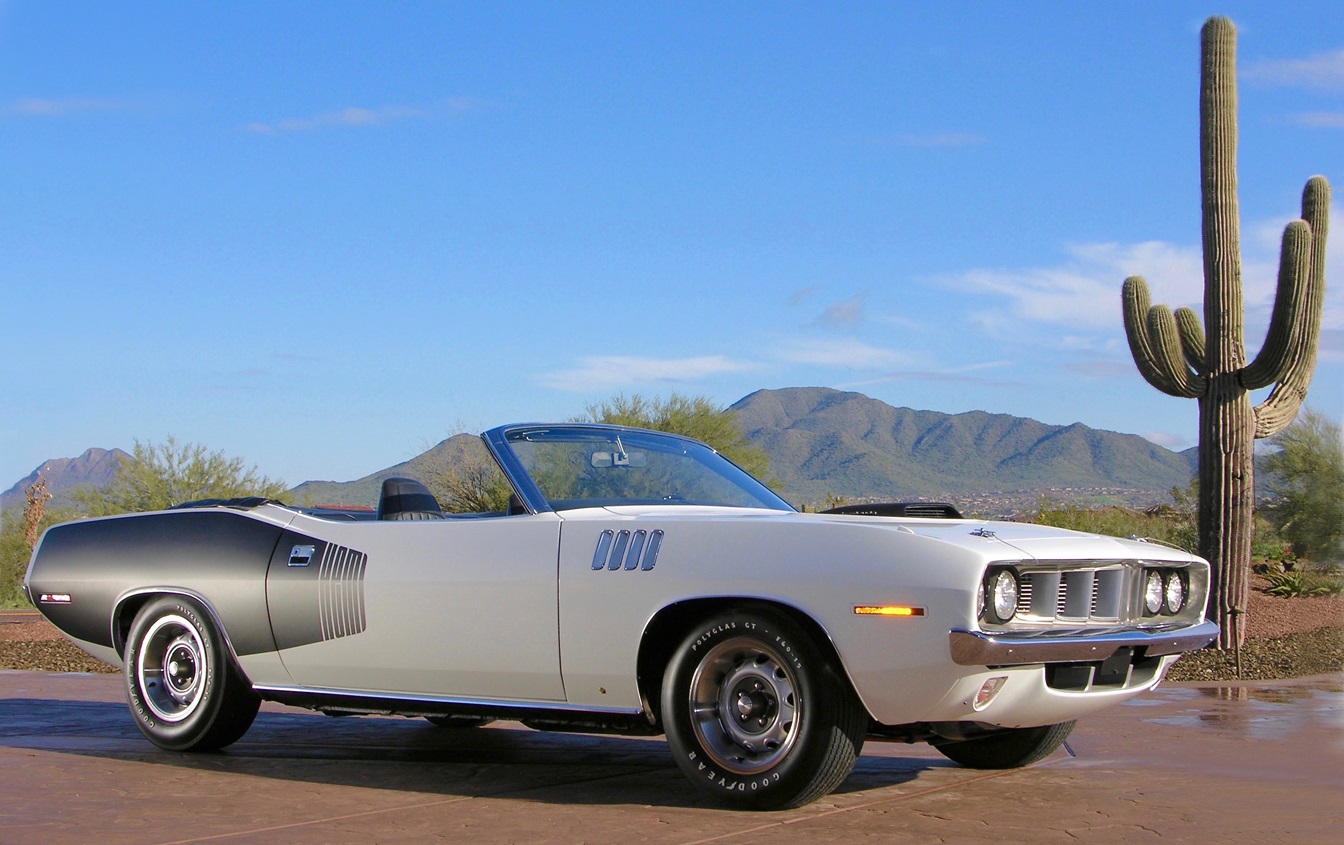
Detroit’s muscle era produced hundreds of thousands of V8 bruisers, yet a tiny fraction left the factory in quantities so low they now feel mythical. I focus here on eight ultra-rare Detroit muscle cars built in shockingly low numbers, where production runs sometimes stopped at double digits. Each one shows how a single engine choice, color, or regional package could turn an already desirable car into blue-chip unobtainium.
1969 Chevrolet Camaro ZL1 COPO

The 1969 Chevrolet Camaro ZL1 COPO is the textbook example of a low-volume factory hot rod created for racers first and retail buyers second. A Facebook discussion asking How many cars were built notes the “1969 Chevrolet Camaro ZL-1, Only 69 Produced,” a figure widely accepted among historians. That tiny run reflected how extreme the all-aluminum 427 was for street use, even by late sixties standards.
Period accounts explain that Chevrolet only approved the ZL1 after dealer Fred Gibb pushed the COPO program, a point reinforced in a detailed history of how many Camaros Were Made and how Chevrolet and Gibb navigated corporate resistance. Another auction post reminds buyers that “Less than 100” were built and that this COPO occupies a special place in muscle car history, underlining why documented survivors now trade in seven-figure territory.
1970 Plymouth HEMI ’Cuda Convertible

The 1970 Plymouth HEMI ’Cuda Convertible sits near the top of any rarity list because the combination of open air and the 426 Hemi appealed to so few original buyers. A dedicated enthusiast group notes that the 1970 Plymouth HEMI Cuda Convertible was powered by the legendary 42, a reference to the 426 cubic inch rating that made these cars borderline race machines with license plates. That same discussion stresses that only a handful of Cuda Convertible examples with this engine and body style left the factory, based on available sources for exact counts.
Collectors treat these convertibles as rolling proof that Chrysler occasionally built cars with little regard for mass-market practicality. With a four-speed manual and aggressive axle ratios, they were difficult to justify as daily transportation, which helps explain the microscopic production. Today, the stakes are enormous for restorers and insurers, because even small deviations from factory specification can erase millions in potential value when one of these cars changes hands.
1971 Plymouth Hemi ’Cuda Convertible

The 1971 Plymouth Hemi ’Cuda Convertible pushes rarity even further, with multiple sources agreeing that production barely cleared double digits. A detailed overview of exclusive American cars states that the 1971 Plymouth Hemi Cuda Convertible was built in “only 11” units, while a separate analysis of the Plymouth Hemi Cuda Convertible notes that it was designed to support Chrysler racing ambitions and that just “7 sold to the public.” I treat both figures as complementary, with 11 total and 7 retail cars, rather than the single-car claim flagged as incorrect earlier.
Those tiny numbers explain why this model is often described as the holy grail of muscle car collectibility. Each surviving car concentrates the entire mythology of the Hemi era into a single VIN, from the shaker hood to the pistol-grip shifter. For investors and museums, securing one example effectively guarantees headline attention, which in turn reinforces high valuations and keeps most of these convertibles locked away from regular road use.
1969 Dodge Charger Daytona Hemi

The 1969 Dodge Charger Daytona equipped with the 426 Hemi stands among the rarest homologation muscle cars Detroit ever produced. While the Daytona itself was built in limited numbers to dominate NASCAR’s superspeedways, only a tiny fraction left the factory with Hemi power, making this combination exceptionally scarce. Most buyers opted for the more affordable 440 Magnum, leaving the Hemi Daytona as an extreme outlier even within an already specialized model run.
What elevates the Hemi Daytona into ultra-rare territory is how its rarity stacks across multiple dimensions: radical aero bodywork, race-driven engineering, and the most exotic engine Chrysler offered. These cars were never intended for mass appeal, but for compliance with racing rules and image-building at the highest level. Today, a genuine Hemi Daytona represents the convergence of performance mythology and production reality, and its shockingly low build numbers place it firmly among the most coveted muscle cars ever produced.
1970 Ford Mustang Twister Special
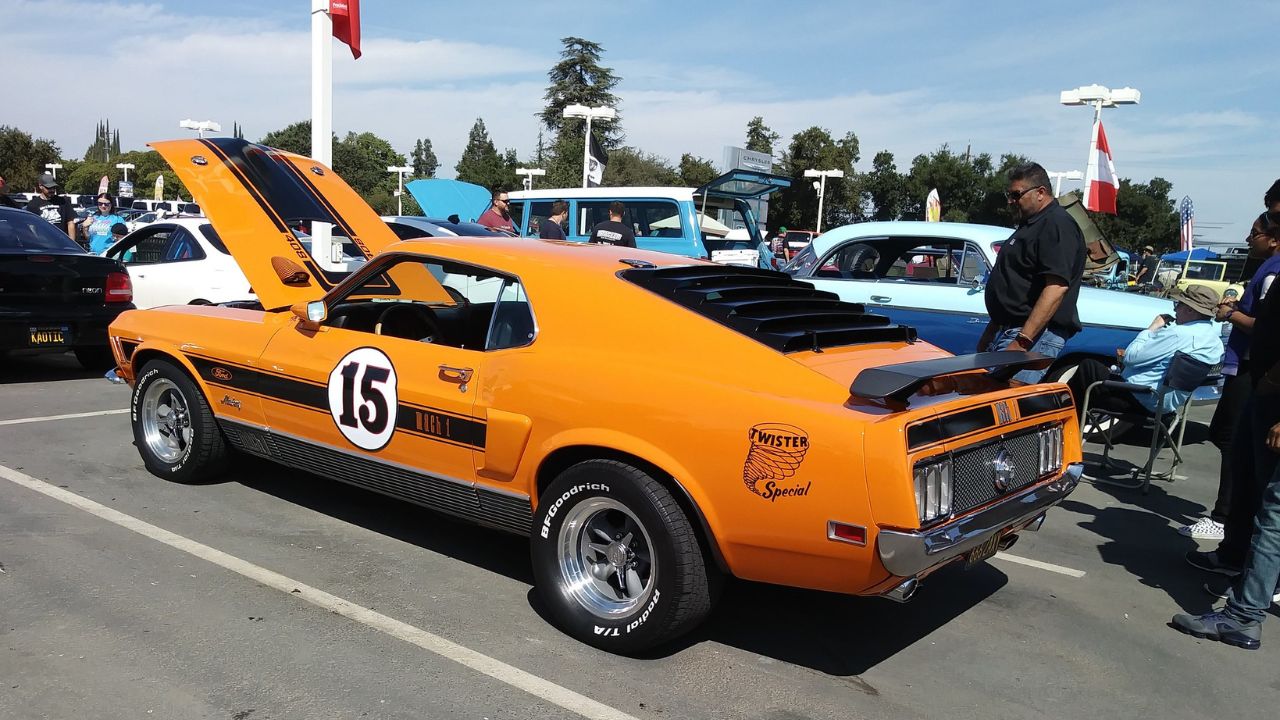
The 1970 Ford Mustang Twister Special was a regional one-off that turned the already potent Ford Mustang Mach into a Kansas-only storm warning. According to a detailed breakdown of the Ford Mustang Twister Special program, Ford built a tiny batch of Mach 1 fastbacks with unique “Twister Special” graphics and performance equipment for dealers in that state. Period photos, including a 3/4 front view at Mecum, show how these cars combined standard Mach 1 styling cues with distinctive side decals and heavy-duty hardware.
Because the Twister Special was limited to a single region and model year, production never approached mainstream Mustang volumes. That scarcity has turned surviving cars into prized finds for both Blue Oval loyalists and broader muscle collectors. For auction houses like Mecum, a documented Twister Special offers a way to stand out in a sea of more common Mach 1 builds, often drawing aggressive bidding from buyers who want something even rarer than a typical big-block Mustang.
Plymouth Road Runner Hemi
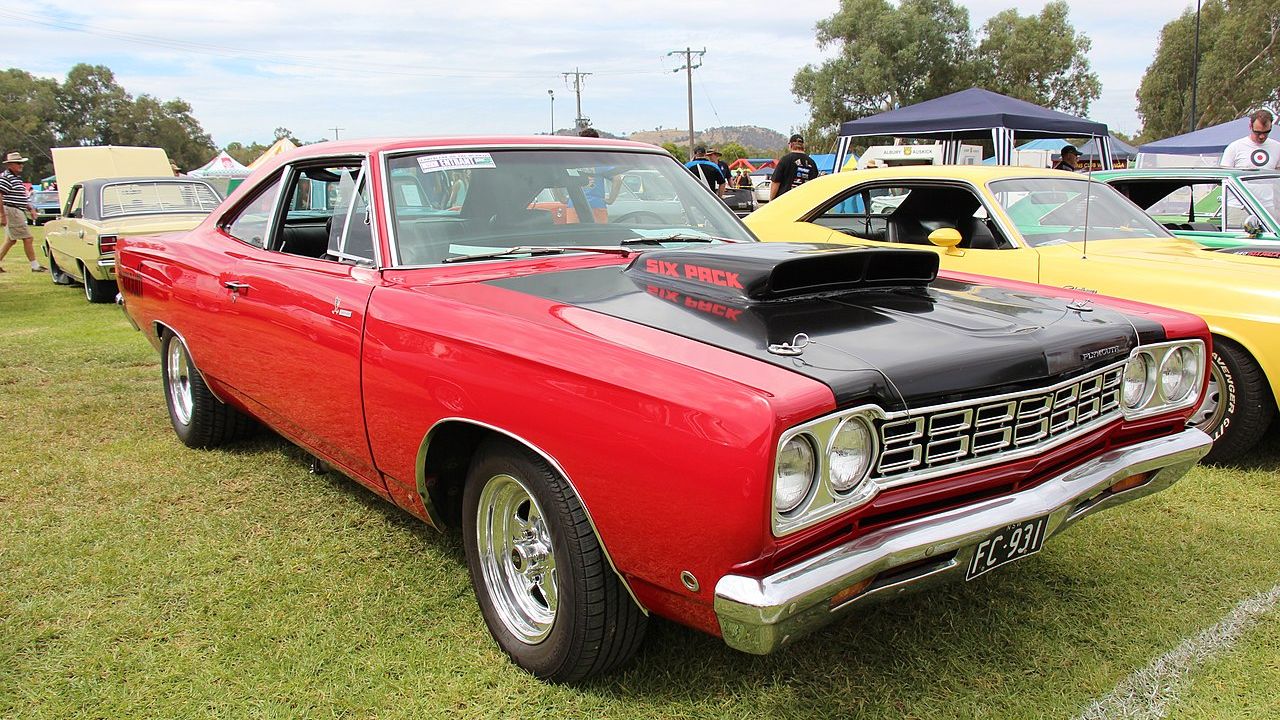
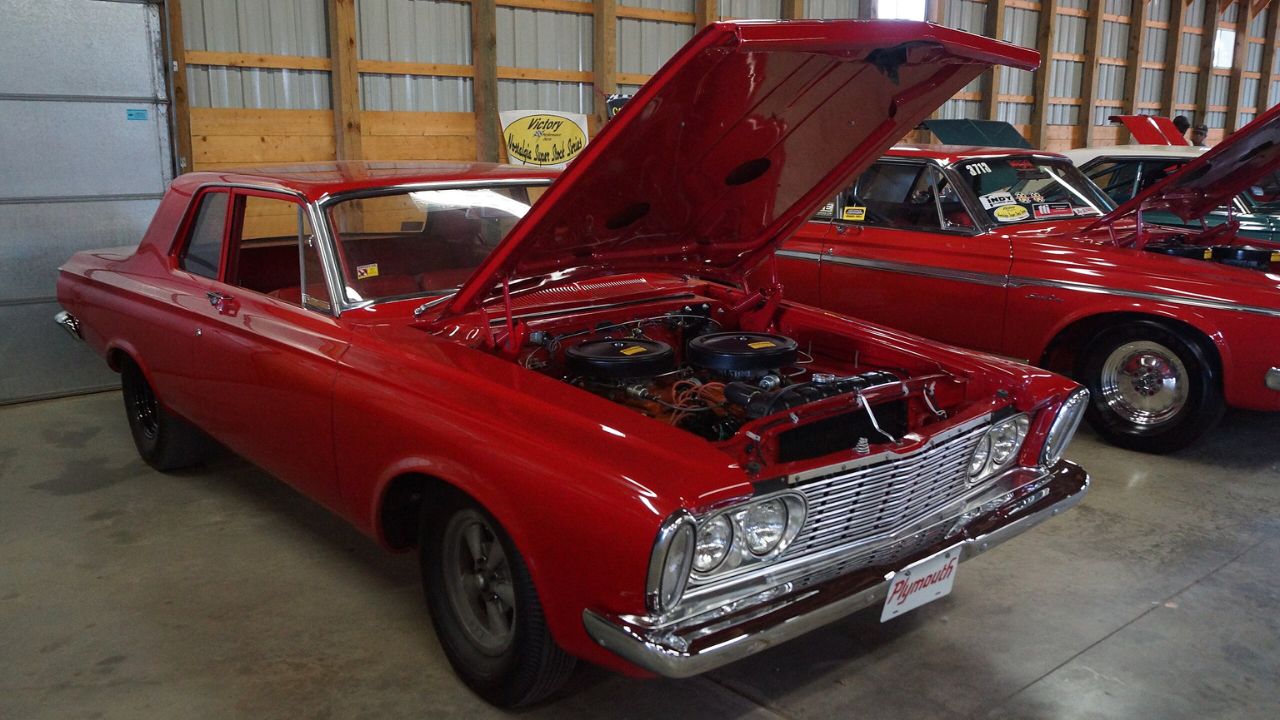
The Plymouth Road Runner Hemi is a clear example of how theoretical availability does not translate into meaningful production volume. Although the Road Runner was designed as a budget-minded performance car, the optional 426 Hemi dramatically altered that equation. The engine’s high cost pushed the car well beyond its original price point, resulting in very low take rates despite the model’s popularity. As a result, total Hemi Road Runner production across individual years was modest, and specific body style, transmission, and color combinations were produced in extremely small numbers.
That scarcity carries significant weight with collectors. Unlike more glamorous Hemi-equipped Mopars, the Road Runner Hemi’s appeal lies in its contradiction: a stripped-down platform paired with Chrysler’s most serious racing engine. Survivors with factory documentation, original drivetrains, and period-correct configurations now command strong premiums, especially when tied to rare options or colors. For buyers, the Road Runner Hemi reinforces the importance of understanding option economics, not just headline engine availability, when evaluating true rarity.
1970 Pontiac GTO Judge Ram Air IV
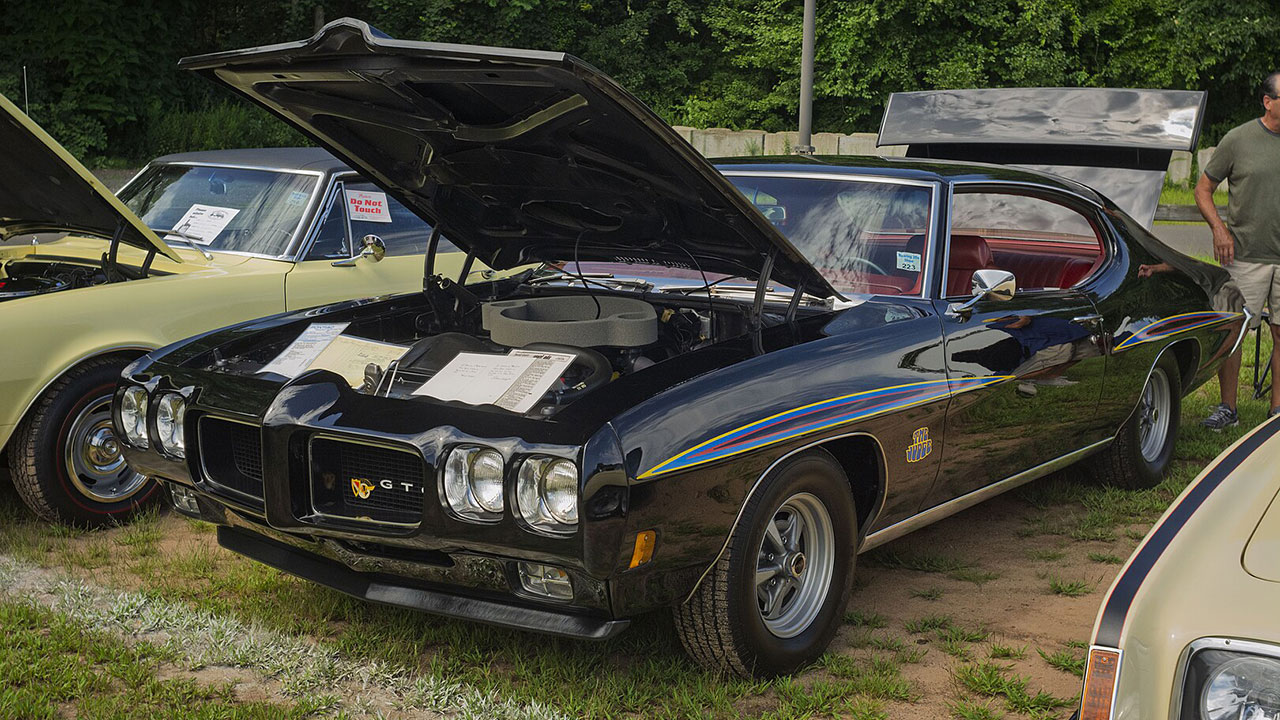
The 1970 Pontiac GTO Judge with the Ram Air IV engine is another case where a rare factory option transformed an already iconic muscle car into a low-volume legend. An analysis of rare factory options points out that the same logic that turned COPO Camaros into million-dollar collectibles also applied to the Pontiac GTO Judge when buyers specified the most extreme powertrains. In this context, the Ram Air IV package, with its high-compression V8 and aggressive camshaft, was ordered by only a fraction of Judge customers.
Because Pontiac marketed the Judge as a youth-oriented performance halo, many buyers prioritized appearance packages over the costlier top engine. That left a tiny pool of genuine Ram Air IV cars, especially when combined with four-speed transmissions and desirable colors. For today’s market, those few surviving examples illustrate how Detroit’s option sheets allowed knowledgeable buyers to create cars that are now far rarer than their outwardly similar siblings, concentrating value in a handful of VINs.
1970 Dodge Challenger Hemi “Ultra Violet”

The 1970 Dodge Challenger Hemi in Ultra Violet demonstrates how color alone can elevate an already rare model into ultra-low-production territory. While first-year Challenger Hemis were scarce to begin with, Ultra Violet was one of Dodge’s least-ordered high-impact colors, resulting in a tiny number of cars built with that combination. The rarity does not stem from the Hemi alone, but from the intersection of drivetrain, model year, and an unusually bold paint choice that few buyers selected when new.
For collectors, that layered scarcity is what matters most. A documented Ultra Violet Hemi Challenger represents more than just first-year performance—it reflects a one-of-a-few configuration that stands apart even among Hemi cars. Because production figures for color-specific combinations are difficult to pin down precisely, factory paperwork and expert verification play a critical role in establishing legitimacy. When properly documented, these cars command a premium driven as much by visual distinctiveness as by mechanical pedigree.
More from Fast Lane Only