
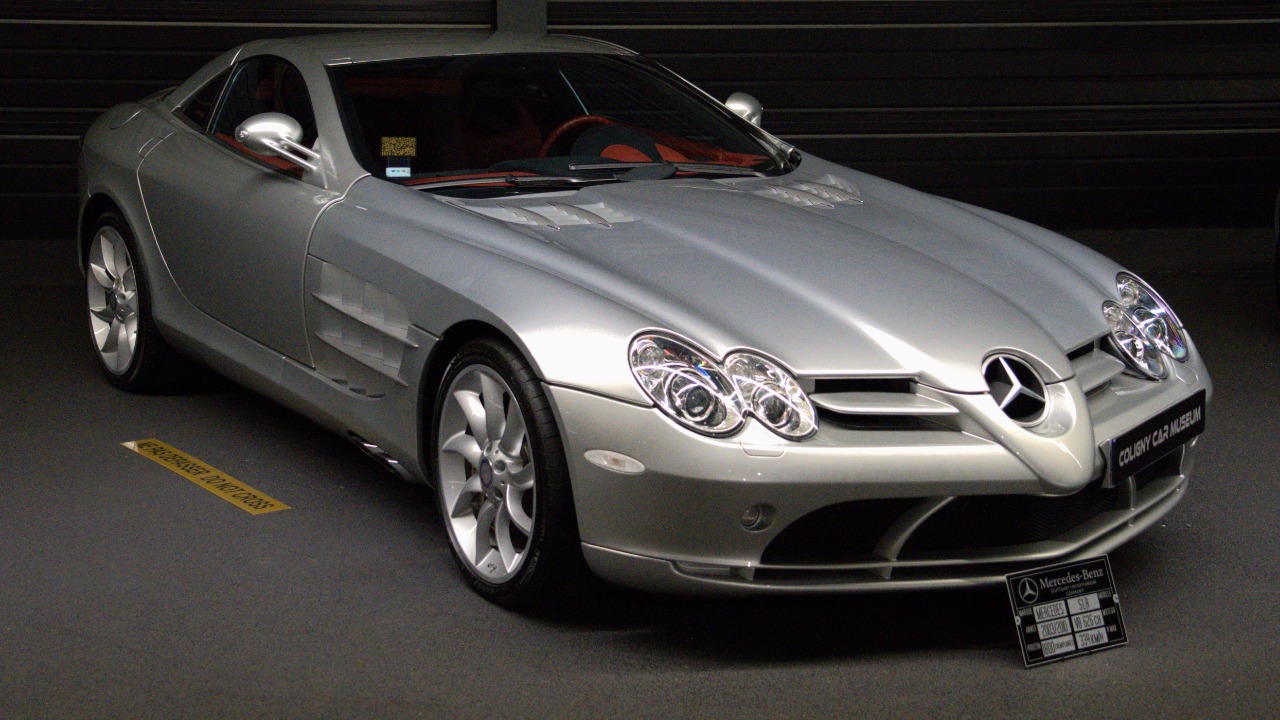
The Mercedes SLR McLaren arrived as more than a fast grand tourer. It was a deliberate attempt to translate the rarefied world of Formula 1 engineering into something a committed driver could use on real roads, in real weather, with luggage in the boot. By blending race-bred materials, braking systems and chassis thinking with long-distance comfort, it turned the idea of an F1-inspired road car from poster fantasy into a usable, if still extreme, reality.
The unlikely Mercedes and McLaren partnership
When I look at the SLR story, the first thing that stands out is how improbable the partnership was. Mercedes had deep experience building refined performance cars, while McLaren was defined by its single-minded focus on racing and the uncompromising McLaren F1. In the SLR project, Mercedes handled the styling, but McLaren was fully responsible for everything else, from the design and the engineering to the way the car was put together. That division of labor meant the car’s silhouette carried the familiar cues of a German grand tourer, while the underlying structure and dynamics were shaped by a team used to shaving tenths off lap times.
The collaboration did not emerge in a vacuum. Earlier, the company had brought out the CLK GTR, a barely tamed race car that showed how difficult a pure-bred hypercar could be to live with, and that experience set the stage for a different approach. The SLR was conceived as a kind of daily hypercar, a machine that would still deliver extreme tech, material choices and speed, but with a level of usability the CLK GTR never attempted. That ambition, to fuse everyday drivability with exotic performance, defined how CLK GTR lessons were folded into the SLR’s concept and explains why the car feels like a negotiated truce between two very different engineering cultures.
F1 materials and construction brought to the road
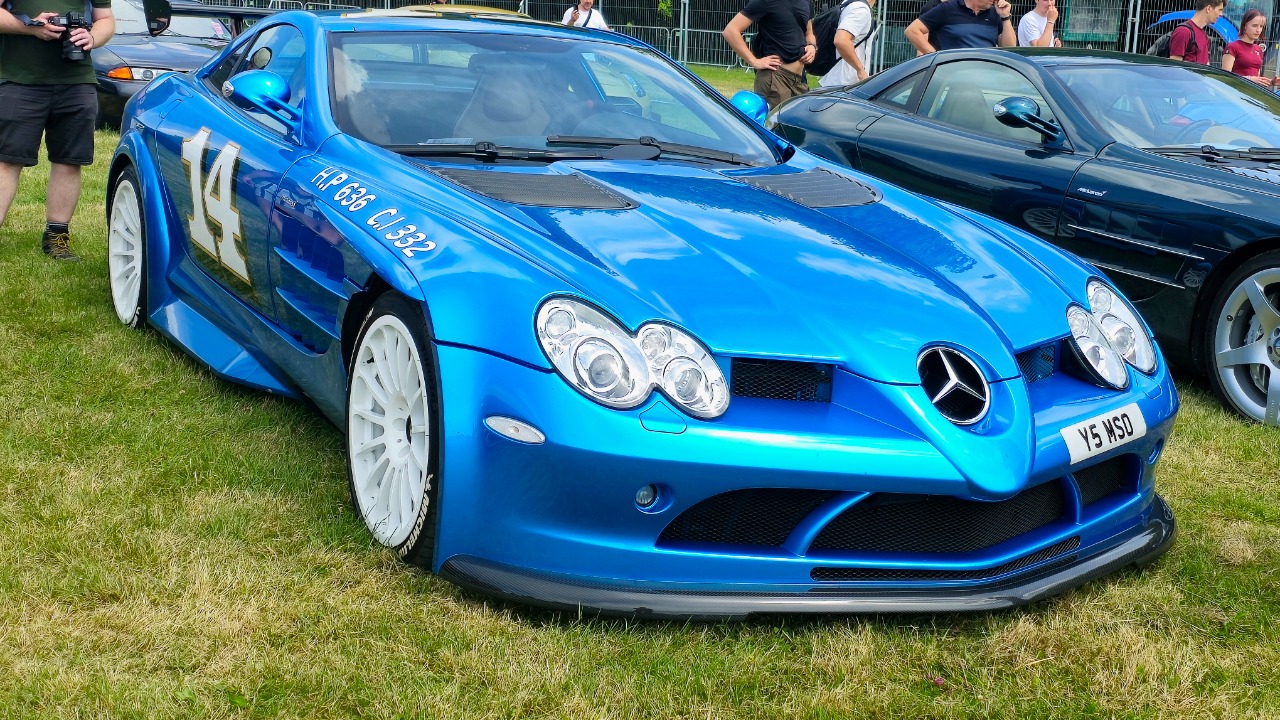
The SLR’s most direct link to Formula 1 sits in its bones. Instead of a traditional metal monocoque, the chassis and body construction use mass-produced carbon fiber composites, one of F1’s proprietary technologies that McLaren helped pioneer in racing. That choice was not just about bragging rights. Carbon fiber allowed engineers to create a structure that was extremely stiff yet light, improving crash performance and sharpening handling in ways that conventional steel or even aluminum could not match. The development history traces this philosophy back to the 1955 300SLR Coupe and a later concept car called Vision SLR, which previewed how those materials and proportions could be adapted for a modern supercar, and those ideas were carried directly into the production carbon fiber structure.
That focus on composites fits into a broader pattern of F1 innovations migrating to road cars. McLaren pioneered the use of carbon fibre chassis in top-level racing, and over time that technology filtered into high-end production models from several brands. The SLR sits squarely in that lineage, using a carbon tub and bodywork to deliver a level of rigidity and impact performance that would have been unthinkable in a conventional GT of its era. In the wider context of track-to-road transfer, the car stands alongside other examples of F1-derived tech, from advanced braking systems to steering-wheel controls, that have gradually reshaped what drivers expect from modern performance cars, as highlighted by the spread of carbon fibre chassis and other race-born ideas into the showroom.
Race-bred power and braking in a grand tourer shell
Under the long bonnet, the SLR’s powertrain reads like a technical manifesto. The Engine is a hand-built 5.4 L (5,439 cc) supercharged V8, a configuration that delivers immense torque and a broad power band more reminiscent of endurance racing machinery than a peaky track special. By pairing that displacement with forced induction, the car could produce towering performance while still offering the kind of flexibility that makes long-distance driving effortless. The way the Engine responds, with instant shove and a deep reserve of power, reflects a philosophy borrowed from racing, where usable torque across the rev range often matters more than a single headline figure, and the exact 5.4 and 5,439 numbers have become part of the SLR’s technical lore as recorded in its Mercedes Benz SLR specifications.
The braking system pushes the F1 connection even further. The SLR features Sensotronic Brake Control, a brake-by-wire setup that replaces a purely mechanical link with an electronically managed system, allowing more precise modulation and integration with stability systems. To cope with the speeds the car can reach, it uses massive carbon-ceramic discs that resist fade and maintain performance under repeated heavy use, a clear nod to race technology adapted for public roads. The combination of that advanced hardware with aerodynamic aids, including an air brake function, gives the driver a sense of deceleration that feels closer to a track car than a traditional GT, and it underlines how deeply F1 thinking was baked into the SLR’s approach to stopping as well as going.
Safety, structure and the F1 mindset
One of the most revealing aspects of the SLR’s design is how it treats safety as a performance feature rather than an afterthought. The frame is highly rigid, and the carbon fiber structure is engineered to absorb and dissipate energy in a controlled way, much like an F1 survival cell. That rigidity does more than protect occupants in an impact. It also provides a stable platform for the suspension and steering, which in turn allows more precise tuning of ride and handling. By building a road car around a structural philosophy borrowed from single-seaters, the engineers created a machine that feels unshakably solid at speed yet surprisingly composed over imperfect surfaces, a balance that reflects the same priorities that shape a modern racing chassis, as detailed in technical breakdowns of how How the Mercedes SLR Works.
That structural integrity also allowed the designers to experiment with packaging and crash management in ways that would have been difficult with metal. Long front crash structures, carefully designed crumple zones and the placement of major components were all influenced by the need to manage energy like a race car does, channeling forces around the passenger cell rather than through it. In practice, that meant the SLR could deliver the drama of a front-mid engine layout and a low seating position without compromising on the kind of crash performance regulators and buyers expect from a Mercedes. The result is a car that feels unapologetically exotic yet carries a quiet layer of F1-derived safety engineering beneath its surface.
A “Cold Fusion” of philosophies and its legacy
Looking back now, the SLR feels like a bold experiment in corporate chemistry. The project has been described as a Cold Fusion of cultures, with The Mercedes side bringing luxury, brand heritage and a focus on comfort, and the McLaren side pushing for purity, weight savings and track-ready responses. That Partnership produced The SLR, a car that some saw as too heavy to be a true racer and too aggressive to be a conventional GT, yet it also delivered one of the most powerful German supercars of its decade. The tension between those aims is exactly what made the car interesting, and it explains why opinions about whether it succeeded, or both, remain divided among enthusiasts who prize different aspects of performance, as reflected in retrospective analyses of that Cold Fusion collaboration.
For me, the SLR’s real legacy lies in how it normalized the idea that F1-grade materials, braking systems and structural thinking could coexist with everyday usability. Later supercars and hypercars have gone further in some areas, with even lighter tubs or more extreme hybrid systems, but they operate in a world the SLR helped define. By taking carbon fiber construction, brake-by-wire control and a race-bred Engine and wrapping them in a car that could cross continents as easily as it could demolish a straight, the SLR showed that bringing Formula 1 to the street was not just a marketing slogan. It was a blueprint that other manufacturers have been following, refining and challenging ever since.




Leave a Reply