Vintage trucks have been gaining quiet momentum for years, but the economic and regulatory crosswinds lining up for the mid‑2020s are about to shove them into the spotlight. As new pickups get more expensive, more complex, and more tightly monitored, older iron is starting to look less like a nostalgic indulgence and more like a rational choice. I see 2026 as the moment when those forces converge and turn classic and vintage trucks from a niche passion into a mainstream market story.
New trucks are getting pricier, fussier and harder to love
The first reason 2026 looks pivotal is simple: buying a new truck is becoming a high‑stakes financial decision. Industry data on Vehicle Research shows that 2026 model‑year vehicle prices rise across the market while incentive spending is mostly unchanged, which means buyers are paying more without getting much relief from discounts. Even workhorse nameplates are not immune: the latest Tacoma for 2026 carries a starting MSRP of $32,145, and option packages quickly push the price higher. For buyers who grew up paying used‑sedan money for a basic pickup, those numbers are jarring.
At the same time, the ownership experience for new vehicles is becoming more tightly controlled. Analysts looking ahead to late 2026 point out that Euro 7 emission standards will arrive for new cars in that market, and insurers are leaning harder into telematics and data‑driven policies, trends highlighted in a Nov discussion of how regulatory and insurance shifts could make older cars more attractive. While Euro 7 is a European framework, the direction of travel is clear for North America as well: more sensors, more software, and more oversight baked into every new truck. For drivers who want a vehicle they can understand, maintain, and modify on their own terms, that complexity is starting to feel like a cost rather than a benefit, and it nudges them toward older, simpler machines.
Regulation and tariffs are pushing fleets toward older iron
Those pressures are not limited to private buyers. On the commercial side, fleets are staring at a wave of cost and policy changes that make the economics of new trucks look increasingly punishing. Forecasts for the North American commercial vehicle market describe how, on top of IEEPA tariffs, the trucking industry is dealing with new IEEPA‑related levies and a 232 tariff that adds 25 percent to the value of certain imported trucks and components. That kind of policy uncertainty around US economic rules makes it harder for fleets to plan multi‑year refresh cycles, and it encourages them to sweat existing assets longer rather than gamble on expensive new technology.
There is also a regulatory clock ticking toward 2027, when stricter emissions and efficiency standards for heavy trucks are scheduled to take full effect. Industry observers note that, ahead of 2027, when most regulations would be implemented on truck manufacturers, experts anticipated a pre‑buy boom starting this year and continuing to grow in 2026 as fleets rush to secure current‑spec vehicles. That dynamic is already visible in the heavy‑duty segment, where buyers are concerned about expected cost increases, up to $30,000 per truck, and wary of the dependability of new technology, with some estimates putting the added burden at $30,000 per unit. When the cost of being an early adopter is that steep, it is no surprise that both fleets and small operators are looking at older trucks, including vintage and mechanically simpler models, as a way to hedge against regulatory and technological risk.
Classic values are rising, and trucks are leading the charge
On the enthusiast side, the financial case for older vehicles is strengthening as well. The classic car market has already shaken off the worst of its pandemic‑era volatility, and the Hagerty CEO has been explicit that the segment is poised for a strong 2026. In a separate interview, Hagerty CEO McKeel Hagerty told CNBC that the strength in the classic‑car market is expected to continue into next year, with demand coming from both seasoned collectors and younger buyers entering the hobby. When the head of a major valuation and insurance company is that bullish, it signals that this is not just a speculative blip.
Within that broader classic universe, trucks have been one of the most dynamic sub‑segments. Analysts who track the space note that pickups and SUVs have outperformed many traditional sports cars in recent years. Enthusiast channels focused specifically on older pickups are asking bluntly, as one analysis put it, “What is the Future of the Classic Truck Market?” and concluding that values for well‑kept vintage trucks remain resilient even as some other segments cool. When you combine that resilience with the rising cost and complexity of new trucks, it is easy to see why more buyers are treating a 1970s or 1980s pickup as both a passion project and a store of value.
Old trucks still deliver what many owners actually want
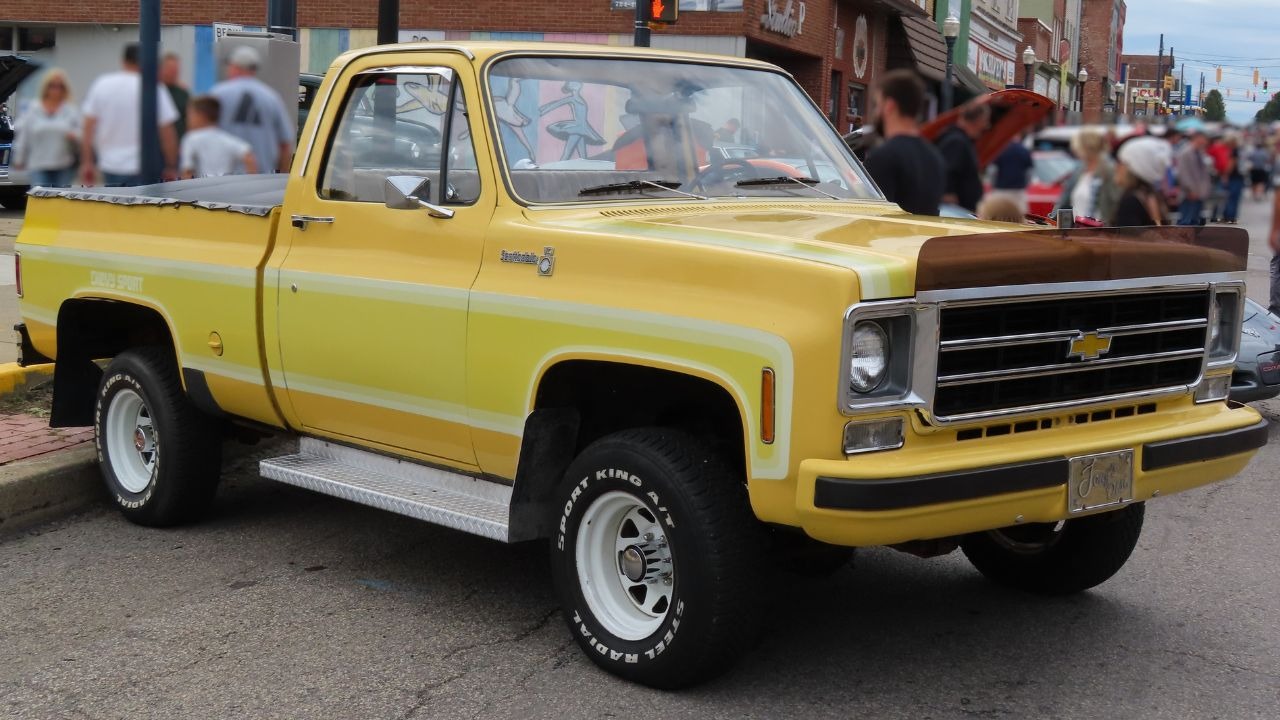
Beyond the spreadsheets, vintage trucks are benefiting from a simple reality: they still do the job for a huge slice of owners. A widely shared video that walks through “10 old trucks” makes the case that models like the K10 were not just built tough, they were built “forever,” and that many of those rigs can still out‑perform or out‑last modern pickups in real‑world use. The argument is not that a carbureted square‑body can tow more than a new heavy‑duty diesel, but that for daily hauling, light towing, and weekend projects, a well‑sorted older truck feels more honest, more fixable, and less fragile than a gadget‑laden new model.
That perception matters because it aligns with how a lot of people actually use their trucks. Most owners are not maxing out tow ratings or chasing tenths of a second in 0‑to‑60 runs; they are hauling lumber, towing a small boat, or commuting on rough roads. For those tasks, the charm of a vintage pickup is not just aesthetic, it is functional: tall sidewalls instead of 22‑inch wheels, steel bumpers instead of plastic, and drivetrains that can be rebuilt in a home garage. When enthusiasts see a K10 or a first‑generation diesel still working hard decades later, it reinforces the idea that older trucks are not just nostalgic toys but durable tools that can justify their rising price tags.
Younger enthusiasts are bringing fresh energy and formats
The demographic story behind vintage trucks is changing as well, and that is another reason I expect 2026 to be a breakout year. A new generation of builders and competitors is embracing older platforms and blending them with modern performance, as illustrated when Dan Mayer sat down with Aiden Hodges to talk about a brand‑new Super Stock Diesel Truck coming in 2026. They are keeping many details under wraps, but the very fact that a high‑profile build like this is being teased around a traditional pulling format shows how much cultural capital old‑school trucks still carry. For younger fans, a vintage‑bodied diesel on a modern chassis is not a contradiction; it is the ideal mash‑up.
Social media and streaming platforms are amplifying that energy. The same breakdown of the classic truck market that dissects pricing trends also spends time on community, from local cruise‑ins to online forums where twenty‑somethings trade tips on LS swaps and patina preservation. In the market‑prediction conversation, the host notes that a couple of years ago the focus was more on the transactional side of the financial world, such as private equity, but that now there is more attention on how real enthusiasts are using their vehicles. That shift favors trucks, which are easier to daily‑drive and share on camera than a fragile vintage exotic. As more of that content circulates, it normalizes the idea that a 40‑year‑old pickup can be a first car, a family hauler, or even a side‑hustle asset, not just a weekend toy.
2026 sits at the crossroads of cost, culture and regulation
Vintage trucks have been gaining quiet momentum for years, but the economic and regulatory crosswinds lining up for the mid‑2020s are about to shove them into the spotlight in my opinion. As new pickups get more expensive, more complex, and more tightly monitored, older iron is starting to look less like a nostalgic indulgence and more like a rational choice. I see 2026 as the moment when those forces converge and turn classic and vintage trucks from a niche passion into a mainstream market story.