It started the way so many classic-car stories do: a clean listing, a handful of flattering photos, and just enough description to spark that familiar itch. This 1966 Mustang was advertised as a “garage-kept classic,” the kind of phrase that carries weight in the vintage world. Long hood, short deck, iconic lines—it checked every visual box.
At a glance, it delivered. The paint had a deep shine, the chrome looked presentable, and the interior appeared surprisingly well-preserved for a car nearing 60 years old. Then came the trunk—and that’s where the story took a turn.
The photos told one story—the trunk told another
The listing leaned heavily on curb appeal. Angles were tight, lighting was kind, and every image seemed carefully chosen to reinforce the idea of a well-maintained weekend cruiser. Even the engine bay looked clean enough to pass a casual inspection.
But as any seasoned buyer knows, photos are a highlight reel—not a full inspection. And one area almost never featured in listings? The trunk. That’s where this Mustang quietly held its truth.
The moment the trunk opened, the tone shifted
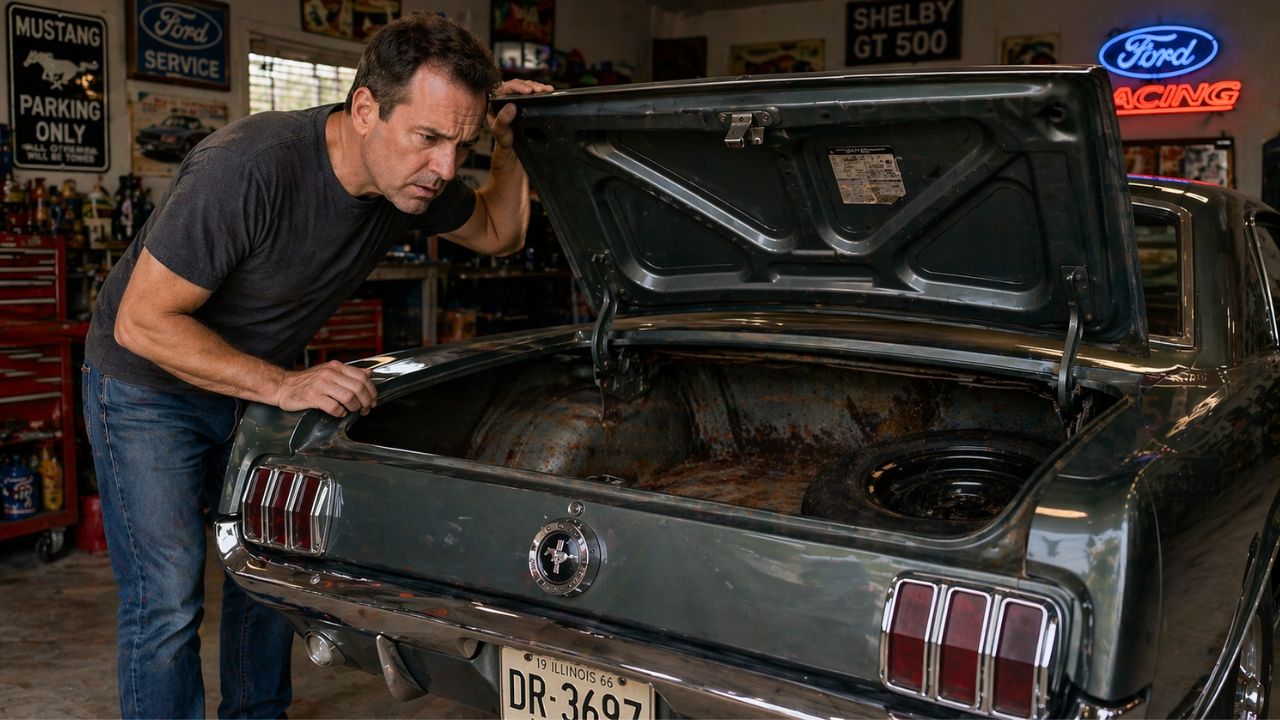
When the buyer popped the trunk during a final walkaround, expectations were simple: a spare tire, maybe some old tools, and that faint vintage smell. Instead, what hit first was the odor—damp, stale, and unmistakably wrong.
The trunk liner looked uneven, like it had been pulled up and pressed back into place more than once. Beneath it, there were signs of trouble: surface rust, discoloration, and patchwork repairs that didn’t quite match. Some of it could be blamed on age. Some of it looked like it had been covered up just well enough to pass a quick glance.
This wasn’t a single dramatic failure—it was a slow reveal of neglect.
Why the trunk is a truth detector on classics
On cars like the 1966 Mustang, the trunk is more than storage—it’s a diagnostic window. Unlike polished exterior panels or freshly vacuumed interiors, the trunk often escapes last-minute detailing.
And that makes it honest.
Moisture intrusion, rust, poor repairs, and even minor collision damage often leave their fingerprints here. Trunk floors, wheel wells, and seams can reveal years of hidden issues in a matter of seconds.
Steel-bodied classics don’t forgive moisture. Once it gets in, it lingers—and over time, it quietly rewrites the condition of the car.
What the buyer reportedly uncovered
The buyer described a mix of corrosion, residue buildup in the corners, and uneven metal surfaces that hinted at past patchwork. There were also subtle signs of water pooling—something no “garage-kept” car should be dealing with.
It wasn’t catastrophic. But it was enough to raise questions.
And in the classic-car world, questions are currency.
“Garage-kept” doesn’t always mean what you think
That phrase gets tossed around like a badge of honor, but garages vary wildly. Some are climate-controlled sanctuaries. Others are little more than enclosed humidity traps.
A car can spend decades indoors and still suffer from moisture if seals are worn, weatherstripping fails, or condensation builds up. Trunks, especially, are vulnerable. Once water gets in, it doesn’t need much encouragement to stay.
“Garage-kept” sounds reassuring—but it’s not a guarantee.
The inspection lesson most buyers learn the hard way
This is where experienced buyers start nodding. You don’t inspect a classic where it looks good—you inspect it where it’s inconvenient.
That means lifting mats, checking seams, smelling for dampness, and looking for inconsistencies. Fresh undercoating? Ask why. New trunk liner? Look underneath.
The places sellers avoid are often the places that matter most.
What a deeper inspection should uncover next
After a discovery like this, the next step isn’t panic—it’s pattern recognition.
Check for:
- Door and window seal integrity
- Signs of water intrusion into the cabin
- Rust along floor pans and frame rails
- Electrical issues from moisture exposure
- Evidence of prior repairs underneath
A flashlight and patience will tell you more than any listing ever will.
The price always follows the truth
If the Mustang was marketed as pristine, the trunk changes everything. Maybe it’s still a solid car—but it’s no longer a top-dollar example.
Now it’s a negotiation.
Documentation becomes critical here. Service records, restoration photos, and receipts can either rebuild confidence—or confirm that the trunk is just the beginning.
The bigger takeaway hiding in plain sight
Classic cars aren’t just machines—they’re stories. And sometimes, the most important chapter is hiding under a piece of old trunk carpet.
This buyer didn’t just find rust—they found reality.
And for anyone shopping a vintage car, the lesson is simple:
Always open the trunk.
It’s amazing how often the truth is waiting right there, just beneath the surface.
More from Fast Lane Only