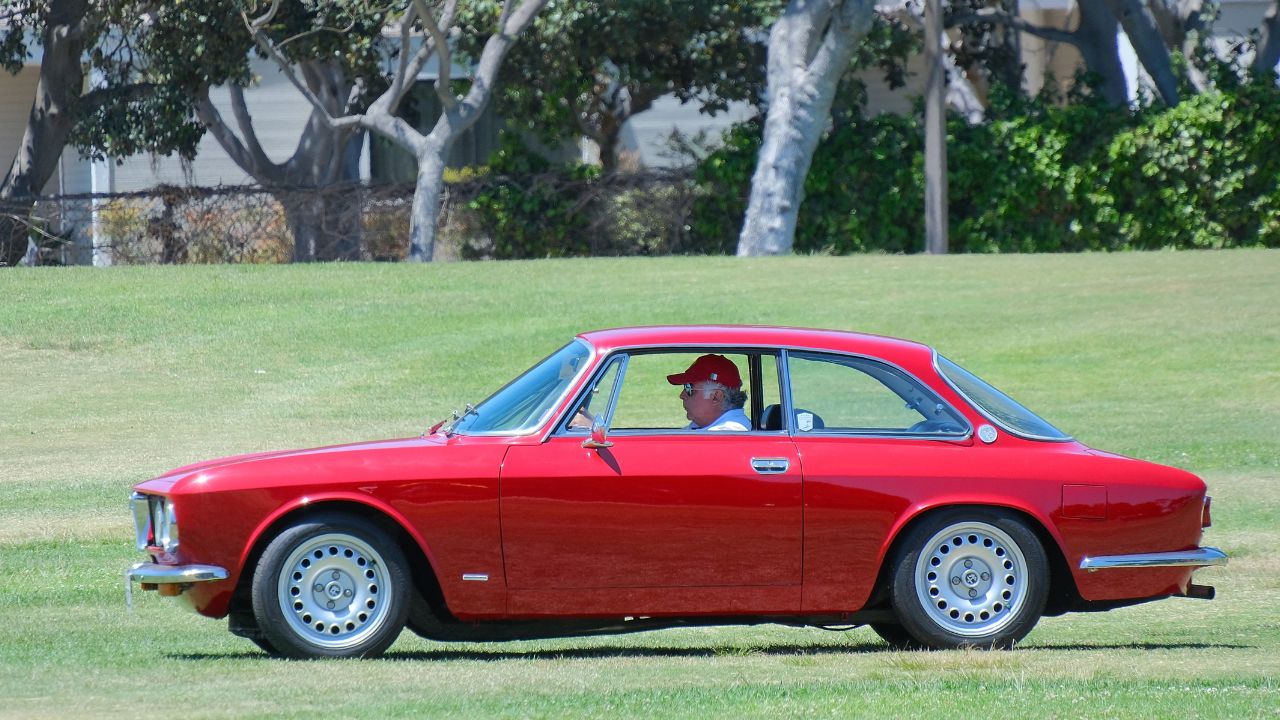
When the breakup paperwork was finally done, the car conversation wasn’t. She says there was one item that kept coming up like a song stuck on repeat: a 1965 Alfa Romeo Giulia. Not the most practical hill to die on, sure, but anyone who’s ever heard an old Italian engine clear its throat knows these things get under your skin.
She says he insisted on keeping it, even though the split was otherwise clean and polite. No big shouting matches, no dramatic driveway scenes. Just one stubborn “no” whenever the Giulia was mentioned, and a vague promise that it would “make sense later.”
A classic car that didn’t feel like “just a car”
The Giulia had been part of their lives for years, the kind of shared project that turns weekends into greasy little adventures. She says they’d hunted for parts together, argued over paint samples, and celebrated small victories like a smooth idle or a door that finally shut without a slam. It wasn’t only transportation—it was memory storage on wheels.
That’s why his refusal stung. She didn’t even need to own it forever, she says, but she wanted a fair arrangement: sell it and split the proceeds, or trade it for something comparable. Instead, he stayed firm, oddly protective, and frustratingly short on explanations.
Friends noticed the same odd detail
Over the next few weeks, she says the story became one of those “you won’t believe this” updates she’d share over coffee. People asked the obvious questions: Was he hiding money? Was there a lien? Was the car secretly worth way more than anyone realized? A few friends joked that maybe the Giulia was his emotional support vehicle.
But what bothered her wasn’t the joke—it was the mismatch. He’d been reasonable about everything else, she says, even generous in spots. So why was this one object treated like it couldn’t possibly leave his hands?
A paper trail starts to form
She says curiosity eventually turned into action. Not in a revenge way, more like the nagging need to close an open tab in her mind. She started with the boring stuff: old emails, insurance documents, registration records, and the folder where they kept restoration receipts like they were family photos.
One thing jumped out: the maintenance and parts purchases had recently shifted. For most of the restoration, purchases were split or alternated. But in the last year, a string of invoices showed he’d paid for several expensive items on his own—engine work, interior trim, and a hard-to-find set of period-correct details that aren’t cheap even when you know the right people.
A tip from an unlikely place
The bigger clue, she says, came from a message she almost ignored. It was from someone connected to the local vintage car scene—more acquaintance than friend—asking a casual question about the Giulia. Had it been shown anywhere recently? Was it still in the area?
That was new. The car had never been a showpiece, she says, just a beloved project that occasionally left the garage for a careful Sunday drive. So she asked why, and the reply was simple: there’d been talk about the Giulia popping up at a private viewing, the kind where people wear nice watches but pretend they don’t.
The discovery: a quiet plan, already in motion
She says she did what anyone with a smartphone and a suspicious streak would do: she started searching. Not just public listings, but the harder-to-find corners—club newsletters, event calendars, photo dumps from meets, even a few auction house preview pages. And then she found it: a shot of a familiar dash and steering wheel, posted with a caption that hinted the car was “freshly sorted” and “available for the right buyer.”
It wasn’t a full listing with a price tag, but it didn’t need to be. The details matched too well, down to a small interior quirk that only someone who’d ridden in it would recognize. The Giulia wasn’t just being kept; it was being positioned.
Why keeping it suddenly “made sense”
According to her, the reason snapped into focus when she compared dates. Those big-ticket repairs? They lined up neatly with the timing of their separation. The car had been quietly upgraded from lovable project to market-ready classic right as everything else was being divided up.
She believes he wasn’t clinging to the Giulia for sentimental reasons—not primarily, anyway. He was protecting an investment, and more specifically, protecting the moment when that investment would pay out. If the car sold after the split, in his control, it could be framed as “his” win, even if the history of the car was very much shared.
The other layer: a personal attachment he didn’t talk about
Still, she says it wasn’t only about money. When she confronted him—calmly, with screenshots and receipts—his first reaction wasn’t anger. It was panic, like someone caught trying to juggle too many storylines at once.
Then came the softer explanation: the Giulia had been a promise he’d made to himself long before they met, a “one day” dream he’d finally gotten close to finishing. In his mind, letting it go felt like losing more than a car. It felt like losing the one thing he could point to and say, “I did this.”
What happens when a classic car becomes leverage
She says the conversation that followed was strangely modern: part emotional truth, part negotiation. She wasn’t trying to punish him, she insists, but she also wasn’t willing to be written out of the car’s story—or its value. If he wanted to keep it, then the numbers had to reflect reality, including what it might fetch in a serious sale.
That’s when the vintage-car world’s favorite word showed up: appraisal. She learned quickly that classic car value is less like a price tag and more like a weather forecast. Condition, originality, documentation, and recent work all matter, and the difference between “nice driver” and “properly sorted” can be the cost of a small kitchen remodel.
A settlement shaped by receipts, not nostalgia
In the end, she says they brought in a neutral specialist to evaluate the Giulia and its restoration history. The paperwork helped—every invoice, every part number, every dated service note. What felt like obsessive record-keeping during the relationship suddenly became a lifeline.
They reached a new agreement: he kept the car, but she received compensation that reflected its updated value, not the half-finished project it used to be. It wasn’t the romantic ending where they take one last drive together at sunset. It was better in a different way: clear, fair, and finally honest.
A small lesson hiding under the hood
She says she doesn’t hate him, but she’s done being confused by him. The Giulia taught her something she didn’t expect to learn from a classic Italian sedan: when someone is unusually firm about one specific thing, there’s usually a reason, and it’s often already underway.
And if you ever find yourself sharing ownership of something that’s both emotional and valuable—cars, art, collectibles, even a business idea—document everything. Not because you’re planning a fight, but because life changes fast. Sometimes the difference between “he kept the car” and “she discovered why” is just one receipt, sitting quietly in a folder.
More from Fast Lane Only