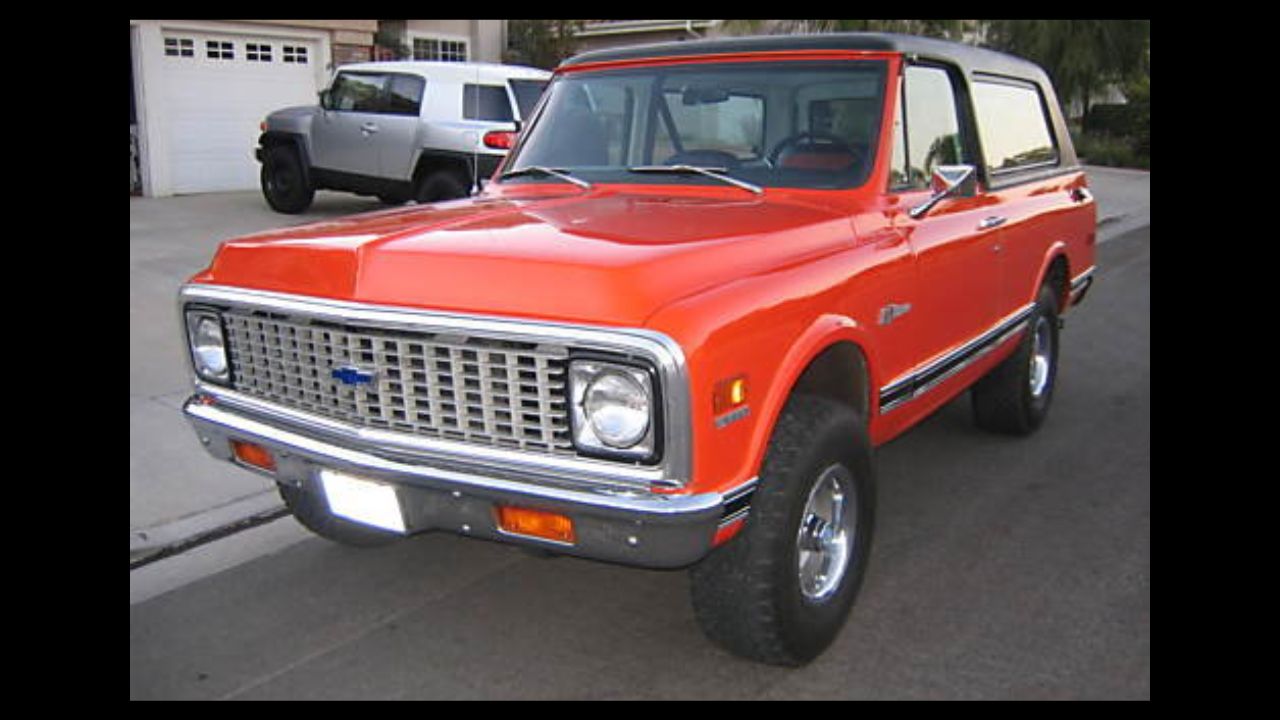
For months, the sound of a ratchet clicking in the garage became as regular as the dishwasher. Whenever she walked past, she’d see the same scene: her husband hunched over a weathered 1972 Chevrolet K5 Blazer, sleeves rolled up, hands smudged with grease, wearing the focused look of someone trying to solve a puzzle that keeps changing shape. It was endearing at first, then a little baffling.
He wasn’t just “tinkering” either. Parts arrived in small boxes and big ones, tools migrated from drawers to countertops, and the garage started to smell faintly like old oil and fresh paint. She joked that the Blazer was becoming the family’s third roommate, and he’d laugh, but he never really explained why he was so locked in.
A project that wouldn’t quit
The Blazer was the kind of classic that makes people do double takes at stoplights—boxy, rugged, built back when trucks were allowed to look like trucks. Still, it wasn’t exactly a quick weekend refresh. He was swapping hoses, rebuilding pieces of the suspension, tracking down hard-to-find trim, and obsessing over details most people wouldn’t notice unless they were two inches away from the dashboard.
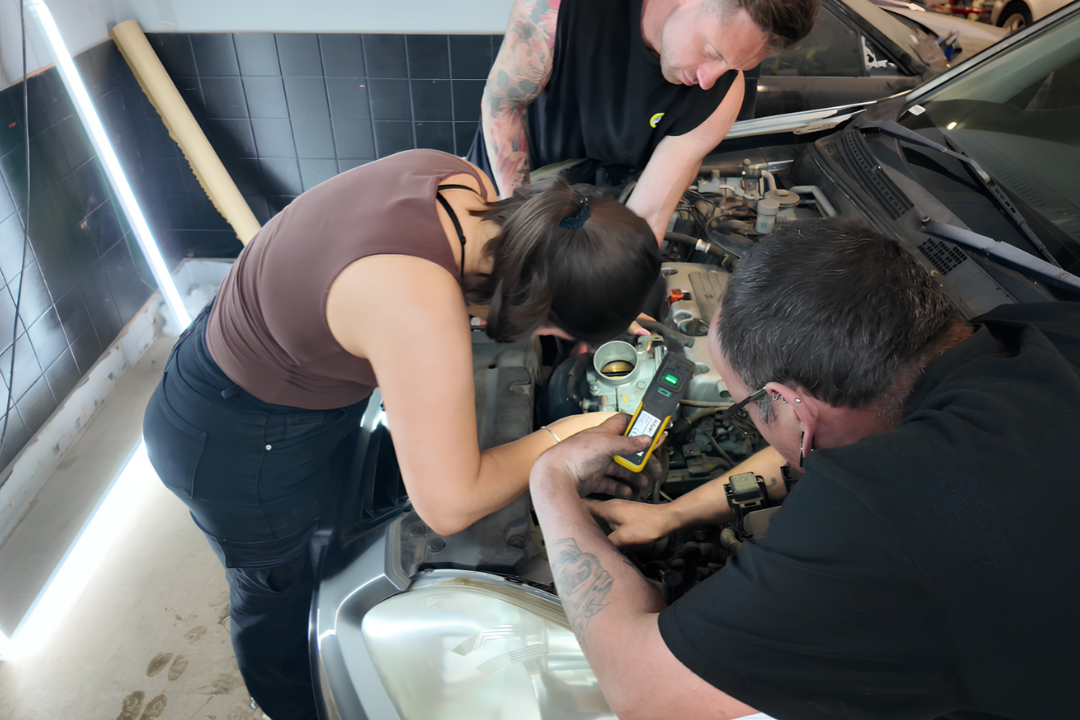
When she asked what the rush was, he’d shrug and say he wanted to “do it right.” Fair enough, except the work kept expanding. A simple tune-up turned into a carburetor rebuild, which turned into pulling panels, which turned into sanding and repainting parts that nobody sees unless they’re crawling under the vehicle with a flashlight.
And then there were the evenings he’d slip out after dinner “just for a minute” and come back two hours later. The pattern was so consistent it started to feel like something else was going on—something he wasn’t saying out loud.
Little clues started piling up
It wasn’t that he was acting suspicious in a dramatic way. It was more like a string of tiny oddities: a new lock on the garage side door, a sudden interest in learning how to stitch upholstery, and a habit of lowering his voice when he took calls from salvage yards. Every time she asked what he was hunting for, he’d answer with vague cheerfulness and quickly change the subject.
She also noticed he was keeping receipts tucked into a folder instead of leaving them on the workbench like he used to. And a couple of times, she caught him scrolling through old photos on his phone—pictures that looked sun-faded and decades old, showing a similar Blazer parked beside a small house. He’d swipe them away when she walked in, not guilty exactly, just private.
By the time a large package arrived marked “interior kit,” curiosity had officially moved in. She wasn’t angry. She just wanted to know why a truck restoration had turned into a full-on mission.
The moment she finally asked—and didn’t let it slide
One Saturday morning, she brought coffee into the garage and leaned against the workbench, making it clear she wasn’t there for a quick pop-in. The Blazer sat with its hood up like it was eavesdropping. She asked, gently but plainly, what this was really about.
He wiped his hands on a rag and stared at the engine bay for a long second. Then he exhaled and said it wasn’t just a hobby. The Blazer wasn’t just a Blazer, either—it was a stand-in for something he’d been carrying around for years.
It turned out the truck had a history he hadn’t shared
He explained that when he was younger, someone close to him owned a K5 Blazer—same year, same body style, same tough stance. It was the vehicle tied to some of his clearest memories: late-night drives, muddy back roads, the kind of simple freedom you don’t realize is precious until it’s gone. Eventually, that original truck disappeared from his life, sold off when money was tight and priorities were different.
He’d told himself he didn’t care, that it was just a vehicle. But the older he got, the more that loss stuck to him, not because of the metal, but because of what it represented: a time when the future felt wide open and the people around him felt permanent. Restoring this Blazer was his way of rebuilding a piece of that—quietly, carefully, bolt by bolt.
That was the first “why.” But it wasn’t the whole story, and she could tell there was more waiting behind his words.
He was building it for someone else, not himself
After another pause, he admitted he’d been aiming for a deadline. He wanted the truck finished for a milestone coming up in their family—one he knew would hit harder than anyone was admitting. He’d been planning a surprise reveal, not as a flashy gift, but as a moment: something tangible that could pull everyone together and give them a reason to smile on a day that might otherwise feel heavy.
That’s why he’d been so meticulous. That’s why he couldn’t stop. He wasn’t chasing perfection for bragging rights; he was chasing a feeling he wanted to hand to someone he cared about, like you can wrap up nostalgia and hope if you tighten the last bolt just right.
She stood there holding two mugs of coffee, suddenly seeing the garage differently. It wasn’t an escape. It was a workspace for love, disguised as a never-ending restoration.
Why he kept it quiet
He said he hadn’t told her because he didn’t want the surprise to slip, but also because he wasn’t sure he could pull it off. If he talked about it too much and then the project stalled—or the engine fought back, or the budget got tight—he worried it would feel like he’d promised something and failed. Keeping it private was his way of protecting the plan, and maybe protecting himself a little too.
There was also the simple fact that projects like this can feel irrational when you say them out loud. Spending evenings chasing the correct trim piece or the right shade of paint doesn’t always sound sane, even when it makes perfect sense in your chest. So he worked quietly, letting progress speak for him.
She laughed at that part, because she understood it immediately. Everyone has something they don’t quite know how to justify until it’s done.
What the Blazer looked like when she really saw it
After he told her, he walked her around the truck and pointed out the changes like he was finally allowed to share the secret language. New weatherstripping, carefully routed wiring, a refurbished steering wheel, the original-style badges he’d tracked down after weeks of searching. The truck wasn’t finished, but it had stopped being a pile of tasks and started becoming a story with a direction.
She noticed small touches she’d missed before, like how he’d kept the interior color close to factory, or how he’d cleaned and preserved certain worn parts instead of replacing everything. It wasn’t about making it look brand-new. It was about making it feel right, like it had lived a life and deserved a second one.
And yes, there was still plenty of work ahead—classic trucks don’t exactly reward impatience. But now she knew why he kept going back out there, night after night.
A surprise that changed the rhythm at home
Once the “why” was out in the open, the dynamic shifted in a way that surprised her. She didn’t suddenly become a car person, but she started bringing him snacks and asking for small updates. He started explaining what he was doing without sounding defensive, and the garage felt less like a place she was competing with and more like a place she could visit.
She also caught herself rooting for the Blazer, which felt ridiculous and kind of wonderful. Not because it was a truck, but because it was proof of how he shows up: quietly, stubbornly, with his hands dirty and his heart set on making something good happen.
In the end, she didn’t “find out why” in one dramatic reveal with a bow on the hood. It came in pieces—memories, worries, hope, and a plan he’d been carrying alone. And once she saw it, the endless tinkering didn’t look like a mystery anymore.
More from Fast Lane Only