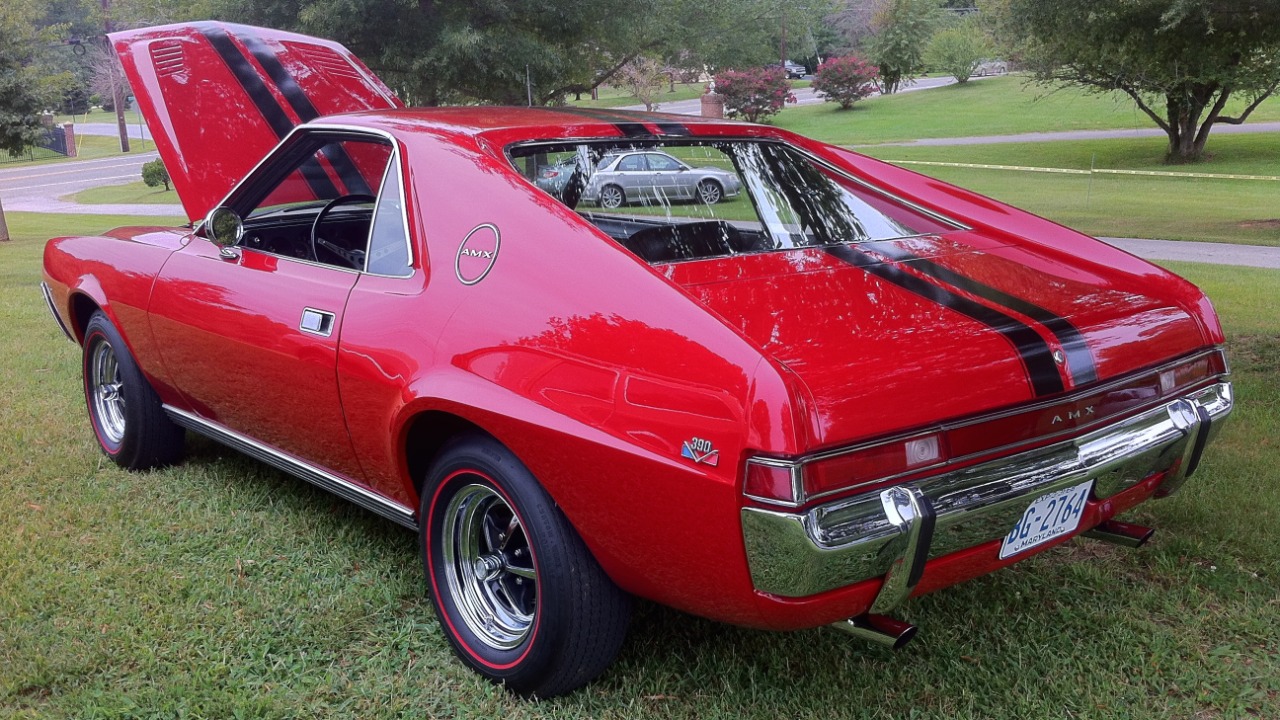
The 1968 AMC AMX arrived as a sharp rebuttal to Detroit convention, a short-wheelbase, two-seat muscle car that treated practicality as optional and personality as mandatory. At a time when big-block power usually came wrapped in family-sized sheet metal, American Motors Corporation tried something riskier and more focused, and in doing so created one of the era’s most distinctive performance cars.
More than half a century later, the AMX still stands out for its proportions, its racing pedigree, and its refusal to copy the Big Three playbook. It was not the most powerful or the best-selling muscle car of its day, but it was among the boldest, and its influence still echoes in how enthusiasts think about American performance coupes.
What happened
By the mid 1960s, American Motors Corporation faced a problem that was as much about image as it was about sales. The company was known for compact, sensible cars and could not match the marketing budgets or dealer reach of Ford, General Motors, or Chrysler. To stay relevant with younger buyers, AMC leadership pushed for a dedicated performance model that would stand apart from the usual intermediate coupes and pony cars. The result was the AMX, a car that shared its basic platform with the Javelin but lost its back seat and several inches of wheelbase in pursuit of a more aggressive stance.
Debuting for the 1968 model year, the AMX rode on a wheelbase shortened to roughly 97 inches, which gave it a stubby, purposeful profile that looked more European grand tourer than Detroit boulevard cruiser. Designers carved a fastback roofline into the compact shell and kept the overhangs tight, making the car appear muscular without the bulk that defined many contemporaries. The two-seat layout was the defining choice. At a time when most muscle cars were marketed as practical performance for four or five passengers, AMC committed to a configuration that put style and speed ahead of family duty.
Under the hood, the AMX launched with a straightforward but serious engine lineup. Buyers could choose from American Motors V8s that ranged from a 290 cubic inch unit to a 343 cubic inch version, with the top 390 cubic inch V8 delivering the kind of straight-line performance that put the car in direct contention with better known rivals. Period road tests highlighted that a well-driven 390 AMX could run the quarter mile in the low 14 second range, a figure that placed it squarely in the muscle car conversation. Later coverage of a preserved 1969 AMX with the 390 and a four-speed manual illustrates how that combination became the heart of the car’s enthusiast appeal.
AMC backed the hardware with an aggressive marketing and motorsports push. The company leaned on its involvement in SCCA Trans-Am racing with the Javelin and used that halo to give the AMX credibility. Special editions and appearance packages, including performance-oriented trims and dealer-prepped cars, reinforced the message that this was not just a dressed-up economy model. The AMX was positioned as a genuine performance car that happened to come from the smallest of Detroit’s major automakers.
Production numbers remained modest compared with high-volume muscle coupes, but that scarcity became part of the story. AMC built the AMX as a two-seater for three model years, from 1968 through 1970, before shifting the nameplate to a performance package on the Javelin. Those early cars, especially the 390-equipped examples, form the core of the AMX legend and laid the groundwork for the car’s later status among collectors.
Why it matters
The AMX mattered in 1968 because it showed that American performance did not have to follow a single template. At a time when the market was crowded with long-hood, short-deck coupes that all seated four or more, AMC’s decision to build a two-seat muscle car was a deliberate break from convention. That choice aligned the AMX less with mass-market pony cars and more with specialized machines like the Chevrolet Corvette, yet it arrived at a significantly lower price point and with a very different brand image.
From a design perspective, the AMX demonstrated how much character could be extracted from a compact platform. The car’s short wheelbase, minimal rear overhang, and tightly drawn bodywork produced a look that was both aggressive and tidy. Where some competitors relied on sheer size to convey power, the AMX projected speed through its stance and proportions. The two-seat cabin also allowed stylists to push the rear bulkhead forward, visually emphasizing the rear haunches and fastback roofline. That visual identity helped the AMX stand apart in a crowded showroom environment.
Performance was central to its significance. The availability of the 390 cubic inch V8, combined with a four-speed manual transmission and performance rear axle ratios, gave the AMX acceleration that could embarrass larger, heavier cars. Reports on surviving examples show that a well-tuned 390 AMX remains a serious performer, and the period-correct specification continues to draw interest from collectors who value both speed and rarity. The car’s relatively light weight compared with full-size muscle offerings translated to strong straight-line numbers and more agile handling, especially when equipped with upgraded suspension components.
The AMX also mattered for what it represented inside American Motors. The company had built its reputation on practicality, fuel economy, and value, often appealing to buyers who were indifferent to performance trends. By investing in a dedicated two-seat muscle car, AMC signaled that it was willing to take risks to capture a slice of the youth market. That gamble did not transform the company’s fortunes, but it did inject energy into the brand and produced a halo effect that benefited models like the Javelin and performance-oriented versions of AMC’s compacts.
In the broader muscle car story, the AMX occupies a niche that highlights how diverse the segment really was. Enthusiast discussions often focus on high-production icons like the Ford Mustang, Chevrolet Camaro, and Dodge Charger, yet the AMX shows that smaller manufacturers could contribute genuinely original ideas. Its combination of two seats, a short wheelbase, and big V8 power anticipated later interest in compact, driver-focused American performance cars. The AMX did not inspire a wave of direct imitators at the time, but its philosophy can be seen in later niche models that prioritized personality and engagement over mass appeal.
The car’s limited production run also shapes its importance today. With only a few model years of two-seat AMX production, surviving cars represent a relatively small pool. Collectors value that scarcity, especially for well-documented examples with the 390 engine and four-speed gearbox. Auction results and enthusiast coverage show that high-quality AMX restorations can command strong prices relative to their original cost, reflecting both nostalgia and recognition of the car’s distinct place in muscle history.
Beyond values, the AMX matters because it challenges assumptions about what a muscle car had to be. The prevailing formula in the late 1960s involved intermediate or pony car bodies, optional big-block engines, and a mix of comfort and speed that allowed manufacturers to sell performance to a broad audience. AMC’s two-seat approach narrowed the target buyer pool but delivered a purer expression of the performance theme. For enthusiasts who cared more about driving than practicality, the AMX offered something closer to a sports car experience while retaining the sound and feel of an American V8.
The car’s motorsports connections add another layer to its significance. Although the Javelin carried AMC’s main racing responsibilities in series like Trans-Am, the AMX benefited from the engineering lessons and brand halo that came from those efforts. Special performance packages and dealer-tuned variants drew on that competition knowledge, and the association with racing helped counter perceptions that AMC was a conservative, economy-focused brand. Even decades later, the link between the AMX and AMC’s racing push gives the car an image that is more aggressive and adventurous than the company’s mainstream products might suggest.
For modern enthusiasts, the AMX also serves as a reminder that innovation sometimes comes from the margins. AMC lacked the resources to outgun the Big Three on their own terms, so the company chose to redefine the terms instead. The decision to build a two-seat muscle car was risky, but it created a vehicle that still feels distinctive long after many higher volume models have blurred together in memory. That distinctiveness is a key part of why the AMX continues to attract attention at shows, in collections, and in enthusiast media.
What to watch next
The legacy of the 1968 AMX continues to evolve as the collector market, restoration practices, and cultural interest in late 1960s performance cars shift. One area to watch is how values for early, numbers-matching AMX models, particularly those equipped with the 390 V8 and four-speed manual, compare with more mainstream muscle cars of similar performance. As attention increasingly turns to cars that offer character and rarity rather than sheer brand recognition, the AMX is well positioned to gain further prominence among enthusiasts who want something different from the usual Mustang or Camaro.
Restoration trends will also shape how the AMX story is told. Purist restorations that return cars to factory-correct specifications tend to highlight the originality of AMC’s design choices, from paint colors and interior trim to period performance options. At the same time, restomod builds that update suspension, brakes, and drivetrains while retaining the AMX’s basic look are becoming more common. These projects keep the car visible in modern performance circles and demonstrate how the compact, two-seat layout adapts to contemporary expectations for drivability and reliability.
Another factor to watch is how the AMX fits into broader conversations about American performance heritage. As more attention is paid to underappreciated or low-production models, the AMX’s story as a bold experiment from a smaller manufacturer resonates with enthusiasts who value originality over ubiquity. Coverage of specific cars, such as well-preserved 1969 examples with factory performance options, helps keep the narrative alive and provides tangible reference points for what made the AMX special.
Events and gatherings that focus on AMC vehicles are likely to play a growing role in shaping the car’s reputation. Dedicated shows and club meets bring together owners, restorers, and historians who share knowledge about production details, factory options, and period modifications. As documentation improves and more cars are carefully restored, the understanding of how the AMX was built and how it was used in period becomes sharper. That, in turn, influences how future buyers and enthusiasts evaluate originality and authenticity.
The AMX’s influence on modern design thinking is subtler but still worth watching. Contemporary manufacturers occasionally revisit the idea of compact, two-seat performance cars with strong visual identities, and the AMX provides a historical example of how that formula can work within an American context. While no current model traces a direct lineage to the AMX, the car’s blend of aggressive styling, focused packaging, and accessible performance offers a template that designers and product planners can study when considering niche performance projects.
More from Fast Lane Only