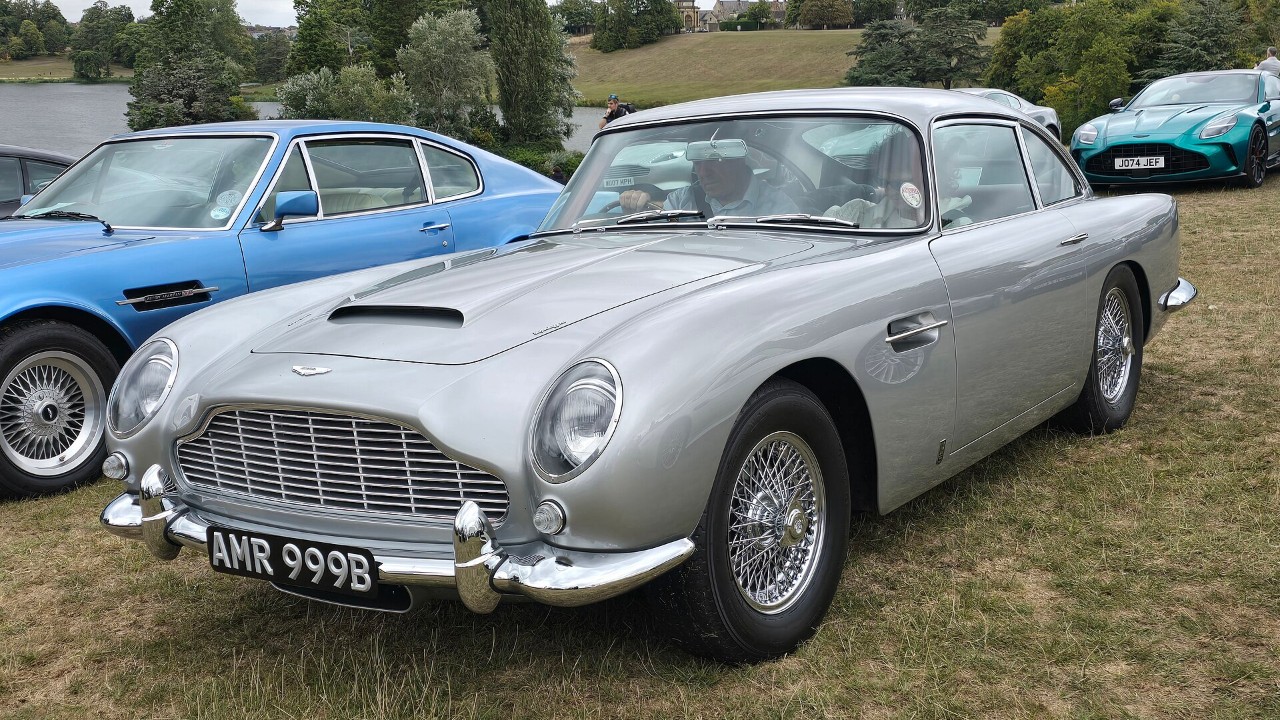
The Aston Martin DB name stands for David Brown, who bought the company in 1947. Over the next two decades, his initials went on a run of six-cylinder grand tourers. These seven models trace that run from the DB2 to the DB6 Mk 2.
Each one also changed something real, whether an engine, a body method or a wheelbase. Together they show how a small British maker built a car line that collectors now chase at auction.
Most of the figures below come from RM Sotheby’s lot essays, so the counts belong to that auction house’s research. Where Hagerty adds a detail, it says so.
1. 1950–1953 Aston Martin DB2
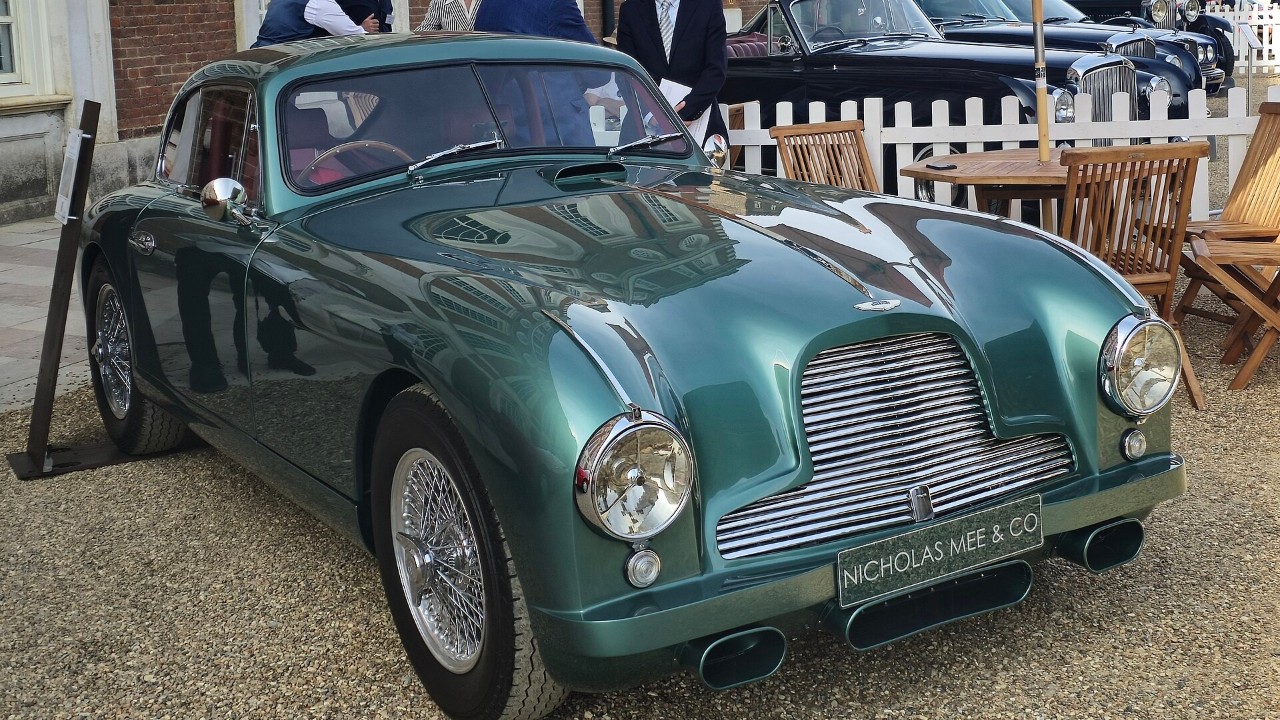
David Brown bought Aston Martin in February 1947 for £20,500, then bought Lagonda a few months later. That second deal gave him a 2.6-liter twin-cam six that W.O. Bentley had designed in 1943. As a result, the DB2 got that engine, wrapped in a coupe body that Frank Feeley drew.
According to RM Sotheby’s, the DB2 stayed in series production from May 1950 until April 1953. Output ran from 105 to 145 horsepower depending on options. In fact, the Vantage name started here as a DB2 engine option, Hagerty notes, rated at 125 horsepower. RM sold one early car for $308,000.
2. 1957–1959 Aston Martin DB Mark III
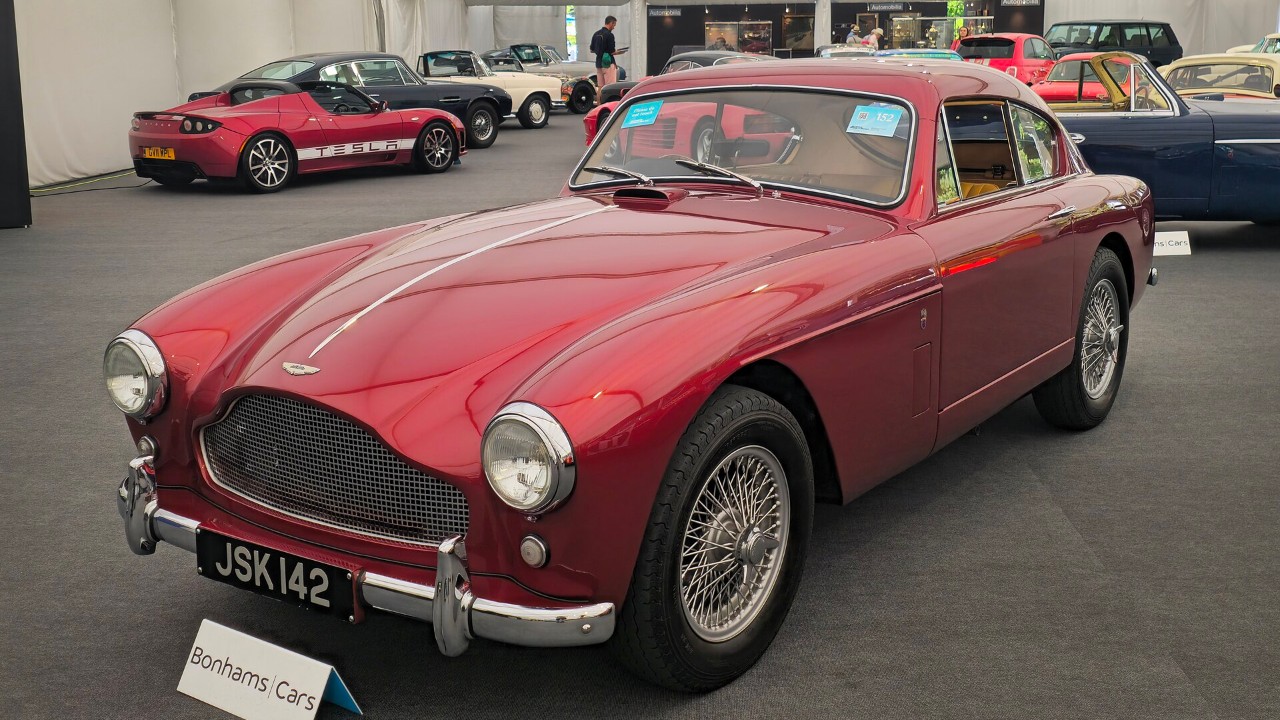
The DB Mark III arrived in March 1957 as the last step of the DB2 family. It used a 2,922 cc twin-cam six rated at 162 bhp, or 178 bhp with the optional twin exhaust. Aston Martin built 551 by 1959, and only 84 were drophead coupes, according to an RM Sotheby’s drophead listing.
It also brought two firsts, RM says in a second lot essay. Front disc brakes appeared on a road-going Aston Martin for the first time. The Mark III was also the first production Aston Martin with the grille shape first seen on the DB3S racer. That fixed-head car sold for $302,500.
3. 1958 Aston Martin DB4
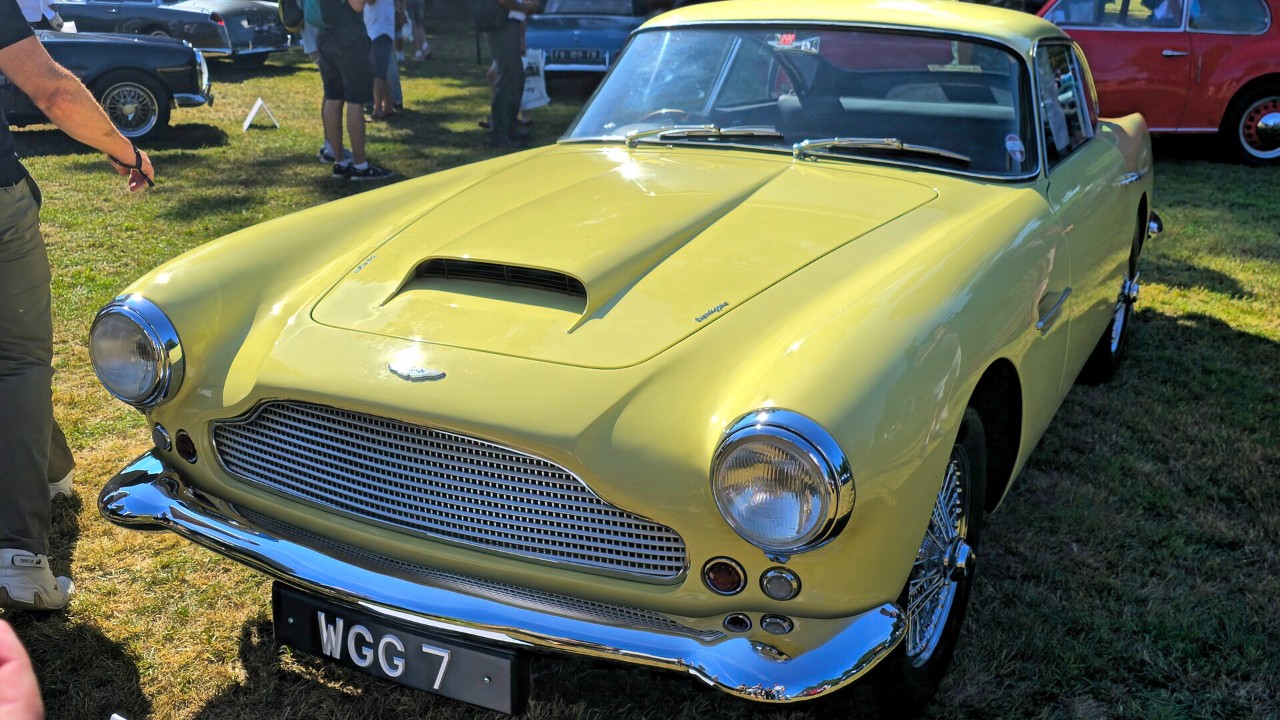
The DB4 debuted in 1958 with an all-new engine. Tadek Marek designed its 3.7-liter six, which made 240 bhp at 5,500 rpm, according to RM Sotheby’s. Its top speed was 140 mph.
Beyond the engine, the body was new, too. Carrozzeria Touring of Milan used its Superleggera method, with small steel tubes clothed in aluminum panels. RM counts 349 Series II cars alone, of which 125 were factory left-hand drive. Later, the 1961 DB4 Vantage became the first Vantage that looked different from the standard car, Hagerty says.
4. 1959–1963 Aston Martin DB4 GT

After the 1958 DB4 unveiling, Aston Martin’s leading French dealer told John Wyer the marque needed a GT car to beat Ferrari. So the team cut five inches from the DB4 chassis behind the front seats. Then it saved 185 pounds, mostly with thin magnesium-alloy panels, RM Sotheby’s explains.
The DB4 GT made its formal debut at the London Motor Show in September 1959. Its six made 302 bhp at 6,000 rpm on triple Webers. Aston Martin built only 75 between 1959 and 1963, 45 with right-hand drive and 30 with left, according to another RM lot essay. That 1960 car sold for £2,408,000.
5. 1963–1965 Aston Martin DB5

The DB5 grew from the DB4 Vantage. A wider 96 mm bore took the six to 3,995 cc and 282 bhp, while a ZF five-speed manual came as standard. Buyers could also order a three-speed Borg-Warner automatic.
Aston Martin built 1,022 DB5s from September 1963 to the end of 1965, RM Sotheby’s says. That total splits into 887 saloons, 123 convertibles and 12 shooting brakes. Of those hardtops, only 68 got the 325-horsepower Vantage engine, according to Hagerty. A 1964 saloon in California Sage sold at RM’s Cliveden House sale for £432,500.
6. 1965 Aston Martin DB6

Next, the DB6 made its debut at the London Motor Show in October 1965. It rode on a stretched wheelbase, so four adults could sit in comfort. However, power still came from the four-liter twin-cam six.
Its most visible change was at the back. A squared-off Kamm tail with an upswept spoiler lip cut rear lift and helped high-speed handling, according to RM Sotheby’s. By comparison, RM likens that tail to the one on Ferrari’s 275 GTB/4. RM sold this 1966 car at Monterey in 2015 for $429,000.
7. 1969 Aston Martin DB6 Mk 2
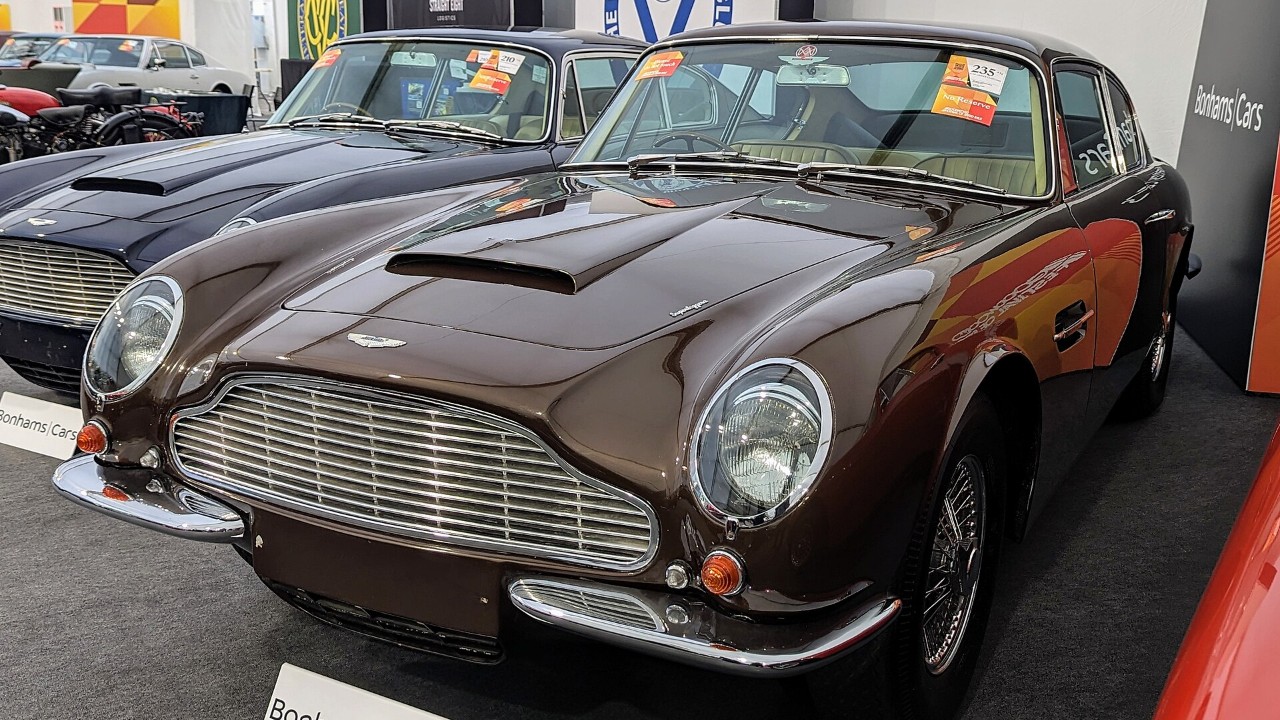
Aston Martin announced the DB6 Mk 2 in August 1969, near the end of DB6 production. Flared arches made room for wider six-inch wheels, which is the quickest way to spot one. The standard car ran triple SU carburetors and 282 bhp.
Meanwhile, the Vantage version switched to triple twin-choke Webers and 325 bhp, says RM Sotheby’s. According to the same lot essay, Aston Martin built only 62 Vantage-specification DB6 Mk 2 saloons between 1969 and 1970.
More from Fast Lane Only
- Unboxing the WWII Jeep in a Crate
- 15 rare Chevys collectors are quietly buying
- 10 underrated V8s still worth hunting down
- Police notice this before you even roll window down
This article was created with the help of AI and was reviewed and edited by Fast Lane Only editors before publication.