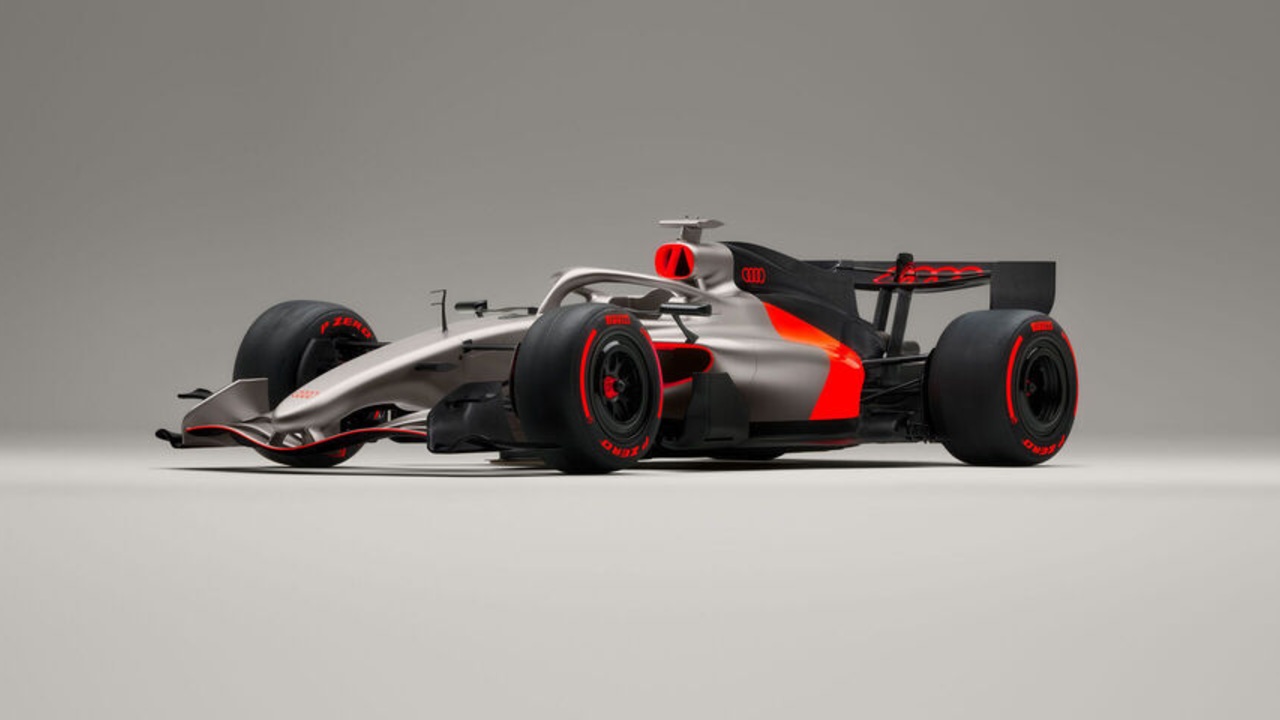
Audi’s first true Formula 1 challenger has finally turned a wheel in anger, and the cameras were rolling. Spy clips from a private filming day at Barcelona, followed by official imagery, have given the paddock an early look at the R26 that will carry the brand into the 2026 regulations and a radically different era for the sport. What emerges from those frames is not just a new car, but a clear statement of intent about how Audi plans to interpret the next rulebook.
From the compact bodywork to the distinctive power unit note, the shakedown has already revealed more than Audi might have liked, yet just enough to sharpen anticipation. As I sift through the early visuals and technical hints, I see a project that is still in its infancy but already aligned with the direction Formula 1 is heading: smaller, more efficient cars that put a premium on integration between chassis and hybrid powertrain.
Shakedown at Barcelona: Audi’s first laps in the 2026 era
The most important fact is simple: Audi has now run its 2026 car on track for the first time. The R26 completed initial laps at Spain’s Circuit de Cataluñya during a filming day in Barcelona, a controlled environment that allowed the team to gather systems data while keeping the wider world at arm’s length. Even in that limited context, the sight of an Audi-branded Formula 1 car circulating a current grand prix venue marked a decisive shift from concept to reality for the manufacturer’s works programme.
Those first laps were not a ceremonial rollout. Audi treated the Barcelona session as a full shakedown, with Nico Hulkenberg and Gabriel Bortoleto sharing driving duties in what was described as a successful debut run. The team completed its planned programme, validating basic reliability of the new power unit and chassis package while capturing promotional footage that would later be released in carefully curated form. Yet before Audi could fully control the narrative, low resolution images and short clips from trackside began to circulate, turning a closed filming day into the sport’s first real-world glimpse of a 2026-spec machine.
Leaked footage and early design clues on the R26
What struck me first in the leaked material was how different the R26 looks from the current generation of long, heavy cars. The proportions appear shorter and more compact, consistent with the 2026 rules that will reduce wheelbases and overall width to create smaller and more agile machinery. In the spy shots, the Audi does not have the stretched, “land-yacht” stance of recent seasons, instead presenting a tighter footprint that hints at the new emphasis on nimbleness and weight reduction that the regulations demand.
Beyond the basic stance, the bodywork already reveals some of Audi’s aerodynamic thinking. The sidepods appear relatively conservative in volume but are sculpted aggressively around the mid-section, feeding a tall and straight rear bodywork structure that channels hot air toward a central outlet in the engine cover. This “coke bottle” area at the back is clearly defined, suggesting that Audi is prioritising clean airflow to the rear wing and beam wing while managing cooling through a single, prominent exit rather than multiple smaller vents. For an early test car, the surfaces look surprisingly resolved, which implies that the team has already committed to a baseline concept it believes can carry through to the first race.
A closer look at the aero philosophy and that ‘basic’ detail
From a technical standpoint, I see the R26 as a cautious but clever first step into the 2026 aerodynamic landscape. The car’s upper surfaces, particularly around the engine cover and rear deck, seem designed to stabilise airflow in a world where active aerodynamics and reduced drag will play a larger role. The tall spine of bodywork behind the airbox, combined with the central hot-air outlet, points to a philosophy that tries to keep the flow attached and predictable as it moves toward the rear wing. It is a contrast to some of the extreme undercut and ultra-low engine cover concepts seen in the early ground effect era, and it suggests Audi is prioritising robustness and cooling margin over outright extremity at this stage.
Yet within that generally sophisticated package, observers have already highlighted one surprisingly simple element. Close-up images from Barcelona show an “extremely basic” component on the car, a detail that looks more like a placeholder than a final race part. I interpret that as a sign of where Audi is in its development curve: the team has brought a structurally representative chassis and bodywork to the track, but it is still iterating on finer aerodynamic devices that will only appear closer to pre-season testing. Using a rudimentary solution in one area allows the engineers to focus on validating core systems, from cooling and suspension geometry to power unit integration, without being distracted by fragile or unproven aero add-ons.
Power unit sound and the 2026 hybrid challenge
If the visuals tell one story, the audio from Barcelona tells another. Audi has already shared a short clip of its 2026 power unit running, and the sound is strikingly different from the current turbo-hybrid era. The note is sharper and more insistent, with a distinct mechanical edge that reflects the new balance between internal combustion and electric power. For a brand that trades heavily on acoustic identity in its road cars, revealing the engine sound ahead of full technical details is a deliberate move, a way of signalling that the future Formula 1 package will still feel visceral even as electrification increases.
That soundtrack sits within a demanding regulatory framework. From 2026, Formula 1 cars will be smaller and lighter, with reduced wheelbases and narrower track widths, while the power units will rely on a much larger electrical contribution alongside a simplified combustion engine. The R26’s early laps therefore represent more than a shakedown of a new chassis; they are a live test of Audi’s interpretation of a complex hybrid formula that must balance performance, efficiency and energy deployment strategies such as overtake modes and boost functions. The fact that the car ran cleanly through its programme at Barcelona suggests that Audi’s integration of battery, MGU systems and combustion engine is already at a functional stage, even if performance mapping remains in its infancy.
Drivers, rivals and what the shakedown really tells us
For all the focus on bodywork and power units, I keep coming back to the human element that underpinned the Barcelona run. Nico Hulkenberg and Gabriel Bortoleto form a deliberate blend of experience and youth, and both were present for the filming day, giving Audi immediate feedback from two very different reference points. Hulkenberg brings a deep understanding of how current-generation cars behave at the limit, while Bortoleto represents the next wave of talent that will grow up entirely within the 2026 ruleset. Their impressions from those first laps, even if not yet public in detail, will shape how the team prioritises its development between now and the first official test.
Context also matters when assessing what we have seen so far. Other manufacturers, including established front-runners like Ferrari and Red Bull, are already deep into their own 2026 projects, and early design trends are beginning to emerge across the grid. Initial analysis of Audi’s car suggests that the team has opted for a relatively conventional interpretation of the new rules, at least on the surface, rather than a radical outlier concept. That choice may prove wise. History is full of examples, such as the much-discussed zero sidepod experiment that later had to be abandoned, where early extremism created more problems than it solved. By contrast, Audi appears to be building a solid, well-understood platform first, leaving room to layer on innovation once the fundamentals are proven.
From spy shots to expectations: how much have we really learned?
As compelling as the leaked footage and official images are, I remind myself that this is still a very early snapshot of Audi’s 2026 contender. Filming days are heavily constrained in mileage and run plans, and teams often use interim parts or disguised components to avoid giving away too much. The tall rear bodywork, central hot-air outlet and compact wheelbase we have seen are likely to remain core features, but the finer details of the floor edges, front wing geometry and cooling louvre layouts may change significantly before the car appears at a full pre-season test. In that sense, the Barcelona shakedown is less a finished portrait and more a pencil sketch of what the final R26 will become.
Even so, the significance of these first laps should not be understated. Audi has moved from renderings and concept models to a functioning Formula 1 car that has already turned meaningful mileage at a current grand prix circuit. The R26 looks aligned with the direction of the 2026 regulations, its power unit has found its voice, and its driver pairing has begun the process of shaping its behaviour on track. For a newcomer stepping into a tightly contested championship, that combination of early clarity and measured ambition is exactly what I would expect from a manufacturer intent on being competitive from the moment the new era begins.
More from Fast Lane Only: