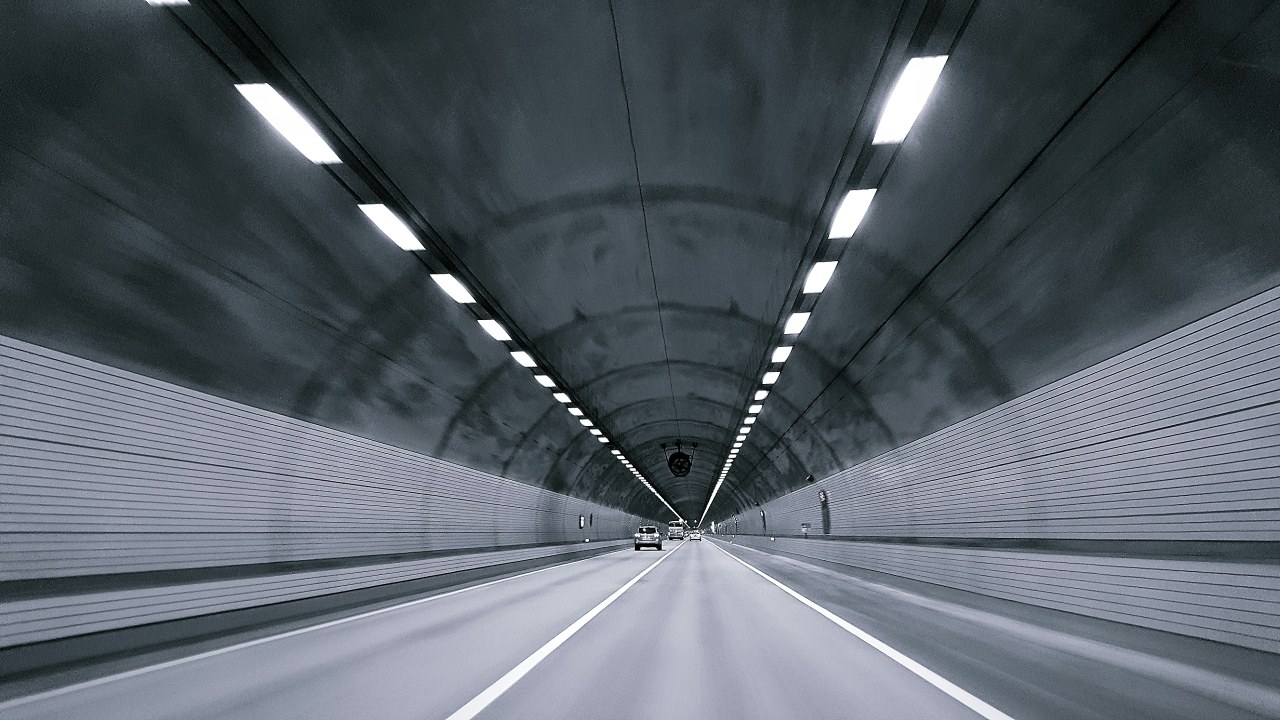
Across the world, road tunnels have quietly stretched longer, dived deeper, and grown more ambitious, reshaping how people move through mountains and under seas. The longest of these projects are no longer just feats of excavation, they are strategic pieces of infrastructure that compress geography, link regions, and test the limits of engineering. A closer look at where the record holders sit, and which projects are poised to overtake them, reveals a global race measured in kilometers of concrete and rock.
When I trace the rankings of these mega-tunnels, a clear pattern emerges: Norway dominates the very top of the list, but new contenders in Australia and China are rapidly closing the gap. The hierarchy is not static, and as new links open and others are extended, the definition of “longest” is being contested in real time.
The current record holder: Lærdal’s long, lonely drive
Any ranking of the world’s longest road tunnels still begins in western Norway, where the Lærdal Tunnel cuts through the mountains between Lærdal and Aurland. At 24.5 km, or 15.23 miles, it is widely described as the longest road tunnel in the world, a figure that has become a benchmark for every subsequent project that aspires to similar scale. That length is not just a trivia point, it translates into roughly twenty minutes of continuous driving underground, a psychological as much as a technical challenge for motorists who never see daylight along the way.
Engineers responded to that challenge with design choices that go beyond simple ventilation and lighting. Inside the Lærdal Tunnel, the roadway is punctuated by large caverns and distinctive blue and yellow light zones that are explicitly designed to reduce driver fatigue and break the monotony of the journey. Recent travel notices about upcoming night closures underscore how central the tunnel has become to regional traffic, with authorities planning multi‑year maintenance windows that run from 22:00 to 06:00 while still emphasizing that it remains the world’s longest road tunnel. For now, any global list that ranks these structures by length still places Lærdal at the top.
WestConnex and the rise of multi‑segment urban tunnels
If Lærdal represents the archetypal long mountain tunnel, the WestConnex project in Sydney shows how urban road networks are redefining what counts as a single tunnel. Official lists of the world’s longest road tunnels in use identify WestConnex in Australia, located in Sydney, with a continuous tunnel length of 22.4 km, or 13.91 mi. That figure reflects a linked series of underground motorway sections that together function as one extended corridor, threading beneath dense neighborhoods where surface expansion would be politically and physically difficult.
From my perspective, WestConnex signals a shift in how engineers and planners think about long tunnels. Rather than a solitary bore under a mountain range, it is a stitched‑together system of underground links that collectively rival the scale of older, more rural projects. The fact that a metropolitan motorway can now appear near the top of a global ranking, just behind Lærdal, shows how urban congestion and land constraints are pushing cities to adopt the same kind of long‑distance tunneling once reserved for remote terrain. It also complicates the rankings themselves, since some databases now distinguish between single‑bore tunnels and multi‑segment systems when they list the “Name Location Length” of each project.
Norway’s undersea ambitions: Rogfast and Ryfylke
Norway’s dominance in long road tunnels is not limited to Lærdal. Offshore, the country is investing heavily in undersea links that aim to set new records in both length and depth. The Rogfast project, often referred to simply as The Rogfast, is being excavated beneath Boknafjorden and Kvitsoyfjorden in Norway’s Rogaland region. Reporting on the project describes it as the world’s longest and deepest undersea road tunnel under construction, with the alignment reaching about 392 meters below sea level and backed by a budget measured in tens of billions of kroner. Construction began several years ago and has faced delays, but the core ambition has remained constant: to create a fixed link that shortens travel times and removes the need for ferries across these fjords.
While Rogfast is still being bored, another Norwegian project already holds a different kind of record. The Ryfylke Tunnel, also in Norway, is identified as the longest subsea road tunnel currently in operation, with a length of 8.98 miles, or 14.46 km. That figure appears consistently in recent rankings of the longest road tunnels, where The Ryfylke Tunnel is highlighted as a landmark in underwater road construction. Together, Ryfylke and Rogfast illustrate how Norway has turned its challenging coastal geography into a proving ground for deep, long undersea tunnels, complementing the mountain‑piercing Lærdal with a new generation of fjord‑spanning links.
China, Japan and the broader global league table
Beyond Norway and Australia, other countries are steadily filling out the upper tiers of the global tunnel rankings. Lists of the longest road tunnels in use point to major projects in China, including the Tianshan Shengli tunnel in Xinjiang, which appears alongside WestConnex in the same tables that track length by country and location. While the exact figure for Tianshan Shengli’s road section is not detailed in the summaries at hand, its presence near the top of those lists signals China’s broader push to tunnel through interior mountain ranges in order to connect remote regions with coastal markets.
Japan, long associated with record‑setting rail tunnels such as the Japan Seikan Tunnel in Aomori Prefecture, also features in compilations of the top longest and deepest tunnels in Japan and around the world. Material from tunnel specialists highlights how Japanese engineers have refined techniques for long, deep excavation under both mountains and urban districts, experience that feeds directly into road projects like the Yamate Tunnel in Tokyo. Although these Japanese road tunnels do not yet match Lærdal or WestConnex in total length, they occupy important positions in regional rankings and demonstrate how densely populated countries are threading high‑capacity roads beneath existing cities rather than carving new surface corridors.
How rankings are shifting, and what might come next
When I compare different sources that attempt to list the “10 Longest Road Tunnels in the World,” I find subtle discrepancies that hint at how fluid these rankings have become. One widely shared breakdown, for example, lists the Lærdal Tunnel in Norway at 24.51 km, or 15.2 miles, a slightly different measurement from the 24.5 km and 15.23 miles cited in other detailed profiles of the same tunnel. That same list places WestConnex in Australia high in the order, alongside other long projects in China and Europe, and treats the combined Sydney motorway tunnels as a single entity. The small numerical differences do not change the overall hierarchy, but they do show how measurement conventions, rounding, and the inclusion or exclusion of ramps and connectors can shift the exact figures that appear in public rankings.
Looking ahead, the most likely candidate to disrupt the current order is Rogfast, which is already under construction and is consistently described as the world’s longest and deepest undersea road tunnel project. Once it opens, it will sit alongside Lærdal, WestConnex, and Ryfylke as part of a tight cluster of mega‑tunnels that define the upper end of what is currently possible in road engineering. At the same time, smaller but symbolically important projects, such as the Fyllingsdalen Tunnel in Bergen, which opened as a state‑of‑the‑art cycling tunnel, suggest that the future of long tunnels will not be limited to cars and trucks. Even as I focus on the rankings by sheer length, it is clear that the next generation of underground links will be judged not only by kilometers, but also by how they balance capacity, safety, and more sustainable forms of transport.
More from Fast Lane Only: