The 1963 Ferrari 250 GT Lusso arrived at a moment when Ferrari already ruled racetracks, yet it managed to reset expectations for what a road-going grand tourer could be. With a V12 borrowed from competition bloodlines and a body that looked more like sculpture than sheet metal, it fused style and speed in a way that turned a niche GT into an enduring cultural artifact.
More than sixty years later, the 250 GT Lusso still anchors auction catalogs, museum exhibits, and social media feeds, its silhouette instantly recognizable even to casual car fans. The reasons run deeper than nostalgia: this was a car where every mechanical choice and every curve of steel served a single idea, that performance and elegance did not have to live in separate garages.
From racing dynasty to road-going luxury
By the early 1960s Ferrari had built its reputation on motorsport, and the 250 series sat at the center of that success. The 250 GT Lusso emerged from this lineage as a more refined counterpart to the pure racing berlinettas, conceived as a grand touring model that could cross a continent at speed without punishing its occupants. Contemporary guides describe how the car used a Colombo-designed short block V12, the same basic architecture that had already proved itself in competition, to give the road car authentic performance credentials.Engine & Performance figures for this model are framed around the familiar 250 G series specification, with power delivered through triple carburetors and a free-revving character that defined the brand.
In Ferrari’s catalog for 1963, buyers could choose between a handful of distinct personalities. At the top sat the grand range-topping 400 Superamerica, a showcase of bespoke luxury. Alongside it were the four-seat 2+2 models and the more focused competition cars. The 250 GT Berlinetta Lusso occupied a sweet spot between these extremes, offering the glamour and presence associated with the 400 while retaining the compact proportions and sharper dynamics of the sporting 250 line.BACKGROUND material from the period makes clear that Ferrari positioned this car as both a statement piece and a serious driver’s machine.
Pininfarina lines, Carrozzeria Scaglietti craft
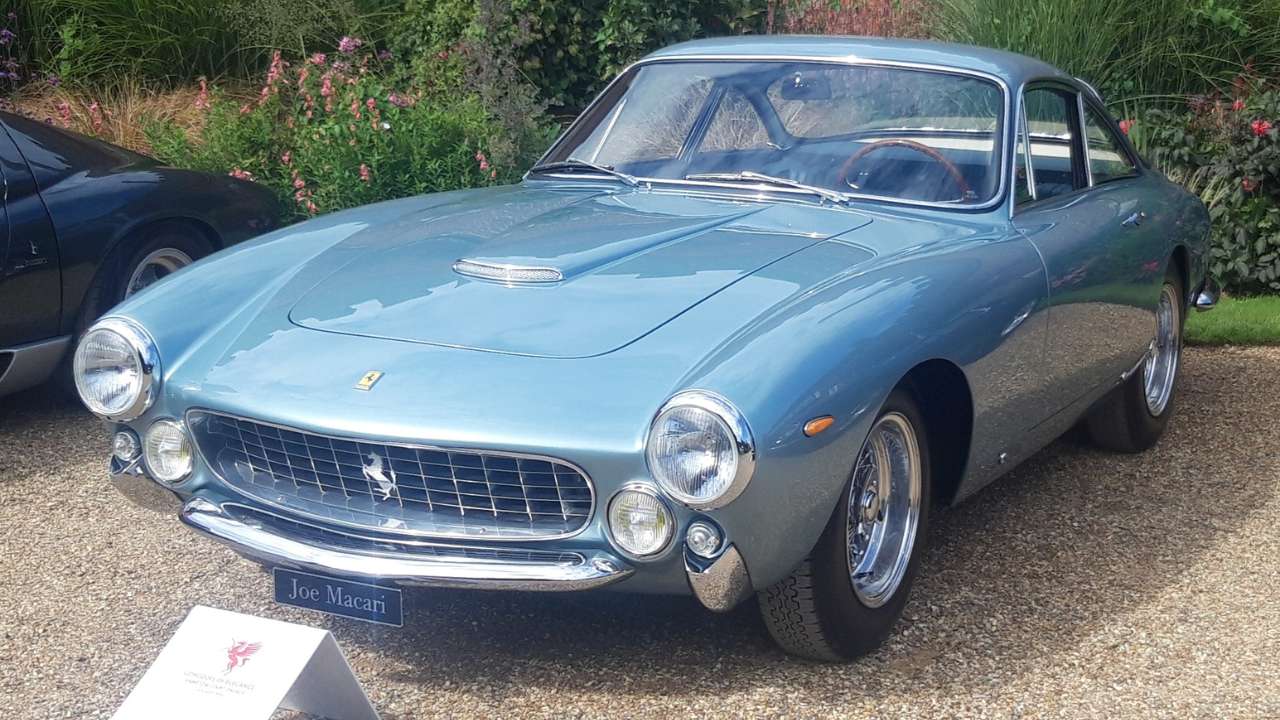
The 250 GT Lusso’s visual impact begins with its proportions. Pininfarina shaped the design, and the bodywork was manufactured by Carrozzeria Scaglietti, the Modenese coachbuilder that had already handled several of Ferrari’s most important racing bodies. According to period descriptions of the Ferrari 250 GT, the car used a steel shell with carefully chosen alloy panels to balance strength, weight, and cost. The long hood, set over that compact V12, flowed into a low roofline and a delicately tapered rear that gave the car its signature fastback profile.
Observers at the time remarked on how the design seemed to eliminate unnecessary ornament. The front featured a wide, shallow grille flanked by simple round headlights, while the sides were almost unbroken planes of metal, interrupted only by subtle creases over the wheel arches. At the rear, the glass area wrapped around to meet a short tail, a detail that gave the cabin an airy feel and made the car look lighter than its steel construction might suggest. Later enthusiasts would single out these elements as key reasons the 250 GT Lusso is widely regarded as one of the most elegant and timeless cars ever designed by Pininfarina and bodied by Scaglie, a sentiment echoed in modern retrospectives that treat the model as a high point of Italian GT styling.
Inside, a grand tourer’s compromise
Open the door and the 250 GT Lusso reveals a cabin that blends minimalism with luxury. The dashboard stretches in a simple, horizontal sweep, finished in body color and topped with a thin pad of leather. In front of the driver, a large tachometer and speedometer dominate the view, while a cluster of smaller gauges sits awkwardly to the right. That layout has become a talking point in its own right. Modern commentators have highlighted how the 1963 Ferrari 250 GT Lusso’s dashboard contains 7 instruments grouped in a way that some consider poor ergonomics, a contrast to the otherwise harmonious design that has even sparked debate on enthusiast forums about the quirks of classic Italian interiors.
Seats are low and thin but surprisingly supportive for long journeys, trimmed in rich leather that matched the car’s grand touring mission. The rear bench is more symbolic than practical, yet it provided just enough space for luggage or an occasional passenger. This packaging choice reflects Ferrari’s intention: the Lusso was not a family car, but it needed to be more usable than a stripped-out racer. Owners could drive from Milan to the Riviera in comfort, with room for weekend bags and the sense that the car’s performance was always held in reserve.
The Italian Grand Tourer on the road
Underneath the elegant body, the 250 GT Lusso remained a serious performance machine. Contemporary technical descriptions emphasize that the Ferrari 250 GT Lusso was the beneficiary of a Colombo-designed short block V12 engine that utilized three carburetors and a free-breathing exhaust, a combination that gave the car strong acceleration and a distinctive soundtrack. The engine displaced the familiar 250 G series capacity, and while it was detuned slightly from pure racing specification, it still delivered more than enough power for high-speed touring.
Modern driving impressions reinforce that balance. One enthusiast video featuring a 1963 example, filmed with the help of the Bond Group in Waltham Massachusetts, shows how the car feels alive at moderate speeds yet remains composed on rougher surfaces.Tedward describes the steering as light but communicative, with the front end responding quickly to small inputs while the rear axle, located by leaf springs, offers a degree of movement that keeps the ride supple. Disc brakes, which vastly improved stopping performance compared with earlier drum-equipped Ferraris, allow the driver to use the car’s speed with confidence on modern roads.
The soundtrack is central to the experience. As the revs climb, the V12’s intake and exhaust notes build into a layered mechanical chorus that many owners consider the car’s defining feature. A widely viewed review of a 1963 Ferrari 250 GT Luso, which describes it as one of the most beautiful and sought-after Ferrari models ever made, captures this sensation as the presenter runs the engine through the gears on open roads.Ferrari Luso footage underscores how the car’s character shifts from relaxed cruiser to focused sports machine as the tachometer needle sweeps toward its upper range.
Gran Turismo Lusso, Grand Touring Luxury
The name itself signaled Ferrari’s ambitions. Period descriptions translate Gran Turismo Lusso directly as Grand Touring Luxury, a label that framed the car as a long-distance companion rather than a track-day weapon. Introduced at the Paris Salon, the model sat in Ferrari’s lineup as a bridge between the uncompromising competition berlinettas and the more opulent four-seat cars. A detailed museum spotlight on the Gran Turismo Lusso emphasizes that the car was designed to cover great distances quickly, with comfort and style that matched its performance.
That dual mission influenced every aspect of the specification. The wheelbase was shorter than the 2+2 models, which sharpened handling and gave the car its taut stance, yet the suspension tuning and cabin appointments leaned toward comfort. Alloy deck lids and doors helped reduce weight without compromising structural integrity, a detail highlighted in specialist descriptions that also mention the hand-built nature of each example. The result was a GT that could hold its own on a twisty Alpine pass yet arrive at a hotel porte cochère looking as refined as any luxury coupe of its era.
Craftsmanship and construction
Hand assembly defined the 250 GT Lusso from the start. Accounts of the production process describe how Carrozzeria Scaglietti workers shaped the steel panels over wooden bucks, adjusting each piece by hand to match Pininfarina’s drawings. Some components, such as the hood and trunk lid, were formed in aluminum to save weight, a practice captured in period sales literature and later technical write-ups that summarize the car as constructed by hand using alloy deck lids and doors to reduce weight, disc brakes which vastly improved braking, and a shorter wheelbase that sharpened responses.
Inside, the same attention to detail appears in the stitching of the leather, the fit of the chrome switchgear, and the placement of the signature three-spoke steering wheel. Even the slightly eccentric dashboard layout, with its cluster of seven instruments, reflects a bespoke approach rather than mass-produced ergonomics. Each car left the factory with small differences in trim and finish, reinforcing the sense that owners were receiving something closer to a tailored suit than an off-the-rack garment.
Design acclaim and cultural afterlife
Contemporary reaction to the 250 GT/L Berlinetta Lusso was enthusiastic, particularly regarding its styling. Commentary on a 1962 Ferrari 250 GT/L Berlinetta Lusso notes that Pininfarina’s design for the 250 GT/L Berlinetta Lusso drew immediate acclaim when presented, with enthusiasts praising the purity of its lines and the balanced proportions that distinguished it from both earlier and later Ferraris.Berlinetta Lusso Pininfarina imagery from the period shows crowds gathered around the car at shows, often drawn first to the delicate rear treatment and then to the low, purposeful stance.
That admiration has not faded. Modern owners’ groups and social media communities frequently share images of the model, using captions that call it The Italian Grand Tourer and highlight how the Ferrari 250 GT Lusso, introduced in 1963, remains one of the most elegant and timeless shapes in the brand’s history.Italian Grand Tourer posts often focus on the interplay of light across the car’s curves, the way the rear glass wraps into the C-pillars, and the restrained use of chrome compared with contemporary rivals.
Professional commentators echo that sentiment. Detailed essays on the 250GT Lusso describe it as widely regarded as one of the most elegant and timeless cars ever designed by Pininfarina and bodied by Scaglie, placing it alongside icons such as the 250 GT California and later 275 GTB in lists of Ferrari’s most beautiful road cars.The Remarkable assessments often single out the Lusso’s ability to look both delicate and muscular, a rare combination that helps explain its enduring appeal.
Quirks, character, and the golden era
Part of the 250 GT Lusso’s charm lies in its imperfections. Modern reviewers have pointed out the car’s idiosyncrasies, from the offset pedals to the unusual gauge placement and the relatively thin seats by current standards. One widely shared analysis of the model’s quirks argues that these details define Ferrari’s golden era, suggesting that the blend of handcrafted oddities and serious engineering gives the car a personality missing from more clinical modern machinery.crazy quirks commentary references Doug DeMuro’s style of focusing on small design decisions, noting that some viewers are fascinated by this level of detail while some would rather focus on the broader driving experience.
More from Fast Lane Only