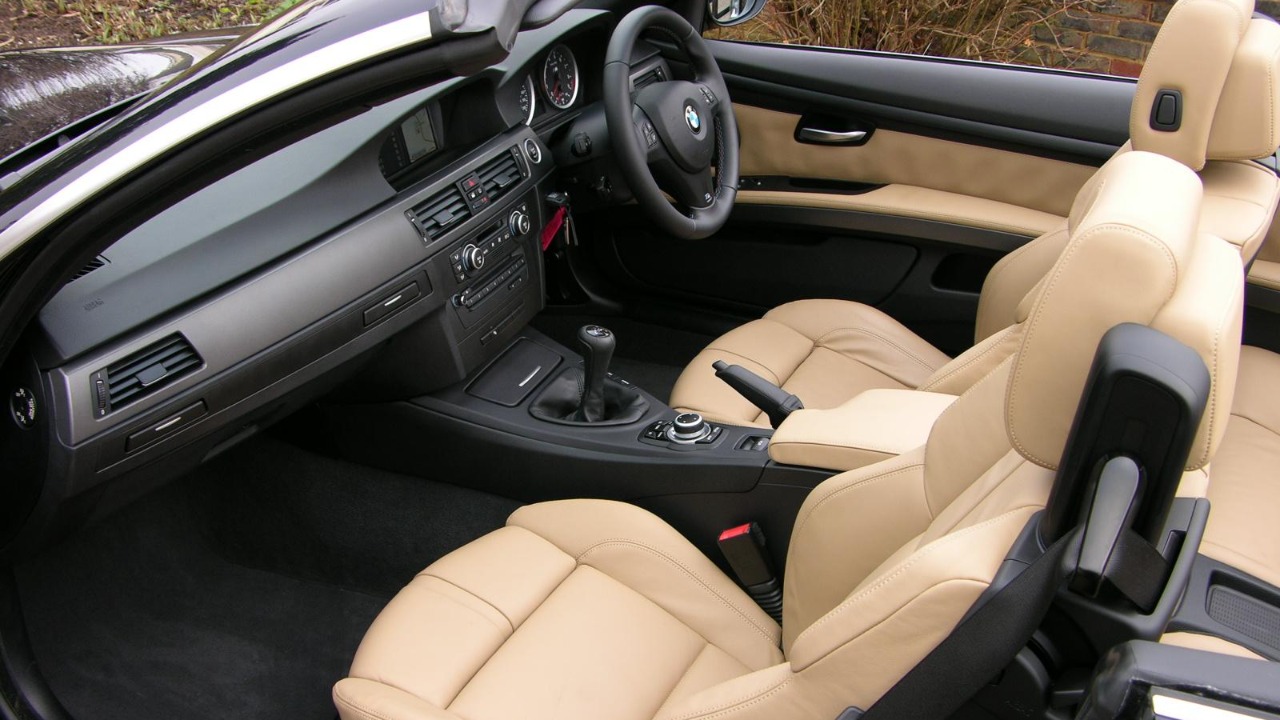
BMW’s performance division is openly preparing drivers for a future in which the manual gearbox is a nostalgic indulgence rather than a serious engineering choice. At the center of that shift is BMW M chief Frank van Meel, who now frames the stick shift as an emotional object that no longer aligns with where high performance is headed. His comments crystallize a broader industry tension between measurable speed and the subjective satisfaction of changing gears by hand.
For enthusiasts, the message is both clear and conflicted. The manual will survive for a short while longer, not because it is the fastest or most capable tool, but because a vocal group of customers still finds joy in it. BMW is effectively admitting that sentiment, not stopwatch data, is keeping the clutch pedal alive.
Emotion versus engineering in BMW M’s manual debate
Van Meel now presents the manual transmission as something that speaks to the heart more than to the stopwatch. As BMW M CEO, he has stated that the manual gearbox no longer fits where performance engineering is heading, even though tradition and driver emotion still argue for its presence. That distinction between feeling and function captures why the M division is not yet ready to cut the cord, even as its own leader describes the format as technically outdated.
His stance is not a casual aside but a structured argument about priorities. In a separate explanation, the long-term future of the manual transmission at BMW is described as increasingly fragile, with van Meel questioning how long the stick shift can survive in a world defined by power, torque, and efficiency targets. The message is that the gearbox is being kept on life support by affection rather than by any data that would convince an engineer starting from a blank sheet of paper.
Torque, timing and the technical squeeze on stick shifts
Behind the rhetoric sits a hard mechanical problem that BMW cannot engineer away without changing what its M cars are. The brand itself has acknowledged that BMW is phasing by 2029 in part because traditional gearboxes literally cannot handle the torque of modern M engines. As outputs climb, the packaging, durability and emissions compromises required to keep a three pedal option grow ever more severe, particularly once regulatory test cycles and warranty expectations are layered on top.
That technical squeeze is compounded by the simple reality that automatics are now quicker and more consistent than any human hand. In public comments shared earlier in Feb, BMW M chief again described the manual transmission’s long term outlook as fragile, reinforcing that the performance market is moving toward rapid fire automatics and dual clutch systems. The result is a car that accelerates harder, shifts with perfect timing and integrates seamlessly with stability systems, even if some drivers feel less involved in the process.
Customer demand, timelines and the shrinking manual lineup
The emotional case for the manual is not hypothetical. BMW’s own data shows that a significant share of M buyers are choosing a manual in 2025, a striking figure in a market dominated by automatics. That level of take rate explains why van Meel continues to acknowledge that emotion matters for his customers, even while he describes the format as a mismatch with future performance targets. There is a clear constituency that still wants to row its own gears, particularly in compact models like the M2.
Yet the product roadmap shows how finite that window has become. Reporting on the current range notes that the axe is falling on BMW manuals, with the last non-M roadster becoming the final regular model to offer a stick shift before it disappears by early 2029. Within M itself, earlier assurances that the division would keep the manual now sit alongside van Meel’s newer suggestion that the era of the manual is nearing its end, which signals a narrowing corridor rather than an open ended promise.
How BMW frames the final chapter for three pedals
For BMW, the communications challenge is to reassure enthusiasts that their preferences are heard while preparing them for a future shaped by software and electrification. In a widely cited interview, van Meel explained that the company is still happy with the manuals it offers and plans to keep them for the next couple of years, but that in the future the format probably will not survive, even as the brand tries to keep them as long as possible. That sentiment is reflected in coverage that quotes him as saying he is ‘still happy’ with the current manuals while openly questioning their long-term feasibility. The official tone is one of managed decline rather than abrupt cancellation.
Enthusiast communities have responded with a mix of resignation and renewed advocacy, using platforms such as Facebook discussions and Threads forums to debate what is being lost. Some argue that models like the BMW M2 manual comparison prove that a slightly slower shift is a fair price for engagement, while others accept that high performance cars now live in a world of launch control, torque vectoring and hybrid assistance. In that context, BMW’s framing of the manual as an emotional choice rather than a rational one reads less like a dismissal and more like a final acknowledgement that the clutch pedal belongs to the past, even as it lingers a little longer in the present.
More from Fast Lane Only