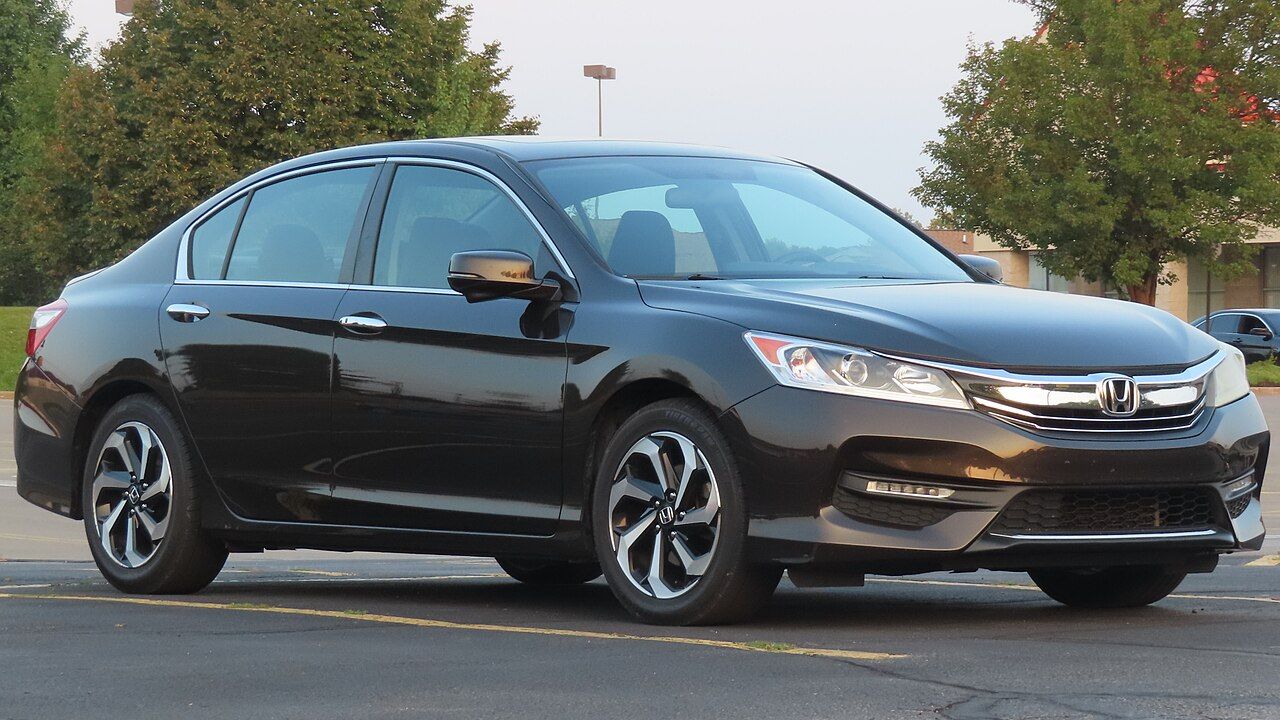
The Honda Accord has spent decades quietly building a reputation for durability, comfort, and value that often embarrasses far more expensive sedans. In an era when luxury badges dominate marketing, the Accord continues to deliver reliable daily transportation and long-term durability at a lower cost. That quiet consistency is why the car now routinely outlasts and outshines models that cost twice as much at the showroom.
Owners, dealers, and reviewers increasingly describe the Accord as a product that earns loyalty through engineering rather than image. From high-mileage 1990s examples to current hybrids, the pattern repeats: long service lives, reasonable running costs, and a driving experience that feels unexpectedly premium. Taken together, those traits help explain why used prices stay elevated and why strangers still leave notes on windshields asking whether an old Accord might be for sale.
Longevity that rivals luxury sedans
The core of the Accord’s appeal is simple: it keeps going. Multiple dealer and buyer guides describe typical lifespans that stretch from 200,000 to 300,000 with routine care, a range that pushes into territory usually associated with high-end German sedans maintained on meticulous schedules. Another advisory aimed at fuel-conscious drivers notes that with proper maintenance, the Honda Accord can run well past 300,000 miles before requiring major work, reinforcing its long-term durability.
That durability shows up in owner anecdotes as much as in dealer copy. A long-running discussion about older models includes a driver whose early-2000s Accord remains in demand, with strangers offering to buy the car because it continues to run reliably. A separate analysis of older generations notes that the 1992 Honda Accord was designed so that routine repairs could be handled easily by owners, a feature that helped extend the life of that Honda Accord for drivers who were willing to pick up a wrench.
Why used Accords command premium prices
The Accord’s longevity feeds directly into its used-market behavior, where prices often surprise shoppers who assume a mainstream badge should be cheap. Enthusiasts on one popular used-car forum have been debating why 2017 V6 Accords remain so expensive, even as newer models arrive with more technology. Owners tend to answer that these cars combine proven drivetrains with modern safety and comfort, creating a sweet spot that buyers are willing to pay for, especially when they expect to keep the car for a decade or longer.
That calculus also shapes how shoppers weigh the Accord against higher-priced luxury sedans. On another forum, a buyer cross-shopping premium brands against an Accord Touring 2.0T was advised that the key question is whether the extra money buys more than badge prestige. One commenter argued that buyers will get most of the comfort, power, and technology in the Accord, and that any savings could be redirected into improved features or future maintenance. That kind of reasoning helps explain why used Accords often sit closer in price to aging luxury sedans than to other mass-market midsize cars.
Quiet comfort and hybrid efficiency that feel upscale
Longevity alone does not make a car feel like it belongs in a luxury conversation; refinement does. Dealer guidance on cabin noise ranks several current Hondas by serenity and highlights how the Accord has evolved into a calm place to spend time. One advisory about selecting the quietest model for a given driver points to the latest Accord for those who prioritize a peaceful cabin. Another detailed breakdown notes that the 2025 model aims at buyers who want low noise, strong insulation, and a composed ride. A separate dealer blog from Honda of Cleveland Heights explains that tech-focused trims, including the latest Accord, benefit from thicker glass, improved seals, and more sophisticated suspension tuning, all aimed at reducing fatigue on long drives.
The hybrid versions deepen that impression of quiet sophistication. According to one consumer-rating summary, the Accord Hybrid produces 204 horsepower and can deliver up to 51 miles per gallon in city driving, allowing for quiet operation and reduced fuel stops. Another evaluation of the latest Accord Hybrid cites an EPA estimate of 51 miles per gallon in city driving for certain trims, figures that rival some compact luxury sedans. When a midsize family car offers that sort of efficiency and polish, the traditional justification for paying more to get into a premium badge starts to erode.
The Accord as a “product” that beats the “brand”
The Accord’s ability to embarrass more expensive rivals has also become a cultural talking point. In a widely shared video, a commentator raises the question of whether buyers prioritize the product or the brand, using Honda as an example. The clip singles out the Accord as a product-focused vehicle, arguing that it delivers tangible value rather than relying on marketing. That same reel emphasizes that a brand name means little if the underlying engineering does not back it up, turning the Honda into a kind of case study in rational car buying and linking the argument to buying the product or are you buying the brand as a broader consumer question.
More from Fast Lane Only