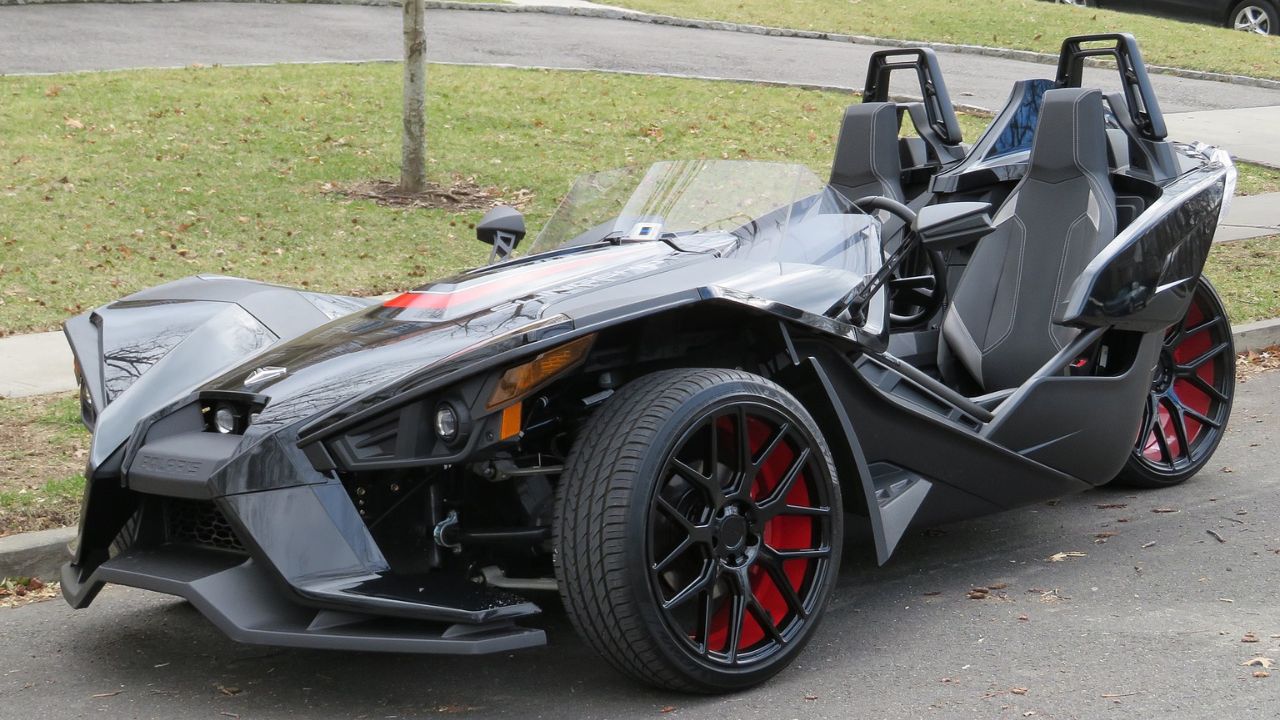
Federal lawmakers are weighing a measure that could quietly reshape what counts as a motorcycle in the United States, with outsized consequences for niche three-wheeled machines. At the center of that debate sits the Polaris Slingshot, a low-slung, open-air vehicle that has relied on motorcycle rules to reach buyers who want sports-car drama without traditional car regulations.
The proposed change would tighten the federal definition of a motorcycle and push many three-wheeled “autocycles” into a regulatory gray zone. For owners, dealers, and manufacturers, the fight over a few lines of statutory language could determine whether vehicles like the Slingshot remain easy to register and drive or become casualties of a classification overhaul.
What House Bill 3385 would do to motorcycle definitions
House Bill 3385 is a federal bill that aims to rewrite how Washington classifies motorcycles, with a specific focus on separating traditional two-wheeled bikes from three-wheeled autocycles that use car-style controls. Supporters want the Transportation Department to narrow the motorcycle definition so that vehicles with steering wheels and automotive seating are no longer treated as motorcycles for regulatory purposes, a shift that would directly affect any autocycle built around a three-wheel platform. The legislation would require the Transportation Department to complete its new classification work within 120 days of enactment, underscoring how quickly the rules for motorcycle registration and safety standards could change once the bill becomes law.
Right now, three-wheeled machines that lack full automotive crash structures but offer seat belts and a steering wheel occupy a hybrid space in federal rules, which treat many of them as motorcycles even as states experiment with separate autocycle categories. House Bill 3385 would effectively erase that hybrid status at the federal level by carving autocycles out of the motorcycle definition entirely, a change that could leave them outside both motorcycle and automobile frameworks until new rules are written. That uncertainty has drawn national attention from riders and manufacturers who view the bill as a fundamental reordering of how unconventional vehicles are allowed to reach public roads.
Why three-wheeled autocycles and the Slingshot are in the crosshairs
The Slingshot occupies precisely the regulatory niche that House Bill 3385 targets, which is why its future looms so large in the current debate. The manufacturer describes the Slingshot as federally classified as a three-wheeled motorcycle and notes that most states treat it as an autocycle that can be driven with a standard driver’s license rather than a motorcycle endorsement. That flexible status allows the Slingshot to combine motorcycle-style freedom and exposure with driver access rules that feel closer to a compact sports car, a mix that has helped it carve out a visible niche on highways and in tourist destinations.
Autocycles more broadly share this blended identity, pairing three wheels with car-like controls and partial weather protection, and they have relied on motorcycle classifications to avoid the full weight of automobile crash and emissions standards. The measure would explicitly strip three-wheeled autocycles that use a steering wheel of their motorcycle status, affecting vehicles such as the Polaris Slingshot and similar three-wheel designs. If that language becomes law, these machines would lose the regulatory foundation that currently lets them be sold and registered as motorcycles, which is why owners and dealers see the bill as a direct threat rather than a distant bureaucratic adjustment.
Industry backlash and the Motorcycle Industry Council’s warning
Organized opposition has already coalesced around the proposal, led by groups that represent manufacturers, dealers, and riders who rely on the current motorcycle definition. The Motorcycle Industry Council has formally opposed the bill and warned lawmakers that removing autocycles from the existing motorcycle category would create market turmoil. The organization has framed the issue as one of regulatory overreach that fails to account for how deeply autocycles are woven into the motorcycle retail ecosystem, from showroom financing to insurance products that were designed around their current status.
Industry advocates have also stressed the broader economic stakes, pointing to estimates that peg the overall motorcycle sector at $51 billion in 2025 and arguing that sudden rule changes could ripple through that entire market. For dealers who have invested in Slingshot showrooms and service bays, the prospect of losing the ability to register these vehicles as motorcycles raises the risk of stranded inventory and confused customers who no longer know which license or safety gear they need. That anxiety reflects concerns that a rewrite of federal code could sideline three-wheeled models that help anchor local powersports economies and attract tourism.
What it would mean for drivers, states, and the road ahead
For drivers, the most immediate impact would likely be confusion about licensing and registration, especially in states that have leaned into the Autocycle category to make vehicles like the Slingshot easier to adopt. Company materials explain that Yes, Slingshot is fully highway legal and is marketed as suitable for both city and long distance travel, positioning it as a practical alternative to a small convertible or touring motorcycle for everyday use, as detailed in the manufacturer’s autocycle overview. Other guidance aimed at riders notes that, According to federal classification, the Slingshot is a three-wheeled motorcycle, while In Texas a standard driver’s license is sufficient to operate one, a reminder that state and federal rules already coexist in a delicate balance that could be disrupted if the federal piece suddenly shifts, as described in a licensing explainer.
More from Fast Lane Only